

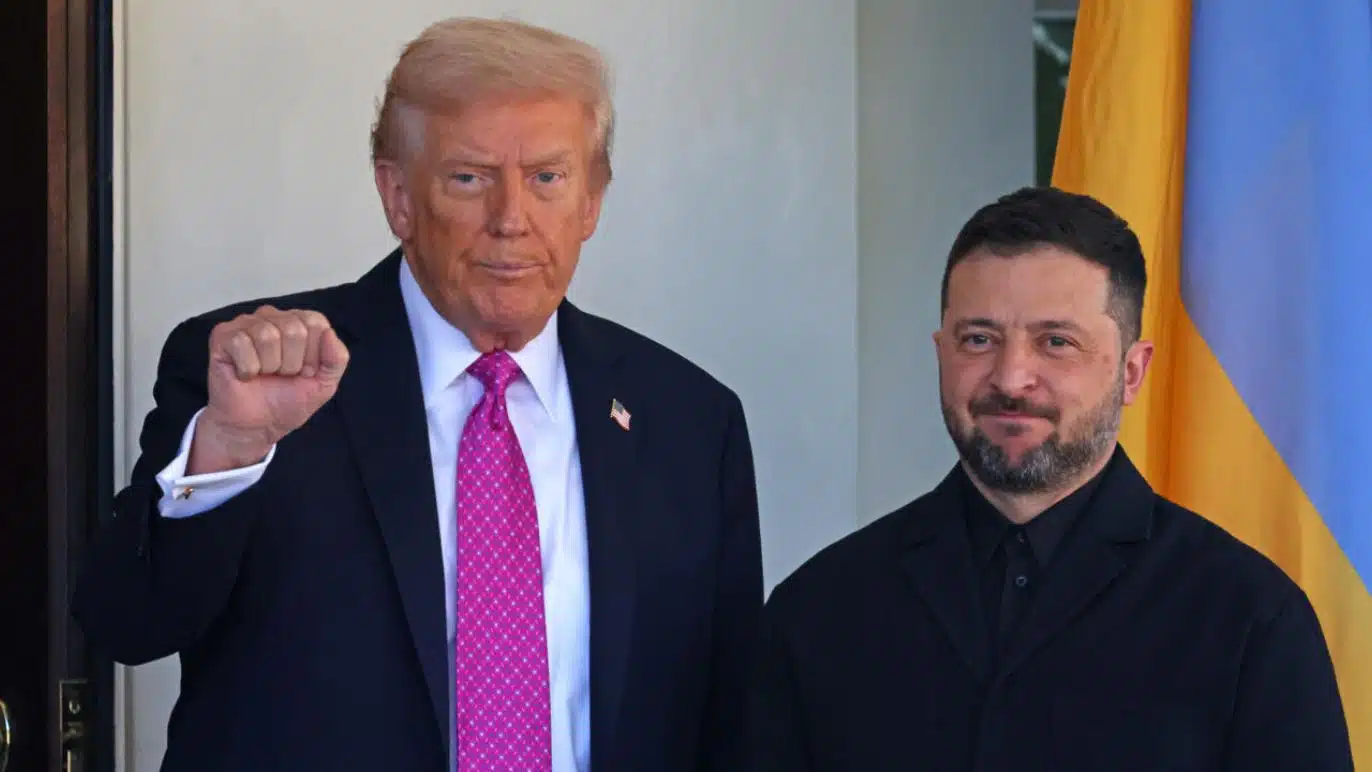
President Donald Trump and Ukrainian President Volodymyr Zelenskyy convened at Mar-a-Lago on December 28, 2025, marking a pivotal moment in efforts to end Russia’s nearly four-year invasion of Ukraine. Following their in-person discussions, the two leaders rallied a coalition of European heads of state and government via phone call, hailing “substantial progress” toward a framework that could secure lasting peace. This high-stakes diplomacy unfolds amid battlefield stalemates, economic strains on Europe, and Trump’s insistence on rapid resolution as the current U.S. president.
Diplomatic Rendezvous at Mar-a-Lago
The meeting at Trump’s Palm Beach estate began with a private lunch, transitioning into detailed talks on security guarantees, territorial outlines, and economic reconstruction. Trump described the session as “excellent,” claiming a truce was in “final stages” and good for “Ukraine and everybody.” Zelenskyy echoed optimism, stating the peace framework stood at “90% agreed,” with U.S.-Ukraine security pacts “100% agreed,” though sticking points lingered on enforcement and Russian compliance.
Prior to Zelenskyy’s arrival, Trump held a lengthy call with Russian President Vladimir Putin, a move that reportedly caught Ukrainian delegates off-guard but underscored the U.S. leader’s shuttle diplomacy style. Reports indicate the conversation lasted over an hour, with Trump later briefing reporters on intentions to follow up with Putin post-meeting. This sequence—Putin first, then Zelenskyy—highlights Trump’s pattern of engaging Moscow directly, a tactic he has employed since his January 2025 inauguration.
The Mar-a-Lago backdrop, often a venue for Trump’s deal-making, symbolized a departure from formal Washington summits. Zelenskyy arrived amid Russia’s recent missile barrages on Kyiv, lending urgency to the agenda. Both leaders avoided specifics in joint remarks but emphasized mutual respect, contrasting earlier tensions where Trump pushed territorial concessions.
European Coalition Joins the Call
Post-lunch, Trump and Zelenskyy dialed into a multilateral conference call with key European figures, framing it as a unified push for peace. Participants included UK Prime Minister Keir Starmer, French President Emmanuel Macron, German Chancellor Friedrich Merz, Italian Prime Minister Giorgia Meloni, Polish President Karol Nawrocki, Norwegian Prime Minister Jonas Gahr Store, Finnish President Alexander Stubb, European Commission President Ursula von der Leyen, and NATO Secretary-General Mark Rutte.
The hour-plus discussion focused on “concrete steps” toward a “just and lasting peace,” with Stubb posting on X that all were aligned on ending the war. Von der Leyen welcomed “good progress” and stressed “ironclad security guarantees from day one,” signaling Europe’s readiness to collaborate but insistence on robust protections. Starmer’s office noted commendations for Trump’s efforts, while Poland’s presidential readout affirmed that regional security decisions must involve all stakeholders.
This wasn’t the first such huddle; earlier gatherings in August and October 2025 at the White House drew similar crowds, with leaders like Macron, Merz, and Starmer providing solidarity amid Trump’s post-Putin maneuvers. The December call, however, carried fresher momentum from Mar-a-Lago breakthroughs, positioning Europe as co-architects rather than sidelined observers.
Core Elements of the Emerging Peace Framework
At the heart of these talks lies a refined U.S.-backed proposal, evolving from a controversial 28-point draft leaked in November 2025. That blueprint, partially drawn from Russian inputs, called for Ukraine to cede Crimea, full Donetsk, and Luhansk; cap its military size; forgo NATO membership; and accept a demilitarized buffer zone. It envisioned a Trump-chaired Peace Council for oversight, amnesties for war actions, and funds for Ukrainian tech and infrastructure revival.
Recent iterations show softening: Zelenskyy now touts 90-95% alignment, with U.S. security guarantees—modeled on NATO’s Article 5—fully locked in, potentially extending 15 years. Territorial lines may freeze at current contacts in areas like Kharkiv and Zaporizhzhia, with Russia withdrawing from other gains outside five key regions. Economic pillars include a Ukraine Development Fund for AI and energy modernization, plus unblocked Dnipro River access.
Trump has rejected ceasefires, arguing peace can proceed amid fighting, drawing from his claimed resolutions of six prior conflicts. Putin signaled receptivity via aide Yuri Ushakov, praising Trump’s “peace efforts” without committing. Zelenskyy insists on fairness, warning against deals betraying Ukraine’s dignity.
Historical Context of Trump-Zelenskyy Diplomacy
This rally caps a rollercoaster since Trump’s 2025 return. An February Oval Office clash saw Trump berate Zelenskyy over aid; by August, European-backed White House talks yielded security pledges and trilateral feelers with Putin. October’s D.C. lunch soured over concessions, but December’s Florida thaw revived hopes.
Europe’s role expanded post-Geneva and G20 sideline scrambles, where leaders like Von der Leyen and Macron critiqued the 28-point plan as Russian-tilted. Fears of territorial rewards for aggression prompted “nothing about Ukraine without Ukraine” pledges. NATO’s Rutte and others now bolster Zelenskyy, countering isolation risks as U.S. aid wanes.
Russia’s advances in Donbas fueled Moscow’s leverage, yet intensified strikes underscore negotiation pressures. Trump’s pre-Zelenskyy Putin calls echo Alaska and Budapest previews, positioning him as broker.
Reactions from Key Players
European responses blend guarded optimism with caveats. Von der Leyen hailed collaboration potential; Merz eyed ceasefires despite Trump’s aversion. Macron warned of Russian betrayal absent deterrents; Starmer slammed Moscow’s rhetoric-action gap. Poland and Finland stressed inclusive decisions.
In Ukraine, Zelenskyy frames progress as dignity-preserving, eyeing January White House follow-ups with Europeans. Critics decry concessions; supporters see survival via guarantees. Kremlin voices praise Trump but demand details.
U.S. senators like Mike Rounds dismissed early drafts as “Russian wish lists,” urging balance. Globally, the plan’s NATO dialogues and arms controls intrigue, though enforcement skepticism persists.
Challenges and Sticking Points Ahead
Major hurdles remain: Russia’s uncompromising territorial asks, Ukraine’s NATO aspirations, and military limits. Zelenskyy rejects “surrender,” while Trump eyes quick closure before 2026 deadlines. Europe’s energy woes and election cycles add pressure for resolution.
Verification mechanisms, like the Peace Council, face trust deficits post-war crimes allegations. Battlefield dynamics—Russian gains versus Ukrainian resilience—could shift leverage. Upcoming trilateral talks, potentially in Budapest or neutral sites, loom critical.
Security pacts must detail triggers, durations, and U.S. commitments amid domestic debates. Economic revival hinges on funds materializing, with AI and pipelines as sweeteners.
Broader Geopolitical Implications
A deal could reshape Europe: reduced U.S. aid burdens allies, bolstering NATO’s eastern flank. Russia might pivot to Asia, easing global food and energy crunches from Black Sea blockades. Ukraine’s post-war boom in tech and green energy could emerge, funded by Western pledges.
Yet failure risks escalation, with long-range missiles like Tomahawks in Kyiv’s crosshairs—Trump has wavered. Europe’s unity tests cohesion; divisions over concessions echo pre-invasion hesitations.
For Trump, success burnishes his dealmaker image; for Zelenskyy, it secures legacy amid polls pressuring elections within 100 days of accord. The world watches as this rally tests if diplomacy can outpace destruction.
Path Forward and Next Steps
Trump plans Putin follow-ups and January summits, possibly at the White House with Europeans. Zelenskyy pushes for swift implementation, eyeing reconstruction. Leaders like Stubb foresee “complex negotiations” but shared hope.
Monitoring bodies and phased withdrawals offer blueprints, but mutual verification is key. As 2025 closes, this coalition stands at a crossroads: peace or prolonged proxy war.





















