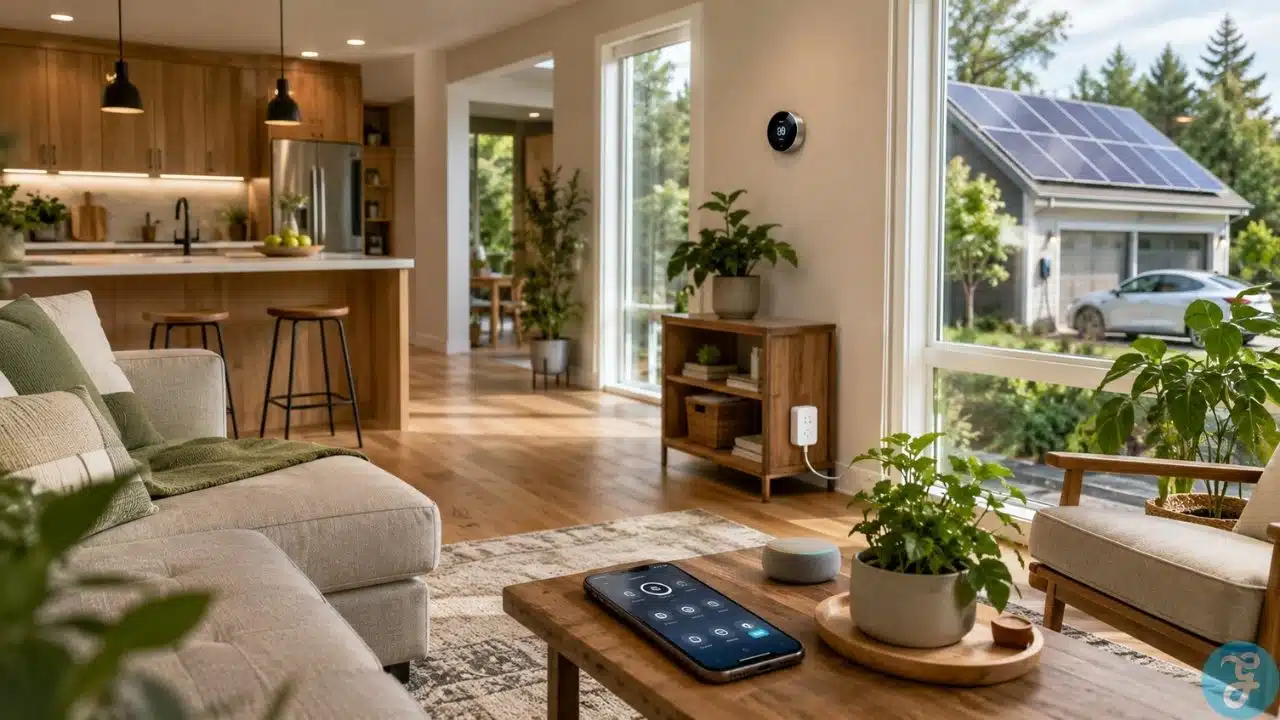
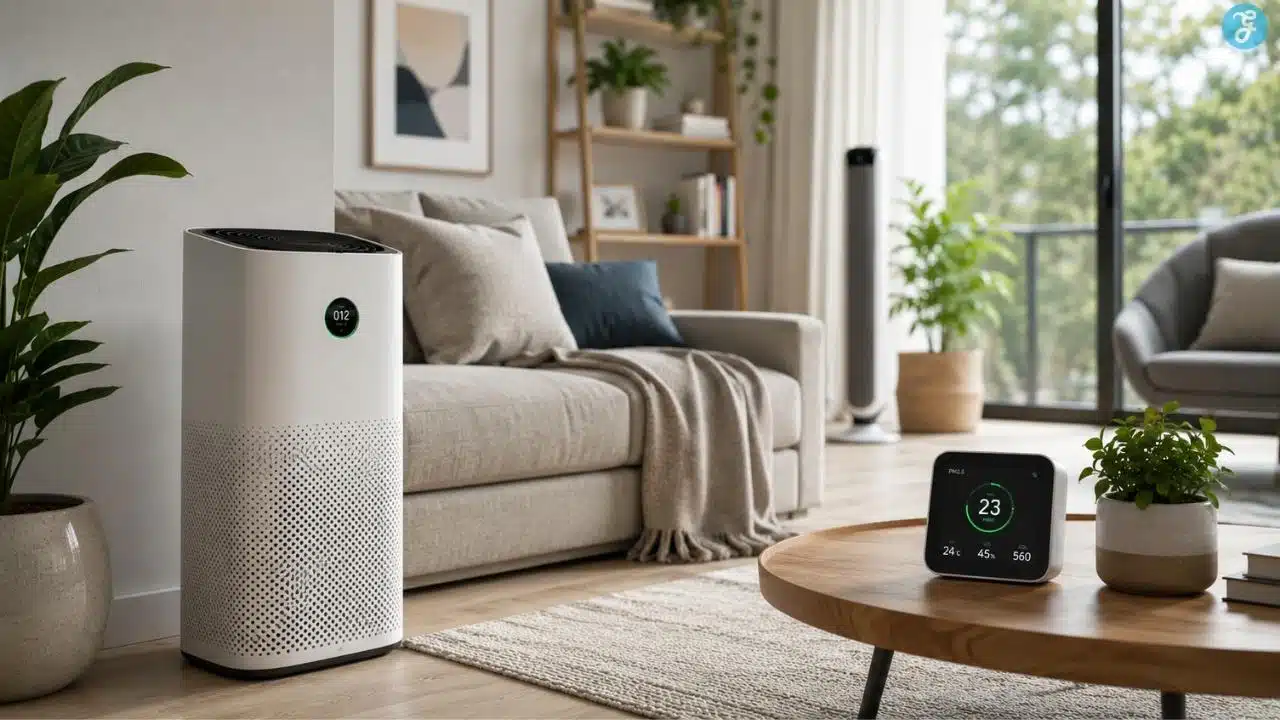
A home insurance security system discount can be one of the most overlooked ways to reduce your homeowners or renters insurance premium. As insurance costs continue to rise across many states, homeowners are actively looking for legal, practical ways to lower their monthly or annual bills without sacrificing protection. Smart security and safety devices offer one such opportunity.
Insurance companies reward behaviors and systems that reduce risk. When your home is less likely to be burglarized, catch fire, or suffer extensive water damage, insurers face fewer and smaller claims. That reduced risk often translates into lower premiums through discounts.
However, not all security systems qualify, and not every insurer offers the same discounts. Even more importantly, discounts often vary by state due to insurance regulations and approved policy forms. That’s why understanding how a home insurance security system discount works in your state is critical before spending money on new devices.
In this in-depth guide, you’ll learn about nine common insurance discounts tied to smart security, how they work, what proof insurers require, and how to check availability state by state. This article is designed to help you make informed decisions that balance safety, savings, and long-term value.
What This Guide Covers
| Topic | Why It Matters |
| 9 security-related discounts | Helps you identify all potential savings |
| State-by-state variation | Avoids assumptions that lead to missed discounts |
| Documentation tips | Prevents losing discounts at renewal |
| Smart buying strategy | Saves money without overspending |
How Insurers Link Smart Security to Lower Premiums

Insurance companies calculate premiums based on risk exposure. The greater the chance of loss, the higher the premium. Smart security devices reduce both the likelihood of a loss and the severity if one occurs.
Security systems deter criminals, reduce response times, and provide early warnings. Fire and smoke detectors alert occupants before flames spread. Water sensors identify leaks before they turn into costly disasters. From an insurer’s perspective, these technologies directly reduce claims.
In recent years, insurers have become more focused on loss prevention rather than just loss repair. This shift explains the growing interest in smart home technology and mitigation devices. Some insurers even encourage or subsidize installation because it benefits both parties.
Another key factor is behavior. Homes with monitored systems tend to receive faster emergency responses. Faster response often means less damage, fewer injuries, and lower repair costs. This creates a strong incentive for insurers to reward policyholders who invest in smart protection.
Risk Reduction and Insurance Impact
| Risk Type | Smart Devices | Insurance Benefit |
| Theft | Burglar alarms, cameras, smart locks | Fewer theft claims |
| Fire | Smoke, heat, CO detectors | Earlier fire response |
| Water damage | Leak sensors, shutoff valves | Lower repair costs |
Home Insurance Security System Discount Explained
A home insurance security system discount is not a single, fixed discount. Instead, it refers to a group of credits applied for protective devices installed in your home. These devices reduce the chance of loss or limit damage.
Many insurers group these discounts under terms like “protective devices,” “loss prevention,” or “smart home credits.” The exact naming varies, but the concept is the same: safer homes cost insurers less.
The size of the discount depends on multiple factors. These include the type of device, whether it is professionally monitored, the insurer’s underwriting rules, and state-level approvals. Some discounts are small on their own but become meaningful when stacked together.
It’s important to remember that advertised “up to” savings represent the maximum possible discount, not the average. Real savings depend on your policy, home, and location.
What a Security System Discount Usually Includes
| Device Category | Typical Treatment |
| Burglar alarms | Theft prevention credit |
| Fire/smoke systems | Protective device credit |
| Water mitigation | Loss severity reduction |
| Smart monitoring | Enhanced eligibility |
Before You Buy: Questions to Ask Your Insurer
Buying smart security devices before confirming discount eligibility can lead to disappointment. Not all systems qualify, and some insurers have strict requirements. Start by contacting your insurer or agent. Ask which protective device discounts are available in your state and on your specific policy. This avoids buying devices that don’t generate savings.
Next, clarify monitoring requirements. Some discounts only apply if the system is professionally monitored. Others accept self-monitoring but offer smaller credits. Also ask about documentation. Insurers may require certificates, receipts, photos, or proof of activation. Knowing this upfront helps you prepare and avoid delays. Finally, confirm whether discounts can stack. Combining multiple protective devices often produces better results than relying on one system alone.
Insurer Questions Checklist
| Question | Why It Matters |
| What discounts apply in my state? | Avoids invalid assumptions |
| Is monitoring required? | Affects ongoing costs |
| What proof is needed? | Prevents denied discounts |
| Can discounts stack? | Maximizes savings |
Discount 1: Monitored Burglar Alarm Discount
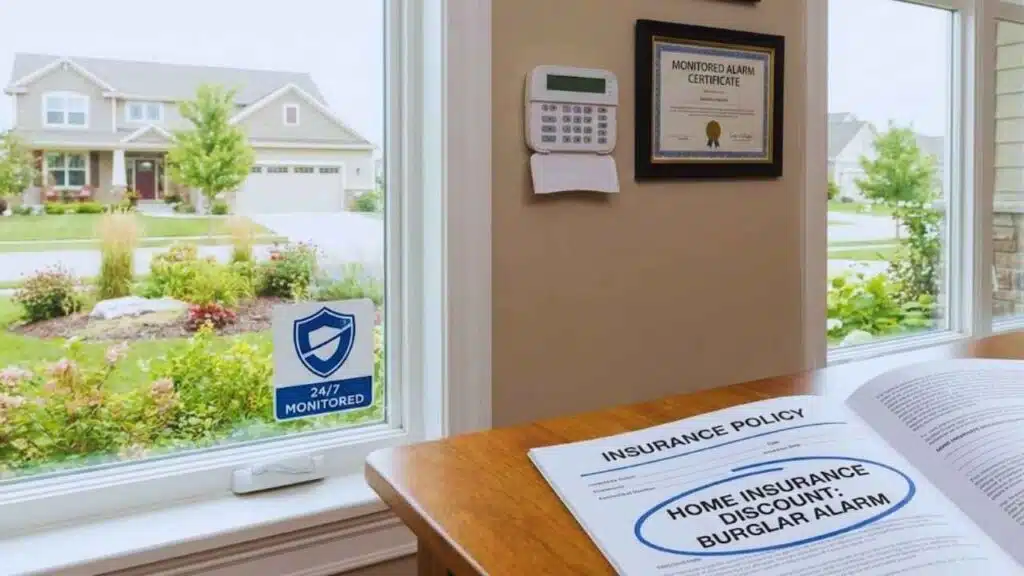
This is one of the most common and widely recognized insurance discounts. A burglar alarm reduces the likelihood of break-ins and theft claims. Professionally monitored systems usually qualify for higher discounts than unmonitored systems. Monitoring ensures alerts are acted on even when you’re away or asleep. Some insurers still offer smaller credits for local alarms that only sound a siren. However, these may not qualify for premium reductions in every state. To maintain the discount, the system must remain active. If monitoring lapses or the system is disconnected, insurers may remove the credit at renewal.
Monitored Alarm Discount Overview
| Feature | Details |
| Monitoring type | Central station preferred |
| Discount size | Often higher with monitoring |
| Proof needed | Monitoring certificate |
| Common pitfall | Lapsed service |
Discount 2: Fire and Smoke Detection Discount
Fire damage is one of the most severe and costly home insurance claims. Smoke detection systems play a critical role in reducing this risk. Standard smoke detectors often qualify under basic protective device discounts. Smart smoke detectors offer additional features, such as mobile alerts and self-testing. Some insurers provide additional discounts for monitored fire systems. These systems notify emergency services automatically, reducing response times. Regular maintenance is essential. Dead batteries or disabled devices can invalidate discounts during inspections or claims reviews.
Fire and Smoke Detection Benefits
| Device | Insurance Value |
| Standard smoke detector | Basic safety credit |
| Smart detector | Enhanced awareness |
| Monitored fire alarm | Faster emergency response |
Discount 3: Carbon Monoxide Detection Discount
Carbon monoxide is invisible and odorless, making it especially dangerous. CO detectors help prevent poisoning and fatalities. Insurers may treat CO detectors similarly to smoke detectors, especially in homes with gas appliances or attached garages. Combination smoke and CO detectors can simplify compliance and documentation. These devices often qualify under the same protective device category. Placement matters. Insurers may expect detectors in sleeping areas and on each level of the home.
CO Detection Essentials
| Aspect | Recommendation |
| Device type | Standalone or combo |
| Placement | Near bedrooms |
| Maintenance | Test regularly |
Discount 4: Water Leak Detection Discount
Water damage is one of the most frequent causes of homeowners insurance claims. Even small leaks can lead to extensive repairs. Leak detection devices alert homeowners when moisture is detected. Smart sensors can notify you instantly through a mobile app. Insurers value early detection because it limits damage. Some offer discounts specifically for leak sensors, while others include them under broader smart home credits. Installing sensors near high-risk areas such as water heaters and washing machines increases their effectiveness.
Leak Detection Savings
| Area | Why It Matters |
| Water heater | Common failure point |
| Under sinks | Slow leaks |
| HVAC systems | Condensation issues |
Discount 5: Automatic Water Shutoff Discount
Automatic water shutoff systems go beyond alerts. They actively stop water flow when abnormal usage is detected. These systems are especially valuable for second homes or frequent travelers. Insurers see them as a strong loss prevention tool. Some insurers offer separate credits for shutoff valves, while others bundle them with leak detection discounts. Professional installation may be required for eligibility, depending on the insurer.
Shutoff System Advantages
| Feature | Benefit |
| Auto shutoff | Limits damage |
| Flow monitoring | Detects anomalies |
| Remote control | Peace of mind |
Discount 6: Protective Devices Discount
Many insurers group safety features into a single protective devices discount. This simplifies administration and allows stacking. Qualifying devices often include alarms, smoke detectors, deadbolts, and sometimes sprinkler systems. The more protective features you have, the stronger your case for a discount. However, insurers may cap the total credit. Documentation is critical. Keep a list of devices and update it whenever you upgrade your home.
Common Protective Devices
| Device | Purpose |
| Deadbolts | Theft deterrence |
| Smoke detectors | Fire prevention |
| Alarms | Intrusion detection |
Discount 7: Smart Home or Connected Home Program Discount
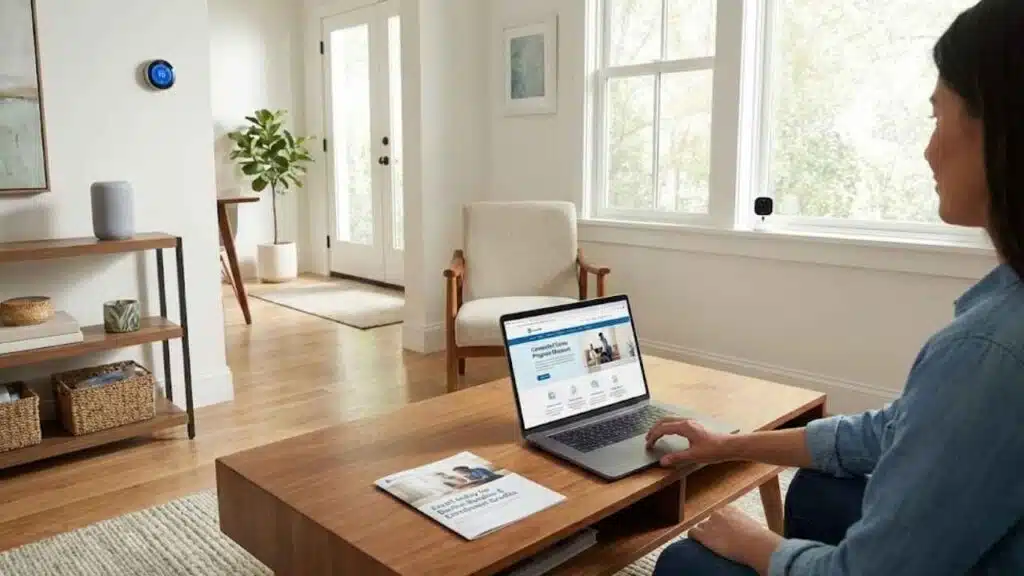
Some insurers offer dedicated smart home programs. These may include free or discounted devices in exchange for enrollment. Participation may require data sharing. Homeowners should understand what information is collected and how it’s used. Program availability often varies by state. Not all policyholders qualify, even with identical homes. Leaving a program may affect your discount, so review the terms carefully before enrolling.
Connected Home Program Features
| Element | Consideration |
| Device bundle | Lower upfront cost |
| Enrollment credit | Immediate savings |
| Data use | Privacy implications |
Discount 8: Smart Locks and Entry Security Discount
Strong door and window security reduces burglary risk. Deadbolts are commonly recognized as protective devices. Smart locks add convenience and tracking features. Some insurers treat them the same as traditional deadbolts. Reinforced doors and strike plates may also qualify under theft prevention credits. Always confirm classification, as not all insurers list smart locks separately.
Entry Security Options
| Upgrade | Insurance Impact |
| Deadbolts | Standard credit |
| Smart locks | May qualify |
| Door reinforcement | Added protection |
Discount 9: Newer Home and System Update Credits
Newer homes often qualify for lower premiums due to updated materials and systems. Smart security devices can enhance these discounts by demonstrating proactive risk management. If you renovate, notify your insurer. Updated plumbing or wiring combined with smart detection can lead to reevaluation. Periodic policy reviews ensure you receive all available credits.
Update-Based Opportunities
| Update | Smart Enhancement |
| Plumbing | Leak detection |
| Electrical | Smoke upgrades |
| Renovation | Full discount review |
State-by-State: How to Confirm Eligibility
Insurance discounts are approved at the state level. This means availability and requirements can vary widely. Instead of guessing, use a consistent process. Review your policy, contact your insurer, and confirm eligibility. Keep records of conversations and written confirmations. This helps resolve disputes later. Revisit discounts annually, especially after upgrades.
State-Level Discount Checklist
| Step | Action |
| Review policy | Identify current credits |
| Contact insurer | Ask state-specific questions |
| Submit proof | Secure discounts |
| Recheck annually | Maintain savings |
Final Takeaway
A home insurance security system discount rewards homeowners who invest in safety and prevention. While savings vary, combining smart security with proper documentation can significantly reduce premiums.
The key is strategy. Confirm eligibility first, prioritize high-impact devices, and review your policy regularly. With the right approach, smart security protects both your home and your wallet.
Smart security is no longer just about convenience. When used correctly, it becomes a powerful financial tool. A well-planned home insurance security system discount strategy can deliver long-term savings, stronger protection, and peace of mind.
FAQs
Does a security system lower home insurance?
Often, yes. Many insurers provide discounts for security or safety devices, and consumer regulators recommend asking about discounts for devices like burglar alarms.
Do I need professional monitoring to qualify?
Sometimes. Some insurers give higher credits for central monitoring, and monitoring is commonly mentioned as a factor in discount eligibility.
Do smart cameras qualify for discounts?
Cameras may help with deterrence, but many discount lists focus on alarms, smoke/fire devices, and protective devices like deadbolts. Ask your insurer how they classify cameras.
Are water leak detectors worth it even if my insurer doesn’t discount them?
They can be, because water damage and freezing is a major category of homeowners losses and can be expensive per claim.
Why do discounts vary by state?
Insurance products are regulated at the state level, and insurers frequently note that credits and availability can differ by state.