

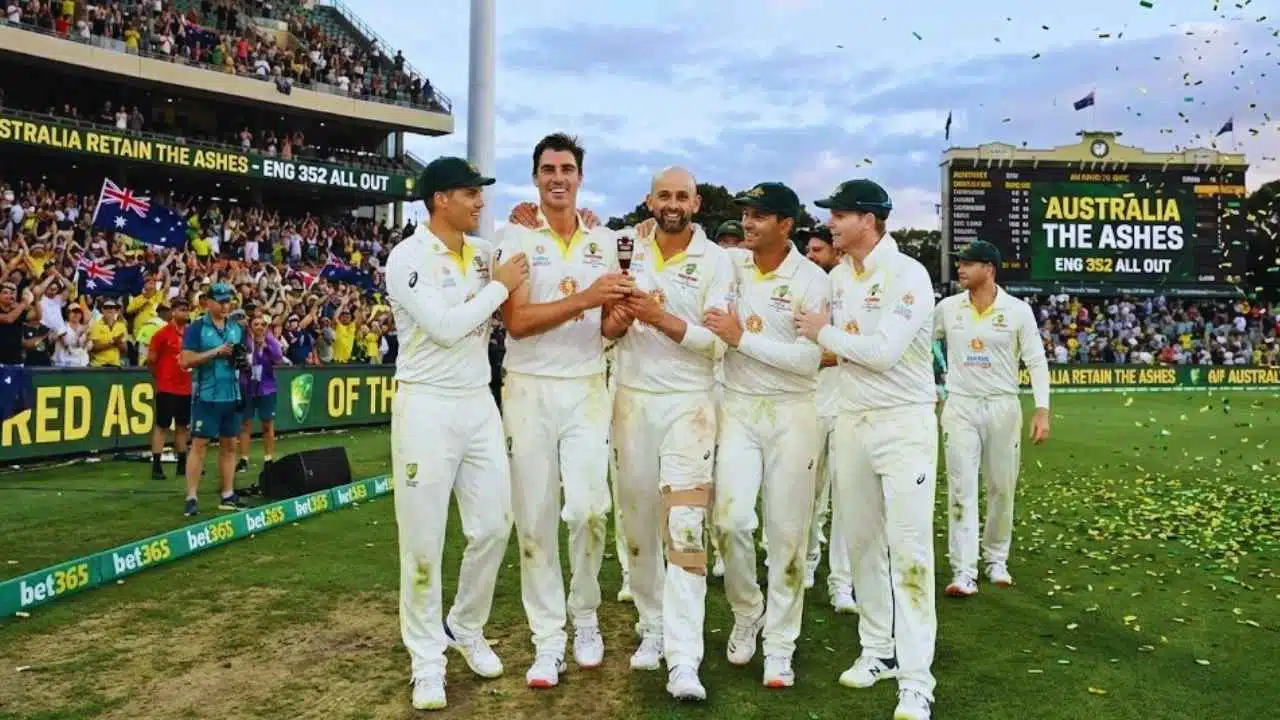
Australia retain Ashes after beating England by 82 runs at Adelaide Oval on December 21, 2025, moving 3-0 up and making the five-Test series impossible for the tourists to recover.
Australia Shut the Door on England’s Comeback Bid
Australia have retained the Ashes with two Tests to spare after defending a daunting fourth-innings lead in the third Test at Adelaide Oval. England, set a world-record 435 to win, were bowled out for 352 on day five, falling short despite a late surge that briefly raised home nerves.
The result gives Australia an unassailable 3-0 series advantage, extending England’s long struggles on Australian soil. With Melbourne (Boxing Day) and Sydney still to come, the series is decided—but both teams now face selection and strategy questions, especially with fresh injury concerns.
Match Snapshot: What Happened in Adelaide
Australia’s control came from a familiar formula: a big second-innings score, relentless pace bowling, sharp slip catching, and decisive wicketkeeping.
England fought harder than in the first two Tests, but the chase demanded sustained scoring against an attack that tightened as the target came into view. Once Australia took the new ball and forced risky strokes, the last resistance faded.
Key Scorecard Numbers
| Item | Detail |
| Match | Australia vs England, 3rd Test, Adelaide Oval |
| Dates | December 17–21, 2025 |
| Result | Australia won by 82 runs |
| Target | England needed 435 (world-record chase attempt) |
| England chase | 352 all out |
| Australia 1st innings | 371 |
| England 1st innings | 286 |
| Australia 2nd innings | 349 |
| Series | Australia lead 3-0 (Ashes retained) |
Carey and Head Build the Winning Platform
Australia’s advantage was built on runs that repeatedly forced England into high-risk situations.
Carey’s Ashes Test to Remember
Alex Carey was named Player of the Match after an outstanding all-round wicketkeeper-batter performance, scoring 106 in the first innings and 72 in the second. In a match defined by pressure moments, Carey’s contributions did two things:
- prevented England from turning early breakthroughs into dominance
- pushed the fourth-innings target beyond a psychologically “reachable” chase
Carey’s keeping also mattered as England’s chase entered survival mode, with edges carrying and chances arriving quickly when the new ball returned.
Travis Head’s 170: Adelaide’s Defining Innings
Travis Head’s 170 in Australia’s second innings was the day-and-a-half that shaped the match. Head’s ability to score quickly without reckless shot selection forced England’s bowlers into defensive fields and drained their energy before the chase even began.
By the time Australia declared their intent through tempo and total, England’s task had shifted from “unlikely” to “record-breaking.”
England’s Chase: Fight, Then Fracture
England began the chase needing something that has never been done in Test cricket. Still, they showed more discipline than earlier in the tour, mixing controlled phases with bursts of counterattack.
Smith and Jacks Give England Hope
The strongest late resistance came from Jamie Smith (60) and Will Jacks (47), who pushed Australia into defensive thinking for a stretch. Their partnership trimmed the deficit and briefly changed the tone inside Adelaide Oval.
But chasing 435 leaves almost no margin for one loose over, one mistimed pull, or one edge that carries. When Australia took wickets in clusters, England’s required rate and risk level spiked again.
How Australia Finished It
Mitchell Starc was central to the final-day finish, striking at key moments as England tried to keep the chase alive. Australia’s catching in the cordon also stood out, turning half-chances into wickets and cutting off the “one big partnership” route England needed.
Pat Cummins, returning from a lengthy layoff earlier in the year, contributed strongly across the match and finished with six wickets overall, providing both breakthroughs and control when England tried to reset.
Bowling and Fielding: The Deciding Difference
In a chase of 435, England needed not just one or two standout performances, but a chain of them across five sessions. Australia broke that chain repeatedly.
Australia’s Key Bowling Returns (Selected)
| Australia bowler | Highlight contribution (match context) |
| Mitchell Starc | Late-day-five wickets to break partnerships and expose the tail |
| Pat Cummins | Major impact across innings; six wickets overall on return |
| Nathan Lyon | Important wickets during the match; later left the field with hamstring trouble |
| Scott Boland | Supported the finishing push as England’s lower order was forced to attack |
Australia’s fielding supported the bowlers: slips were alert, boundaries were cut off, and England were repeatedly made to earn singles.
Injury Clouds After the Win: Lyon and Cummins in Focus
Even in celebration, Australia’s camp had immediate concerns.
Nathan Lyon suffered a hamstring injury during the closing stages and was later seen moving gingerly, raising doubt over his availability for the Boxing Day Test at the MCG. Cummins also indicated he will weigh workload management after returning from a back issue earlier in the year—especially now that the Ashes are already secured.
Australia have experienced spin options available, and the next Test could force a reshuffle that tests squad depth despite the series lead.
What England Said—and What England Must Fix
England’s leaders acknowledged Australia have been better across the series. The tourists arrived with confidence and bold talk, but three Tests in, the pattern has been consistent:
- England have not scored enough in the key innings that set up matches
- their bowling has created pressure spells but not sustained control
- missed chances and momentum swings have tended to go Australia’s way
There has also been renewed scrutiny of England’s tour preparation and tactical balance—especially when their aggressive reputation gives way to more cautious batting, yet still fails to produce match-winning totals.
Series Context: Australia Clinch Another Home Ashes
With this win, Australia have now secured the Ashes again on home soil and ensured England’s long wait for an away Ashes series victory in Australia continues.
Remaining Fixtures
| Test | Venue | Dates |
| 4th Test | Melbourne Cricket Ground (MCG) | December 26–30, 2025 |
| 5th Test | Sydney Cricket Ground (SCG) | January 4–8, 2026 |
Australia may rotate due to injuries and workload, while England will push for pride, points, and proof that the series scoreline overstates the gap.
Final Thoughts
Australia retained the Ashes because they won the biggest moments: Carey’s runs when the game was tight, Head’s dominant acceleration when England needed containment, and the final-day wickets that shut down England’s chase before it could become historic.
For England, Adelaide was a better performance—yet it underlined how difficult it is to win in Australia without near-perfect execution across batting, bowling, and catching. With Melbourne and Sydney left, the mission shifts from saving the Ashes to salvaging belief and building a clearer blueprint for future tours.






















