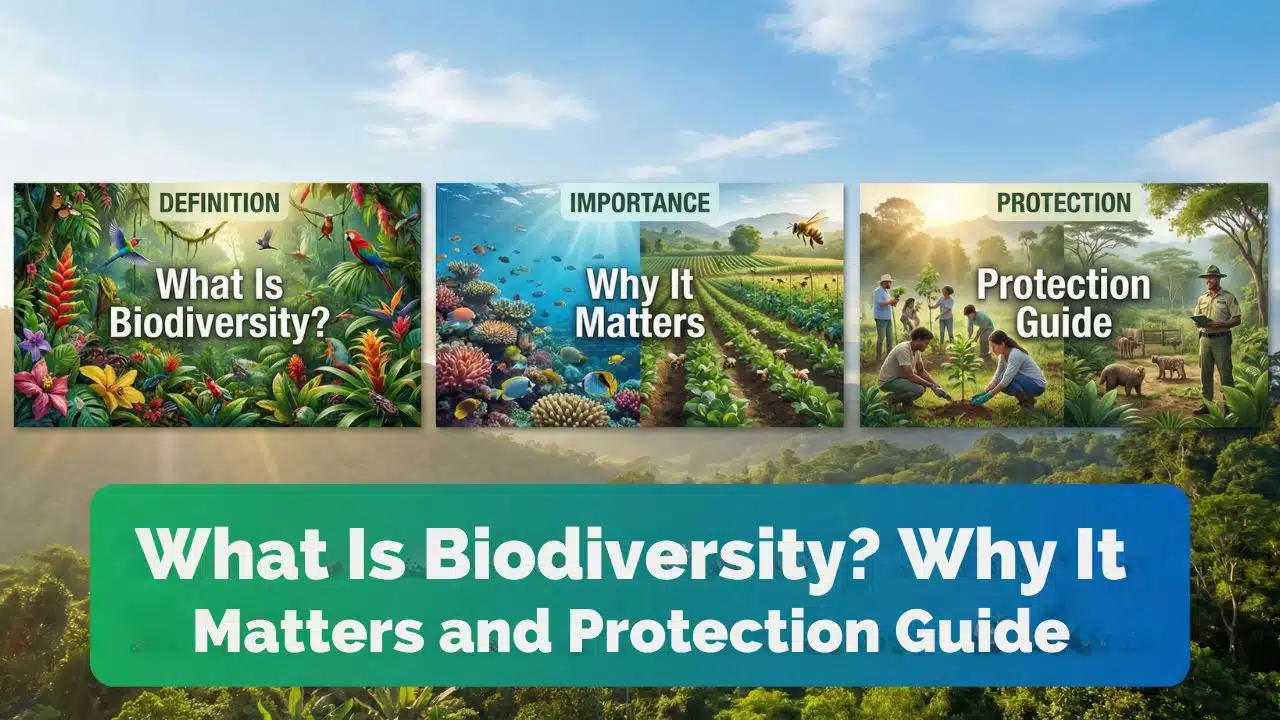
Life on Earth is rich, complex, and deeply connected. Forests, oceans, grasslands, rivers, and even city parks are filled with plants, animals, fungi, and tiny organisms that quietly keep our world running. The scientific word for this variety of life is biodiversity. Understanding What Is Biodiversity? Why It Matters & How to Protect It is not just an academic exercise. It is directly linked to our food, water, health, climate, and long-term survival.
Biodiversity shapes the stability of ecosystems, supports economies, and influences culture and identity. When species disappear and habitats break down, the systems that support human life become weaker and more fragile. In this in-depth guide, we will explore what biodiversity really is, why it is so important, what threatens it, and most importantly, what can be done to protect it.
What Is Biodiversity
When people search for What Is Biodiversity? Why It Matters & How to Protect It, they are usually trying to connect a simple everyday idea, the variety of life, with a complex reality, the global network of living things and their environments.
Biodiversity includes:
-
All living species, from bacteria and insects to trees, fish, birds, and mammals
-
The genetic differences within each species
-
The ecosystems and habitats where those species live
It is not only about rare or exotic animals. It is about the bees in your garden, the trees on your street, the microbes in soil, and the fish in distant oceans. Together, these life forms form a web of interactions that keeps the planet stable and habitable.
Pro Tip: Whenever you hear the word biodiversity, think of it as the “infrastructure of life” that supports everything humans depend on, even if we do not see it daily.
What Counts as Biodiversity
When most people hear “biodiversity,” they picture elephants, tigers, whales, or colorful birds. Those species matter, but biodiversity is much bigger than wildlife documentaries. It includes all living things, the differences within them, and the systems they form together.
Biodiversity includes:
-
Plants (trees, grasses, mosses, algae)
-
Animals (insects, fish, birds, mammals, reptiles, amphibians)
-
Fungi (mushrooms, molds, yeast—many are essential decomposers)
-
Microorganisms (bacteria, archaea, plankton—tiny but powerful)
It also includes variety at different “layers” of life:
-
Genetic diversity: differences within a species (important for adaptation)
-
Species diversity: how many species live in a place
-
Ecosystem diversity: different habitats (forests, wetlands, coral reefs, grasslands)
Everyday examples people often overlook
Biodiversity isn’t only “out there” in remote jungles. It also includes:
-
Bees and butterflies pollinating local gardens
-
Soil microbes helping plants absorb nutrients
-
Urban trees supporting birds, insects, and cooler temperatures
-
Sea plankton forming the foundation of marine food chains
Bottom line: biodiversity is the living support system that keeps nature functional—from the smallest microbes to the largest mammals.
The Three Levels of Biodiversity
Scientists usually talk about biodiversity at three main levels. Understanding these levels helps explain why small changes can have big consequences.
Genetic Diversity
Genetic diversity refers to differences in the genes within a single species. No two individuals are exactly the same. This diversity allows species to adapt to new diseases, climate changes, and environmental pressures.
For example:
-
Crop varieties with diverse genetics can withstand different pests or droughts
-
Wild animal populations with high genetic diversity are better able to survive new threats
Low genetic diversity makes species more vulnerable to extinction.
Species Diversity
Species diversity refers to how many different kinds of living organisms exist in an area. A rainforest, for example, usually has far more species than a single crop farm.
High species diversity:
-
Supports more complex food webs
-
Makes ecosystems more stable
-
Helps buffer against shocks, such as storms or pests
When species disappear, the entire system becomes less resilient.
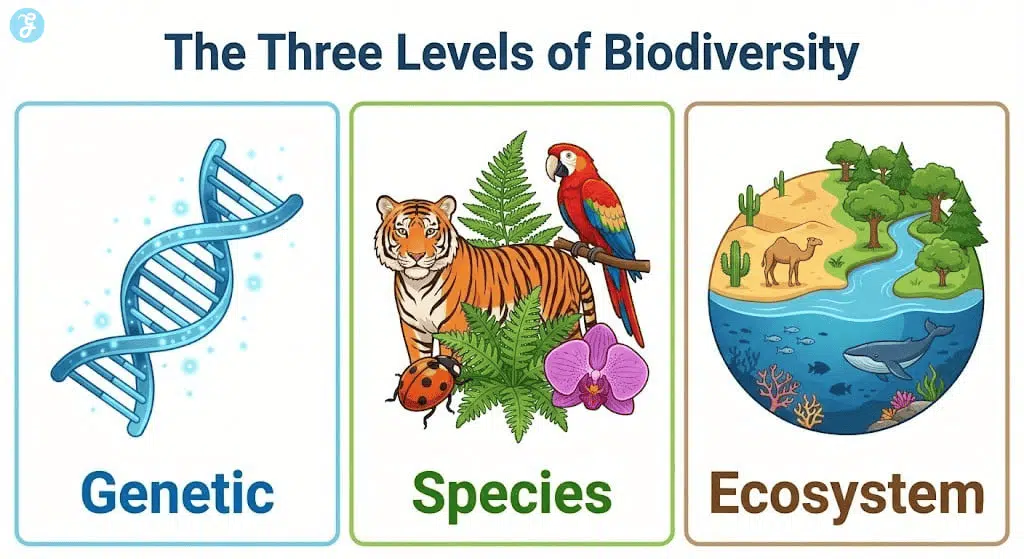
Ecosystem Diversity
Ecosystem diversity refers to the variety of habitats and ecological systems. Examples include:
-
Forests
-
Wetlands
-
Coral reefs
-
Grasslands
-
Deserts
-
Rivers and lakes
Each ecosystem has unique conditions and species. Losing one type of ecosystem can mean losing many species at once.
| Level | What It Describes | Why It Matters |
|---|---|---|
| Genetic diversity | Differences within a single species | Helps species adapt and survive new challenges |
| Species diversity | Number and variety of species in an area | Supports stable, resilient ecosystems |
| Ecosystem diversity | Variety of habitats and ecosystems | Provides different services and supports more lives |
Why Biodiversity Matters for People and Planet
Biodiversity is not just nice to have. It is essential. It supports the basic systems that humans rely on every day, often without realizing it.
Ecosystem Services: Nature’s Hidden Work
Healthy ecosystems provide what scientists call ecosystem services. These are benefits that nature delivers to humans at no direct cost.
Key ecosystem services include:
-
Clean air and water
-
Pollination of crops by bees, butterflies, and other insects
-
Natural pest control by predators and parasites
-
Soil formation and nutrient cycling
-
Flood control by wetlands and forests
-
Carbon storage in forests, oceans, and soils
When biodiversity declines, these services become weaker and more expensive or impossible to replace with technology.
Food and Agriculture
Modern agriculture relies on biodiversity in multiple ways:
-
Crop diversity helps farmers manage risk from pests and climate
-
Wild plants provide genes for disease resistance or drought tolerance
-
Pollinators support many fruits, vegetables, and nuts
If pollinators disappear or genetic diversity shrinks, food systems become more fragile and less able to adapt.
Health and Medicine
Many medicines originate from natural compounds found in plants, fungi, and marine organisms. Preserving biodiversity and health keeps open the possibility of discovering new treatments.
Examples include:
-
Painkillers derived from plants
-
Cancer drugs developed from marine organisms
-
Antibiotics were discovered in soil bacteria
Losing species before they are studied means losing potential medical breakthroughs.
Economy and Livelihoods
Biodiversity supports jobs and income across multiple sectors:
-
Fisheries
-
Forestry
-
Agriculture
-
Tourism and ecotourism
-
Natural products and cosmetics
Communities that depend on nature, such as coastal fishers or forest communities, are especially vulnerable to biodiversity loss.
Culture, Identity, and Wellbeing
Many cultures are deeply linked to local landscapes, species, and seasons. Sacred forests, rivers, mountains, and particular plants or animals often have religious or cultural importance.
Being in nature also supports mental health, reducing stress and improving well-being. Losing biodiversity is not just an environmental problem. It is a cultural and emotional loss as well.
Pro Tip: When thinking about biodiversity, always link it to a specific human benefit. It helps turn a vague concept into a clear, concrete reason to care.
The Web of Life: How Species Depend on Each Other
Nature isn’t a set of separate species living side by side. It’s a network of relationships—a “web of life”—where one change can ripple outward.
Common ways species depend on each other
Here are some of the most important connections:
-
Food relationships: predators, prey, herbivores, and plants
-
Pollination: insects, birds, and bats help plants reproduce
-
Seed dispersal: Animals spread seeds through droppings or by carrying fruit
-
Decomposition: fungi and bacteria break down dead matter and recycle nutrients
-
Habitat-building: some species create shelter for many others
Quick examples of the web in action
-
If pollinators decline, fewer plants reproduce → Less food for insects and animals → weaker ecosystems.
-
If top predators disappear, prey species may explode in number → overgrazing or habitat damage → biodiversity drops.
-
If decomposers are harmed, nutrients recycle slowly → soil health declines → plant growth weakens.
Keystone species: small changes, big impact
Some species matter far more than their population size suggests. These are keystone species. When they decline, the ecosystem can shift dramatically.
Examples include:
-
Beavers creating wetlands that support many species
-
Sea otters controlling sea urchins that can destroy kelp forests
-
Large predators balancing herbivore populations
Pro Tip: A healthy ecosystem is not just “many species.” It’s many strong relationships between species.
Main Threats to Biodiversity Today
Biodiversity is declining worldwide. The main causes are human-driven and often interconnected. Understanding them is the first step in planning effective solutions.
Habitat Loss and Fragmentation
When forests are cleared, wetlands are drained, rivers are dammed, or coastlines are developed, species lose their homes. Habitat loss is the single largest cause of biodiversity decline.
Fragmentation, where habitats are broken into smaller, isolated patches, makes it harder for species to move, find mates, or access food.
Pollution
Pollution comes in many forms:
-
Plastic waste in oceans
-
Chemicals and pesticides in soil and water
-
Air pollution from factories and vehicles
-
Noise and light pollution are affecting wildlife behavior
These pollutants can kill species directly or disrupt their ability to feed, breed, or migrate.
Climate Change
Climate change shifts temperature and rainfall patterns, raises sea levels, and increases extreme weather. Species are forced to move, adapt, or disappear.
Some examples:
-
Coral reefs are bleaching in warming oceans
-
Species moving to higher altitudes or latitudes
-
Mismatched timing between flowers blooming and pollinators emerging
Climate change and biodiversity loss reinforce each other. Damaged ecosystems store less carbon, which then worsens climate change.
Overexploitation
Overfishing, illegal hunting, logging, and overharvesting of plants remove species faster than they can reproduce.
Examples include:
-
Fisheries collapse due to unsustainable catch levels
-
Forests degraded by excessive logging
-
Wildlife populations are shrinking due to hunting or trade
Invasive Species
Species moved by humans to new regions can become invasive. Without natural predators, they may spread rapidly and outcompete or prey on native species, disrupting entire ecosystems.
| Threat | How It Works | Example |
|---|---|---|
| Habitat loss | Destroys or shrinks living space | Deforestation, urban expansion |
| Pollution | Poisons or disrupts ecosystems | Plastic in oceans, pesticide runoff |
| Climate change | Alters climate and habitats | Coral bleaching, shifting species ranges |
| Overexploitation | Harvests species faster than they recover | Overfishing, illegal wildlife trade |
| Invasive species | Non-native species outcompete natives | Invasive plants, introduced predators |
Conservation, Protected Areas, and Policy
Protecting biodiversity requires deliberate action. “Conservation” is the umbrella term for efforts to safeguard species, habitats, and ecosystems.
Protected Areas and Parks
Protected areas include:
-
Wildlife reserves
-
Marine protected areas
-
Community conserved areas
When well managed, they give species space to survive and ecosystems space to function.
However, protection on paper is not enough. These areas need funding, enforcement, and community involvement to be effective.
Conservation in Working Landscapes
Not all biodiversity can live inside protected areas. Many species live in farmland, cities, and managed forests.
Conservation in these working landscapes can include:
-
Wildlife-friendly farming
-
Maintaining hedgerows and small forest patches
-
Urban green spaces and corridors
-
Sustainable forestry and fisheries
Pro Tip: A landscape approach that combines protected areas with sustainable use in surrounding lands is often more effective than isolated parks.
Laws, Policies, and International Agreements
Governments play a major role in protecting biodiversity through:
-
Environmental laws and regulations
-
Protected area networks
-
Species protection lists
-
Land use planning
At the global level, agreements such as biodiversity conventions set goals for conservation, restoration, and sustainable use. Success depends on political will and real implementation.
| Tool or Action | Main Purpose | Example |
|---|---|---|
| Protected areas | Safeguard key habitats and species | National parks, marine reserves |
| Sustainable use | Balance resource use with conservation | Certified forestry, ecotourism |
| Restoration projects | Repair damaged ecosystems | Reforestation, wetland restoration |
| Laws and policies | Create rules and standards | Endangered species laws, land use rules |
| Community conservation | Empower local stewardship | Indigenous-managed forests and lands |
How to Protect Biodiversity in Daily Life
Protecting biodiversity is not only the job of scientists or governments. Individual and community choices also matter, especially when they add up over time.
Rethink Consumption
Every product we buy uses land, water, and energy. By choosing carefully, we can reduce pressure on ecosystems.
Practical steps:
-
Buy fewer but higher-quality products that last longer
-
Choose products with eco labels where they are credible
-
Limit single use plastics and packaging
-
Reduce food waste by planning meals and storing food properly
Support Sustainable Food Systems
Food production is a major driver of habitat loss and emissions. Small shifts can make a difference.
Ideas include:
-
Eating more plant-based meals
-
Choosing sustainably certified seafood
-
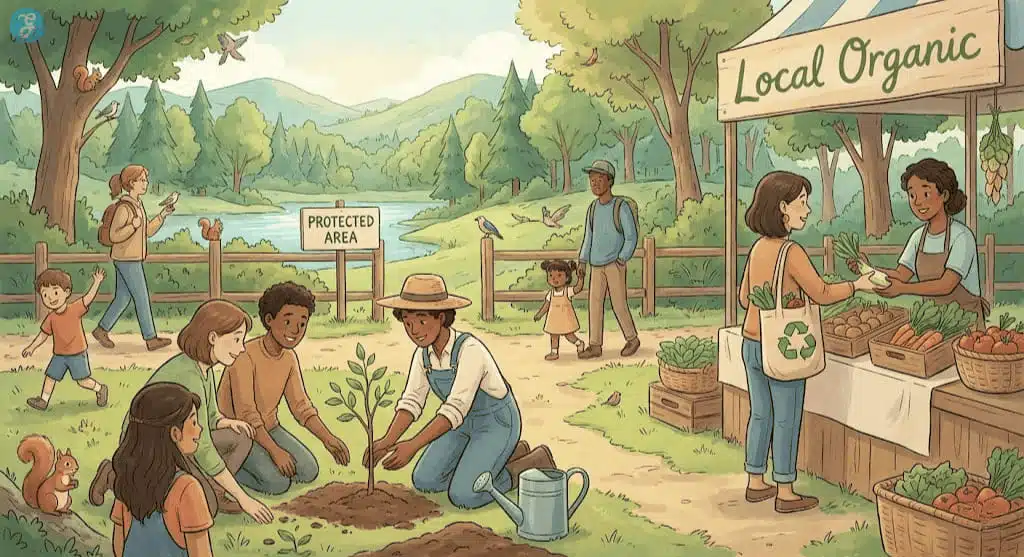
Supporting organic or local producers where possible
-
Avoiding products linked to deforestation
Protect and Restore Nature Locally
You do not have to travel far to help biodiversity.
You can:
-
Plant native trees and plants in gardens or community spaces
-
Create small habitats like ponds or pollinator-friendly flower beds
-
Join local clean-up campaigns around rivers, beaches, or parks
-
Support groups that protect local forests, wetlands, or coastlines
Pro Tip: Native plants are often the best choice. They support local insects and birds far better than decorative exotic plants.
Use Your Voice and Influence
Individual actions become more powerful when they influence systems.
You can:
-
Support companies with clear, transparent environmental practices
-
Ask brands questions about their sourcing and impact
-
Vote for leaders who prioritize environmental policies
-
Engage in community discussions about land use and development
Over time, these signals shape markets and laws.
Biodiversity and Climate Change: A Two-Way Relationship
Biodiversity and climate change are deeply linked in both directions:
-
Climate change harms biodiversity
-
Biodiversity loss worsens climate change
How climate change harms biodiversity
As temperatures rise and rainfall patterns shift, species face problems like:
-
Habitat changes (forests drying out, wetlands shrinking)
-
Heat stress (especially for corals and cold-adapted species)
-
Season timing mismatches (flowers bloom earlier; pollinators may not be ready)
-
Range shifts (species move higher up mountains or toward the poles)
-
More extreme events (fires, floods, heatwaves destroying habitats)
Example: warmer oceans can trigger coral bleaching, reducing reef biodiversity and harming fisheries.
How biodiversity protects the climate
Healthy ecosystems help stabilize climate by:
-
Storing carbon in forests, peatlands, mangroves, seagrass meadows, and soils
-
Regulating local temperatures (trees provide shade and cooling through evaporation)
-
Reducing disaster impacts (mangroves buffer storm surges; wetlands absorb floods)
| If this happens… | Then this gets worse… | And it leads to… |
|---|---|---|
| Ecosystems degrade | Less carbon is stored | More greenhouse gases in the atmosphere |
| Climate extremes increase | More habitat loss and die-offs | Faster biodiversity decline |
| Species diversity drops | Ecosystems become fragile | Lower resilience to droughts/fires/storms |
Final Words
Biodiversity is the living fabric of our planet. It underpins our food, water, health, economy, culture, and climate stability. When we ask, what is biodiversity? Why It Matters & How to Protect It, we are really asking how to keep Earth safe and livable for ourselves and future generations.
The good news is that solutions exist. Protecting habitats, using resources more carefully, restoring damaged ecosystems, and supporting fair and sustainable economies can slow and even reverse some losses. At the same time, everyday choices, from what we buy to how we vote, help shape the systems that either protect or destroy nature.
The challenge is urgent but not hopeless. Every forest protected, every wetland restored, every species saved, and every person who decides to care brings us closer to a future where people and nature can thrive together.
Frequently Asked Questions About Biodiversity
Here are the most frequently asked questions about biodiversity:
What exactly is biodiversity in simple terms?
Biodiversity is the variety of life. It includes different species, the genes within those species, and the ecosystems where they live. It is the living network that supports life on Earth.
Why is biodiversity important for humans?
Biodiversity provides food, clean water, medicine, climate regulation, and protection from disasters like floods. It also supports jobs, cultural identity, and mental well-being.
What is the biggest threat to biodiversity?
Habitat loss is the biggest driver, often caused by agriculture, urban growth, and infrastructure. Climate change, pollution, overexploitation, and invasive species add more pressure.
Can biodiversity loss be reversed?
In some cases, yes. Ecosystems can recover when pressures are reduced and restoration is done carefully. Forests can regrow, wetlands can be restored, and species can be reintroduced. However, extinctions are permanent, so prevention is always better.
What is the relationship between conservation and biodiversity?
Biodiversity is what we aim to protect. Conservation is the set of actions, policies, and practices used to protect and restore it. Without conservation, biodiversity will continue to decline.
How can an ordinary person help protect biodiversity?
You can reduce waste, buy more sustainable products, support local nature projects, plant native species, vote for strong environmental policies, and educate others. Small actions matter, especially when many people do them.