

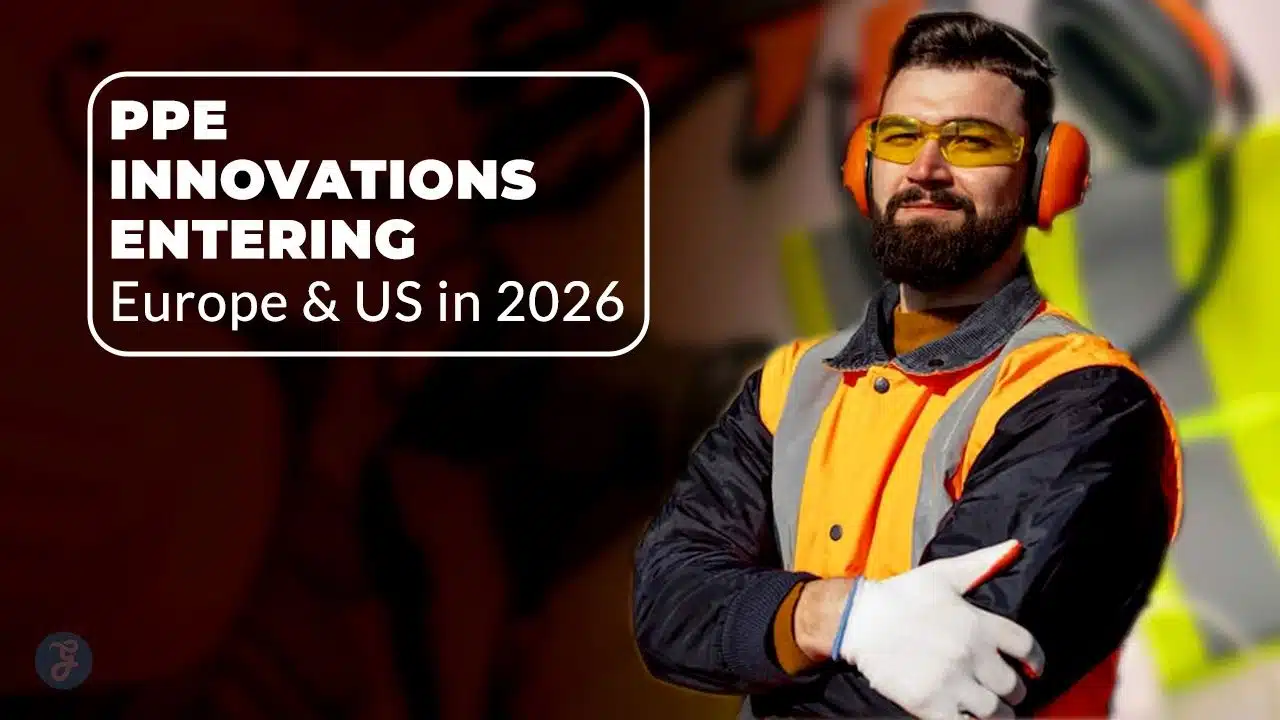
The next wave of PPE innovations 2026 is arriving at a moment when employers in Europe and the US face two parallel pressures: tighter regulation and a workforce exposed to more complex risks. From heat stress and musculoskeletal injuries to chemical hazards and airborne pathogens, the limits of traditional safety gear are clear.
At the same time, connected devices, advanced materials, and sustainability demands are reshaping what “protection” looks like. PPE is shifting from static equipment to intelligent, data-rich systems that prevent incidents, not just respond to them.
This editorial looks at 20 PPE innovations 2026 that are set to move from pilots and niche use into mainstream deployment across Europe and the US. The emphasis is on how smart PPE in Europe and US markets will integrate sensors, software, and new materials to deliver next-generation PPE that is connected, cleaner, and more ergonomic.
Smart PPE in Europe and US: Connected Protection Becomes the Norm
1. IoT-connected smart helmets and hard hats
Smart helmets are no longer science fiction in heavy industry. They combine traditional head protection with impact sensors, GPS or ultra-wideband positioning, cameras and two-way communication. Recent smart PPE guides describe devices that connect via Wi-Fi, Bluetooth or cellular networks to cloud platforms, sending real-time data on worker location, shock events and environmental conditions.
By 2026, these helmets are expected to appear more often on construction and energy projects in Europe and the US. For safety managers, the value lies in faster incident response, automated reporting and the ability to reconstruct near-misses. For regulators, connected helmets fit with a wider move towards verifiable evidence of risk management rather than paper-based checklists.

2. Smart protective eyewear with AR overlays
Protective eyewear is also going digital. Smart glasses and visor-style goggles overlay instructions, hazard warnings and line-of-sight arrows onto the worker’s field of view. Current smart PPE concepts show AR-enabled eyewear delivering live blueprints, step-by-step procedures and lock-out/tag-out prompts.
By 2026, AR eyewear is likely to feature most prominently in high-value sectors like aerospace, advanced manufacturing and field maintenance. For companies, the attraction is clear: fewer manual errors, faster training and less reliance on printed documentation that can be outdated or ignored. As prices fall, the same technology will filter into more mainstream PPE catalogues.
3. Smart vests that track biometrics and location
Smart vests sit at the heart of smart PPE in Europe and US roll-outs. Current safety technology reports already identify wearables that track heart rate, heat stress, fatigue and exertion while also providing fall detection and lone-worker alarms.
In 2026, smart vests are expected to evolve from experimental add-ons to standard options in high-risk industries. For example:
-
Construction firms can monitor workers for signs of heat exhaustion on hot days.
-
Logistics operators can spot patterns of over-exertion before they translate into injuries.
-
Emergency responders can be tracked and supported in real time during complex incidents.
The trend contributes directly to PPE innovations 2026, where protection includes continuous health insight rather than just physical barriers.
4. Gas-detection wearables and connected safety badges
Direct-reading instruments for gas and vapour monitoring have long been a requirement in some OSHA standards. New devices miniaturise this capability into wearable gas detectors and smart badges that continuously sample the air around the worker.
These wearables connect to cloud platforms and can trigger alerts when they detect combustible gases, oxygen depletion or toxic substances. In Europe and the US, chemical plants, wastewater facilities and confined-space operations are likely to expand their use of such devices in 2026, especially where regulators expect evidence of real-time exposure monitoring.
5. Smart hearing protection with analytics and communication
Noise-induced hearing loss remains one of the most persistent occupational diseases. Smart earmuffs and earplugs add microphones, speakers and sound-level logging to traditional protection. Industrial suppliers already offer electronic hearing protectors that adjust attenuation automatically, support two-way radio or Bluetooth calls and log dose data for hearing-conservation programmes.
As next generation PPE, these devices give safety teams objective data on who is actually wearing hearing protection, for how long and in what environments. In 2026, the integration of hearing PPE into broader connected safety suites will make it easier to demonstrate compliance with exposure limits and to tailor controls to real-world conditions.
6. Connected safety platforms that unify smart PPE data
Behind many of these frontline devices sits a connected safety platform. Major PPE manufacturers already promote IoT-enabled ecosystems that link smart PPE, inspection records and incident logs. These platforms analyse data to improve compliance, identify emerging risks and automate reminders for maintenance or replacement.
By 2026, more European and US employers are expected to treat these platforms as core infrastructure. Connected safety software will help unify everything from gas detector readings and respirator fit-tests to exoskeleton usage logs. That integration is likely to influence purchasing decisions, with PPE chosen not only for its physical performance but also for its data compatibility.
Respiratory PPE Innovations 2026: From Nanofibers to Smart Fit
7. Nanofiber-based high-efficiency respirators
Researchers and manufacturers are redesigning respirators using nanofiber membranes that can trap virus-sized particles while maintaining breathability. Recent studies show that nanofiber filters can provide high virus-scale filtration at lower pressure drops than traditional melt-blown media.
These nanofiber respirators are a central pillar of PPE innovations 2026. They promise lighter, more comfortable masks with improved durability and potentially reusable designs when combined with robust decontamination protocols. Europe and the US, where standards for respiratory protection are stringent, are natural lead markets for these advanced products.
8. Reusable elastomeric respirators tailored for healthcare
Elastomeric half-mask and full-facepiece respirators are reusable devices with replaceable filters, long used in industrial settings. Safety bodies now emphasise their potential role in healthcare, highlighting designs that support repeated cleaning and disinfection.
By 2026, healthcare-specific elastomeric respirators are likely to be more common in hospitals and clinics across the US and Europe. Key design advances include:
-
Smooth, easy-to-clean surfaces.
-
Valved and non-valved options to balance source control and wearer comfort.
-
Clear communication windows to reduce barriers between clinicians and patients.
This shift supports sustainability goals by reducing reliance on single-use filtering facepiece respirators while maintaining high protection levels.
9. Compact powered air-purifying respirators for broader sectors
Powered air-purifying respirators (PAPRs) provide filtered air through a blower and hood or facepiece, offering comfort and high protection. Guidance for healthcare and other sectors now highlights PAPRs as a viable option where extended wear is necessary or where airborne hazards are severe.
In 2026, expect more compact, lightweight PAPRs targeted at logistics hubs, construction projects and manufacturing lines, not just hospitals. Design work focuses on:
-
Lower weight and better balance.
-
Quieter motors.
-
Longer battery life and simple user interfaces.
Combined with smart PPE in Europe and US, PAPRs may also include usage tracking and airflow diagnostics.
10. Self-sanitizing respirator surfaces and filter media
Antimicrobial coatings and self-decontaminating materials are moving from laboratory research into commercial PPE components. Reviews of antimicrobial nanomaterials show coatings that can inactivate bacteria and some viruses on textile surfaces, while other work demonstrates bio-derived coatings that enhance the antimicrobial properties of mask fabrics.
By 2026, respirator manufacturers are likely to integrate such technologies into facepiece shells, straps or outer layers. The goal is not to replace cleaning protocols but to reduce microbial load between cleaning cycles and to limit contamination risk when users handle or store PPE.
11. Real-time respirator fit-check and usage monitoring
Poor fit undermines even the best respirator. With sensors now common across smart PPE, respirator makers are beginning to explore:
-
Embedded pressure or motion sensors that infer seal integrity.
-
Wear-time logging for each mask.
-
Digital prompts for donning and doffing sequences.
Market analyses of smart PPE already point to embedded sensors and data analytics as core differentiators. By 2026, it is reasonable to expect respirators that work with connected safety platforms to document fit and usage, helping employers demonstrate compliance with European and US standards.
Exoskeletons, Heat and Musculoskeletal Protection
12. Industrial back-support exoskeletons formally recognised as PPE
Exoskeletons have been tested in industrial settings for years. European occupational safety agencies have discussed them as technical devices that can function as PPE by reducing musculoskeletal load, particularly on the back and shoulders.
Recently, a back-support exoskeleton received formal Category II PPE certification under European regulation, confirming that exoskeletons can sit within the same regulatory framework as protective clothing and helmets. This milestone signals that, by 2026, more exoskeleton models will reach the European and US markets as standard items in PPE catalogues rather than experimental extras.
13. Full-body and limb-specific exoskeletons for material handling
Beyond the lower-back devices, exoskeletons now cover shoulders, hips and entire bodies. Academic roadmaps outline how occupational exoskeletons can redistribute forces, support static postures and reduce fatigue during repetitive tasks.
In ports, warehouses and assembly plants across Europe and the US, 2026 will likely see wider trials of:
-
Shoulder-support exoskeletons for overhead work.
-
Lower-limb exoskeletons for frequent lifting.
-
Full-body systems for heavy manual handling.
These devices will count among the most visible PPE innovations 2026, particularly in sectors facing labour shortages and high injury costs.
14. Cooling vests as standard PPE in heat-exposed sectors
Heat stress is emerging as a major occupational risk. Cooling vests using evaporative fabrics or phase-change inserts are already marketed as PPE for outdoor and high-temperature workplaces.
By 2026, several trends will push cooling vests towards standard issue in Europe and US:
-
Rising temperatures and more frequent heatwaves.
-
Stricter guidance on heat-stress management.
-
Integration of cooling garments into PPE bundles for construction, agriculture, and logistics.
Smart versions that pair with biometric sensors will bridge physical comfort and digital monitoring.
15. Heat-stress wearables embedded in smart PPE
Safety technology reports already list wearables that monitor heart rate, core temperature proxies, and heat stress, with predictive analytics to flag risk situations.
In 2026, smart PPE in Europe and the US is expected to integrate these sensors into vests, helmets, and wrist devices as part of a coherent heat-safety strategy. Alerts can be delivered to supervisors and to the worker directly, prompting rest, hydration, or task rotation. This fusion of physiological monitoring with PPE is a clear example of next-generation PPE shifting from passive protection to active risk prediction.
16. Advanced cut-, puncture-, and chemical-resistant gloves
Although gloves may appear conventional, advances in textile coatings and composite fibers are delivering multi-functional protection. Recent research highlights functional coatings that combine flame resistance, antimicrobial properties, and self-cleaning behaviour on protective textiles.
By 2026, glove lines aimed at Europe and the US are likely to feature:
-
Multi-layer constructions that balance dexterity with cut and puncture resistance.
-
Chemical-resistant outer coatings combined with antimicrobial inner layers.
-
Improved grip in oily or wet environments.
These developments sit alongside more visible technologies like exoskeletons, but they address high-frequency injury types and therefore remain central to PPE innovations 2026.
Sustainable and Self-Sanitizing Next Generation PPE
17. Self-decontaminating PPE textiles with antimicrobial finishes
Self-decontaminating PPE aims to reduce the risk of pathogens persisting on protective garments. Studies of N-halamine finishes show fabrics that can kill microbes upon contact while maintaining mechanical performance.
For Europe and the US, where healthcare-associated infections and cross-contamination are major concerns, such fabrics are a natural candidate for gowns, lab coats, and reusable coveralls. By 2026, expect more PPE items to be marketed with validated antimicrobial performance and compatible recharging or reprocessing instructions.
18. Joule-heated reusable PPE for rapid surface disinfection
Researchers at Rice University developed a textile composite that heats its outer surface to virus-inactivating temperatures in seconds when an electric current is applied, while keeping the wearer’s side at safe temperatures. Tests show the material can deactivate coronaviruses on its surface in a matter of seconds.
This concept allows gloves or garments to self-decontaminate between tasks without being removed. As power electronics and conductive textiles mature, by 2026, similar Joule-heated designs could appear in niche PPE lines for high-risk environments, complementing chemical disinfection and sterilisation.
19. Biodegradable masks, gowns, and gloves
The environmental footprint of PPE waste became highly visible in recent years. Scientific reviews discuss biodegradable polymers such as chitosan, alginate, collagen, and other bio-based materials as promising alternatives for masks and packaging.
Editorial discussions in occupational safety publications now highlight biodegradable masks and gloves as a realistic avenue for reducing plastic pollution and easing pressure on waste management systems. By 2026, early commercial products are expected to be more widely available in Europe and the US, particularly in sectors where single-use PPE is unavoidable.
20. Circular PPE models and digital traceability
Sustainability in next-generation PPE is not only about materials. Circular models include:
-
PPE designed for disassembly and recycling.
-
Take-back schemes where manufacturers collect used items.
-
Digital tags and QR codes that track inspection history and eventually end-of-life routing.
Work on PPE plastics and biodegradability points to the need for better design choices and lifecycle thinking. In Europe, Regulation (EU) 2016/425 already sets harmonised rules for bringing PPE to market, and digital traceability aligns well with wider EU initiatives on product passports and supply-chain transparency.
By 2026, European and US buyers are likely to see more PPE catalogues that specify recyclability, carbon footprint, and digital traceability alongside traditional conformity marks.
What PPE innovations 2026 mean for employers
The technologies described above share three characteristics that will define PPE innovations 2026 in Europe and the US:
-
Data-rich protection – Smart PPE in Europe and US markets will generate continuous streams of data that can support predictive safety, not just compliance reporting.
-
Integrated systems – PPE will link seamlessly with connected safety platforms, merging information from respiratory protection, exoskeletons, gas detectors, and biometric wearables.
-
Sustainable design – Next generation PPE will respond to regulatory and societal pressure for lower waste, greener materials, and more circular models of use.
For employers, the challenge will be to integrate these PPE innovations 2026 into coherent strategies. That includes training workers to trust and use smart PPE correctly, handling the data responsibly, and re-thinking procurement to account for lifecycle impacts.
However, the payoff is meaningful: fewer injuries, better resilience to emerging health threats, and a safety culture that is more proactive than reactive. As Europe and the US tighten expectations around occupational health, next-generation PPE will not be optional – it will be the new baseline for responsible operations.
Final Words
PPE innovations 2026 are less about gadgets and more about a shift in how we think about protection at work. Smart, connected gear, cleaner materials, and ergonomically intelligent designs point to a future where PPE prevents harm before it happens, not just softens the impact.
For employers in Europe and the US, the message is clear: treating next generation PPE as a strategic investment rather than a cost line will shape not only compliance, but competitiveness, workforce trust, and long-term resilience.






















