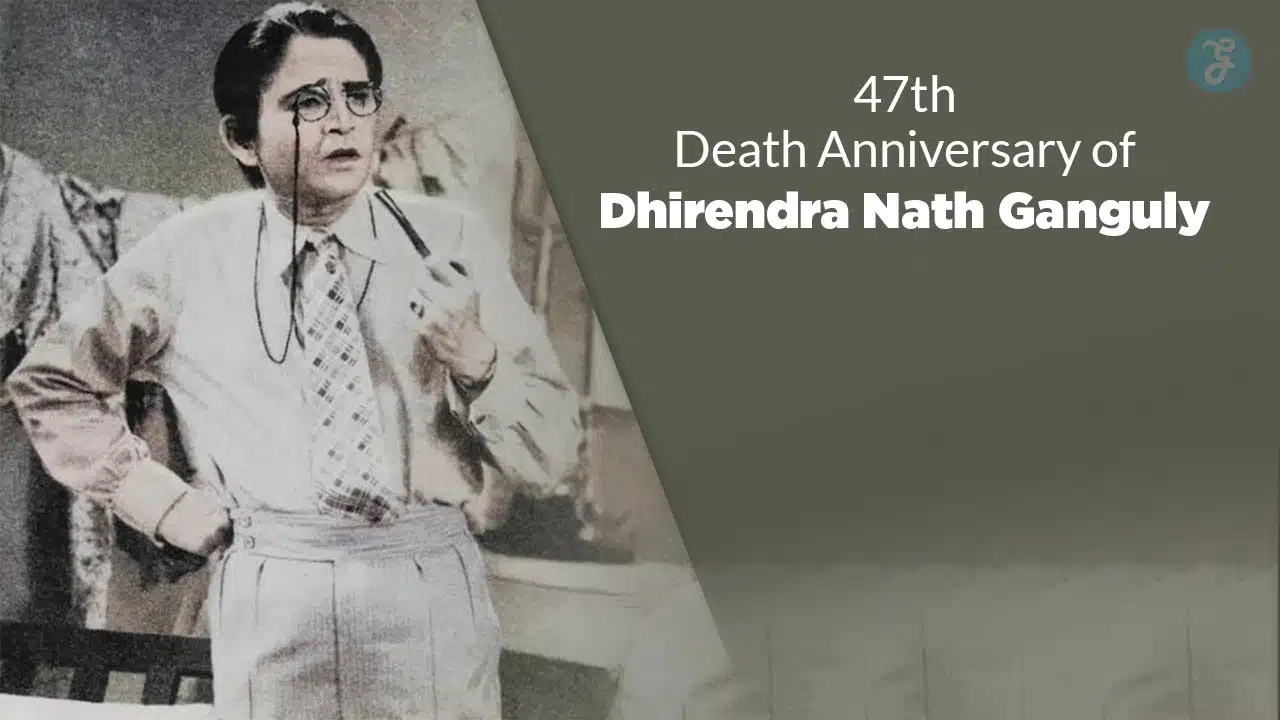
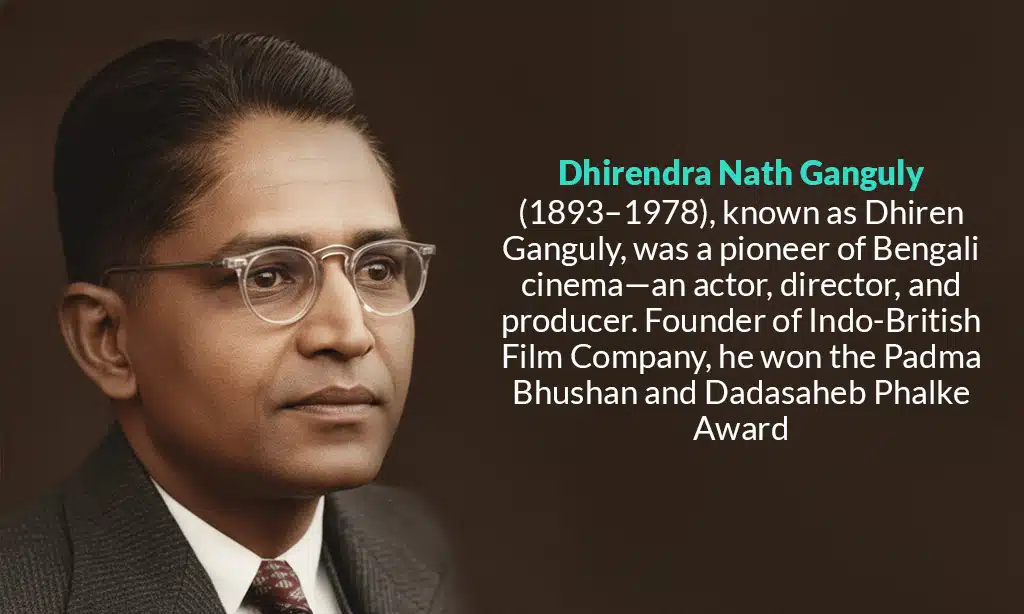
Have you ever wondered who really started Bengali cinema? I mean the person who actually rolled cameras, built studios, and changed everything for Indian film. Today is the 47th death anniversary of Dhirendra Nath Ganguly, a pioneer figure in Bengali movies.
Let me tell you about Dhirendra Nath Ganguly. You might have heard his other name, Dhiren Ganguly. He made movies when most people in India didn’t even know what one was.
His story is wild. He didn’t simply produce one or two films and move on. According to records, Ganguly directed and produced 49 films over three decades, building three major studios from scratch.
That’s more films than most modern directors make in a lifetime. And he did it all before sound even existed in cinema.
Key Takeaways
- Dhirendra Nath Ganguly founded the Indo British Film Company in 1918, the first Bengali-owned production company in India
- He built three major studios: Indo British Film Company, Lotus Film Company, and British Dominion Films between 1918 and 1929
- His first major film, Bilat Ferat (1921), was advertised as the first fully Bengali film with an all-Bengali crew and live band
- Ganguly successfully transitioned from silent to talkies, directing films until 1949.
- He received the Padma Bhushan in 1974 and the Dadasaheb Phalke Award in 1975
What was Dhirendra Nath Ganguly’s Early Life and Education Like?
Dhiren Ganguly was born on March 26, 1893, in Calcutta. His family came from Barisal, now in Bangladesh, and they were educated, respected folks.
But here’s the thing. His family hated the idea of him working in films.
To them, it was undignified. Theatre and cinema were not “proper” careers for someone from their social class. So what did young Ganguly do?
He enrolled at Visva Bharati University in Shantiniketan. This wasn’t just any school. It was founded by Rabindranath Tagore, the Nobel Prize-winning poet. There, Ganguly soaked up art, drama, and literature.
He even acted in Tagore’s plays, including Valmiki Pratibha, Raj, and Daak Ghar. His performances caught the poet’s eye.
After graduating in 1910, he tried Scottish Church College in Calcutta but left after six months. Instead, he joined the Jubilee Arts Academy and then the Government School of Arts, completing his course with distinction in 1912.
To make ends meet while his family disapproved of his career choice, Ganguly sold his paintings to magazines.
The Book That Changed Everything
In 1915, Ganguly published something unusual: a book on makeup techniques called Bhavki Abhibyakti. It featured photographs showing how to transform your appearance completely.
This book wasn’t just a hobby project. It brought him to the attention of J.F. Madan, a powerful theater owner who ran Madan Theatres, the largest entertainment empire in British India at the time.
Madan agreed to invest in Ganguly’s films. That single connection changed Bengali cinema forever.
Contributions to Bengali Cinema
Dhiren Ganguly didn’t just make movies. He built the entire infrastructure that Bengali cinema needed to survive. Think about it: in 1918, there were almost no Bengali-owned film companies. Foreign producers controlled everything.
How did the Indo-British Film Company come into existence?
In 1918, Ganguly partnered with Nitish Lahiri, the manager of Madan Theatres, to form the Indo British Film Company. This was the first film production company owned by Bengalis.
That’s huge. It meant Bengali stories, told by Bengali people, for Bengali audiences.
The company’s first major release was Bilat Ferat (also called The England Returned) in 1921. Ganguly wrote the story and played the lead role. The film was directed by Nitish Lahiri and became a massive hit.
It was a sharp comedy satirizing Indians who returned from England with exaggerated British manners. People loved it. According to film historians, it was promoted as the first truly “Bengali” film because the entire crew, cast, and even the live music band were Bengali.
In 1922, they followed up with two more films: Yashoda Nandan and Sadhu Aur Shaitan.
But by 1923, the partnership between Ganguly and Lahiri fell apart. Creative differences? Money issues? History doesn’t tell us exactly, but Ganguly moved on to his next big project.
What were the roles of Lotus Film Company and British Dominion Films in his career?
After leaving Calcutta, Ganguly headed south to Hyderabad. There, he struck a deal with the Nizam, the ruler of Hyderabad state.
With the Nizam’s patronage, he founded Lotus Film Company in the early 1920s. This wasn’t just a production company. Ganguly built a complete film studio and two cinema houses at Gunfoundry in Hyderabad.
Between 1922 and 1924, Lotus Film Company churned out eight silent films, mostly comedies like Lady Teacher (1922) and The Marriage Tonic (1922).
Ganguly’s career nearly ended in 1924 when he distributed Razia Begum, a film about a Muslim princess who fell in love with a Hindu slave. The story enraged the Nizam, who ordered Ganguly to leave Hyderabad within one day.
So in 1928, Ganguly returned to Calcutta and set up British Dominion Films. He established a studio in Dumdum in 1929, which became known as one of the best-equipped silent film studios in India.
Here’s where it gets intriguing. Famous actor Pramathesh Barua invested in British Dominion Films and even acted in some of their productions.
In 1930, Ganguly made Flames of Flesh (Kamonar Agun), a film about Rani Padmini of Chittor. It was shot at Amber Palace in Rajasthan. Think of it as an early version of Sanjay Leela Bhansali’s Padmaavat (2018), just made 88 years earlier.
But technology was changing. When “talkies” arrived with synchronized sound, British Dominion Films struggled to adapt. The company eventually closed down as Ganguly moved into the sound era.
How Did Dhirendra Nath Ganguly Transition to the Talkies Era?
Most silent film stars couldn’t make the jump to sound. Their voices didn’t match their image, or they had heavy accents audiences didn’t like. Ganguly? He sailed through the transition.
In 1931, he directed Gharjamai, one of his first talkies. The film adapted smoothly to the new technology, and Ganguly kept going strong.
Joining Forces with New Theatres
Around this time, Ganguly joined Barua Pictures Company, owned by his friend Pramathesh Barua. But soon, both of them made a bigger move.
They joined New Theatres, the legendary studio founded by B.N. Sircar on February 10, 1931 in Calcutta. New Theatres was the crown jewel of Indian cinema in the 1930s and 1940s. It had a roster of incredible talent: directors like Debaki Bose, cinematographer Nitin Bose, singer K.L. Saigal, and music pioneers like Raichand Boral and Pankaj Mullick.
At New Theatres, Ganguly took on multiple roles: producer, director, writer, and actor. He made a series of short comedies there, including Mastuto Bhai (1934) and Excuse Me Sir.
His talkie films kept coming throughout the 1930s and 1940s:
- Charitraheen (1931)
- Night Bird (1934)
- Chashir Meye (1934)
- Sitaram (1935)
- Country Girl (1936)
- Chandramukhi (1938)
- Bicharak (1938)
He directed films right up to 1949 with Nimai Sanyas. Most filmmakers from the silent era did not stay relevant that long.
According to a 2018 article, Ganguly’s career spanned three decades and 49 films, mostly based on political and social developments in India. Sadly, copies of most of his films no longer exist.
What Awards and Recognition Did Dhirendra Nath Ganguly Receive?
Here’s something that might surprise you. For decades, Ganguly didn’t receive major national recognition. He quietly worked, producing film after film, progressively building the Bengali film industry. But the big honors came late in his life.
The Prestigious Awards Finally Arrived
In 1974, the Indian government awarded Ganguly the Padma Bhushan, one of the country’s highest civilian honors. Then, in 1975, he received the Dadasaheb Phalke Award. This is India’s highest honor in cinema, named after the father of Indian film, Dadasaheb Phalke.
Think about that timing. Ganguly founded his first studio in 1918 and finally got the Dadasaheb Phalke Award 57 years later.
The Dadasaheb Phalke Award is presented annually by the Directorate of Film Festivals to honor “outstanding contribution to the growth and development of Indian cinema.”
Despite these awards, there’s surprisingly little documentation about Ganguly today. Film archives and academic publications reference him, yet numerous details of his life persist in old magazines and journals.
His daughter, Monica Basu Thakurta, who acted alongside him as a child in films like Path Bhule (1940) and Dabi (1943), wrote a book titled DG and Bengali Films. In it, she described her father as witty, with a talent for disguise and makeup.
Is there a famous story that exemplifies this? To prove his makeup skills, Ganguly once dressed as a beggar and sat outside the studio of directors Debaki Bose and Pramathesh Barua for days. Neither the guard nor the famous directors recognized him.
A 2013 publication and a 1979 documentary by director Kalpana Lajmi called DG Pioneer have tried to preserve his legacy. But his story deserves wider recognition.
What is Dhirendra Nath Ganguly’s Legacy in Indian Cinema?
Let’s talk about what Ganguly actually accomplished. Not only did Ganguly produce films, but he also made lasting changes.
He Built the Foundation of Bengali Cinema
Before Ganguly, Bengali-owned film companies didn’t exist. After him, they thrived. His Indo-British Film Company, founded in 1918, proved that Bengalis could produce, direct, and distribute their films. It paved the way for subsequent trailblazers.
By the 1930s, Calcutta had become one of India’s three major film production centers, alongside Bombay and Madras. Ganguly’s early work laid that groundwork.
The Comedy Pioneer
Ganguly specialized in comedies at a time when most Indian films were mythological epics or historical dramas.
His breakthrough hit, Bilat Ferat (1921), is considered by historians to be the first Bengali social satire. It poked fun at Indians who blindly copied Western culture, a topic that still resonates today.
Film researchers Ashish Rajadhyaksha and Paul Willemen noted in their Encyclopaedia of Indian Cinema that Ganguly’s acting style blended Hollywood slapstick with 19th-century Calcutta performance traditions, creating something uniquely Bengali.
The Studios That Shaped an Industry
Ganguly didn’t just make films. He built infrastructure:
- Indo British Film Company (1918)—First Bengali-owned production company
- Lotus Film Company (early 1920s)—Built a studio and two cinema houses in Hyderabad
- British Dominion Films (1929)—State-of-the-art silent studio in Dumdum, Calcutta
Each studio trained technicians, employed actors, and created jobs. They proved Bengali cinema could be commercially viable.
A Bridge Between Eras
Think about this: Ganguly started making films in 1921, during the silent era. He was still directing in 1949, well into the talkie age. That’s not common. Technology changed, audience tastes shifted, but Ganguly adapted. His ability to evolve kept Bengali cinema competitive.
New Theatres, where Ganguly worked in the 1930s and 1940s, produced over 100 films in Bengali, Hindi, and Tamil and became known for technical innovation and quality storytelling.
Inspiring Future Generations
Directors who came after Ganguly, including legends like Satyajit Ray, built on the foundation he created. Ray’s masterpiece Pather Panchali (1955) was made possible because infrastructure like studios and trained crews already existed.
Ganguly’s emphasis on Bengali stories told by Bengali people for Bengali audiences set a template. It showed that regional cinema could have its own identity, separate from Bombay’s Hindi films.
His comedies proved you didn’t need gods and kings to make successful Indian films. Everyday stories about regular people could work too.
Today, Bengali cinema is celebrated worldwide for its artistic merit and social consciousness. That tradition started with pioneers like Dhiren Ganguly, who took risks, built studios, and made films when no one else would.
Takeaways
Dhiren Ganguly lit a spark in Bengali cinema that still burns today. His work gave Indian cinema strong roots and fresh eyes.
From silent reels to talkies, he shaped stories that echo through generations. The Padma Bhushan and Dadasaheb Phalke Award shine beside his name, but his films speak loudest of all.
In every frame he created, you can see his love for telling tales that last.
FAQs on Dhirendra Nath Ganguly
1. Who was Dhirendra Nath Ganguly and why does he matter to Bengali cinema?
Dhirendra Nath Ganguly, also known as Dhiren Ganguly, was a trailblazing director, actor, and producer in Indian cinema. He founded the Indo British Film Company in 1918, the very first film production company owned by Bengalis. His foundational work earned him the Padma Bhushan in 1974 and the Dadasaheb Phalke Award in 1975, two of India’s highest honors.
2. What film companies did Dhiren Ganguly start or work with?
Dhiren Ganguly was a prolific studio founder, establishing the Indo British Film Company, which later became British Dominion Films, and the Lotus Film Company. He also directed films for the major studio New Theatres, influencing many aspects of early Bengali cinema.
3. What was Dhirendra Nath Ganguly’s most famous film?
While he had many notable works, his 1921 film Bilet Pherat (England Returned) is one of his most famous.
4. Why did Dhiren Ganguly receive the Dadasaheb Phalke Award?
He received this prestigious award in 1975 for his pioneering contributions that helped build the foundation of Bengali cinema. His work was recognized for establishing some of the industry’s first studios and for introducing popular social satire films to audiences.