Want more joy, routine, and friendly company in your day? Dog companionship can ease loneliness and help lower stress for many older adults. This guide walks you through the 7 best dog breeds for seniors, from the relaxed French Bulldog to the cuddly Cavalier King Charles Spaniel.
Take a look, then match a canine friend to your lifestyle. A calm, loyal pal might be only a few steps away.
Key Takeaways
- Research links dog companionship with lower loneliness and stress in seniors, and French Bulldogs have topped the American Kennel Club rankings for three years.
- Small breeds like the Cavalier King Charles Spaniel, Shih Tzu, and Maltese are easier to handle, need less exercise, and fit well in apartments.
- Some breeds need regular coat care, including the Bichon Frise and Pomeranian; hypoallergenic dogs shed less and may reduce allergy flare-ups.
- Consider trainability, expected lifespan of about 12 to 16 years, annual costs, your home setup, and a backup care plan if your health changes.
- Adopting an adult dog often means calmer behavior and basic training already in place, which can simplify daily life.
What makes the Cavalier King Charles Spaniel a great companion for seniors?
The Cavalier King Charles Spaniel was bred for friendly temperament and close companionship. Their gentle, easygoing nature helps folks who feel uneasy around bigger dogs.
This small breed fits neatly into apartments and senior living spaces. Cavaliers enjoy short strolls, then prefer to relax by your side. On a quiet afternoon, petting those silky ears can calm a busy mind.
They are sociable, so they lift moods and help ease isolation. Whether it is a slow walk around the block or a movie on the couch, they adapt. In group settings, they greet people and other dogs with patience and charm.
Grooming needs are moderate, mostly brushing and occasional trims. You get steady affection without heavy exercise demands or complicated care.
Why is the Shih Tzu ideal for older adults?
Shih Tzus bring big heart in a small body, usually under 16 pounds. Their size makes them easier to lift than larger breeds like a Golden Retriever or a Labrador Retriever.
They do well in apartments thanks to low exercise needs. Rainy day inside? A little playtime and a short walk will do. Their calm, lap dog vibe means peaceful afternoons instead of high-speed zoomies.
Shih Tzus are friendly with kids, other pets, and visitors. That warm attitude helps many seniors feel connected and supported. In a pet-friendly senior living community, they fit right in.
Coats can be kept long or clipped short. Long hair needs daily brushing; many owners use a groomer to keep things simple. A couple of short walks a day keep them healthy without tiring you out.
How does the Maltese suit senior lifestyles?
A Maltese fits a quiet life like a favorite pair of slippers. The American Kennel Club often recommends this breed for older adults who want a loving, low-maintenance dog.
Most weigh around seven pounds, so they are easy to carry and manage. Short walks are usually enough. In apartments or assisted living, they settle in and stay close, which many people find comforting.
This breed is known for a soft, non-shedding coat, which means less hair on clothes and furniture. Hypoallergenic means a dog is less likely to trigger allergies, not allergy-free. Regular brushing or grooming keeps that coat neat and tangle-free.
Training tends to go smoothly because they love pleasing their person. Many Maltese match your energy, whether it is tea with a friend or birdwatching by the window.
What are the benefits of a French Bulldog for seniors?
French Bulldogs have been America’s most popular breed, according to the American Kennel Club, for the past few years. Their compact size, usually under 30 pounds, makes them ideal for apartments and senior communities.
These dogs are typically quiet, so thin walls are no problem. They love to curl up near you and are content with short, easy walks. The risk of being pulled off balance is low because they are not built for sprinting marathons.
Grooming is simple, just a quick brush and an occasional bath. Many people consider them classic lap dogs, since they enjoy close contact and steady company. If you want one of the best dog breeds for seniors that keeps life calm, a Frenchie is worth a look.
One note on health, short-nosed breeds can be prone to breathing issues. Talk with your vet about safe activity and temperature limits.
Why choose a Bichon Frise as a senior companion dog?
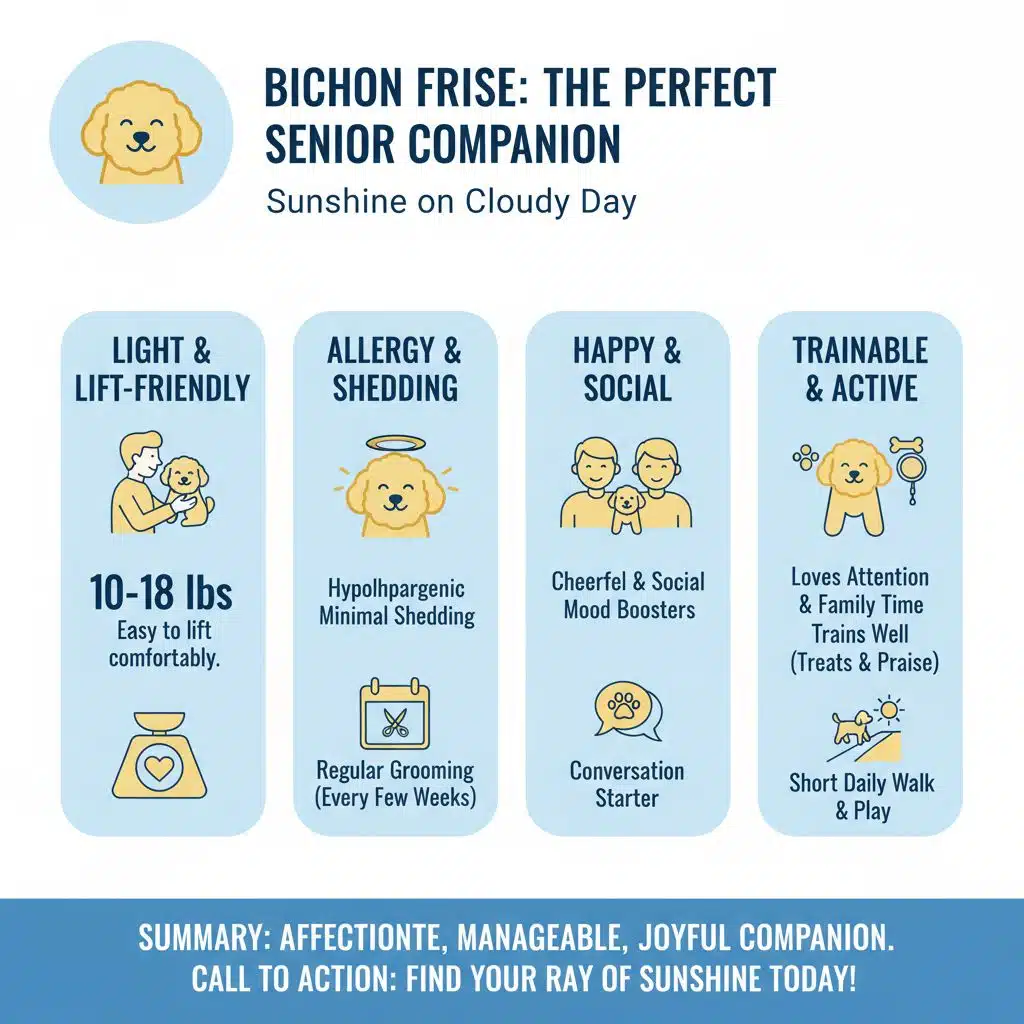
A Bichon Frise usually weighs 10 to 18 pounds, light enough for most seniors to lift comfortably. They are cheerful and social, which brightens the mood at home.
They are often described as hypoallergenic, so many allergy-prone people do better with them. The coat sheds very little, but it does need regular grooming. Think of it like a routine hair appointment every few weeks.
Bichons love attention and family time, and they train well when treats and praise are involved. A short daily walk and some play keep them happy. They also make friendly conversation starters with neighbors, which can help you stay social.
If you want an affectionate dog that feels like sunshine on a cloudy day, this breed is a strong choice.
What should seniors know about owning a Pomeranian?
Pomeranians are tiny fluffballs with a big voice. Most weigh 3 to 7 pounds, so they are easy to pick up and carry.
They enjoy short walks and indoor play, which suits many seniors. In smaller homes or apartments, their playful nature fits well without wearing you out. They tend to be alert and may bark at sounds, which can make you feel more secure.
The double coat needs routine brushing to prevent mats. Many owners turn grooming time into a gentle weekly ritual. If you want a loyal lap dog that sticks close and lifts your spirits, a Pomeranian can be a wonderful match.
As with many toy breeds, watch stairs and jumping from furniture. Small dogs can injure themselves more easily.
How does the Miniature Schnauzer fit as a dog for seniors?
The Miniature Schnauzer checks practical boxes for many older adults. They shed very little and are fairly easy to groom, which keeps cleaning simple.
They learn fast and enjoy training games, from sit and stay to a few cute tricks. In an apartment or condo, they settle nicely after a good walk. Many owners say these dogs make them laugh every day.
Mini Schnauzers are alert, so they may bark when someone is at the door. That little watchdog vibe can add a sense of security. Their preferred exercise is a couple of brisk, short walks, not long hikes.
For seniors who want pep without chaos, this breed offers a friendly balance of energy and calm.
Key factors to consider when choosing a companion dog
Picking a dog shapes your day, your budget, and your peace of mind. A good match brings comfort, routine, and joy. Here is a clear checklist to guide you toward the best dog breeds for seniors.
- Exercise level: If mobility is limited, choose low-energy dogs, like a Shih Tzu or Bichon Frise, that enjoy short walks and lots of couch time.
- Trainability: Easy-to-train breeds, such as the Cavalier King Charles Spaniel or the French Bulldog, save time and reduce stress.
- Grooming needs: Some dogs, like the Maltese or Poodles, need regular grooming. Breeds like Boston Terriers are simpler to maintain.
- Lifespan and planning: Small dog breeds may live 12 to 16 years. Pick a backup caregiver in case your health changes.
- Home setup: In shared housing, neighbors prefer quiet breeds. Talkative dogs like some Pembroke Welsh Corgis can be a challenge.
- Budget: Expect costs for vet care, food, supplies, and grooming. The total can reach thousands per year.
- Adopt an adult: Grown dogs often have calmer temperaments and basic training, which makes daily life easier.
- Travel and visitors: Choose a breed that handles pet sitters, new faces, and occasional visits from kids.
- Health benefits: Studies link pet ownership with stress reduction and less loneliness in later years. Temperament matters as much as looks.
- Meet a few dogs: Ask about health history and care needs. Seeing several helps you spot the right fit.
Tip: If you have medical concerns, ask your clinician or a trusted trainer about safe activity levels and handling.
Takeaways
The right companion dog can turn a quiet space into a home filled with routine and smiles. Breeds like the Cavalier King Charles Spaniel or the French Bulldog offer steady comfort, simple grooming, and an easy pace that suits many seniors.
These choices come with real health perks too. Many clinicians and groups such as AKC.org point to lower stress and better mood for older adults with pets. Match a breed’s energy, grooming needs, and size to your lifestyle for the strongest bond.
If you want calm company, shorter walks, and a faithful lap dog, one of these best dog breeds for seniors may be waiting at a local shelter or a responsible breeder. Visit, ask questions, and let the right dog choose you back.
FAQs on Best Companion Dog Breeds for American Seniors
1. What are the best dog breeds for seniors who want low-maintenance pets?
French Bulldogs, Bichon Frises, and Shih Tzus top the list for older adults seeking easy care. These small dog breeds have simple grooming needs and calm temperaments.
2. Which companion dogs help reduce loneliness in senior living communities?
Cavalier King Charles Spaniels and Boston Terriers offer steady companionship. Their affectionate nature makes them perfect lap dogs, easing feelings of isolation.
3. Are there hypoallergenic options among the best dog breeds for seniors?
Yes, Miniature Poodles and West Highland White Terriers shed very little. These hypoallergenic choices suit pet-friendly senior living spaces where allergies matter.
4. How do companion animals support emotional health in older adults?
Dogs like Golden Retrievers or Labradors provide emotional support by lowering stress levels and encouraging daily routines; their presence can even help with dementia care.
5. Do any trainable dog breeds fit well into a slower-paced lifestyle?
Pembroke Welsh Corgis adapt quickly to new routines; they learn commands fast without needing constant activity, making them ideal herding dogs for retirees wanting an obedient friend.
6. What should seniors consider about lifespan when choosing a companion animal?
Breeds such as Toy Poodles often live longer than larger types like Labrador Retrievers; thinking about longevity helps match energy levels with long-term commitment while enjoying all the benefits of pet ownership well into later years.