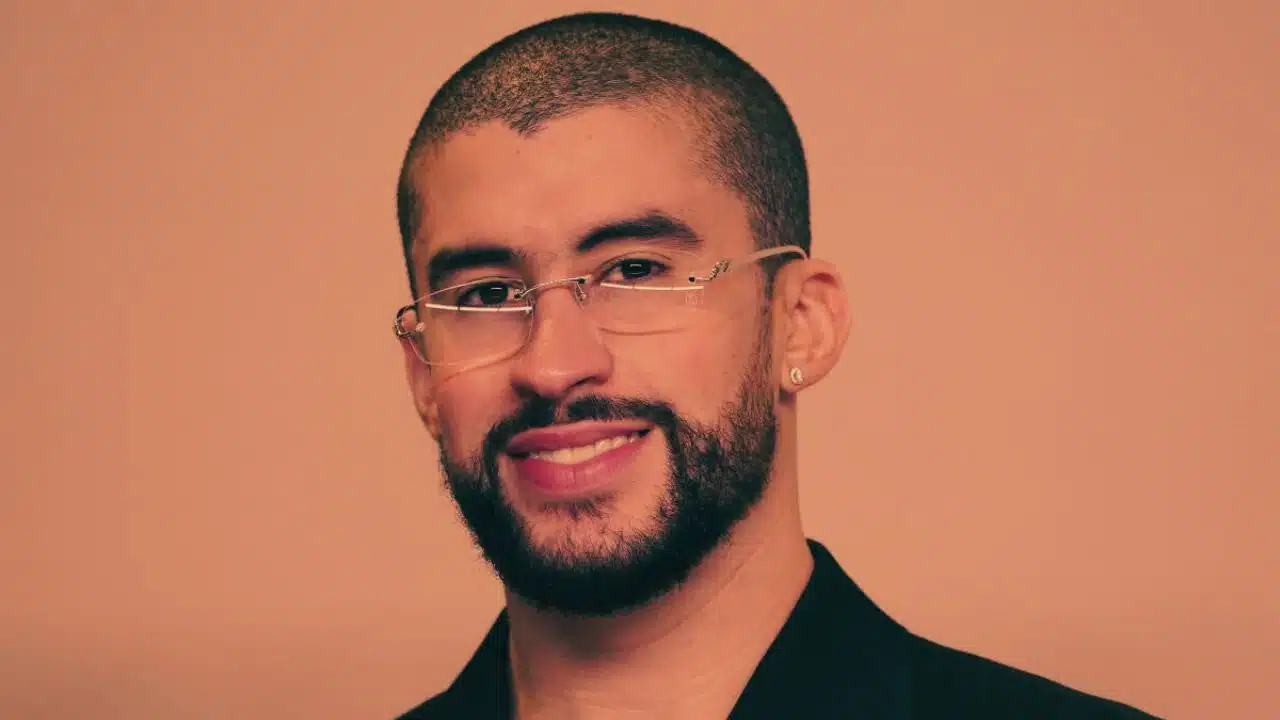
Bad Bunny has taken the music world by storm with his bold style and catchy beats. Many fans wonder about his personal life, especially his sexuality. They search online for answers to questions like “Is Bad Bunny LGBTQ?” This curiosity often stems from his eye-catching outfits and strong support for queer rights, leaving people confused about where he stands.
Bad Bunny identifies as heterosexual, but he talks openly about sexual fluidity in interviews. This blog post explores his statements, his allyship, and the controversies around his gender expression.
It clears up the facts to help you understand his role in the music industry.
Keep reading to see why he matters.
Bad Bunny’s Sexuality
Bad Bunny identifies as heterosexual, and he has shared this in multiple interviews. He also talks about sexual fluidity, saying in a 2020 GQ interview, “I don’t identify as gay, but you never know.
Identification as heterosexual
Bad Bunny identifies as heterosexual. He shared this in a recent interview. People know him for his allyship in the LGBTQ community. His views embrace sexual fluidity. He refuses labels that define his sexuality.
Critics accuse him of queerbaiting due to his gender-fluid style.
This identification sparks talks on masculinity in the music industry. Bad Bunny challenges homophobia through his actions. He promotes inclusivity and openness. His stance links to broader queer culture and representation.
Puerto Rico’s history influences his approach. He faces these claims but stays a strong advocate.
Statements on sexual fluidity
He stayed quiet about his own sexuality for years. That changed in a recent interview. There, he spoke on sexual fluidity. He embraces openness and inclusivity in his allyship. He refuses labels that define his sexuality.
This stance challenges norms in the music industry.
Critics accuse him of queerbaiting despite his heterosexual identity. He wears skirts and mixes styles. These choices spark talks on gender expression. His actions fight homophobia in reggaeton.
They tie to Puerto Rican artists’ history of drag as protest. He pushes for queer representation and advocacy.
Bad Bunny’s Allyship to the LGBTQ+ Community
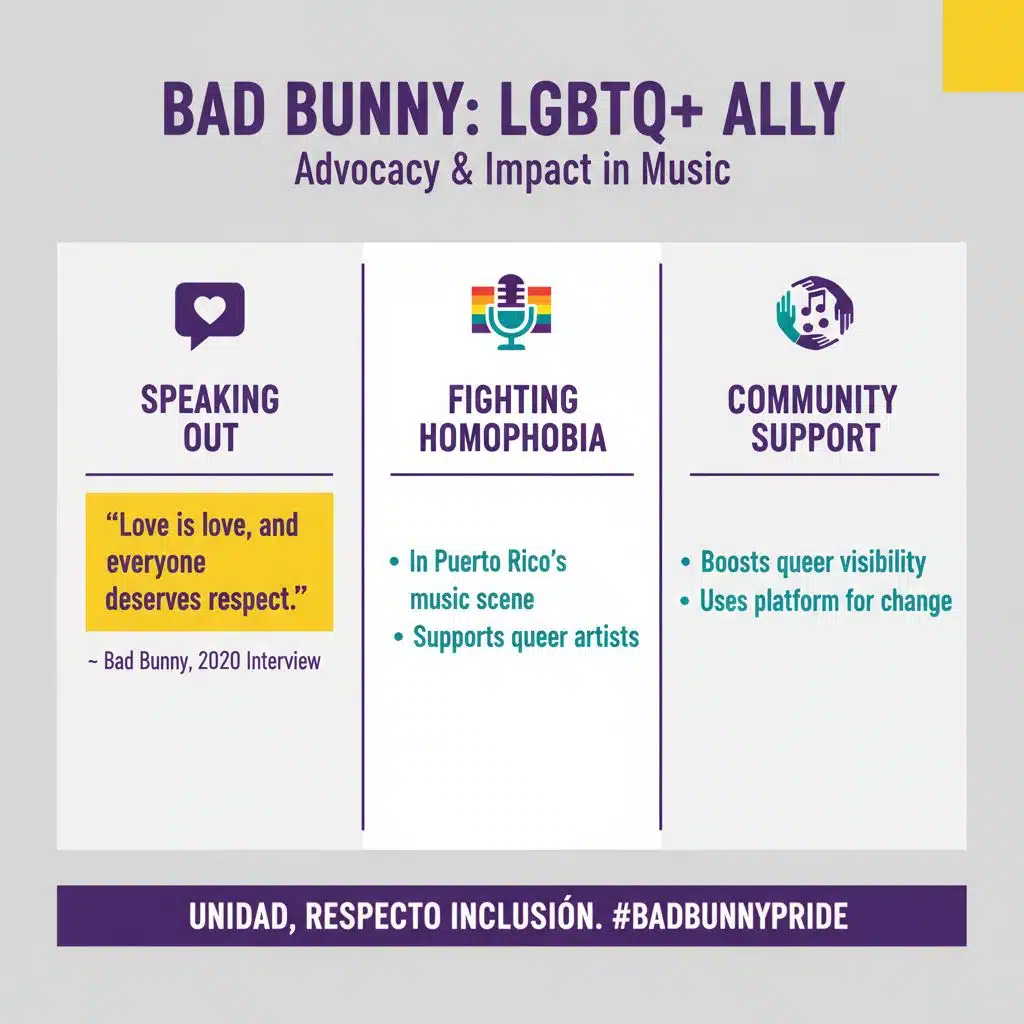
Bad Bunny speaks out for LGBTQ+ rights, and he fights homophobia in Puerto Rico’s music scene. He supports queer artists, as he said in a 2020 interview, “Love is love, and everyone deserves respect.
Advocacy for LGBTQ+ rights
He challenges homophobia in reggaeton music. This artist stands as a longtime LGBTQ ally. Actions and statements prove his support. Openness marks his approach. Inclusivity drives his efforts.
Fluidity shapes his views on identity. He refuses strict labels on sexuality. His role grows in the music industry. Impact shows in Puerto Rico and beyond. Representation gains from his work.
Advocacy pushes against old norms.
Controversies do not stop him. He speaks out for queer rights. Support for the community stays strong. His voice fights for change. Queer culture benefits from this push. Pop culture shifts with his influence.
Public support for queer representation
Bad Bunny shows strong public support for queer representation in his work. He challenges homophobia in reggaeton, a genre known for its traditional views. Fans see this in his music and videos that highlight LGBTQ+ stories.
His actions prove his longtime LGBTQ allyship. He pushes for openness and inclusivity in the music industry.
Bad Bunny embraces fluidity in his advocacy. This support links to broader queer culture and representation. Puerto Rican artists inspire his style, using it as protest. He makes a big impact, even as his allyship grows.
Critics note his outspoken stance against hate.
Gender Expression in Bad Bunny’s Art
Bad Bunny challenges traditional masculinity through his bold choices in music videos and performances, often wearing skirts, nail polish, and makeup to push against rigid gender norms in Latin trap and reggaeton.
He embraces gender-fluid fashion, as he stated in a GQ interview, “I feel comfortable with myself, and that’s what matters,” which highlights his role in promoting broader acceptance of diverse expressions in the music industry.
Challenging traditional masculinity
Bad Bunny pushes against old ideas of manhood in his work. He mixes masculine and feminine looks in bold ways. Fans see this in his choice to wear skirts and other gender-fluid clothes.
Critics call this queerbaiting, even though he says he is heterosexual. His style fights back against homophobia in the music industry.
This gender expression ties to Puerto Rico’s past. Artists there have used drag for political protest. Bad Bunny turns fashion into a statement against rigid masculinity. He keeps advocating for LGBTQ rights amid the backlash.
His actions spark talks on sexual fluidity and representation.
Embracing gender-fluid fashion
Bad Bunny mixes masculine and feminine styles in his outfits. He wears skirts and other feminine clothes on stage. Critics accuse him of queerbaiting for this gender-fluid expression.
They say it happens despite his heterosexual identity. His choices challenge traditional masculinity in the music industry.
This style draws from Puerto Rican history. Artists there have used drag as political protest for years. Bad Bunny turns fashion into a statement against homophobia. He promotes fluidity and inclusivity through his looks.
His actions spark talks on queer culture and representation.
Addressing Controversies
Critics have accused Bad Bunny of queerbaiting, claiming he adopts queer aesthetics in his music and fashion to appeal to LGBTQ+ fans without identifying as queer himself. He counters these claims by emphasizing his genuine support, stating in interviews, “I don’t care if people think I’m gay or not; I’m here to break barriers and support everyone.
Queerbaiting accusations
Bad Bunny faces queerbaiting accusations from some fans and critics. They claim he teases queer identity without committing to it. This stems from his gender-fluid expression, like wearing skirts and mixing masculine and feminine styles.
He identifies as heterosexual, yet his fashion choices spark these debates. People accuse him of using queer aesthetics for attention in the music industry.
His style draws from Puerto Rican artists who used drag as political protest against homophobia. Bad Bunny turns gender-bending into a statement for advocacy and representation. He stays an outspoken LGBTQ ally through actions and words.
Controversies persist, but he pushes for inclusivity and fights traditional masculinity norms.
Responses to criticism
Critics have accused Bad Bunny of queerbaiting due to his gender-fluid fashion choices, like wearing skirts. He identifies as heterosexual, yet faces these claims for blending masculine and feminine styles.
Bad Bunny responds by linking his look to Puerto Rican history, where artists used drag for political protest against homophobia.
He pushes back on the criticism through ongoing advocacy for LGBTQ rights in the music industry. His actions show allyship that embraces sexual fluidity and representation. Bad Bunny stays vocal, proving his commitment despite the backlash, and continues to challenge traditional masculinity in pop culture.
Takeaways
Bad Bunny keeps pushing for LGBTQ rights in the music scene. He shows true allyship through his bold actions and words. His journey inspires many to embrace fluidity and fight homophobia.
People admire how he blends style with protest. This sets a new path for artists everywhere.
For more insights into Bad Bunny’s personal life and relationships, check out Is Bad Bunny Still With Kendall Jenner?.
FAQs
1. Is Bad Bunny part of the LGBTQ community?
Bad Bunny has stated that he identifies as heterosexual, but he often challenges gender norms in his music and performances. He told the Los Angeles Times in 2020, “I don’t think sexuality defines a person.” This stance reflects broader cultural shifts toward fluid expressions of identity in the music industry.
2. What has Bad Bunny said about his own sexuality?
In interviews, Bad Bunny has been open about not labeling his sexuality strictly. He explained in a GQ feature, “At the end of the day, you don’t know if I’m going to date a man or a woman, it’s my business.”
3. How does Bad Bunny show allyship to the LGBTQ community?
Bad Bunny supports the LGBTQ community through his actions, like wearing dresses and kissing men on stage, which highlight issues of acceptance. These moves tie into current trends of artists promoting inclusivity. He said in a Rolling Stone interview, “I want to help the community, I want to be an ally.”
4. Why is Bad Bunny’s role in the music industry important for LGBTQ allyship?
Bad Bunny’s influence as a top Latin artist helps push conversations about sexuality and acceptance forward. His work connects to wider social changes, encouraging fans to embrace diversity.