
Surgery is a process that’s meant to heal, repair, or improve a patient’s life, but medical professionals are human, and mistakes and accidents can happen. Consequences of surgical mistakes can range from minor issues to devastating complications.
Unfortunately, there are many people in Arizona suffering the consequences of surgical errors including permanent disabilities, disfigurement, huge medical bills, and tremendous emotional strain and trauma. The state’s legal system offers a way for these victims to hold the negligent parties accountable, and, in many cases, find justice and financial compensation.
In this article we will break down the most common types of surgical errors, and the process of proving negligence, while highlighting how the help of an experienced medical malpractice lawyer in Phoenix can be fundamental when pursuing compensation and justice.
Understanding the Different Types of Surgical Errors
Surgical errors are not all the same. They can vary from minor issues without, or with only minor, consequences to catastrophic mistakes that end with permanent disabilities, or in worst case scenarios, wrongful death. Regardless of the severity, all surgical errors have one thing in common; they are preventable and would never have occurred if adequate medical standards had been applied and followed.
The most common categories of surgical errors are the following:
Retained surgical items: Ranging from sponges to surgical instruments left inside the patient’s body, these errors can lead to severe infections and internal injuries, even death.
Anesthesia errors: Administering too little or too much anaesthesia can cause issues ranging from awareness during surgery to brain damage or fatal complications.
Nerve or organ damage: Improper or inadequate technique can cause permanent damage to organs and nerves that can cause permanent disabilities.
Wrong site surgery: Operating on the wrong part of the body might seem impossible, but, mostly because of administrative mistakes, it happens more than we would like to know. There have even been instances when the wrong patient was operated on.
Post-operative negligence: If the patient is not properly monitored after the surgery, there’s a danger of infections, blood clots, and other complications going undetected. All of these can lead to serious consequences.
Medical professionals are humans, and humans make mistakes, but these mistakes are fully avoidable, and they arose from administrative mistakes, lapses in communication, disregard for protocol, and lack of attention to detail.
Proving Negligence in Operating Room Cases
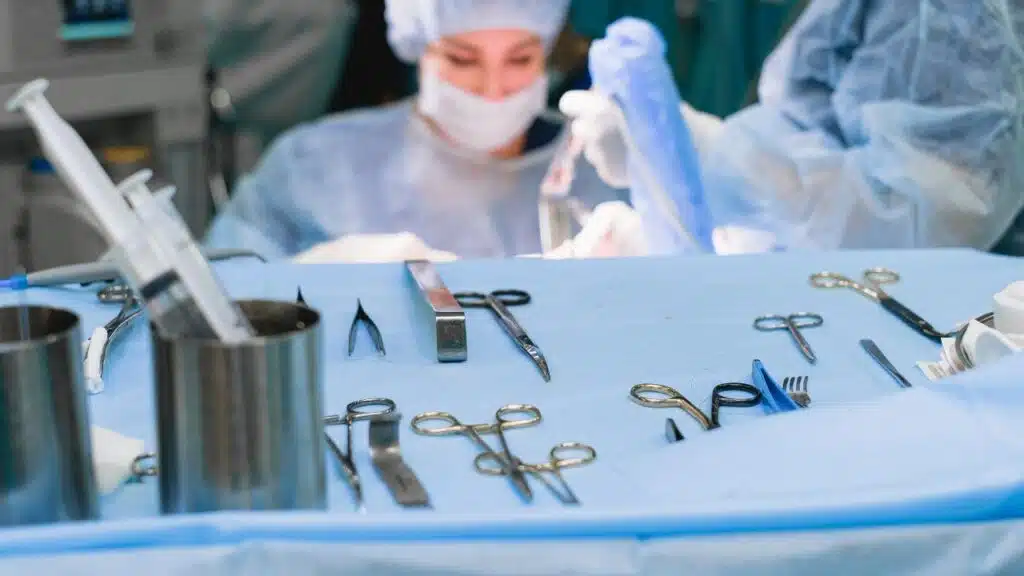
Proving surgical negligence in Arizona, like in the rest of the country, isn’t only about proving that something went wrong. In order to prove negligence, the victim must show without a doubt that the healthcare provider failed to meet the accepted standards of healthcare.
Let’s try to break this process down, and the way it usually works:
Establishing the standard of care: In this step, the courts and juries will consult experts and rely on their testimonies to clearly define what a reasonably competent medical professional would do in the same situation.
Demonstrating a breach: When the standard of care has been set, it must be demonstrated how the surgeon or hospital failed to meet it. It could be failure to follow protocols, skipping safety checklists, misreading the charts, or similar.
Linking the breach to the injury: The link between the breach of standards and the injury must be proven too. In other words, it must be demonstrated that the damage was caused by the surgical error.
Using surgical protocols as evidence: Hospitals have very strict and clearly defined safety procedures and protocols. Any breach of the protocol strengthens the case for negligence.
Cases are often built on expert testimonies as they can clearly explain how the mistake was made and how it was preventable, and a more experienced Phoenix malpractice lawyer will have access to the most reputable experts.
Why Experience Matters in Malpractice Litigation
Medical malpractice cases can be some of the most complex in Arizona’s personal injury law. Not only does a lawyer need to have an understanding of medicine they will also often face unscrupulous and aggresive opposition from insurers’ and hospitals’ legal teams.
Hiring an experienced Phoenix malpractice lawyer will give you a best chance of proving negligence, and here’s why:
Proven trial experience: An experienced lawyer will have proven trial experience, and be sure that hospitals and insurers will be hesitant in taking a lawyer to court if that lawyer has a history of winning cases. This will often mean higher settlements as the defendants will want to avoid trial.
Strategic negotiation skills: Knowing when to settle and when to push for a trial can make a huge difference in the amount of payout. An experienced professional will know exactly how far to go.
Access to top medical experts: Experience also brings established relationships with a multitude of medical experts including surgeons, anaesthesiologists, and other specialists who can give compelling and credible expert testimonies.
Comprehensive case preparation: With experience comes the ability to build the most comprehensive case, as there’s no better preparation than experience. From gathering medical records to collecting credible expert testimonies, experienced professionals know how to cover all angles to ensure the best possible outcome.
Takeaways
Surgical errors are some of the most dangerous forms of malpractice, and can have extremely serious, sometimes even catastrophic consequences. Fortunately, Arizona’s personal injury law provides a clear pathway along which an experienced malpractice lawyer in Phoenix can build a strong case, and bring the victim some justice and financial relief.
Considering the complexity of these cases, experience is invaluable, and can mean a difference between a minimal settlement and a multi-million payout.