

Think of some art gallery or social feed you scroll down. You nod, gasp, and say, possible in disbelief, and definitely with awe, in response, only saying one thing; “Wow, what an incredible photograph.” Though then you realize that: the breathtaking picture was not made with a camera. It is an art that was imagined as a part of a series of instructions in the form of lines of code, a series of prompts to the AI art generator. Welcome to the new digital wild West-world of creativity-and controversy.
Prompted images are becoming more and more an affordable option with tools like Midjourney, DALL·E (by OpenAI), Stable Diffusion, and more recently Leonardo AI. A surreal desert landscape in the morning, a portrait in the style of the Renaissance masters with the neon accents, a few words and you will have a polished, imaginative image within seconds. Such tools have democratized the opportunity to create beautiful things to the common person with an Internet connection.
Leonardo AI and the Expansion of Creative Tools
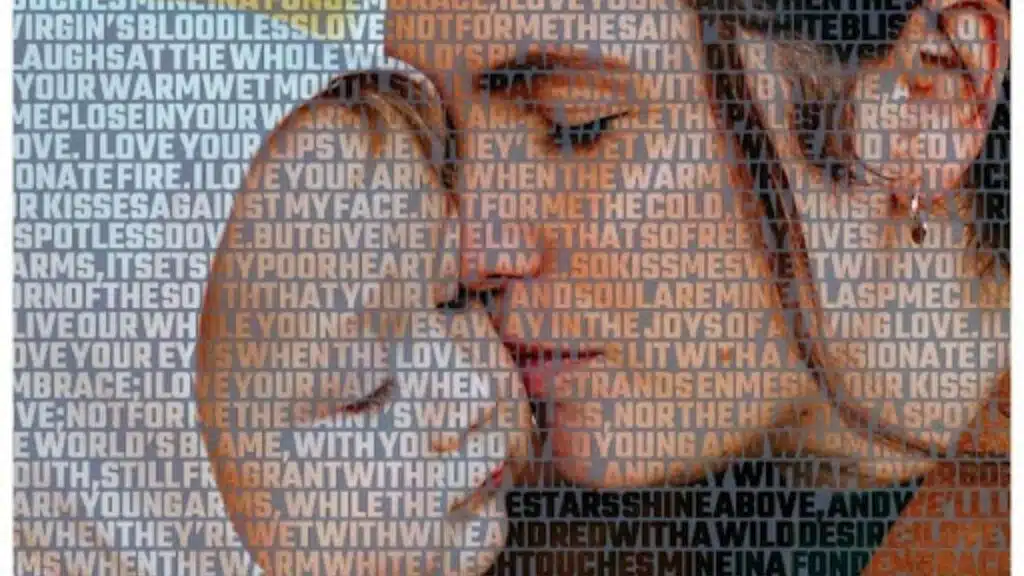
Leonardo AI, as an example, has positioned itself as a platform, as well, to hobbyists as well as professionals, including graphic designers, filmmakers, marketing teams, game artists. The company is proud to say that it is committed to AI safety and creative empowerment; the company has indicated that over 15 million individuals now create using the platform and there are multiple filters used to ensure that creative works are not misused. Along with his images that remain stationary, Leonardo has also made inroads in linking together words and images. The addition of features that appear to be a text art generator leaves the user free to create spectacular compositions in which typography becomes art: letters turned into textures, posters and stylized digital layouts. This trend demonstrates how AI-based spacial synthesis is shifting and turning into a combined creative platform that would dissolve the border between an oral written work and a visual artwork.
Nevertheless, not everyone is sold Critiques of Leonardo AI-even among its users-feature complaints related to its inconsistency in performance, slow customer support, and filtering that makes even harmless prompts feel censored or hard to realize. There was some complaint in the online forums people claim that Leonardo is less powerful and more limited after its takeover by Canva.
Midjourney and the First Controversial Competitions
Midjourney, in the meantime, has become popular and controversial. Artists and journalists agree that it is made through the training on very large datasets that most probably have copyrighted works without the permission. It has seen high-profile application, e.g. a Midjourney-created image by Jason M. Allen won the top award in the category of Digital Arts / Digitally-Manipulated Photography at the 2022 Colorado State Fair. Allen received more than 600 text prompts, editing the results in Photoshop and printing an end product on canvas. He revealed that he used AI but the judges stated that it would not have made a difference in their ruling.
That incident sparked outrage Because participants of the contest were judged on their creativity as human beings, many musicians criticized the use of AI as cheating. Social media reaction went from apoplectic cries of ill treatment to puzzled disappointment about how the judges could not tell AI was involved.
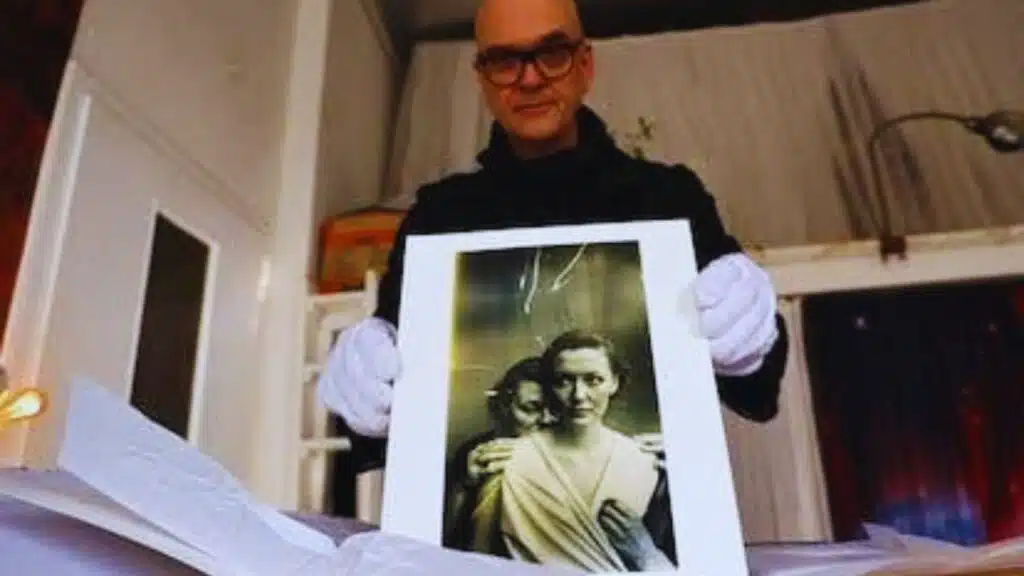
A third well-known case was of German photographer Boris Eldagsen. In 2023 one of his AI images received first place in a category of the Sony World Photography Awards. He later cited that it was generated by AI-what he did as a sort of protest so that people would discuss it. He ended declining the award and referred to himself as “a cheeky monkey” and wished to raise moral issues about allowing AI images to go head-to-head with traditional photography. This disclosure triggered not only questions as to the competitive fairness but also as to the soundness of juries on their own.
Real Photos Competing Against AI
This kind of twist occurred at the 2023 Awards in the 2023 Color Photography Contest, where Miles Astray entered a real photo, of a flamingo, in the AI-generated category, and placed 3rd. Then only did he show that it was not mere pretend, trying to emphasise how the AI dominance is redefining competitions and credibility. He explained that by saying his point was that creativity and emotion was more than a collection of digits.
It is not over concerning the ethical concerns. There is an emerging legal battle in terms of the copyright. After the U.S. Copyright Office denied an application to copyright his work, Jason M. Allen, the winner of the Colorado State Fair whose work was created with Midjourney, filed suit. The office has claimed that AI generated text cannot be granted protection as it lacks the aspect of human authorship. It is but one of the battles arising in the legal arena across the world and has a knock on effect to those who hope to commercially make use of AI enabled work.
More important is where such AI models learn. Users including visual artists Kelly McKernan and Karla Ortiz have sued Stability AI, Midjourney, and DeviantArt, claiming they used their artwork to train generative models- with compensation and injunction sought. Such feelings are substantiated by opinion surveys of professional artists: the majority feel that AI tools should report which other artworks are they trained on, disagree that model creators should own the outputs, and fear it will impact the livelihoods of artists.
Academic Criticism and Trust Issues
There have also been academic criticisms Other researchers are more blunt in describing the phenomenon as a form of labor theft, that is, when modern AI-art generation steals the creativity of people without adequate recognition and reward. Still others point out that, despite the increased accessibility AI may bring to artwork, the economics of its use will benefit the tech industry at the expense of the human artists whose workgives the models life.
An equally arousing worry associated with the concepts of AI is its ability to closely resemble real life. Recent reports state that the human failure rates in correctly identifying whether a photo is real or AI-generated are about 40 percent-and even the most advanced models designed to detect images that are not real are still failing to do so reliably in a fraction of cases. This is bad news: in a world where we can no longer necessarily trust that the photo and video we are seeing is real, what happens to photojournalism, photo evidence, and even basic sharing amongst friends via conventional social media?
These scandals resemble the precedents of the past When photography came in 19 th century, all the painters were shuddering out–some even say–“After today, painting is dead!” Too much painting was acclimated and photography became art by itself. The lesson? There is so much disruption before integration is achieved successfully in new mediums- usually painfully so.
Beyond Just Another Medium
However, AI is not another medium. Its scandal is many-faceted, legal, ethical, economic and cultural. The questions that they cause when pondered are; Does training on copyright art without permission eliminate originality? What will happen to the photo and fine-art awarding procedure should the AI-generated art occur to win some awards? What happens when AI-generated pictures end up in the market in large quantities: how will human creators be able to earn a living? and who belongs to cheez a generative model makes?
A Closer Look at the Tools
Now we look at the tools. The licensing and safety measures offered by Leonardo AI are highlighted, where creators can be more assured that they are contributing to an ethical option and that the data is properly licensed. Midjourney can provide unimaginable visual intricacy, however, at the cost of more obscurity concerning training information. DALL-E and Stable Diffusion also find their way into the blend- both in style and in ability, as well as controversy.
And it is not all applications which are purely aesthetic Malik Afegbua is a Nigerian creative technologist who developed a fashion-runway series called The Elder Series with seniors in fashionable attire using AI. Its work went viral by attacking stereotypes, however, Raph has been accused in part of the ongoing debate concerning the importance of AI in relation to human creativity.
Questions for you
I have presented the terrain, tools, controversies, human impact, real cases. I would now love to hear your views:
- When you learn that a first-rate image was produced via AI, what is your first instinct? Is it thrilling, or disconcerting, or both?
- Should AI art be accepted as the norm in photo competitions in general, or in photo or art competitions in particular- and in either case, should there be separate categories, or must the AI art form be disclosed?
- What is your feeling about the AI platforms training the work of artists without their permission? Is it plagiarism–or remix culture–or somewhere in the middle?
- Do you think that human artists can co-exist and prosper with AI tools? And now what place shall be allotted to that gold of the humanly-made where a machine can imitate style or emotion?
- Who do you believe should have the copyright to AI assisted work, the prompt writer, the AI developer, or neither? And how ought laws adjust to?
- What lies ahead? Is AI going to contribute to enriching creative expression or is it going to destroy trust, explainability and other forms of originality- or a combination of the two?






















