Considering starting an online business but worried about the cost? The fact is, you don’t need a large budget to get started.
In this guide, you’ll find straightforward and actionable steps to create a business with zero investment. Whether you want to sell products, services, or other ideas, this step-by-step process will help you launch without spending a dime.
How to Start Online Business With No Money
1. Pick a Free Business Idea
Start with something you can do using just your time and skills. Some great no-money ideas include:
- Freelance writing or design
- Starting a blog
- Creating digital products
- Print-on-demand stores
Think about what you’re passionate about and try to dig deeper into that. You’ll stick with it longer if you work on something you’re good at or passionate about. A quick way to test your idea is to ask people in online groups what they’d pay for or need help with.
2. Build Your Brand
You don’t have to pay for a logo or fancy website tools right away. Plenty of free tools are available that can help you create a polished and professional look right away. For example:
- Use Canva to design eye-catching logos and visuals
- Try Google Docs to organize your ideas and write content
- Link all your important pages with a tool like Linktree
These resources are perfect for beginners because they keep things simple and affordable. Many offer ready-made templates, so you won’t have to start from scratch.
3. Set Up Social Media for Free Marketing
Marketing doesn’t have to cost money. In fact, social media is one of the best free tools out there. Set up an account on:
- TikTok
- Facebook
Pinterest
Share what you do, post helpful tips, and engage with people who might need your service or product. Building trust and connection is the secret to standing out. Try using trending sounds or hashtags to get more views on your content without paying for ads.
4. Provide Genuine Value Before Pitching a Sale
Constant selling can turn people away—but offering something useful draws them in. Focus on sharing insights, tips, or inspiration that relate to your niche.
For example:
- Into fitness? Post simple, effective home exercises people can try right away.
- Passionate about fashion? Share creative outfit ideas or seasonal styling advice.
- Love writing? Offer thought-provoking prompts or tips to beat writer’s block.
By consistently offering content that helps, entertains, or educates, you earn trust. That trust lays the groundwork for future sales—and helps establish a personal brand people remember and respect.
5. Network and Collaborate Online
You don’t have to build your business alone. Start talking to other creators or business owners in your niche.
- Join free Facebook groups
- Comment on others’ posts
- Send friendly DMs
- Offer to collaborate on content or giveaways
Connections can open doors, even if you’re just getting started. Plus, it’s fun to meet people on the same journey. You might even land your first client or customer just by showing up and helping in a community.
6. Keep Learning
There are tons of free resources online to help you grow your skills and business knowledge. You can check out:
- YouTube tutorials
- Free online courses (like Coursera or HubSpot Academy)
- Podcasts
- Blogs
Even spending 20 minutes a day learning something new can make a huge difference over time. Keep a simple notebook or Google Doc to track what you learn and ideas you want to try later.
How to Start a Business for Free With Print on Demand?
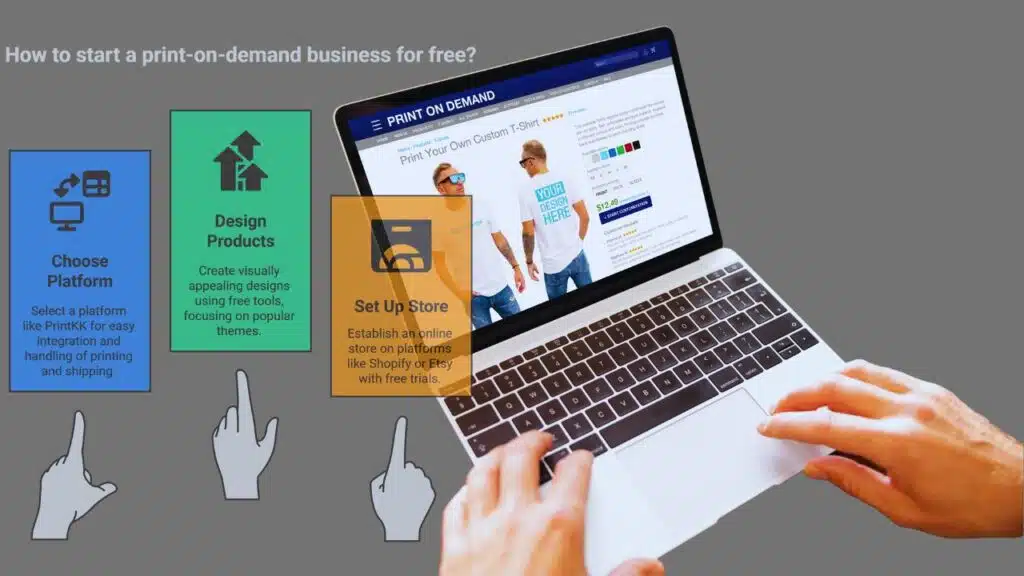
Pick Your Platform
Print-on-demand (POD) is a great way to sell personalized products—like shirts or tote bags—without having to store any inventory. You simply create your designs and upload them to the POD service. When a customer places an order, the company handles printing and shipping for you.
One easy platform to try is PrintKK—it helps you connect your designs to stores and takes care of printing and shipping. This means you can focus entirely on designing and marketing your products while they take care of the rest.
Make Your Designs
Use free tools to create visually appealing and innovative art. Your designs don’t need to be professional — a cool text-based design or simple shapes can be very effective.
Look for ideas that people love, such as motivational quotes, cute animals, or popular hobbies. Create designs that are playful and simple, making them visually impactful and attractive to buyers.
Set Up Store
Next you should carefully set up your store. You might consider platforms such as Shopify or Etsy — both offer free trials or low-cost ways to launch. Link your shop to your chosen print on demand provider.
Your products can be directly synchronized without too much manual operation. This comes in handy when you’re updating your product design or trying out the latest trends.
Start Selling and Promote
After your shop is set up, share it with friends or promote it on social media. You can even start a free Instagram or TikTok page to showcase your products. You only get paid when someone makes a purchase, so there’s no upfront risk for you.
Takeaways
Starting an online business with no money might sound tricky, but it’s totally possible. Use the free tools and ideas you already have, like your skills and free platforms, to get going. Focus on offering value and building your audience step by step. Before you know it, your small online business can grow into something really cool.