
Many fans ask, “where is Natanael Cano from?” They see his songs on Spotify and know little of his home. This can feel like a missing puzzle piece. He got his first guitar at age 11.
We will trace his path from street gigs to corridos tumbados fame. We will tie his hit “Culiacan Vs. Mazatlan” to his Hermosillo, Sonora roots. You will learn how Sonora shaped his sound in regional Mexican music.
Keep reading.
Key Takeaways
- Natanael Cano was born in Hermosillo, Sonora, Mexico. He got his first guitar at age 11 and taught himself chords by 13.
- He blends regional Mexican music, like Ariel Camacho corridos, with U.S. hip-hop beats. This style is called “corridos tumbados.”
- In 2018, he released “Culiacan Vs. Mazatlan.” In 2019, his “Soy el Diablo” remix with Bad Bunny hit over 10 million views on YouTube.
- Hermosillo’s dusty streets, taco stands, and ranch fiestas shaped his sound. He visits the city at least four times a year to film videos and see family.
- He credits Rancho Humilde and local radio for his rise. He names Sonora and his crew in songs and thanks fans on social media.
Natanael Cano’s Hometown
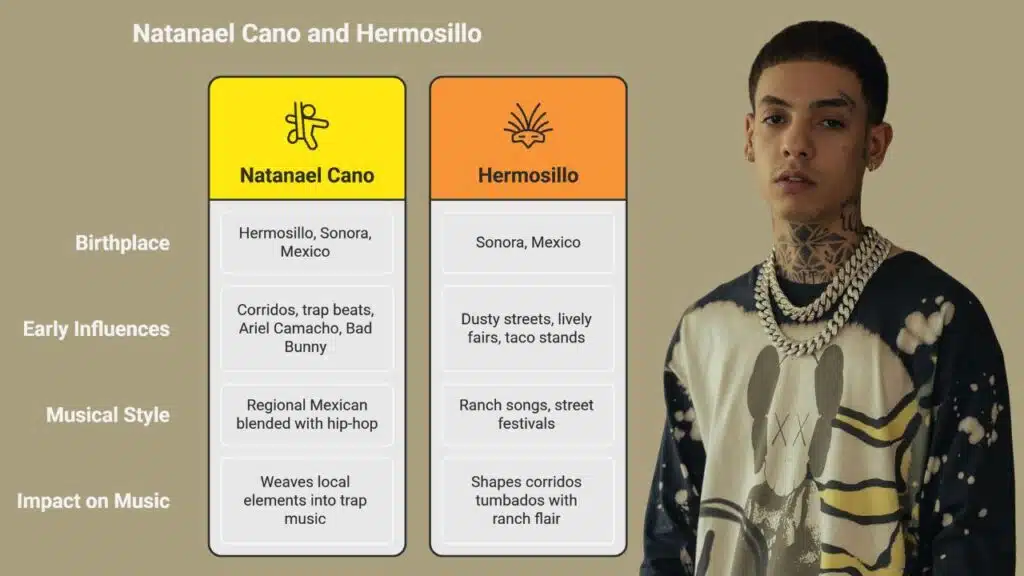
Hermosillo bakes under the Sonora sun, and its dusty streets shaped Cano’s first riffs on a battered six-string. He cut his teeth on local corridos and trap beats before grabbing a mic in a cramped sound booth and shaking up regional Mexican music.
Born in Hermosillo, Sonora, Mexico
Natanael Cano entered the world in Hermosillo, Sonora, Mexico. Dusty streets, lively fairs and the pulse of corridos tumbados shaped his ears. He heard echoes of Ariel Camacho and Bad Bunny on old radios drifting through the mercado.
He got his first guitar at age 11, a gift from his father. He strummed chords on that nylon string and taught himself regional Mexican music. A broken string did not stop him; he kept playing, dreaming of stages bigger than his little barrio.
The cultural significance of Hermosillo in his music
Local radio blares ranch songs in Hermosillo, the Sonoran capital. This city sits in Sonora, Mexico, under a hot sun. He grew up amid taco stands and family fiestas. These scenes pepper his corridos tumbados with ranch flair, like a colorful mural.
He blends regional Mexican tunes with hip-hop beats from the U.S. to craft vibrant tracks.
Street festivals in Hermosillo taught him about rhythm and story. Fans see natanael cano ride these vibes in every corridos tumbados verse. He visited the Rancho Humilde label after school, grabbing guitar strings and drum pads to build fresh sounds.
He weaves desert winds, leather boots and guitarra riffs into trap music that pops worldwide.
Early Life and Musical Beginnings
He grabbed a string instrument at 13 and taught himself chords from Ariel Camacho clips on YouTube, like a sponge soaking up water. He mixed those riffs with folk rhythms and dreamt up songs on his dusty front porch.
Teaching himself guitar at age 13
Natanael Cano taught himself guitar at 13, armed with an old six-string and big dreams. He played YouTube guides, paused riffs, then hit the fretboard again. He picked up basic chords, C and G, as building blocks.
He practiced till his fingertips formed tough shields for the strings. He mimicked Ariel Camacho licks and regional Mexican music riffs to find his own spark.
By 14, he hit party stages and street corners in Hermosillo. He tested new songs on small crowds, chasing every cheer. He wrote his first original demo and uploaded it on YouTube and SoundCloud.
He blended corridos tumbados style with trap music beats, fueling a fast-rising music career.
Influenced by Ariel Camacho and regional Mexican music
Teens in Hermosillo flocked to video platforms for Ariel Camacho videos. Local singer Natanael Cano watched those clips daily on his phone, then grabbed an old guitar. He picked out riffs from regional mexican music, mixed in hip hop lines.
In 2018 he dropped “Culiacan Vs. Mazatlan”. That corridos tumbados single fused rap slang with ranchera chords. Listeners streamed it on a music streamer and audio platform within days.
That raw spark shaped his trap music. A deal with Rancho Humilde led to “Soy el Diablo” in 2019. Bad Bunny hopped on the remix, spitting verses over sliding melodies. Fans praise its cowboy beats and punchy 808s.
Lyrics still nod to Sonora plains. Listeners tap toes to trot rhythms, they shout Camacho’s name in every chorus.
The Rise of Corridos Tumbados
He merges old corrido tales with rap flows, tossing in syncopated trap beats and six-string riffs like a mariachi spinning vinyl. Fans clip it on TikTok and boost plays on the digital jukebox, so Hermosillo playlists hum with his sound.
Fusion of traditional corridos with hip hop
Corridos tumbados blends ranchera strings with rap beats. Cano slaps down 808 kicks like a DJ at a dance. He lifts lines from Ariel Camacho, soaks them in trap music. Then he spits stanzas with bold swagger.
Fans hear that mix and call it fresh.
Soy el Diablo with bad bunny shot to viral fame on YouTube. The video crossed ten million views in days, it hit global feeds. This mash up spotlights rancho humilde roots, and it nods to regional Mexican music.
Natanael winks at tradition, but he throws in hip hop flair.
Impact of Hermosillo’s culture on his unique sound
Desert winds from Hermosillo bring grit to natanael cano’s corridos tumbados. He picks chords like a ranchero soul, yet wraps them in trap music beats. Raised on regional mexican music, he carries memories of rancho humilde into every hook.
Local tales of dusty street markets and rodeo nights echo in his lyrics.
Tracks like soy el diablo show shades of Sonora sun and street grit. Old guitars mix with heavy bass, a contrast that sounds spicy. Fans still hear Hermosillo dust in his voice, even after he moved to Los Angeles.
Natanael Cano’s Connection to Hermosillo Today
He teases corridos tumbados on a streaming service, with lines about Sonora’s sun and rodeo nights. He posts old photos on a social network, front of his childhood school and the bullring, and fans flood the comments.
How his roots continue to influence his music
Hermosillo air spills into his riffs. He uses genre blending of corridos tumbados and trap music beats. He borrows dust road tales, twilight skies, rancho humilde life. He taps that Sonora soil on a music app and video site.
He nods to Ariel Camacho, he credits regional mexican music roots. He wants to stand out, that drive links to his background.
Jimmy Humilde backs his music career and hometown pride. He feeds desert wind into each verse under a live mic. He drops tracks like soy el diablo and todo es diferente, to salute Hermosillo streets.
He teams up with junior h, peso pluma, j balvin and jhay cortez to spread Sonora spirit. Fans spark up subtitles to catch every nod to his roots.
Visits and tributes to his hometown
Natanael Cano returns to Hermosillo at least four times a year to visit family and friends in Sonora. He shoots parts of his corridos tumbados video on local streets and shares the clip on a streaming site.
Cano honors his roots with regional Mexican music and trap music verses that name Sonora and the Rancho Humilde crew. The Mexican artist thanks fans on a social app after each live show at Teatro del Estado.
Takeaways
His Hermosillo roots still fuel his songs, shining through every corrido tumbado. The dusty lanes of Sonora gave him grit and style on his instrument and in the studio. Fans cheer when he drops a new track on a streaming service or takes the stage.
Each trip home feels like a warm hug, it drives his passion forward. He bumps into his old local crew whenever he steps into town.
Discover more about this talented artist, including how tall is Natanael Cano, by clicking here.
FAQs
1. Where did Natanael Cano grow up?
He grew up in Hermosillo, Sonora, Mexico, on a small farm called rancho humilde, under a big desert sky.
2. How did Hermosillo shape his music career?
The sunbaked streets gave him a taste for corridos tumbados. He heard trap music vibes and latin trap beats. He even caught wind of bad bunny and ariel camacho on the radio. He fused them with his roots.
3. What style does this mexican artist perform?
He mixes mexican corridos with trap. He makes tracks like soy el diablo, mi nuevo yo, todo es diferente, and el drip. His style sounds fresh and bold.
4. How did he launch his music career?
He launched his music career with jimmy humilde. He hit the studio and built a fan base. He blends mexican regional sounds with modern beats.
5. What makes his sound stand out?
He fuses regional mexican music with trap music. He writes corridos tumbados that feel current. He adds a slick twist with el drip. This mix hits like a desert storm. It will dust you off and make you dance.