


In today’s fast-paced business environment, organizations are constantly seeking ways to enhance efficiency, improve data accessibility, and reduce operational costs.
One significant shift in recent years has been the transition from traditional on-premise Enterprise Resource Planning (ERP) systems to Cloud ERP Software solutions. But why are businesses making the switch? Let’s explore the key reasons driving this transformation.
Cost Efficiency and Lower Upfront Investment
Traditional ERP systems require a significant upfront investment in hardware, software, and IT infrastructure. Businesses must purchase servers, employ IT specialists for maintenance, and regularly upgrade their systems. In contrast, cloud ERP operates on a subscription-based model, allowing businesses to pay a monthly or annual fee without the need for costly infrastructure.
This affordability makes cloud ERP a preferred choice, especially for small and medium-sized enterprises (SMEs).
Scalability and Flexibility
Businesses grow and evolve, and their ERP systems must keep pace. Traditional ERPs often require expensive upgrades or additional servers to accommodate growth. Cloud ERP solutions, on the other hand, offer unmatched scalability.
Companies can easily scale their usage up or down based on current needs without making significant capital investments. This flexibility is particularly beneficial for businesses with seasonal demand fluctuations or rapid growth plans.
Accessibility and Remote Work Compatibility
One of the most significant advantages of cloud ERP is its accessibility. With a traditional system, employees often need to be physically present at the office to access data. Cloud ERP allows users to access business-critical information from any location with an internet connection.
This feature has become essential in today’s work environment, where remote work and global collaboration are increasingly common.
Automatic Updates and Maintenance
With traditional ERP systems, businesses must manually update and maintain their software, often requiring IT teams to handle complex upgrades. Cloud ERP providers manage all updates and maintenance automatically, ensuring businesses always operate on the latest version. This not only reduces IT workload but also enhances security and functionality without disrupting operations.
Enhanced Security and Compliance
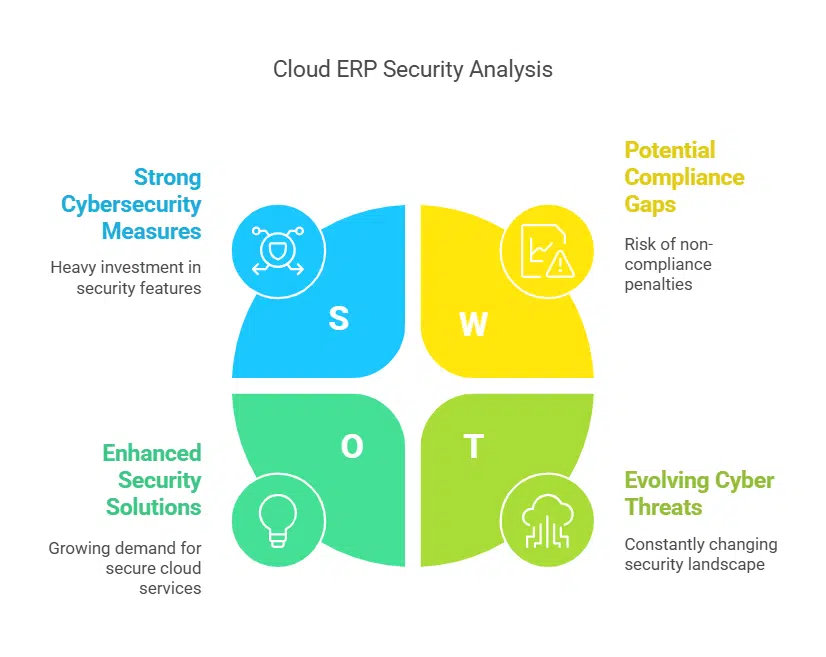
Security is a top concern for businesses handling sensitive data. Cloud ERP providers invest heavily in cybersecurity measures such as encryption, multi-factor authentication, and regular security audits.
Additionally, cloud ERP vendors ensure compliance with industry regulations, reducing the risk of non-compliance penalties and data breaches. In many cases, cloud solutions offer better security than on-premise ERP systems, which may lack dedicated security teams.
Integration with Other Cloud-Based Applications
Modern businesses rely on various cloud-based tools, from CRM and HR management to supply chain solutions. Cloud ERP systems seamlessly integrate with these applications, providing a unified ecosystem that enhances efficiency and decision-making. Traditional ERPs often require complex and costly custom integrations, making them less adaptable to modern business needs.
Disaster Recovery and Data Backup
Data loss due to hardware failure, cyberattacks, or natural disasters can be devastating for businesses. Cloud ERP solutions offer robust disaster recovery and automated data backup features, ensuring business continuity even in the event of unexpected disruptions. Unlike traditional ERPs, where data recovery can be time-consuming and costly, cloud ERP solutions provide peace of mind with their built-in redundancy and secure storage mechanisms.
Improved Collaboration and Real-Time Insights
Cloud ERP enables real-time data sharing across departments and locations, improving collaboration and decision-making. Traditional ERPs often require manual data entry and reconciliation, leading to inefficiencies and delays. With cloud ERP, businesses benefit from real-time reporting, advanced analytics, and AI-driven insights, helping them make informed strategic decisions faster.
Conclusion
The shift from traditional ERP to cloud ERP is driven by a combination of cost savings, flexibility, security, and operational efficiency. As businesses continue to embrace digital transformation, cloud ERP solutions offer a compelling alternative that aligns with modern business needs. Whether you are a small startup or a large enterprise, transitioning to a cloud-based ERP can streamline your operations, enhance agility, and position your company for long-term success.





















