


Mental wellness is no longer just a buzzword; it has become a critical focus in the modern workplace. Employees today value organizations that prioritize their mental health, offering programs, support systems, and resources to create a healthier work environment.
Companies leading the charge in mental wellness are not only improving the lives of their employees but are also boosting productivity, reducing turnover, and fostering a positive workplace culture.
This article highlights 10 companies setting the standard for mental wellness, showcasing their innovative approaches to addressing employee mental health. Let’s explore what makes them stand out and how other organizations can learn from their success.
Why Mental Wellness is a Business Priority?
Workplace stress and mental health challenges have become increasingly prevalent. According to the World Health Organization (WHO), an estimated 12 billion working days are lost annually to depression and anxiety, costing the global economy nearly $1 trillion.
Companies that prioritize mental wellness are seeing tangible benefits, including:
- Higher productivity: Employees with access to mental health support are more engaged and motivated.
- Improved retention: Workers are more likely to stay with companies that care about their well-being.
- Stronger workplace culture: Organizations that focus on mental wellness foster a sense of belonging and trust among employees.
By addressing these challenges, organizations can create a win-win situation for both employees and the business itself.
10 Companies Setting the Standard for Mental Wellness
1. Google
| Sector | Tech |
| Initiatives | Free therapy sessions, mindfulness courses, and mental health days. |
| Differentiator | Comprehensive wellness programs integrated into workplace culture. |
Google has long been known for its innovative approach to employee well-being. Their mental health programs include free access to counseling services, mindfulness courses, and initiatives to reduce workplace stress. Additionally, the company’s culture encourages open discussions about mental health, removing stigma and fostering support.
2. Microsoft
| Sector | Tech |
| Initiatives | Mental health reimbursements and wellness tools in Microsoft Teams. |
| Differentiator | Seamless integration of wellness tools into technology platforms. |
Microsoft supports mental wellness by providing mental health reimbursement programs and integrating wellness tools into its Microsoft Teams platform. These tools help employees manage stress and maintain work-life balance through guided meditations and mindfulness exercises.
3. Johnson & Johnson
| Sector | Healthcare |
| Initiatives | Employee Assistance Programs and on-site counseling. |
| Differentiator | Focus on holistic well-being, including emotional, physical, and mental health. |
Johnson & Johnson offers a comprehensive Employee Assistance Program (EAP), which provides counseling services and mental health resources. The company also conducts regular wellness challenges to promote mental and physical health among employees.
4. Salesforce
| Sector | Tech |
| Initiatives | Mental health apps, free therapy, and mental health first aid training. |
| Differentiator | Emphasis on emotional intelligence and leadership support. |
Salesforce goes above and beyond by offering employees access to mental health apps like Calm and Headspace. They also provide mental health first aid training to managers, empowering them to recognize signs of distress and offer support.
5. Unilever

| Sector | Consumer Goods |
| Initiatives | Global Mental Well-being Framework and peer support networks. |
| Differentiator | Industry-leading global mental wellness policies. |
Unilever’s Global Mental Well-being Framework ensures employees across the world have access to mental health resources. Their peer support networks create safe spaces for employees to discuss their challenges.
6. Starbucks
| Sector | Retail |
| Initiatives | Free therapy for employees and family members. |
| Differentiator | Extending mental health benefits to families. |
Starbucks provides 20 free therapy sessions annually to employees and their family members. This initiative ensures that employees and their loved ones have access to necessary mental health support.
7. Adobe
| Sector | Tech |
| Initiatives | Paid mental health days and wellness stipends. |
| Differentiator | Flexibility for employees to customize their wellness journey. |
Adobe’s wellness stipend allows employees to allocate funds toward activities that improve their mental health, such as fitness classes or therapy. They also provide paid mental health days to encourage rest and recovery.
8. Deloitte
| Sector | Consulting |
| Initiatives | Mental health workshops and mental health champions. |
| Differentiator | Employee-driven mental health advocacy programs. |
Deloitte’s mental health champions program trains employees to advocate for mental wellness in the workplace. Additionally, their workshops address stress management and resilience building.
9. Accenture
| Sector | Consulting |
| Initiatives | Dedicated mental health allies and on-demand support. |
| Differentiator | Proactive approach to eliminating stigma. |
Accenture’s mental health allies program trains employees to support peers and recognize early signs of mental health challenges. The company also offers on-demand mental health support through digital platforms.
10. Patagonia
| Sector | Outdoor Apparel |
| Initiatives | Nature-based therapy and mindfulness retreats. |
| Differentiator | Leveraging nature to promote mental wellness. |
Patagonia focuses on the healing power of nature by offering employees nature-based therapy sessions and access to mindfulness retreats. These initiatives align with their commitment to environmental and social well-being.
Benefits of Prioritizing Mental Wellness in the Workplace
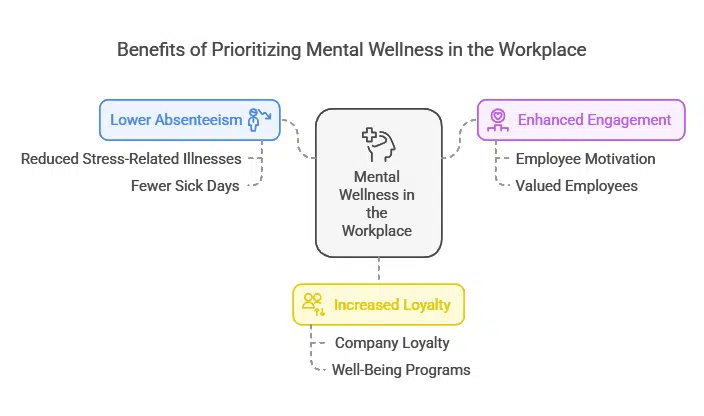
Investing in mental wellness benefits both employees and employers. Companies that prioritize mental health report:
- Lower absenteeism: Employees take fewer sick days due to stress-related illnesses.
- Enhanced engagement: Employees feel valued and are more motivated to perform.
- Increased loyalty: Workers are more likely to stay with companies that care about their well-being.
For example, companies like Google and Salesforce have reported improved employee satisfaction scores and retention rates after implementing mental wellness programs.
How Other Companies Can Follow Suit
Organizations looking to enhance their mental wellness efforts can take inspiration from the practices of these 10 companies. Here are some actionable steps:
- Offer Counseling Services: Provide free or subsidized access to therapy and mental health professionals.
- Implement Wellness Programs: Encourage employees to participate in mindfulness sessions or fitness activities.
- Train Managers: Equip leaders with the tools to recognize and address mental health challenges.
- Normalize Conversations: Create a culture where employees feel safe discussing their mental health.
- Leverage Technology: Use apps and digital tools to promote mental wellness and mindfulness.
Takeaways
The focus on mental wellness is reshaping workplace culture across industries. These 10 companies setting the standard for mental wellness demonstrate how prioritizing employee mental health can lead to happier, healthier, and more productive teams. By following their example, other organizations can create environments where employees thrive both personally and professionally.
Investing in mental wellness is not just a trend; it is a necessity for building a sustainable and successful business. How does your organization support mental wellness? Share your thoughts in the comments below!





















