

In recent years, the beauty and skincare industry has seen a significant shift toward eco-friendly and sustainable products. However, not everything marketed as “green” is genuinely environmentally friendly.
This deceptive marketing practice is known as greenwashing. But what is greenwashing in skincare, and why is it important for consumers to be aware of it?
The Rise of Greenwashing in the Beauty Industry
In recent years, the beauty industry has witnessed a significant surge in demand for “green” and “clean” products. As consumers become more aware of the environmental impact of their purchases and the potential health risks associated with certain chemicals, they are increasingly seeking out natural, organic, and sustainable skincare options. This shift in consumer preferences has led to a corresponding increase in greenwashing practices among cosmetic companies.
Key Statistics
- The global natural and organic cosmetics market was valued at approximately USD 33.7 billion in 2023 and is projected to reach around USD 70.6 billion by 2034, growing at a CAGR of 7.0%.
- A survey conducted by Provenance and London Research found that 79% of beauty consumers have doubts about whether to trust the industry’s sustainability claims.
- Only 13% of over 7,000 beauty products analyzed by Plastic Soup researchers were found to be free from microplastics.
Common Greenwashing Tactics in Skincare
Misleading Labels and Terminology
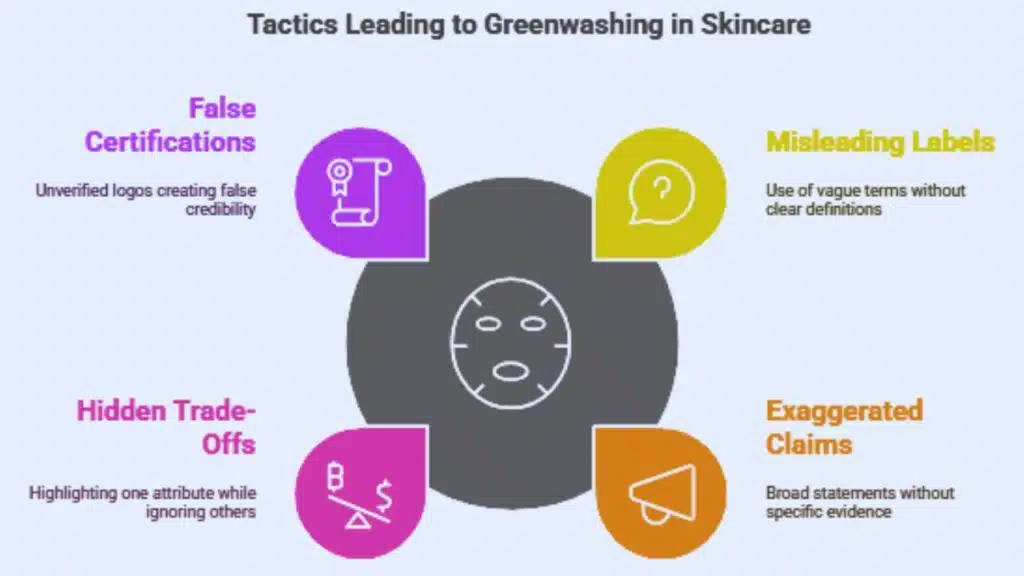
Many skincare brands use vague or unregulated terms like “natural,” “organic,” or “eco-friendly” without clear substantiation. For example, the term “natural” has no standardized definition in the cosmetics industry, allowing companies to use it liberally even when products contain synthetic ingredients.
Exaggerated Environmental Claims
Some companies make broad or exaggerated claims about their products’ environmental benefits without providing specific evidence. This can include statements about biodegradability, sustainability, or carbon neutrality that are difficult for consumers to verify.
Hidden Trade-Offs
A product may be marketed based on a single environmental attribute while ignoring other potentially harmful aspects. For instance, a skincare product might boast about being “paraben-free” while still containing other questionable synthetic ingredients.
False Certification Logos
Some brands create their own certification logos or use official-looking seals that have no real meaning or third-party verification.
Real-World Examples of Greenwashing in Skincare
Bondi Sands Sunscreen Controversy
Bondi Sands, a well-known sunscreen brand, faced criticism for advertising its products as “reef friendly” when they contained ingredients known to be harmful to marine life, including avobenzone, homosalate, octisalate, and octocrylene.
L’Oréal’s Sustainability Claims
L’Oréal came under fire for its “L’Oréal Paris Botanicals” collection, which emphasized natural ingredients and eco-friendly packaging. Critics argued that despite these claims, L’Oréal still relies heavily on plastic packaging and questionable sourcing practices, contributing to a significant environmental impact.
Head & Shoulders Recyclability Issue
Procter & Gamble’s Head & Shoulders brand marketed its Ocean Clean Bottle as recyclable. However, the Changing Markets Foundation found that while the bottles could be recycled, the caps were not recyclable, potentially misleading consumers about the product’s overall sustainability.
The Impact of Greenwashing on Consumers and the Industry
Erosion of Consumer Trust
Greenwashing practices have led to increased skepticism among consumers. A study revealed that 71% of consumers are unsure what brands actually mean when they claim to be “environmentally friendly. This erosion of trust can have long-lasting effects on the entire beauty industry.
Barrier to Genuine Sustainability Efforts
Companies that genuinely invest in sustainable practices and eco-friendly products face unfair competition from those engaging in greenwashing. This can discourage authentic efforts towards sustainability and innovation in the skincare industry.
Environmental Consequences
When consumers purchase products based on false environmental claims, they may inadvertently support practices that are harmful to the environment. This perpetuates the cycle of environmental damage that many consumers are trying to avoid.
How to Identify and Avoid Greenwashed Skincare Products?
Look for Credible Certifications
Seek out products with recognized certifications such as USDA Organic, COSMOS, Ecocert, or EWG Verified. These certifications have strict standards and third-party verification processes.
Analyze Ingredient Lists
Take the time to read and understand product ingredient lists. Be wary of products that claim to be “natural” but contain a long list of synthetic ingredients.
Research Brand Practices
Investigate a brand’s overall sustainability practices, including their manufacturing processes, packaging choices, and environmental initiatives. Genuinely committed brands typically provide transparency about their practices.
Be Skeptical of Vague Claims
Question broad or ambiguous environmental claims. Look for specific, measurable information about a product’s eco-friendly attributes.
Utilize Third-Party Resources
Consult independent organizations and databases, such as the Environmental Working Group (EWG), for unbiased information about product ingredients and safety.
The Future of Green Beauty: Regulations and Industry Response
Upcoming EU Regulations
The European Union is working on legislative proposals to justify green claims, which could significantly impact how beauty brands market their products globally.
Industry Self-Regulation
Some retailers, like Sephora with its “Clean at Sephora” program, have developed their own standards for clean beauty. However, these efforts have also faced scrutiny and legal challenges due to varying standards across the industry.
Consumer Demand for Transparency
As consumers become more educated about greenwashing, there is increasing pressure on brands to provide clear, verifiable information about their products and practices. This shift is likely to drive more authentic sustainability efforts in the skincare industry.
Takeaways
What is greenwashing in skincare? It’s a deceptive practice that undermines consumer trust and genuine sustainability efforts in the beauty industry. As consumers, it’s crucial to be aware of greenwashing tactics and to look beyond marketing claims when choosing skincare products.
By supporting brands with genuine commitments to sustainability and environmental responsibility, we can help shape a more honest and eco-friendly beauty industry.