
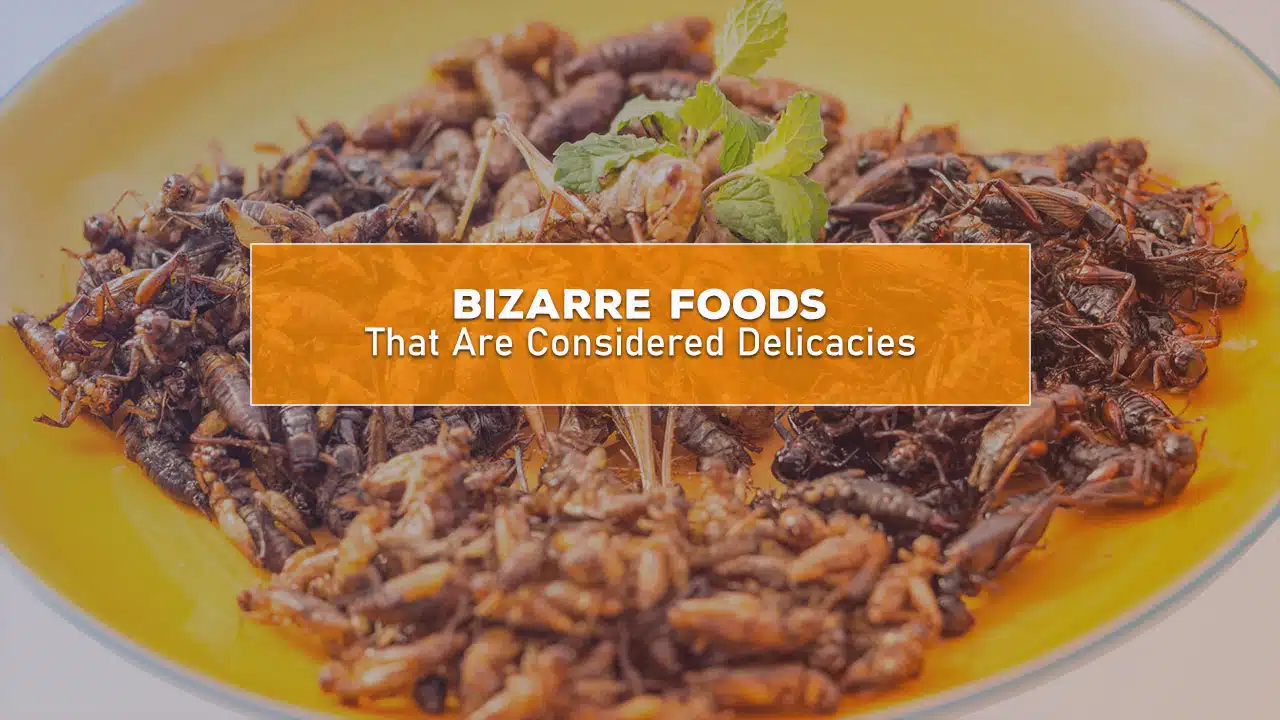
Imagine biting into a cheese crawling with live maggots or savoring a soup made from bird saliva. How about snacking on deep-fried tarantulas or sipping coffee made from partially digested coffee cherries?
Welcome to the wild and wonderful world of bizarre foods! These aren’t just dares for adventurous eaters or scenes from reality TV shows. In fact, these unusual dishes are considered delicacies in various parts of the world, prized for their unique flavors, textures, and cultural significance.
In this gastronomic journey, we’ll explore 15 of the most intriguing and sometimes stomach-churning foods that are treasured in their home cultures.
Bizarre Foods Around the World
Food is a window into culture, history, and tradition. What seems normal to one person might be shocking to another. In this article, we’ll take a culinary journey around the world to discover 15 bizarre foods around the world that are considered delicacies.
Some may make your mouth water, while others might turn your stomach. Let’s dive into the weird and wonderful world of bizarre delicacies!
1. Haggis – Scotland
Haggis, Scotland’s national dish, is a savory pudding made from sheep’s heart, liver, and lungs, minced with onion, oatmeal, suet, and spices. This mixture is traditionally encased in the animal’s stomach and simmered. Despite its unusual ingredients, haggis has a nutty texture and savory flavor, often served with “neeps and tatties” (turnips and potatoes).
2. Balut – Philippines
Balut is a fertilized duck egg, incubated for 14-21 days before being boiled. Crack it open to find a partially developed duck embryo, complete with bones and feathers.
It’s seasoned and eaten whole from the shell. Rich in protein and believed to be an aphrodisiac, balut is a popular street food in the Philippines.
3. Hákarl – Iceland
Hákarl is fermented shark meat, typically from the Greenland shark. The shark is buried for 6-12 weeks, then hung to dry for months. This process makes the poisonous flesh edible.
The result is a pungent, ammonia-rich meat with a strong odor and fishy taste. It’s often served with a shot of local schnapps to help it go down.
4. Fugu – Japan
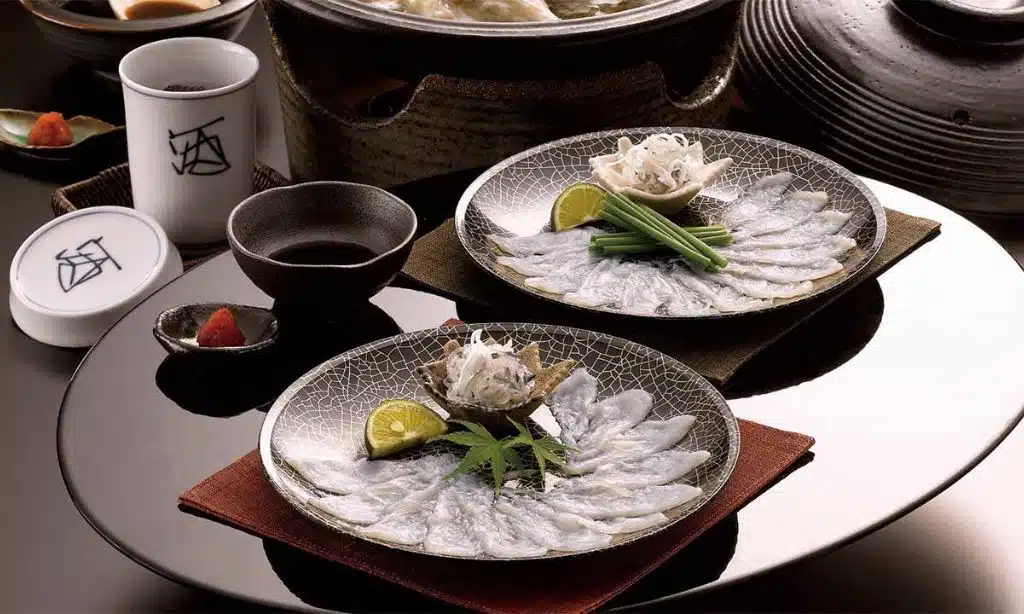
Fugu, or pufferfish, is infamous for its potential danger. It contains a deadly neurotoxin, requiring chefs to undergo special training to prepare it safely.
When done right, fugu offers a subtle flavor and unique texture. Some diners report a tingling sensation while eating. Despite the risks, it’s a highly prized luxury in Japan.
5. Escamoles – Mexico
Escamoles, or “insect caviar,” are the edible larvae of Liometopum ants. Harvested from agave plant roots, they resemble small, white pine nuts.
With a nutty flavor and poppy texture, they’re often sautéed and served in tacos or omelets. Rich in protein, escamoles have been part of Mexican cuisine since Aztec times.
6. Sannakji – South Korea
Sannakji is a Korean delicacy of live octopus. Small octopuses are cut into wiggling pieces and served immediately, often seasoned with sesame oil. The suction cups are still active, creating a unique “moving” sensation in the mouth.
It’s a risky dish, as the active suckers can stick to the throat if not chewed properly.
7. Kopi Luwak – Indonesia
Kopi Luwak, or civet coffee, is the world’s most expensive coffee. It’s made from coffee cherries eaten, partially digested, and defecated by Asian palm civets.
The beans are then collected, cleaned, and roasted. Enthusiasts claim the civet’s digestion process creates a smooth, less acidic brew. However, ethical concerns surround its production.
8. Fried Tarantulas – Cambodia
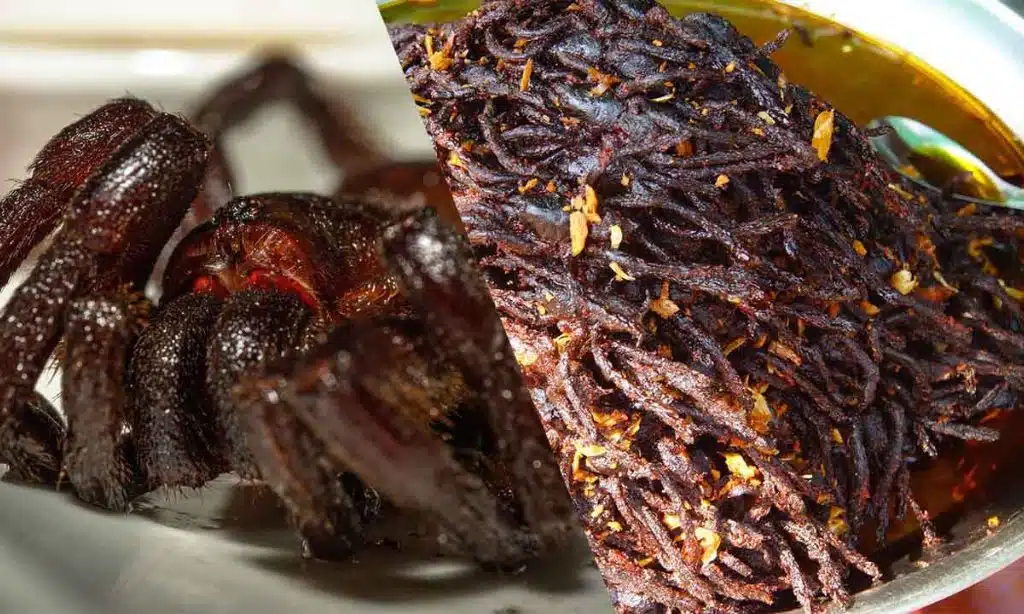
In Cambodia, fried tarantulas are a popular street food. These arachnids are seasoned, deep-fried whole, and eaten like crunchy snacks. They’re said to taste like a cross between chicken and cod.
This practice began during food shortages under the Khmer Rouge regime and has since become a cultural delicacy.
9. Surströmming – Sweden
Surströmming is fermented Baltic Sea herring, notorious for its pungent smell. The fish is caught in spring, salted, and left to ferment for months before being canned.
When opened, the odor is so strong that it’s often eaten outdoors. Despite its challenging aroma, Swedes enjoy it on bread with onions and potatoes.
10. Bird’s Nest Soup – China
This Chinese delicacy is made from the nests of swiftlets, small birds that build nests using their saliva. These nests are harvested from cave walls, cleaned, and then dissolved in chicken broth.
The soup is believed to have various health benefits, including improving skin complexion and boosting the immune system.
11. Casu Marzu – Italy
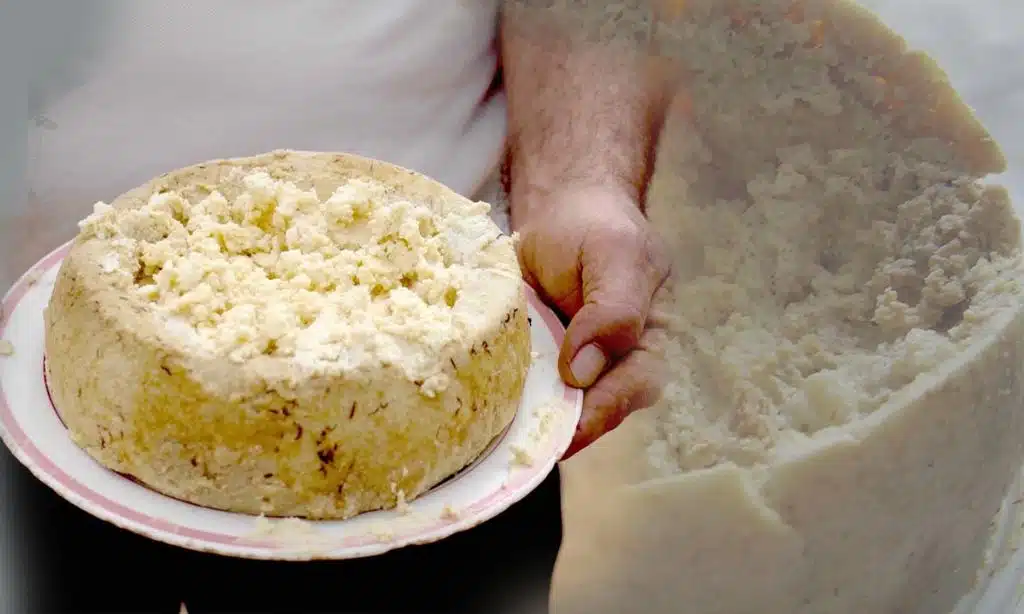
Casu marzu, or “maggot cheese,” is a Sardinian specialty. Cheese fly larvae are introduced into pecorino, consuming and fermenting it. The result is a soft, gooey cheese with live maggots.
Some eat it with the larvae still wriggling! It’s illegal in the EU due to safety concerns but remains a prized black market delicacy.
12. Witchetty Grub – Australia
A staple in Australian Aboriginal bush tucker, witchetty grubs are the larvae of ghost moths. Found in the roots of certain trees, these plump, white grubs can be eaten raw or lightly cooked.
Raw, they taste like almonds; cooked, they’re said to have a flavor similar to roasted chicken. They’re rich in protein and essential nutrients.
13. Tuna Eyeballs – Japan
In Japan, tuna eyeballs are considered a delicacy and can be found in many supermarkets. They’re typically boiled or steamed and seasoned with soy sauce and mirin.
The eyeball has different textures: the outside is fatty and tough, while the interior is soft and tasty, often compared to squid or octopus.
14. Cuy – Peru
Cuy, or guinea pig, has been a traditional food in the Andean highlands for thousands of years. These domesticated rodents are typically roasted whole and served with potatoes and corn.
The meat is described as gamey, similar to rabbit, and is rich in protein and low in fat. It’s a common dish at festivals and special occasions.
15. Huitlacoche – Mexico
Huitlacoche, also known as “corn smut,” is a fungus that grows on corn, turning kernels into tumor-like bulbs. While considered a plague in most corn-growing nations, it’s a delicacy in Mexico.
With a sweet, earthy flavor often compared to mushrooms, it’s used in various dishes, from tacos to soups. It’s also nutritious, high in protein and lysine.
Takeaways
These 15 bizarre foods around the world demonstrate the incredible diversity of human culinary traditions. While some of these delicacies might seem strange or even unappetizing to those unfamiliar with them, they represent important cultural heritage and often sustainable use of local resources.
Whether you’re an adventurous eater or prefer to stick to more familiar fare, exploring these unusual foods can broaden our understanding of global cultures and challenge our perceptions of what’s considered edible. Remember, one person’s bizarre food is another’s cherished delicacy!