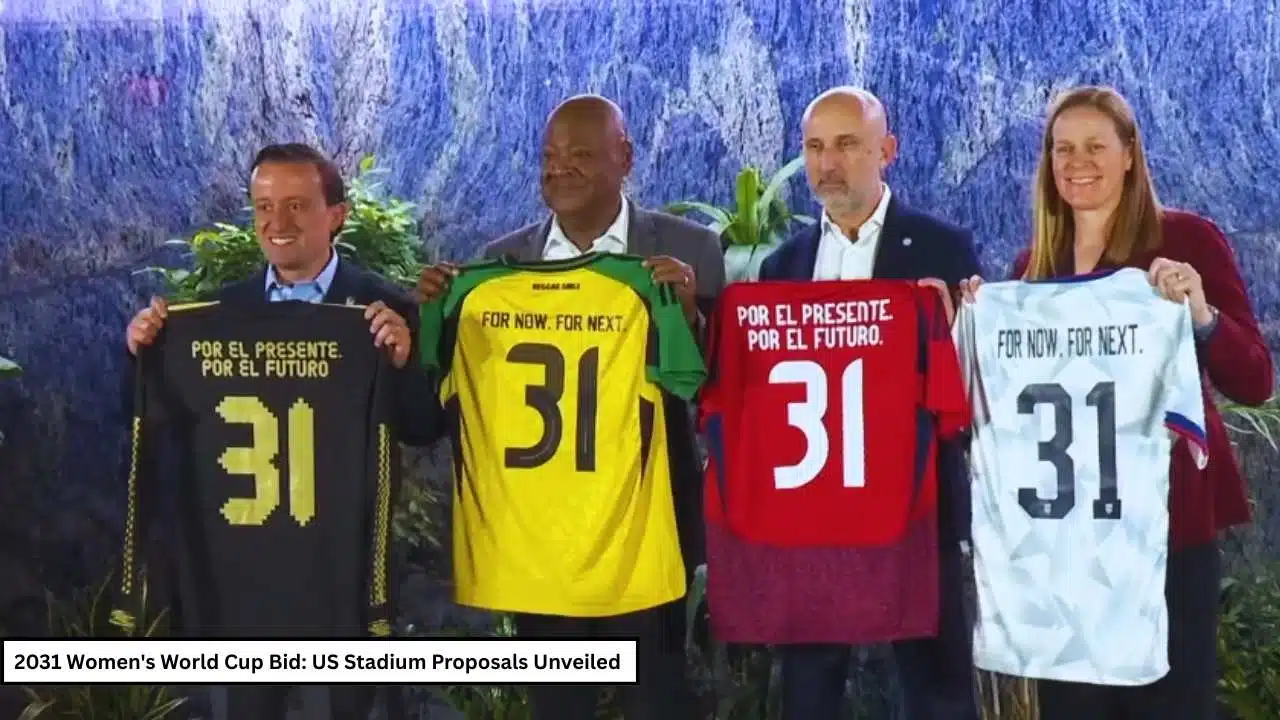
The United States Soccer Federation, in partnership with soccer organizations from Mexico, Costa Rica, and Jamaica, has submitted an ambitious bid to host the 2031 FIFA Women’s World Cup, proposing 14 American stadiums as primary venues among a total of 20 key sites. This collaborative effort highlights the region’s shared infrastructure and passion for the sport, drawing on facilities already preparing for high-profile events like the 2026 men’s World Cup. FIFA made the bid books public on Friday, November 28, 2025, revealing that this North American quartet is the only bidder for 2031, while a multi-nation UK proposal stands alone for 2035. The global soccer governing body is scheduled to formally approve the 2031 hosts at its annual congress on April 30, 2026, marking a pivotal moment for the tournament’s expansion and growth in women’s soccer. This bid comes at a time when the sport is experiencing unprecedented popularity, with viewership for the 2023 edition surpassing 2 billion globally, as reported by FIFA’s official statistics, underscoring the potential for even greater impact six years from now.
The proposal emphasizes inclusivity and regional representation, aiming to bring the tournament to diverse communities across four countries. By leveraging existing venues, the bid minimizes construction needs while maximizing fan accessibility and economic benefits. According to the detailed bid documents, organizers anticipate a 48-team format that could draw 4.5 million spectators in person, a dramatic increase from the 1.9 million who attended the 2023 tournament co-hosted by Australia and New Zealand, which generated $570 million in revenue. For context, the upcoming 2027 Women’s World Cup in Brazil is projected to bring in about $1 billion, but the 2031 bid envisions quadrupling that figure to around $4 billion through expanded matches, global broadcasting deals, and heightened sponsorship interest. This revenue projection is supported by analyses from sports economics experts at Deloitte, who highlight how women’s soccer has seen a 30% annual growth in commercial value since 2019, driven by increased investment from brands like Nike and Visa. The bid’s focus on sustainability includes plans for carbon-neutral operations, aligning with FIFA’s green initiatives introduced after the 2022 men’s tournament in Qatar.
Core Stadium Selections: Building on 2026 Men’s World Cup Infrastructure
At the heart of the US portion of the bid are seven stadiums already selected for the 2026 men’s World Cup, ensuring proven logistics and fan-ready facilities that can seamlessly transition to women’s events. These venues represent a mix of NFL homes and multi-purpose arenas, each with capacities exceeding FIFA’s minimum requirements of 40,000 seats for group-stage matches. The inclusion of these sites demonstrates strategic planning, as they have undergone recent upgrades for safety, technology, and accessibility, including enhanced Wi-Fi for live streaming and inclusive seating for families and diverse audiences. US Soccer officials have stressed that this overlap will allow for shared knowledge transfer, from security protocols to transportation networks, reducing costs and environmental impact. The bid book explicitly states that by proposing more than the required 20 sites, the joint partners are committed to “securing the best possible hosting conditions and ensuring the tournament represents the full diversity of our region on a global scale,” a sentiment echoed in FIFA’s evaluation criteria for equitable geographic spread.
Detailed breakdowns of these flagship US venues reveal their unique strengths:
- Arlington, Texas (AT&T Stadium): This colossal 80,000-seat behemoth, home to the Dallas Cowboys, features a retractable roof and the world’s largest HD video screen, spanning 160 feet wide. It has hosted international events like the 2010 NBA All-Star Game and could serve as a semi-final or final site, with its central location facilitating easy access for fans from the South and Midwest. Recent renovations added more family zones and improved acoustics for national anthems, making it ideal for the electric atmosphere of World Cup matches.
- Atlanta, Georgia (Mercedes-Benz Stadium): With a 71,000 capacity and a innovative retractable roof that opens like a lotus flower, this stadium prioritizes sustainability through solar panels and water recycling systems. It hosted Super Bowl LIII in 2019 and MLS games for Atlanta United, proving its versatility for soccer; the bid envisions it for knockout rounds, capitalizing on Atlanta’s role as a major airline hub for international arrivals.
- East Rutherford, New Jersey (MetLife Stadium): Shared by the New York Giants and Jets, this 82,500-seat venue in the New York metropolitan area was the site of the 2014 Super Bowl and 2016 Copa América Centenario matches. Its proximity to Manhattan— just 10 miles away—positions it as a potential opener or final host, with enhanced public transit links to handle massive crowds; the bid notes its history of accommodating over 100,000 for concerts, showcasing scalability.
- Houston, Texas (NRG Stadium): Seating 72,000 under a retractable roof, NRG is a staple for the Houston Texans and has experience with international soccer, including 2021 Gold Cup finals. Its location in a diverse city with strong Latin American communities aligns with the tournament’s global appeal, and the bid includes provisions for multilingual signage and cultural fan zones to celebrate Mexico’s involvement.
- Inglewood, California (SoFi Stadium): The 70,000-seat home of the Los Angeles Rams and Chargers, opened in 2020, boasts state-of-the-art features like the Halo Board—a 360-degree LED ring—and sustainable materials. As a West Coast anchor, it could host group games leading to later stages, with easy access via LAX airport; SoFi’s design for immersive experiences, including haptic seating, would elevate the viewing for women’s soccer fans.
- Kansas City, Missouri (Arrowhead Stadium): Renowned for its roaring crowds—holding the Guinness record for the loudest outdoor stadium at 142.2 decibels—this 76,000-capacity venue for the Kansas City Chiefs includes a backup soccer-specific option in nearby CPKC Stadium. It has hosted 2011 MLS All-Star Games and could feature high-energy matches, with the bid emphasizing local support from Sporting KC and the NWSL’s KC Current to build grassroots excitement.
- Seattle, Washington (Lumen Field): At 68,700 seats, this stadium is the fortress of the Seattle Seahawks and Sounders FC, famous for its “12th Man” atmosphere that rivals European clubs. It hosted 2009 Gold Cup semifinals and benefits from Seattle’s tech-savvy fanbase, with the bid proposing integrations like AR apps for match stats; its rainy climate is mitigated by covered seating, ensuring comfort year-round.
These selections not only meet FIFA’s technical standards—verified through independent audits by firms like Populous, which designed several of these arenas—but also promote gender equity by highlighting venues that have increasingly hosted women’s events, such as the 2024 SheBelieves Cup.
Expanding the US Roster: Additional Venues for Depth and Flexibility
Beyond the 2026 lineup, the bid proposes seven more US stadiums to provide options for the tournament’s 104-match schedule, ensuring coverage across time zones and climates. These additions include a blend of established NFL sites and emerging soccer-specific facilities, allowing FIFA to balance large-scale spectacles with intimate atmospheres. The strategy addresses potential challenges like weather or scheduling conflicts, with each venue evaluated for proximity to hotels, airports, and public transport. US Soccer’s bid team consulted with local governments and fan groups during planning, incorporating feedback to prioritize accessibility for underrepresented communities, such as affordable parking and shuttle services from urban centers.
The complementary US sites include:
- Charlotte, North Carolina (Bank of America Stadium): Home to the Carolina Panthers, this 74,000-seat stadium in the growing Southeast hub has hosted ACC championships and 2017 NHL Winter Classics. Its modern amenities, including premium club levels, make it suitable for quarterfinals, and Charlotte’s banking economy could attract corporate sponsorships tailored to women’s empowerment initiatives.
- Denver, Colorado (Empower Field at Mile High): The Denver Broncos’ 76,000-capacity venue, elevated at 5,280 feet, challenges athletes with thin air but offers stunning Rocky Mountain views. It has experience with rugby sevens at the 2015 Pan Am Games and could host early rounds, with the bid outlining altitude acclimation programs for teams, drawing from successful MLS adaptations.
- Minneapolis, Minnesota (U.S. Bank Stadium): This 66,000-seat indoor arena, with its ETFE translucent roof allowing natural light, was built for the 2014 Super Bowl and Vikings games. Its cold-weather dome suits summer tournaments, and proximity to the Twin Cities’ international airport supports global travel; the venue’s fan education programs on women’s soccer history add educational value.
- Nashville, Tennessee (Geodis Park): A 30,000-seat soccer-specific stadium for Nashville SC, opened in 2022, it emphasizes community with green spaces and local art installations. As one of the smaller options, it could host group games, fostering an up-close experience; Nashville’s music scene ties into plans for post-match concerts featuring female artists.
- Orlando, Florida (Camping World Stadium): With 65,000 seats, this multi-purpose venue hosted the 1994 men’s World Cup and 2021 NCAA championships. Its theme-park adjacency—near Disney World—appeals to families, and the bid envisions youth clinics here to inspire the next generation of players.
- San Diego, California (Snapdragon Stadium): Recently expanded to 35,000 seats for San Diego State University, it includes a sports medicine complex ideal for player recovery. As a coastal city, it offers mild weather and could feature beachside fan events, building on San Diego’s history with the 1984 Olympic soccer qualifiers.
- Washington, D.C. (Proposed RFK Stadium Site): A new 55,000-seat NFL venue in development to replace the historic RFK, which hosted 1994 World Cup games, this site symbolizes renewal. The bid anticipates completion by 2028, with designs incorporating D.C.’s monuments for iconic backdrops; its location near federal landmarks underscores the tournament’s role in promoting diplomacy through sport.
These venues collectively span from the East Coast to the Pacific, verified by FIFA’s preliminary site visits documented in the bid book, ensuring logistical efficiency for teams traveling between host cities.
International Venues: Mexico, Costa Rica, and Jamaica’s Contributions
The joint bid extends beyond the US to foster true North American and Caribbean unity, with Mexico proposing four stadiums that leverage its storied soccer legacy. As co-hosts of 2026, these sites are battle-tested for World Cup demands. Mexico’s inclusion highlights cultural ties, with plans for bilingual broadcasts and heritage tours to deepen fan immersion.
- Mexico City (Estadio Azteca): The crown jewel at 87,000 seats, it hosted the 1970 and 1986 men’s World Cups and is set for 2026 openers. Its high altitude tests endurance, but renovations for better ventilation and accessibility make it a prime final candidate; Azteca’s murals and fan traditions would add vibrant energy.
- Guadalajara (Estadio Akron): Chivas Guadalajara’s 46,000-seat fortress, opened in 2010, features a translucent roof and youth academies. It could host group stages, drawing on Guadalajara’s tequila and mariachi culture for festive atmospheres.
- Monterrey (Estadio BBVA): Known as “El Gigante de Acero” with 53,000 seats, its steel design symbolizes industrial strength. Home to CF Monterrey, it has hosted 2019 Gold Cup matches and includes family suites for broader appeal.
- Torreón (Estadio Corona): Santos Laguna’s 30,000-capacity venue in the desert north adds geographic balance, with solar-powered features for sustainability. It’s ideal for smaller matches, connecting with local ranching communities.
Costa Rica and Jamaica bring Central American and Caribbean flair with their national stadiums:
- San José, Costa Rica (Estadio Nacional): Built in 2011 with 35,000 seats, it hosted 2014 youth qualifiers and emphasizes eco-friendliness amid rainforests. An alternate, Estadio Saprissa, offers 23,000 seats for backup.
- Kingston, Jamaica (National Stadium): This 35,000-seat track-and-field icon has seen Reggae Boyz triumphs and could host openers, infusing reggae rhythms and jerk cuisine into fan festivals.
Backups like Mexico’s Estadio Miguel Hidalgo in Pachuca (30,000 seats) and Estadio Corregidora in Querétaro (33,000) provide redundancy, all assessed for seismic safety per FIFA’s engineering reports.
Backup and Alternative US Venues: A Comprehensive Network of 50 Sites
To accommodate the tournament’s scale, the bid lists 26 additional US stadiums as viable options, pushing the total to 50 across 35 cities or regions. This expansive framework allows FIFA flexibility in assigning matches, from mega-events in NFL behemoths to community-focused games in MLS parks. The approach mitigates risks like venue availability, with many sites already compliant with FIFA’s pitch dimensions (105m x 68m) and floodlight standards (1,400 lux minimum). Local economic impact studies, conducted by the Sports & Fitness Industry Association, project billions in tourism revenue, including hotel bookings and merchandise sales.
Notable backups include:
- Foxborough, Massachusetts (Gillette Stadium): 65,000 seats for the New England Patriots, with MLS Revolution ties; a 2026 site offering Northeast access.
- Philadelphia, Pennsylvania (Lincoln Financial Field): Eagles’ 69,000-capacity home, known for tailgating culture and 2003 Army-Navy games.
- Santa Clara, California (Levi’s Stadium): 68,500 seats with turf heating, a 2026 venue near Silicon Valley for tech integrations.
- Baltimore, Maryland (M&T Bank Stadium): 71,000 seats, Ravens’ home with harbor views and 2015 Papal visit experience.
- Birmingham, Alabama (Protective Stadium): 47,000 seats, opened 2021 for UAB Blazers and Birmingham Legion SC.
- Carson, California (Dignity Health Sports Park): 27,000-seat LA Galaxy home, a soccer purist’s delight.
- Cincinnati, Ohio (TQL Stadium): 26,000 seats for FC Cincinnati, riverfront location with modern amenities.
- Cleveland, Ohio (Huntington Bank Field): Browns’ 67,500-seat stadium on Lake Erie, versatile for cold-weather play.
- Columbus, Ohio (Lower.com Field): Crew’s 20,000-seat park, emphasizing fan proximity.
- Frisco, Texas (Toyota Stadium): FC Dallas’ 19,000 seats, with youth development focus.
- Glendale, Arizona (State Farm Stadium): Cardinals’ 63,400-seat retractable-roof venue.
- Harrison, New Jersey (Red Bull Arena): 25,000 seats for New York Red Bulls, urban soccer hub.
- Los Angeles, California (Los Angeles Memorial Coliseum): Historic 77,500 seats, Olympic legacy site.
- Miami Gardens, Florida (Hard Rock Stadium): Notably excluded from this bid despite 2026 inclusion, possibly due to turf conflicts; alternatives like Chase Stadium (22,000 for Inter Miami) step in.
- Nashville, Tennessee (Nissan Stadium): Titans’ 69,000 seats as a larger option to Geodis.
- New York (Etihad Park): Proposed 25,000-seat NYCFC stadium opening 2027 in Queens, a soccer-specific gem.
- Orlando, Florida (Inter&Co Stadium): 25,000 seats for Orlando City, theme-park adjacent.
- Pasadena, California (Rose Bowl): Iconic 92,500 seats, 1994 World Cup and Olympic host.
- St. Louis, Missouri (Energizer Park): Proposed 22,000-seat site for St. Louis CITY SC.
- San Francisco, California (Oracle Park): Giants’ 41,000-seat baseball venue, adaptable for soccer.
- Sandy, Utah (America First Field): Real Salt Lake’s 20,000 seats in the Rockies.
- Tampa, Florida (Raymond James Stadium): Buccaneers’ 65,000 seats with pirate ship flair.
- Houston, Texas (Shell Energy Stadium): 22,000-seat backup for Dynamo.
- Kansas City, Missouri (CPKC Stadium): 35,000 seats, the world’s first stadium built for a women’s pro team.
- Washington, D.C. (Audi Field): 20,000-seat DC United home as RFK alternate.
- Indianapolis, Indiana (Proposed Lucas Oil Stadium Expansion): 67,000 seats for Colts, with new developments eyed.
Chicago’s absence stems from its 2022 withdrawal from 2026 bidding over FIFA’s financial demands, as detailed in official city statements, while Miami’s Hard Rock omission avoids scheduling overlaps. This network, spanning 28 US cities, six in Mexico, and more internationally, positions the bid for comprehensive coverage, with final picks likely post-2027 tournament based on performance data.
Ticket Pricing Strategy: Balancing Accessibility and Revenue
The bid outlines a transparent ticket pricing model to make the event inclusive, starting at $35 for entry-level seats in group stages—far more affordable than the men’s tournament’s $60 minimum for 2026. Prices escalate to $120–$600 for the final, reflecting demand while keeping averages under $100 for most matches, as per the grid in the bid book. Premium seating, including VIP boxes and hospitality suites, will comprise 10–20% of capacity in most venues, generating high-margin revenue without alienating general fans. This contrasts with FIFA’s opaque approach to 2026 men’s pricing, which ranges up to $6,730 and uses dynamic adjustments based on real-time demand, a system criticized by fan groups like Football Supporters Europe for exclusivity. For 2031, the fixed grid promotes predictability, with family packages and student discounts to boost attendance among youth, aligning with FIFA’s goal of 50% female spectatorship.
Economists at PwC estimate that affordable pricing could increase attendance by 20% over 2023, especially in diverse markets like the US, where women’s soccer participation has surged 15% annually per U.S. Soccer data.
Revenue Projections and Fan Engagement Initiatives
Organizers forecast $4 billion total revenue, with $1.4 billion from marketing and sponsorships alone—doubling the 2023 figures through partnerships with global brands targeting empowered audiences. Broadcasting rights, projected at $1.5 billion, build on the 2023 deal’s success, while merchandise and licensing add another $500 million. This windfall would fund FIFA’s development programs, like grassroots coaching in host countries.
To amplify engagement, the bid includes fan festivals in non-host cities, featuring live music, interactive zones, and watch parties with big screens. In the US, expect NFL-style tailgates; in Mexico, cultural fairs with lucha libre; in Jamaica, reggae concerts; and in Costa Rica, eco-adventures. These elements, inspired by the 2023 tournament’s fan zones that drew 500,000 visitors, aim to create lasting legacies, including stadium legacies for community sports. With the bid’s emphasis on diversity—over 50% of planning roles held by women, per US Soccer reports—the 2031 Women’s World Cup promises to be a transformative event, elevating the sport’s global profile. Final venue decisions may evolve over years, but this proposal sets a high bar for excellence and inclusivity.