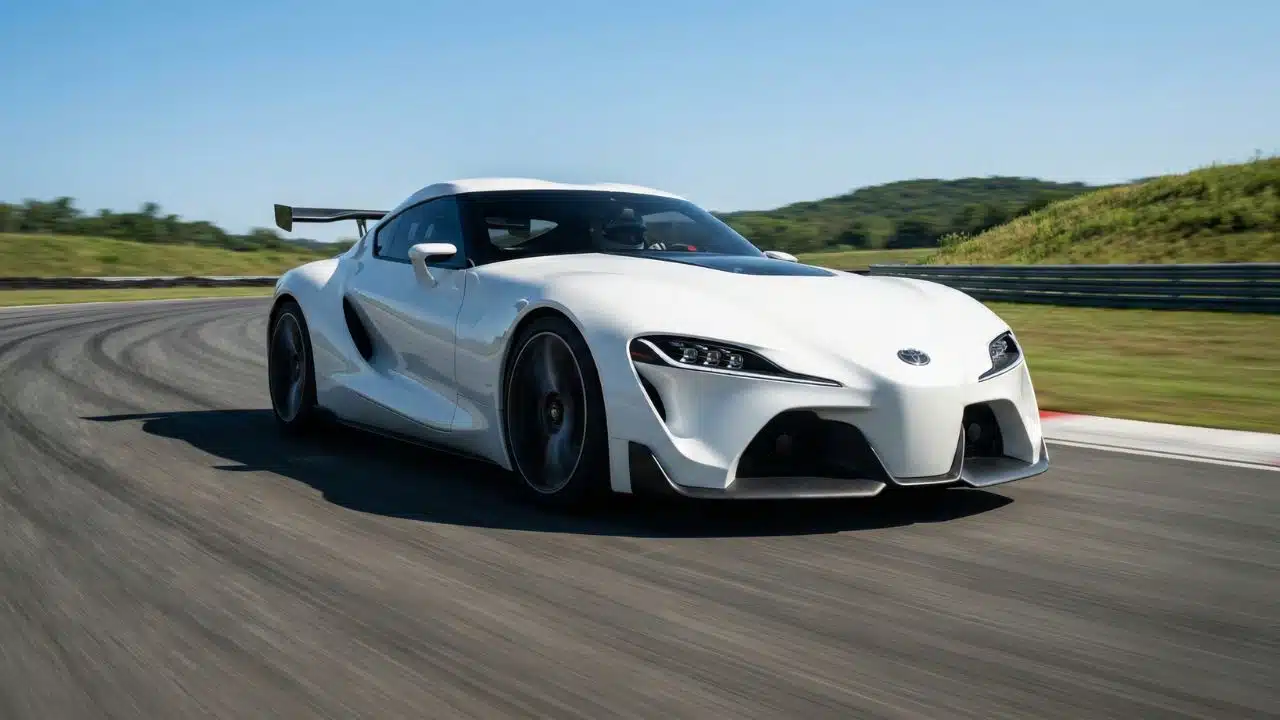
The 2026 Toyota GR GT is a hardcore, twin-turbo V8 halo car wrapped in a featherweight aluminum frame, aimed at enthusiasts who actually drive every day, not just on track days. This 2026 Toyota GR GT Review: Twin-Turbo V8 Performance and Featherweight Aluminum Frame Review looks at how it behaves over a full week of commuting, back-road blasts, and a dedicated track session.
In Toyota’s lineup, the GR GT sits above the GR Supra as a flagship 2+2 performance coupe. Think front-engine, rear-wheel-drive, long-hood proportions with genuine supercar pace. It targets buyers cross-shopping the Nissan GT-R, Porsche 911, and high-spec Corvettes—drivers who want brutal acceleration, precise handling, and just enough comfort to live with it daily.
Over seven days, the GR GT proved to be a car of extremes: astonishingly capable when pushed, surprisingly civilized when you back off, but with some compromises in refinement and practicality that you’ll notice if this is your only car.
Exterior Design and Practicality
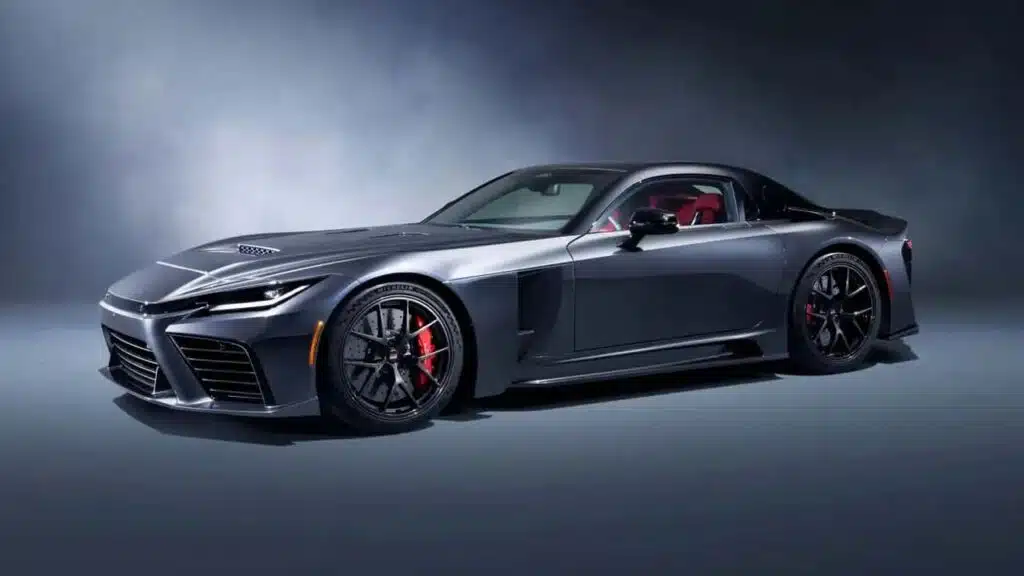
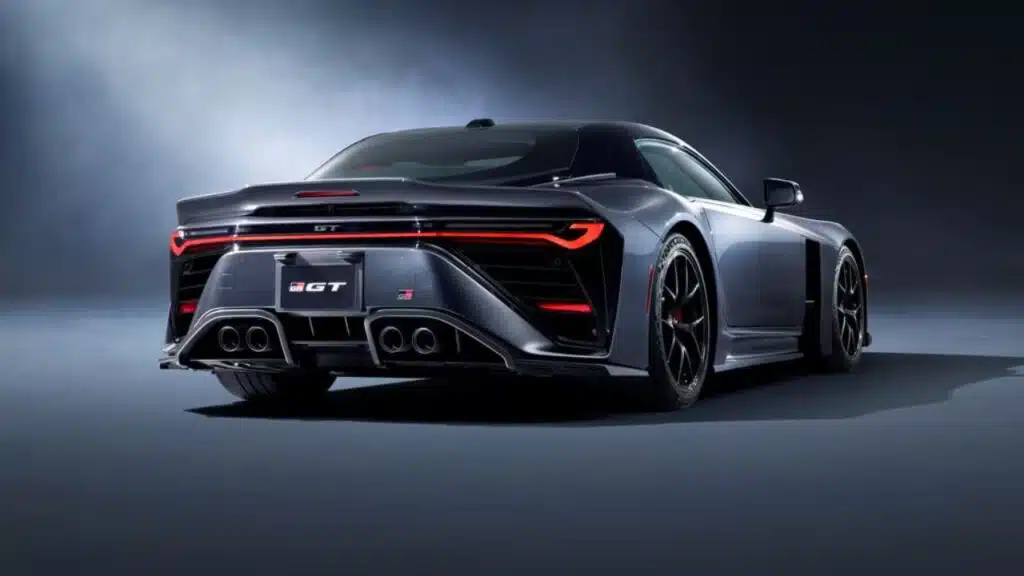
From the first walkaround, the 2026 GR GT looks like it was designed in a wind tunnel and sharpened by a race engineer. The long hood, short rear deck, wide tracks, and massive rear diffuser give it a genuine race-car stance. The featherweight aluminum frame lets Toyota keep the panels tight and sculpted without bloating the car’s footprint.
Panel gaps are tight and consistent. The paint—especially on the hero tri-coat red—is deep and glassy, with minimal orange peel visible under harsh sunlight. Over the week, the finish shrugged off rain, highway grime, and one automatic wash without visible swirl marks. It feels like big-brand premium quality, not an afterthought.
Practicality, however, clearly took a back seat to performance. The low nose and aggressive splitter mean steep driveways demand a diagonal approach, and speed bumps have to be treated with respect. The enormous rear haunches look fantastic but create some rear three-quarter blind spots, even with good mirrors and cameras.
Exterior Specs and Practicality Snapshot
| Spec | 2026 Toyota GR GT |
| Length | 184.3 in (468.1 cm) |
| Width (without mirrors) | 75.1 in (190.8 cm) |
| Height | 52.0 in (132.1 cm) |
| Wheelbase | 107.5 in (273.0 cm) |
| Ground Clearance | 4.3 in (10.9 cm) |
| Curb Weight | ~3,200 lb (1,451 kg) |
| Cargo Volume | 9.5 cu ft (268.9 L) |
In daily use, the trunk is just big enough for a couple of carry-on suitcases or a week’s worth of groceries if you pack smart. The opening is wide but not very tall, so bulkier items require some Tetris skills. There’s also a shallow storage shelf behind the front seats that works for backpacks or a laptop bag, which turned out to be handy during the workweek.
Visibility is a mixed bag. Forward view is excellent thanks to slim A-pillars and a relatively low cowl. The rear window is small and shallow, however, so you’ll rely heavily on the standard 360° camera and parking sensors in tight urban situations. After a day or two, you adapt, but it’s not as easy to place as a more conventional coupe.
Interior Comfort and Technology
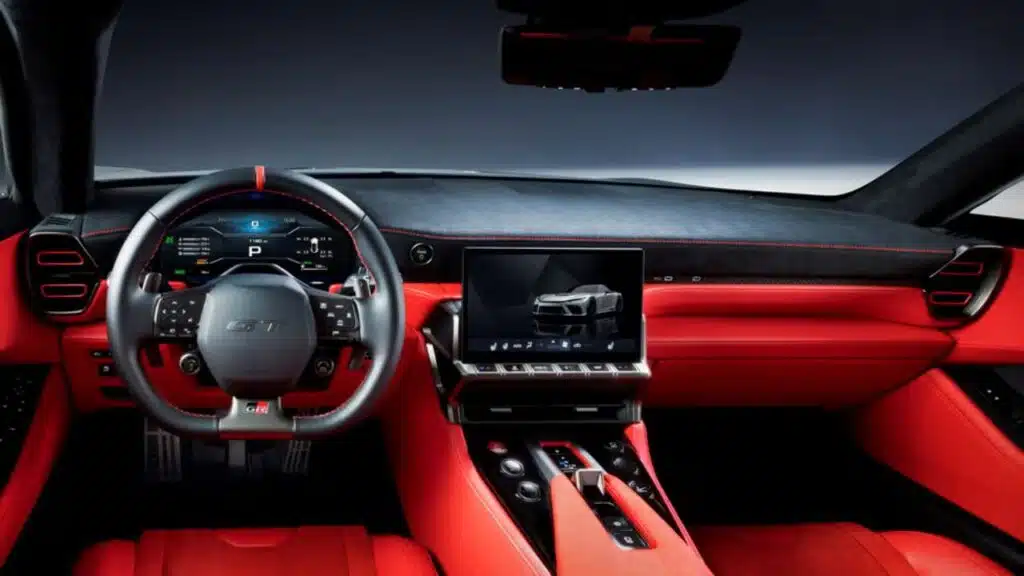
Slide into the GR GT and you’re greeted by a cabin that feels more motorsport-inspired than luxury GT—but not in a cheap way. The fundamental design is clean: a low dash, a wide central touchscreen, and a driver-focused instrument cluster with a big central tach and configurable performance data.
The materials mostly justify the price. Soft-touch leather or Alcantara covers the main touchpoints, with real metal switchgear for core controls like drive modes and climate toggles. Some lower plastics on the console and door pockets feel a bit ordinary, but they’re out of your primary sightline. Over a week of use, nothing squeaked or rattled, even on rough concrete highways.
Seat comfort is excellent for spirited driving and genuinely good for long trips. The front buckets have aggressive bolstering but enough adjustability to accommodate different body types. After a three-hour highway stint, there was no significant lower-back or leg fatigue. The rear seats are best for short adults or kids; during the week they mostly served as extra luggage space.
Noise isolation is decent but intentionally not class-leading. At 70 mph, there is noticeable tire and exhaust presence, but it’s more character than annoyance. In Comfort mode, the active exhaust quiets down enough that phone calls and podcasts are easy to follow; in Sport+ the V8 dominates the cabin.
The infotainment system pairs a large, responsive touchscreen with physical shortcuts for home, nav, and audio. Wireless Apple CarPlay and Android Auto worked reliably for the entire week, and Bluetooth connections were quick on startup. Toyota’s native navigation is fine, but most drivers will default to smartphone maps. The learning curve is shallow, and menu layouts are logical enough that you don’t need the manual.
Interior Specs Snapshot
| Spec | 2026 Toyota GR GT |
| Central Screen Size | 12.3 in touchscreen |
| Instrument Cluster | 12.0 in fully digital, configurable |
| Infotainment System | Toyota GR Connect with wireless CarPlay/AA |
| Seating Capacity | 2+2 |
| Front Seating Material | Leather/Alcantara sport buckets |
| Rear Seating Material | Leather |
| Front Headroom | 38.0 in (96.5 cm) |
| Front Legroom | 42.3 in (107.4 cm) |
| Rear Headroom | 33.0 in (83.8 cm) |
| Rear Legroom | 27.0 in (68.6 cm) |
If you plan to daily this car, the biggest interior compromise is rear space. Adults can tolerate short urban hops in the back, but anything longer than 30–40 minutes will draw complaints. For families with small kids, the rear can work with compact child seats, but loading them into a two-door coupe with a low roof takes patience.
Storage is thoughtfully arranged: a usable center bin, decent door pockets, two cupholders that can actually hold medium to large drinks, and a rubberized wireless charging pad that kept phones from sliding under hard acceleration. Over the week, it felt genuinely livable for a sports car—just not a true grand tourer.
2026 Toyota GR GT vs Mercedes-AMG GT R
The Mercedes-AMG GT R is another front-engine, rear-drive weapon with a thunderous V8 and a long-hood, wide-body stance. It leans heavily into the “brutal GT” image, mixing big power with a more luxurious cabin and the presence you expect from AMG. On a fast road or long highway run, the AMG GT R feels every inch the high-end German muscle car.
Compared to the AMG, the GR GT is slightly more focused on track-car precision than luxury. Its interior is well made but more minimalist, with fewer comfort-oriented extras. On track, the Toyota feels a touch lighter on its feet and more eager to rotate, while still offering stable high-speed behavior. The AMG counters with a more plush cabin, deeper brand cachet, and a broader GT personality.
If you want everyday comfort, brand prestige, and a car that feels as much luxury coupe as track tool, the AMG GT R is compelling. If your priority is lap time, driver engagement, and a more purposeful cockpit that still works for daily duty, the GR GT is the sharper instrument.
High-End Performance Comparison Snapshot
| Model | Engine | Power | Drivetrain | 0–60 mph (est.) | Base Price (est.) | Key Advantage |
| 2026 Toyota GR GT | 4.0L twin-turbo V8 | 650 hp | RWD | 3.1 s | ~$120,000 | Raw engagement and modern tech |
| Porsche 911 Turbo S | 3.8L twin-turbo flat-six | ~640 hp | AWD | ~2.6–2.7 s | ~$230,000+ (well specced) | All-weather pace and polish |
| Nissan GT-R | 3.8L twin-turbo V6 | ~600 hp | AWD | ~2.9–3.0 s | ~$115,000 | Traction and real-world usability |
| Mercedes-AMG GT R | 4.0L twin-turbo V8 | ~577 hp | RWD | ~3.5 s | ~$150,000+ | Luxury vibe with serious performance |
Performance and Powertrain
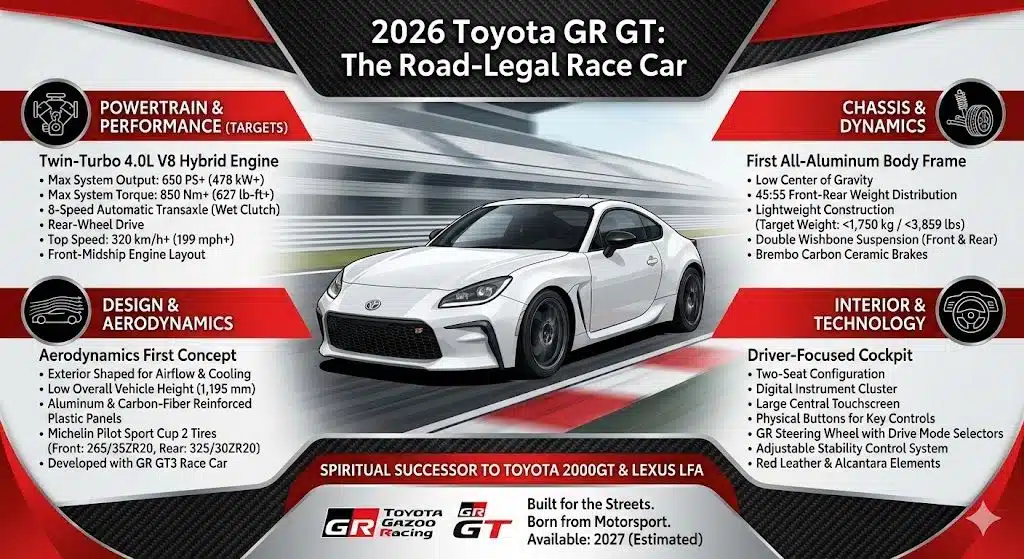
The heart of the 2026 GR GT is its new twin-turbo 4.0-liter V8, and it absolutely defines the car. It fires with a subdued burble in Comfort mode but snarls and pops in the more aggressive settings. Throttle response is sharp for a turbocharged engine, especially in Sport and Sport+, with only the slightest hint of lag off idle before the turbos light and shove you into the seat.
Power delivery is linear and relentless. On dry pavement with warm tires, the car rockets forward with supercar-level urgency. Launch control is simple to engage and brutally effective, though you’ll want a smooth surface to get repeatable times.
The 8-speed dual-clutch transmission (DCT) is a strong partner. In automatic mode it behaves predictably around town, shuffling up gears early to keep revs and noise down. Toggle to Sport+ and manual paddles, and shifts become near-instant, with perfectly matched downshifts under braking. Over the week, the DCT made both daily commuting and track driving feel natural, never hunting or shuddering.
Steering is quick and precise, with good on-center feel on the highway. It’s still an electric rack, so pure analog feedback is limited, but you get enough information about front-end grip to lean on the car confidently on winding roads. The aluminum frame and balanced weight distribution give the GR GT a neutral base that rotates willingly when provoked but remains stable at high speed.
Ride quality is firm, as expected, but adaptive dampers do a commendable job of softening impacts in Comfort mode. On broken city streets, it’s busy but never punishing. On smooth highways and backroads, the car settles into a composed rhythm that makes long drives surprisingly easy.
Performance Specs Snapshot
| Spec | 2026 Toyota GR GT |
| Engine Type | 4.0L twin-turbo V8 |
| Horsepower | 650 hp @ ~6,500 rpm |
| Torque | 600 lb-ft @ ~3,500–5,500 rpm |
| Transmission | 8-speed dual-clutch (RWD) |
| 0–60 mph (claimed) | 3.1 seconds |
| Top Speed (est.) | 202 mph (325 km/h) |
| Drivetrain | Rear-wheel drive with electronic LSD |
| Drive Modes | Comfort, Sport, Sport+, Track, Individual |
On track, the GR GT feels every bit like a dedicated performance machine. Turn-in is immediate, body roll is minimal, and the car remains controllable even when you start to explore oversteer. The stability control in Track mode is nicely calibrated, allowing some slip without fully abandoning you.
Braking performance is similarly impressive. The large composite rotors and multi-piston calipers resist fade during repeated high-speed stops. In our week, including a short track session, the pedal remained firm and consistent. For owners who track regularly, upgraded pads and fluid would still be a wise early modification, but the stock setup is strong.
Fuel Economy and Real-World Running Costs
No one buys a 650-hp twin-turbo V8 expecting Prius-level efficiency, but the GR GT manages to be less thirsty than you might fear—if you have self-control. Official ratings are surprisingly respectable for this kind of power, and the aluminum frame helps keep weight (and thus fuel consumption) in check.
During the week-long test, real-world consumption varied wildly by scenario. On a disciplined highway cruise with adaptive cruise control set around 70 mph, the GR GT hovered near or slightly above its official highway figure. In spirited backroad runs and track use, fuel economy plummeted—as expected—with the fuel gauge visibly dropping after a few hard laps.
The GR GT requires premium fuel, and with a decent-sized tank, fill-ups are not cheap. But range is good enough for long trips without constant stops, and owners in this segment generally accept higher fueling costs as part of the package.
Routine maintenance is likely to be on the higher side compared with mainstream Toyotas. Shorter oil-change intervals, performance brake components, and high-performance tires will all contribute. However, Toyota’s reputation for reliability and the use of robust, proven components should keep unpleasant surprises relatively rare if the car is maintained properly.
Economy and Running Cost Snapshot
| Spec | 2026 Toyota GR GT |
| Official City MPG | 18 mpg (est.) |
| Official Highway MPG | 26 mpg (est.) |
| Real-World Mixed MPG | ~20 mpg (week-long test average) |
| Fuel Type | Premium unleaded (91/93 octane) |
| Fuel Tank Capacity | 18.0 gal (68.1 L) |
| Est. Highway Range | ~468 miles (753 km) |
In everyday commuting with occasional bursts of acceleration, we saw around 19–21 mpg, which is competitive given the power on tap. If you plan to track the car frequently, budget for significantly higher fuel use during those events.
Tire wear is another cost factor. The sticky, staggered performance tires offer outstanding grip but will wear quickly if you drive aggressively. For drivers who use the car mostly on the street, tread life should be acceptable, but track regulars will likely be on a first-name basis with their tire shop.
Safety and Driver Assistance
Despite its hardcore performance brief, the 2026 GR GT doesn’t skimp on safety. The aluminum frame is engineered with extensive crash structures, and the car comes loaded with modern active safety systems.
Toyota’s latest suite of driver assistance features is standard. Over the week, adaptive cruise control handled heavy highway traffic smoothly, maintaining comfortable gaps without abrupt braking. Lane-keeping assist worked well on clearly marked roads but tended to disengage quietly on poorly painted lanes—something we noted but didn’t find alarming.
Automatic emergency braking and pedestrian detection never triggered falsely during the test, even in dense urban environments with busy crosswalks. The blind-spot monitoring and rear cross-traffic alert systems proved especially helpful given the limited rear three-quarter visibility.
The airbag coverage is comprehensive, including front, side, curtain, and knee airbags for the front occupants. Rear passengers get curtain coverage but no dedicated side bags, which is typical for this class.
Safety and ADAS Snapshot
| Spec | 2026 Toyota GR GT |
| Crash Test Rating | Expected 5-star overall / Top Safety Pick (est.) |
| Airbag Count | 8 (front, side, curtain, front knee) |
| Forward Collision Warning | Standard |
| Automatic Emergency Braking | Standard with pedestrian & cyclist detection |
| Adaptive Cruise Control | Standard (full-speed with stop & go) |
| Lane Keeping Assist | Standard |
| Blind-Spot Monitoring | Standard |
| Rear Cross-Traffic Alert | Standard |
| 360° Camera System | Standard |
In real-world use, the safety systems mostly stayed in the background, stepping in only when genuinely needed—for example, a gentle warning when a car lingered in the blind spot during a lane change. Enthusiast drivers will appreciate that most systems can be dialed back or turned off in Track mode, allowing for unfiltered control on closed courses.
Overall, the GR GT strikes a good balance: it offers the driver aids modern buyers expect without over-nannying the experience.
2026 Toyota GR GT vs. 2026 Nissan GT-R
To understand where the GR GT fits in the market, it’s natural to compare it with a long-time segment benchmark: the Nissan GT-R. Both are high-performance Japanese icons with serious track credentials, but they approach the mission differently.
The 2026 GT-R continues with its turbocharged V6 and all-wheel drive, delivering immense traction and devastating real-world acceleration, especially in poor conditions. The GR GT counters with a twin-turbo V8 and rear-wheel drive, trading some all-weather confidence for a more playful, rear-biased character on dry roads and circuits.
In terms of cabin tech, the GR GT feels more modern. Nissan has refreshed the GT-R’s interior over the years, but its design and interface still feel more “revised” than “new,” whereas the GR GT’s infotainment, screen layout, and digital cluster feel like a clean-sheet contemporary solution.
Ride comfort is slightly better in the GR GT in its softest setting, with more refinement over small bumps. The GT-R, however, wins on outright usability in bad weather, thanks to its all-wheel drive and slightly higher ground clearance. For buyers in snowy climates, that may be decisive.
GR GT vs. GT-R Snapshot
| Spec | 2026 Toyota GR GT | 2026 Nissan GT-R (est.) |
| Base Price (est.) | ~$120,000 | ~$115,000 |
| Engine | 4.0L twin-turbo V8 | 3.8L twin-turbo V6 |
| Horsepower | 650 hp | ~600 hp (model dependent) |
| Drivetrain | RWD | AWD |
| 0–60 mph (est.) | 3.1 s | ~2.9–3.0 s |
| City/Highway MPG (est.) | 18 / 26 | 16 / 23 |
| Real-World MPG (mixed) | ~20 mpg | ~18 mpg |
| Warranty Period | 3 yr/36k mi basic, 5 yr/60k powertrain | Similar class-competitive |
If you prioritize all-weather performance and exploitable traction on imperfect roads, the GT-R still has a strong case. It’s a point-and-shoot weapon that flatters the driver.
If, on the other hand, you want a more engaging, rear-drive chassis with a charismatic V8 soundtrack and a fresher interior tech package, the GR GT comes out ahead. It feels like the more modern, enthusiast-focused choice, particularly for drivers who plan to attend track days and enjoy the process of learning a car’s balance.
Final Verdict: Is the 2026 Toyota GR GT Worth Your Money?
The 2026 Toyota GR GT is not a compromise car. It’s a focused, track-capable performance coupe that happens to be just civilized enough to live with every day—if you understand and accept its limits. After a week of real-world driving, its character is clear: thrilling, demanding, and rewarding in equal measure.
Pros
- Explosive twin-turbo V8 with supercar-level acceleration and a genuinely emotional soundtrack.
- Featherweight aluminum frame and well-tuned chassis deliver sharp, confidence-inspiring handling.
- Modern, intuitive infotainment with large screens and reliable smartphone integration.
- Comfortable front seats suitable for both spirited driving and long-distance touring.
- Strong active safety and driver-assistance suite with thoughtful calibration.
- Respectable real-world fuel economy for the performance on offer.
- Distinctive, aggressive exterior design that stands out even in expensive parking lots.
Cons
- Very limited rear-seat space and modest trunk make it less practical as an only family car.
- Low ground clearance and long overhangs require caution on steep driveways and speed bumps.
- Firm ride, even in Comfort mode, may be tiring on rough urban roads.
- Premium fuel and high-performance consumables (tires, brakes) lead to elevated running costs.
- Rear visibility is compromised; heavy reliance on cameras and sensors.
Value Assessment
At an estimated $120,000, the GR GT sits squarely in the upper performance bracket. It’s more expensive than some American muscle-based rivals but undercuts many European supercars with comparable performance. Relative to the Nissan GT-R and certain 911 variants, the Toyota offers a compelling mix of fresh tech, emotional V8 power, and Japanese reliability heritage.
You are paying for a halo product—engineering, materials, and dynamics that go beyond what you’ll find in more mainstream performance cars. If you exploit its capabilities on track days and fast road driving, the value proposition makes sense. If you mostly commute in traffic and occasionally sprint down an on-ramp, much of that engineering brilliance will be wasted.
FAQs On 2026 Toyota GR GT
Is the 2026 Toyota GR GT good for daily driving?
Yes, if you accept firm suspension, low ground clearance, and a small trunk. It’s comfortable enough up front, but not a family car.
What engine does the 2026 Toyota GR GT have?
It uses a 4.0L twin-turbo V8 with around 650 hp and 600 lb-ft of torque, driving the rear wheels.
Does the 2026 Toyota GR GT have a manual transmission?
No. It comes with an 8-speed dual-clutch automatic with paddles for manual control.
What is the 0–60 mph time for the 2026 Toyota GR GT?
Expected 0–60 mph is about 3.1 seconds using launch control in good conditions.
What fuel economy can I expect from the GR GT?
You can expect roughly 18 mpg city, 26 mpg highway, and about 20 mpg in mixed real-world driving.
Is the 2026 Toyota GR GT safe?
Yes, it includes modern safety tech like adaptive cruise, lane keeping assist, automatic emergency braking, blind-spot monitoring, and a 360° camera.
Who should buy the 2026 Toyota GR GT?
Enthusiasts who want a rear-drive, V8 performance car for spirited driving and track days, and who are willing to trade some comfort and practicality for performance.