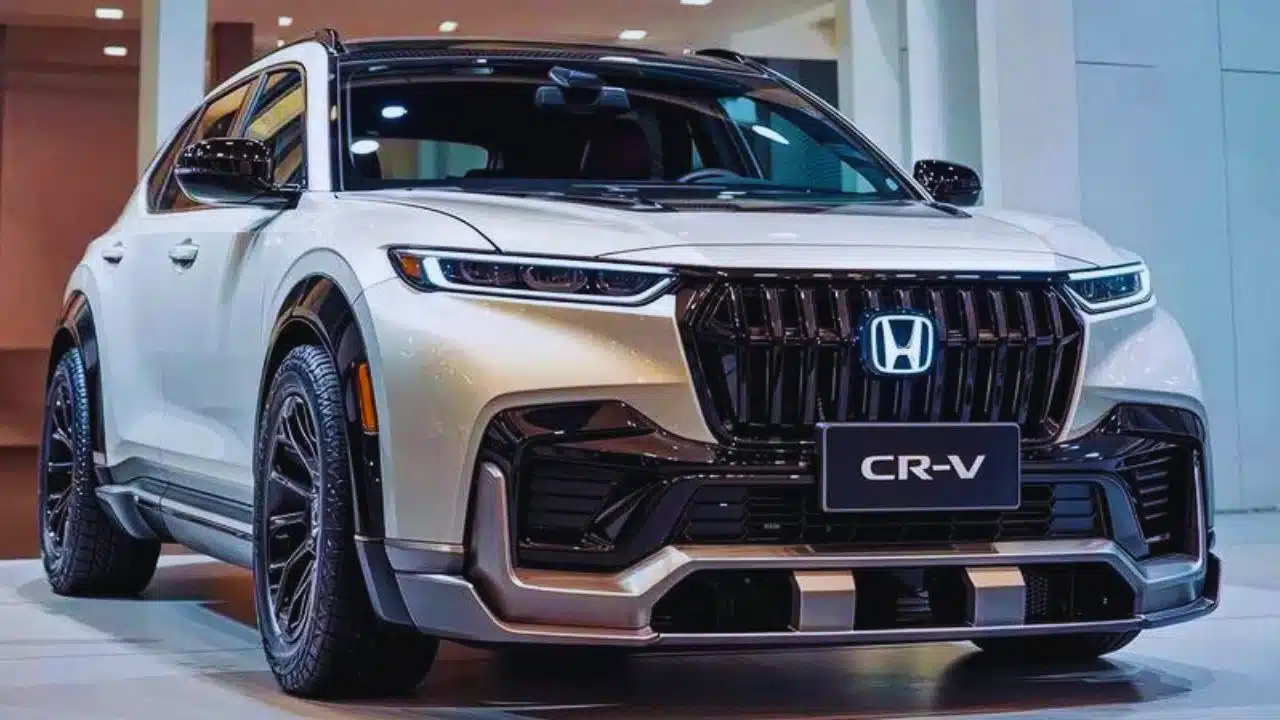
The automotive landscape is shifting rapidly, but some icons remain steadfast. The 2026 Honda CR-V Hybrid arrives in showrooms this coming Spring 2026, reinforcing its position as the benchmark for the compact SUV segment.
While the sixth generation has been praised for its refined road manners and spacious interior since its debut, the 2026 model year brings a highly anticipated expansion to the lineup: the rugged TrailSport trim.
As the industry moves toward electrification, Honda’s strategy is clear—hybridization is no longer an option; it is the new standard for performance. With a powertrain delivering an EPA-estimated 40 mpg combined and a reputation for bulletproof reliability, the 2026 CR-V Hybrid is poised to remain a top choice for families and commuters alike.
Refining the Segment Leader
The 2026 Honda CR-V Hybrid continues to build on the success of the sixth-generation platform. Honda has confirmed that hybrids now account for over 50% of total CR-V sales, a statistic that underscores the shift in consumer preference toward fuel efficiency without range anxiety.
For 2026, the headline is undoubtedly the TrailSport, a badge that has successfully invigorated the Pilot and Passport lineups. However, beyond the off-road aesthetics, the 2026 CR-V Hybrid benefits from subtle software refinements in its driver-assistance systems and updated connectivity features, ensuring it stays competitive against the Toyota RAV4 Hybrid, Kia Sportage Hybrid, and the Hyundai Tucson Hybrid.
According to recent data from Kelley Blue Book (KBB) and Cox Automotive, the compact SUV segment remains the highest-volume segment in the U.S., meaning even minor updates to the CR-V have massive market implications.
Performance and Engineering: The Fourth-Generation Hybrid System
To truly understand the value of the 2026 Honda CR-V Hybrid, one must look under the hood. Unlike mild hybrids that offer negligible gains, Honda utilizes a sophisticated two-motor hybrid system mounted side-by-side.
Powertrain Specifications
- Internal Combustion Engine: 2.0-liter Atkinson-cycle 4-cylinder engine with direct fuel injection.
- Electric Motors: Two distinct motors—one serves as a generator, the other as the propulsion motor.
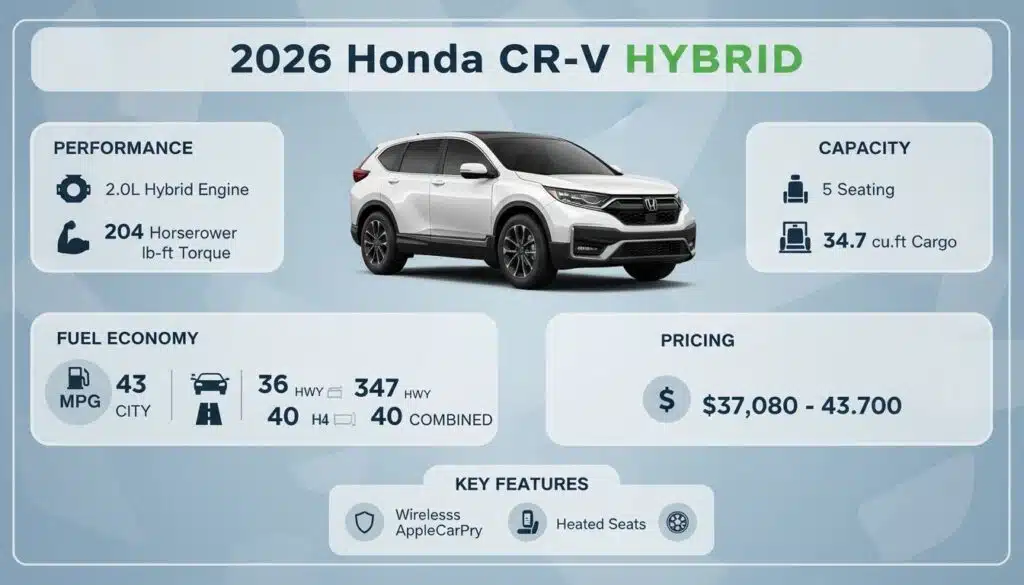
- Total System Output: 204 horsepower.
- Peak Torque: 247 lb-ft (available instantly from 0 RPM).
- Transmission: Two-motor hybrid system (acting as an e-CVT) with Linear Shift Control.
Driving Dynamics:
The magic of this system lies in the 247 lb-ft of torque. In city driving, the CR-V operates primarily as an electric vehicle, using the gas engine strictly as a generator to charge the battery. This provides the EV-like punch off the line that drivers love. On the highway, a lock-up clutch can engage the gas engine directly to the wheels for maximum efficiency.
For 2026, Honda has refined the Linear Shift Control. Although the vehicle utilizes an e-CVT (which technically has no gears), the software simulates the stepped gear changes of a traditional automatic transmission under heavy acceleration. This eliminates the droning noise often associated with hybrids, providing a more natural and engaging driving experience.
Real-Time AWD Update
The Real-Time AWD with Intelligent Control System™ has been updated for the 2026 model year. It can now send up to 50% of engine torque to the rear wheels almost instantly when slippage is detected. This serves not just for snow traction, but for cornering performance on dry pavement as well.
Fuel Economy: Efficiency Meets Real-World Utility
Efficiency is the primary selling point for the 2026 Honda CR-V Hybrid. Despite its size and utility, it delivers numbers that rival compact sedans.
| Trim Level | Drivetrain | City MPG | Highway MPG | Combined MPG | Range (approx.) |
| Sport Hybrid | FWD | 43 | 36 | 40 | ~560 miles |
| Sport / Sport-L | AWD | 40 | 34 | 37 | ~518 miles |
| Sport Touring | AWD | 40 | 34 | 37 | ~518 miles |
| TrailSport | AWD | 38* | 33* | 36* | ~500 miles |
According to the U.S. Department of Energy and EPA testing cycles, opting for the Hybrid over the standard turbo-gas model can save the average driver roughly $450 to $600 annually in fuel costs, depending on local gas prices.
The 2026 CR-V TrailSport: A New Kind of Adventure
This is the trim enthusiasts have been waiting for. The TrailSport bridges the gap between the grocery getter and the weekend warrior. While it is not a dedicated rock crawler like a Jeep Wrangler, it is significantly more capable than a standard crossover.
1. All-Terrain Footwear
The most impactful change is the rubber. The TrailSport ditches the low-profile all-seasons for 18-inch wheels wrapped in General Grabber™ or Continental CrossContact™ A/T tires. These tires feature a deeper tread block design, providing genuine grip on dirt, sand, and mud, while also offering better puncture resistance.
2. Protective Armor
Honda has added functional underbody protection. A stamped steel skid plate protects the oil pan and transmission from road debris and rocks on light trails. This is a critical addition for anyone venturing onto fire roads or dispersed camping sites.
3. Visual Distinction
You will know a TrailSport when you see one. It features:
- Exclusive Diffused Sky Blue Pearl paint availability.
- Orange contrast stitching on the seats, steering wheel, and door panels.
- Wider wheel arch cladding to protect the paint from gravel spray.
- Gloss black grille mesh and blacked-out badging.
4. Suspension Tuning
While Honda did not provide a massive lift kit, the TrailSport features unique spring and damper tuning. This softer tune is designed to absorb the ruts and bumps of unpaved roads better than the sport-tuned suspension found on the Sport Touring trim, resulting in a more compliant ride on washboard gravel.
High-Brand Car Comparison: CR-V vs. The Titans
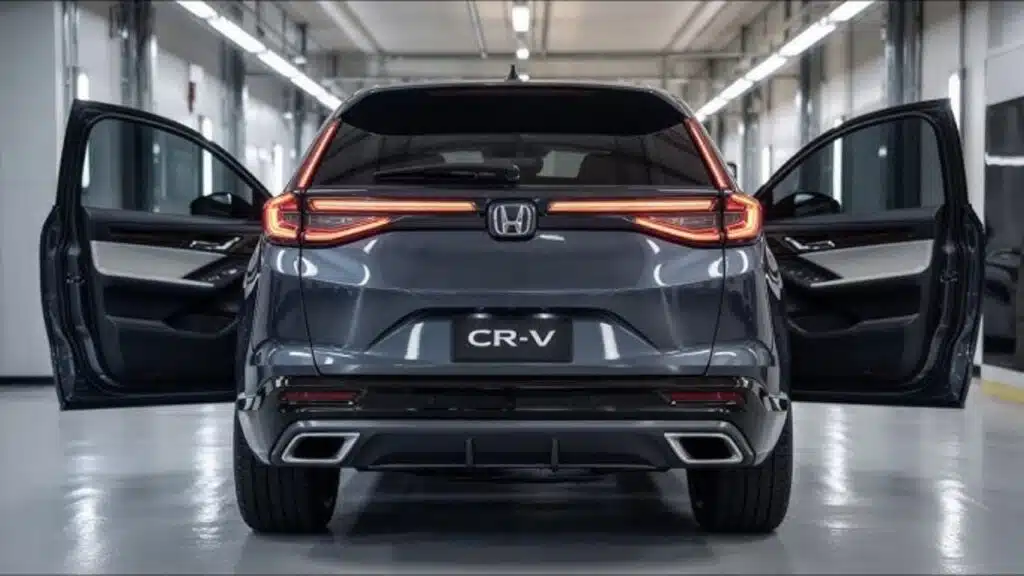
The compact hybrid SUV segment is a battlefield. While the CR-V is the refined all-rounder, it faces stiff competition from Toyota’s reliability icon, Kia’s tech-heavy challenger, and Hyundai’s stylish alternative.
Here is how the 2026 Honda CR-V Hybrid stacks up against its three biggest rivals: the Toyota RAV4 Hybrid, Kia Sportage Hybrid, and Hyundai Tucson Hybrid.
Quick Specs Comparison Table
| Feature | 2026 Honda CR-V Hybrid | 2026 Toyota RAV4 Hybrid | 2026 Kia Sportage Hybrid | 2026 Hyundai Tucson Hybrid |
| Combined HP | 204 hp | 219 hp | 227 hp | 231 hp |
| Torque | 247 lb-ft | 163 lb-ft (Engine) | 258 lb-ft | 258 lb-ft |
| Combined MPG | 40 (FWD) / 37 (AWD) | 41 (AWD) | 43 (FWD) / 38 (AWD) | 38 (AWD) |
| Cargo (Max) | 76.5 cu. ft. | 69.8 cu. ft. | 73.7 cu. ft. | 74.8 cu. ft. |
| Rear Legroom | 41.0 in | 37.8 in | 41.3 in | 41.3 in |
| Standard Screen | 9.0-inch | 8.0-inch | 8.0-inch | 12.3-inch (upper trims) |
Interior and Comfort: A Class-Leading Cabin
The interior of the 2026 Honda CR-V Hybrid is a masterclass in ergonomics. Honda’s Simplicity and Something design language is evident, characterized by the metal honeycomb mesh that spans the dashboard, elegantly concealing the air vents.
Seating and Space: Honda utilizes Body Stabilizing Seats in the front row. These seats use a heavy internal resin mat to support the pelvis and lumbar region, significantly reducing fatigue on long road trips.
- Rear Legroom: A massive 41.0 inches, allowing 6-foot adults to sit comfortably behind 6-foot drivers.
- Reclining Rear Seats: The rear seatbacks recline in eight different stages, a feature often overlooked by competitors.
Cargo Capacity: The battery placement in the 2026 CR-V Hybrid does not compromise cargo space—a common issue in hybrid SUVs.
- Behind Rear Seats: 36.3 cubic feet.
- Seats Folded: 76.5 cubic feet.
- Load Floor: The adjustable load floor allows for a flat surface for loading large items, or a lower floor for taller items like plants or lamps.
Technology and Connectivity
The 2026 model ensures you stay connected, offering a tech suite that rivals premium brands.
- 9-Inch Touchscreen: Standard on Sport-L, Sport Touring, and TrailSport. It features a faster processor for 2026 for lag-free operation.
- Wireless Integration: Wireless Apple CarPlay® and Android Auto™ allow you to leave the cables at home.
- Wireless Charging: A 15W Qi-compatible wireless charging pad is situated conveniently in the center console.
- Bose Premium Audio: The Sport Touring trim features a 12-speaker Bose sound system with Centerpoint technology, delivering immersive audio clarity that is rare in this price bracket.
- Digital Instrumentation: A 10.2-inch digital driver display allows for customization, showing energy flow, turn-by-turn navigation, and safety alerts directly in the driver’s line of sight.
Safety: Safety for Everyone Philosophy
Honda continues to target the highest safety ratings. The 2026 CR-V Hybrid is built on the Advanced Compatibility Engineering™ (ACE™) body structure, designed to protect occupants in frontal collisions.
Every 2026 CR-V Hybrid comes standard with the Honda Sensing® suite, which utilizes a wide-view camera and radar.
Key Safety Features:
- Traffic Jam Assist (TJA): Works with Lane Keeping Assist to steer the car smoothly in heavy, low-speed traffic.
- Traffic Sign Recognition (TSR): Reads speed limit signs and displays them on the dashboard.
- Blind Spot Information (BSI): Now standard on all Hybrid trims.
- Low-Speed Braking Control: Detects objects at low speeds (parking) and applies brakes to prevent fender benders (available on Touring).
Reliability Note: The CR-V consistently earns Top Safety Pick+ awards from the Insurance Institute for Highway Safety (IIHS) and 5-star ratings from the National Highway Traffic Safety Administration (NHTSA).
Trim Level Breakdown: Which One Should You Buy?
Choosing the right 2026 Honda CR-V Hybrid depends on your specific needs.
1. CR-V Sport Hybrid (The Value King)
- Best for: Commuters looking for maximum MPG at the lowest price.
- Key Features: 18-inch black wheels, cloth seats with orange stitching, 7-inch touchscreen, leather-wrapped steering wheel.
2. CR-V Sport-L Hybrid (The Sweet Spot)
- Best for: Buyers who want leather and a big screen without paying for the top trim.
- Key Features: Leather seating surfaces, power tailgate, 9-inch touchscreen, wireless CarPlay, parking sensors.
3. CR-V TrailSport (The Adventurer)
- Best for: Active families, campers, and those living in snowy/rural areas.
- Key Features: A/T tires, skid plates, unique suspension tune, all-weather floor mats, roof rails.
4. CR-V Sport Touring Hybrid (The Luxury Choice)
- Best for: Those who want a near-luxury experience.
- Key Features: 19-inch wheels, Bose audio, Wi-Fi hotspot, heated steering wheel, hands-free access power tailgate.
Comparison: CR-V Hybrid vs. The Competition
| Feature | 2026 Honda CR-V Hybrid | Toyota RAV4 Hybrid | Kia Sportage Hybrid |
| Combined HP | 204 hp | 219 hp | 227 hp |
| Combined MPG | 40 MPG (FWD) | 41 MPG (AWD) | 43 MPG (FWD) |
| Rear Legroom | 41.0 inches | 37.8 inches | 41.3 inches |
| Cargo (Max) | 76.5 cu. ft. | 69.8 cu. ft. | 73.7 cu. ft. |
| Warranty | 3yr/36k Basic | 3yr/36k Basic | 5yr/60k Basic |
Analysis: While the Kia Sportage offers slightly more power and a longer warranty, the Honda CR-V wins on cargo space, resale value, and driving refinement. The Toyota RAV4 is the closest competitor, but its interior feels dated compared to the modern, clean aesthetic of the 2026 CR-V.
The King Retains Its Crown
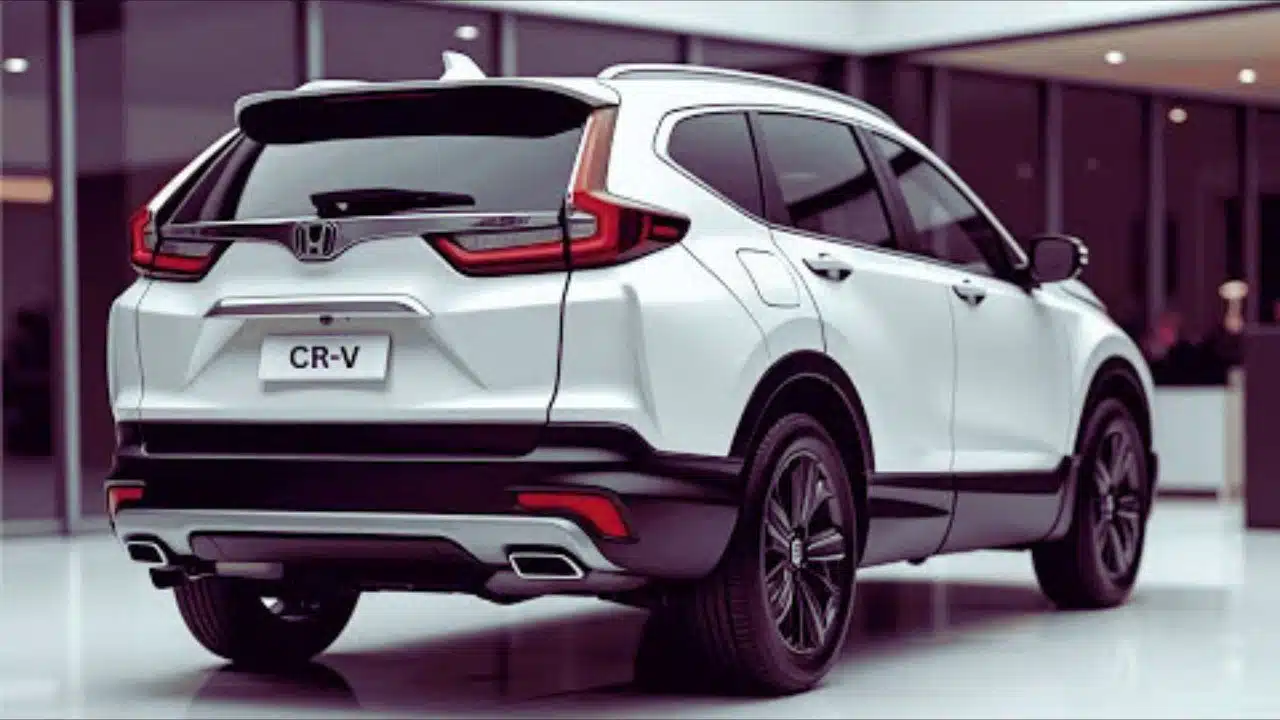
The 2026 Honda CR-V Hybrid is a testament to iterative improvement. By not fixing what wasn’t broken, and instead adding the capable TrailSport trim to address the growing demand for adventure-ready vehicles, Honda has ensured the CR-V remains the Goldilocks of the SUV world—just right for almost everyone.
It offers a blend of efficiency, space, and reliability that is incredibly hard to beat. While it may not be the fastest in its class, its smooth hybrid transition and premium interior feel make it the most pleasant to live with on a daily basis.
Conclusion
The 2026 Honda CR-V Hybrid does not try to be the fastest (Kia) or the cheapest (Toyota). Instead, it succeeds at being the most livable. It balances a premium interior, class-leading cargo space, and a hybrid powertrain that feels natural and responsive.
The addition of the TrailSport trim for 2026 fills the only gap in its armor, offering a legitimate option for active families who encounter dirt, snow, and gravel. While competitors may win on specific spec-sheet numbers, the CR-V wins on the total package. It remains the safe, smart, and satisfying choice for the vast majority of SUV buyers.
FAQs On the 2026 Honda CR-V Hybrid
1. When will the 2026 Honda CR-V Hybrid be released?
The 2026 Honda CR-V Hybrid, including the new TrailSport trim, is scheduled to arrive at U.S. dealerships in Spring 2026. Some dealers may begin accepting pre-orders as early as late 2025.
2. Is the 2026 CR-V TrailSport actually good off-road?
It is soft-road capable, not an off-road rock crawler. The TrailSport adds all-terrain tires, steel underbody protection (skid plates), and a tuned suspension. It will handle fire roads, camping trails, and deep snow much better than the standard CR-V, but it lacks the ground clearance of a Jeep Wrangler or Ford Bronco.
No. The 2026 CR-V Hybrid is designed to run on regular unleaded (87 octane) gasoline, which helps keep daily operating costs low despite its turbo-like torque.
4. What is the real-world MPG of the CR-V Hybrid?
While the EPA rates the AWD models at 37 mpg combined, real-world testing by outlets like Car and Driver and Consumer Reports often finds the CR-V achieves between 32-35 mpg in mixed highway/city driving, heavily dependent on driving style and temperature.
5. Did Honda fix the infotainment screen size for 2026?
Yes. For 2026, the small 7-inch screen has been retired. A larger, faster 9-inch touchscreen with wireless Apple CarPlay and Android Auto is now standard on all hybrid trims.