Apartment living rarely offers greenhouse conditions. Light can be patchy, floor space is tight, and daily routines are busy. Yet the right plants still turn a rented box into a lived-in home. The best houseplants for apartments share a few traits: they tolerate low or indirect light, grow slowly, cope with missed waterings, and stay relatively compact.
Recent plant guides aimed at apartment dwellers consistently spotlight hardy species such as snake plant, ZZ plant, pothos, spider plant, and cast iron plant. They’re flagged for resilience, low-light tolerance, and suitability for small or low-light rooms.
Why the Best Houseplants for Apartments Need to Work Hard in Small Spaces
Apartment plants must adapt to low light, tight corners, and busy routines. This section explains how lighting, space, safety, and maintenance influence which plants truly thrive in compact homes. It helps readers understand how to choose plants that match real living conditions—not perfect ones.
Light in city apartments: reading your windows, not the label
Most small apartments offer a mix of low light and bright but indirect light, with very little true full sun. Many popular indoor plants, including pothos, snake plant, ZZ plant, spider plant, Chinese evergreen, and cast iron plant, are specifically recommended for low or indirect light and are even listed among houseplants that should not sit in harsh direct sun.
Instead of relying only on care tags, watch how far sunlight actually penetrates a room. A north-facing room or a hallway with no window counts as low light. An east window or a bright room where the sun never actually touches leaves is bright indirect light.
Vertical thinking: shelves, corners, and hanging spots
In small apartments, floor space is premium real estate. The plants that work best stay narrow, grow upright, or trail from height:
- Upright: snake plant, ZZ plant, cast iron plant, parlor palm.
- Trailing: pothos, heartleaf philodendron, spider plant.
Using shelves, high cabinets, hanging planters, and slim plant stands keeps walkways clear while still delivering greenery at eye level.
Pets, children, and plant safety in compact homes
When space is tight, pets and plants share the same few corners. Many of the most forgiving species (pothos, philodendron, snake plant, ZZ plant, Chinese evergreen, peace lily) are mildly to moderately toxic if chewed. By contrast, spider plant and parlor palm are widely listed as non-toxic to dogs and cats, making them safer choices where animals roam.
If you live with pets or small children, choose non-toxic plants or keep toxic ones out of reach on high shelves or in hanging pots.
How much maintenance is realistic for your week?
Guides on low-maintenance indoor plants repeatedly highlight species that accept missed waterings and imperfect conditions: snake plant, ZZ plant, cast iron plant, and pothos top those lists.
Be honest about your routine. If you travel, work long shifts, or simply forget to water, prioritise drought-tolerant plants over moisture-loving ones. You can still include a slightly fussier peace lily, for example, but treat it as your “indicator” plant that droops first when it needs a drink.
10 Best Houseplants for Apartments: Low-Maintenance Picks for Small Spaces
This section highlights the top apartment-friendly plants that thrive with minimal care. Each plant profile includes light needs, watering habits, and ideal placement, making it easy for readers to choose the right greenery for their home.
1. Snake plant: the low-light survivor
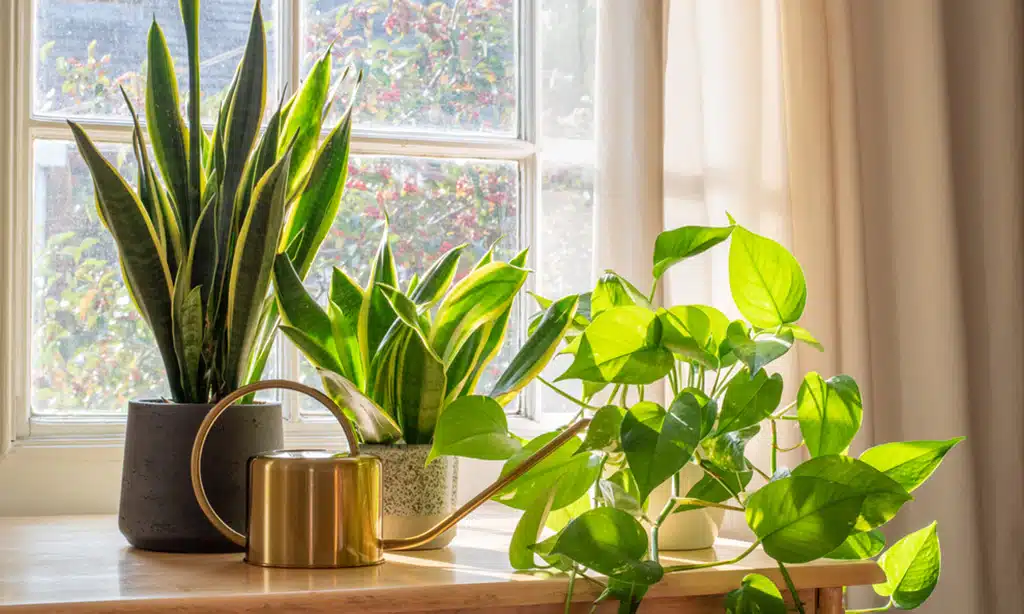
Snake plant (Dracaena trifasciata, still often called Sansevieria) appears in almost every list of best houseplants for apartments – and for good reason. Recent guides describe it as one of the most resilient, low-maintenance indoor plants, capable of tolerating low light, irregular watering, and general neglect.
Why does it work in apartments?
- Grows upright, taking very little floor space.
- Handles low to bright indirect light, making it ideal for dim living rooms or bedrooms.
- Stores water in its thick leaves, so it won’t sulk if you skip a week.
Light and water
Place it in anything from a low-light hallway to a bright window filtered by a sheer curtain. Water only when the potting mix is fully dry, roughly every 2–3 weeks in warm months and less in winter. Overwatering, not underwatering, kills snake plants.
Best spots in a small home
- Beside the sofa in a narrow living room.
- On the floor between a TV stand and a wall.
- In the bedroom, where its upright leaves add height without clutter.
Note: Snake plant is mildly toxic to pets if chewed, so it belongs in spots that paws and small children can’t easily reach.
2. ZZ plant: glossy, almost indestructible
ZZ plant (Zamioculcas zamiifolia) is another regular in apartment plant round-ups. It’s described as a “nearly indestructible” houseplant that thrives in low light, accepts infrequent watering, and suits beginners or forgetful owners.
Why does it work in apartments?
- Thick rhizomes store water, so the plant tolerates dry spells.
- Shiny dark leaves give a polished, modern look without needing constant pruning.
- It stays relatively compact and narrow, making it perfect for tight corners.
Light and water
ZZ plants cope with low to medium light and even do well under office fluorescents. Keep them out of strong direct sun, which can scorch leaves. Let the soil dry out most of the way between waterings; watering lightly every 2–3 weeks is often enough.
Best spots in a small home
- Next to a north-facing window.
- On a bookshelf or media unit where it gets ambient light.
- In a hallway, as long as there is some natural or artificial light.
Again, this plant is toxic if eaten, so in a pet household, it should stay on higher shelves.
3. Pothos: trailing greenery for every corner
Pothos (Epipremnum aureum) – sometimes called devil’s ivy – is repeatedly described as fast-growing, easy-care, and perfect for hanging baskets or shelves, even in low-light apartments.
Why does it work in apartments?
- Long, trailing vines soften hard edges like cupboard tops and shelves.
- Tolerates a wide range of light and occasional neglect.
- Grows happily in hanging baskets, freeing floor space.
Light and water
Pothos prefers bright, indirect light but copes with lower light levels, which explains its frequent inclusion in low-light plant guides. Avoid strong midday sun on the leaves. Water when the top 2–3 cm of soil are dry; it will forgive you if you are late.
Best spots in a small home
- In a hanging pot near a window, trailing along the curtain rod.
- On top of kitchen cabinets, letting vines spill down.
- On a high shelf in a home office.
Pothos is toxic if ingested, so keep it away from chewing pets and curious toddlers.
4. Spider plant: a hanging classic that cleans the air
The spider plant (Chlorophytum comosum) is a long-standing favourite in indoor gardening. Recent care guides underline its tolerance for varied conditions, quick growth, and air-purifying reputation, while also confirming that common spider plants are non-toxic to cats and dogs.
Why does it work in apartments?
- Naturally forms arching leaves and baby plantlets that look excellent in hanging baskets.
- Helps remove some indoor pollutants and excess moisture, making it useful in bathrooms and kitchens.
- Pet-friendly choice for small flats where separation of plants and animals is difficult.
Light and water
Spider plants enjoy bright, indirect light but handle lower light as well. Water when the top inch of soil feels dry. Too much fluoride or chlorine in tap water can brown the tips, so filtered or left-to-stand water works better.
Best spots in a small home
- Hanging by a bathroom or kitchen window.
- On a high shelf where its “spiders” can cascade.
In a child’s room, as a non-toxic introduction to plant care (with supervision).
5. Peace lily: compact plant with elegant blooms
Peace lilies (Spathiphyllum) feature heavily in lists of low-light houseplants that also improve indoor air quality. They offer glossy leaves and white bracts that resemble flowers, all from a relatively small footprint.
Why does it work in apartments?
- Produces an elegant, almost architectural shape in a single pot.
- Tolerates low to medium light, suiting rooms where direct sun is limited.
- Leaves droop when the plant needs water, acting as a visual reminder.
Light and water
Peace lilies prefer bright, indirect light. Guides note that deep shade reduces flowering, while strong direct sun can scorch leaves. Keep the soil evenly moist but not waterlogged; they dislike drying out completely.
Best spots in a small home
- On a side table away from harsh window glare.
- In a bright bathroom where the humidity stays higher.
- In a shaded corner of the bedroom or living room.
Important: Peace lilies are toxic to pets and should not be accessible to chewing animals or young children.
6. Chinese evergreen: colour and pattern for dim rooms
Chinese evergreen (Aglaonema) is often recommended for low-light homes and offices because it thrives in shade and offers attractive variegated leaves in silver, green, and sometimes pink tones.
Why does it work in apartments?
- Performs well in dim corners where other plants struggle.
- Grows slowly, so it stays manageable in smaller pots.
- Foliage adds colour without needing flowers.
Light and water
This plant prefers low to medium, indirect light and will suffer in strong sun. Water when the top of the soil is dry to the touch. It appreciates consistent, moderate moisture but can survive occasional neglect.
Best spots in a small home
- In a corner of the living room, opposite a window.
- On a plant stand near a shaded hallway.
- On a desk away from direct sunlight.
Again, treat it as toxic if ingested; keep it out of reach of pets.
7. Cast iron plant: for the darkest, most neglected corners
The cast iron plant (Aspidistra elatior) is repeatedly described as one of the toughest low-light houseplants, valued for its ability to survive deep shade, poor air, and infrequent watering.
Why does it work in apartments?
- Thrives where many other plants fail: shady corners and low-light rooms.
- Tolerates inconsistent care, making it suitable for frequent travellers.
- Forms a dense clump of leaves that reads as a living “sculpture” in a bare corner.
Light and water
Cast iron plants like low to medium light and can cope even with artificial light only. Allow the soil to dry between waterings; overwatering is more dangerous than forgetting a week.
Best spots in a small home
- Under a window that rarely gets sun.
- In a hallway or near an entry where light is poor.
- Beside a sofa or reading chair to soften a hard corner.
Aspidistra is generally considered non-toxic, but as always, discourage pets from chewing foliage.
8. Heartleaf philodendron: soft vines, strong impact
Heartleaf philodendron (Philodendron hederaceum) appears in round-ups of low-light plants suitable for hanging or shelf displays. With its heart-shaped leaves and trailing habit, it offers a softer, more romantic look than pothos while needing similarly simple care.
Why does it work in apartments?
- Vines create a curtain of foliage from high shelves or hanging planters.
- Handles lower light; the plant is frequently recommended for shaded interiors.
- Easy to prune and propagate, so one plant can quickly supply several rooms.
Light and water
Bright, indirect light keeps growth lush, but the plant tolerates lower light. Let the top layer of soil dry out before watering again. Overly wet soil leads to yellow leaves and root issues.
Best spots in a small home
- On a bookcase, trained along the edges.
- In a hanging pot over a dining area.
- Trained up a small moss pole to create vertical greenery without spreading outwards.
Philodendrons are toxic, so keep them away from pets and children.
9. Parlor palm: small-scale indoor palm for shade
Parlor palm (Chamaedorea elegans) is consistently recommended as an indoor palm that copes with low light and modest care, growing to only a few feet tall. It is also widely cited as non-toxic to cats and dogs, making it a rare combination of pet-friendly and apartment-ready.
Why does it work in apartments?
- Bring a tropical look without needing sun-drenched windows.
- Stays relatively compact, usually under 1–2 metres indoors.
- Suitable for pet-friendly households.
Light and water
Parlor palms prefer low to moderate indirect light. Direct sun can scorch fronds. Water when the top few centimetres of soil are dry; they like evenly moist, well-drained soil, but will forgive occasional dryness.
Best spots in a small home
- Beside a reading chair or armchair.
- In a corner of the bedroom to soften sharp lines.
- On a plant stand near a north- or east-facing window.
10. Aloe vera: sun-loving succulent that stays compact
While many of the best houseplants for apartments lean toward low light, it is useful to include at least one plant for brighter windows. Aloe vera, widely listed among low-maintenance indoor plants, offers a compact, sculptural form and the added appeal of its topical gel.
Why does it work in apartments?
- Thick, fleshy leaves store water, so watering needs are minimal.
- Grows slowly and stays narrow, suiting sunny sills in kitchens or bedrooms.
- Often included in lists of air-purifying plants and those that absorb certain indoor chemicals.
Light and water
Aloe vera needs bright light – ideally several hours of direct sun. A south- or west-facing window is ideal. Water thoroughly but infrequently, letting the soil dry completely between waterings. In winter, water sparingly.
Best spots in a small home
- On a sunny kitchen or bathroom windowsill.
- In a bright home office window.
- Grouped with other succulents on a narrow ledge.
Aloe is mildly toxic if ingested; keep it away from pets that like to chew.
Simple Care Rules to Keep Low-Maintenance Indoor Plants Alive
Even the easiest plants need a few basic conditions to stay healthy. This part covers practical tips on watering, soil, drainage, and light, helping beginners avoid common mistakes and build confidence in plant care.
Water less often than you think
Most apartment-friendly plants on this list (snake plant, ZZ plant, pothos, cast iron plant, spider plant) prefer to dry out slightly between waterings. Overwatering is a far more common cause of death than underwatering for low-maintenance species.
A simple routine:
- Check the soil with a finger two or three centimetres deep.
- If it feels dry, water until liquid drains from the pot’s base.
- Empty saucers after 10–15 minutes so roots don’t sit in water.
- Potting mix, drainage, and the right container
- Good drainage is non-negotiable in small apartments where you may water on carpets or shelves:
- Use pots with drainage holes, even if you slip them inside decorative covers.
- For cacti and succulents like aloe and snake plant, use a gritty mix designed for succulents.
- For foliage plants, a general houseplant soil with some perlite works for most species.
Crowded roots are not always a problem. Many apartment plants, including snake plants, peace lilies, and spider plants, prefer to be slightly pot-bound before needing an upgrade.
Light hacks for small apartments and shaded rooms
If your flat faces an alley or courtyard, you can still grow low-light houseplants. Many of the plants listed here are noted in gardening articles as thriving in shade or indirect light, provided they avoid harsh midday sun.
To maximise limited light:
- Position plants close to windows but out of direct, harsh beams.
- Use mirrors to bounce light deeper into the room.
Consider a small, unobtrusive grow light for very dark corners – especially helpful for pothos, philodendron, or parlor palm if natural light is minimal.
When to repot in a small space (and when not to bother)
Repotting every year isn’t essential for slow-growing, low-maintenance indoor plants. In fact, some (like cast iron plant and snake plant) can stay in the same container for several years, which suits small apartments where pot storage is limited.
Repot when:
- Roots circle the surface or emerge from drainage holes.
- Water runs straight through without moistening the soil.
- The plant becomes top-heavy and unstable.
Choose the next pot size up rather than jumping several sizes; this keeps containers proportionate to small spaces.
Styling Apartment Plants for Maximum Impact in Minimal Space
Small homes can still look lush with thoughtful styling. This section explains how to use shelves, hanging planters, and grouped displays to maximise greenery without overwhelming limited square footage.
Use height: shelves, window ledges, and plant stands
Plant experts advising apartment dwellers frequently recommend vining or upright plants for small spaces because they allow you to work vertically.
- Place snake plants and ZZ plants on the floor in slim pots to frame a TV unit.
- Use narrow wall-mounted shelves to hold pothos, philodendron, and spider plants.
- Install a ladder-style plant stand in a corner and mix trailing and upright species.
Hanging and trailing plants to free the floor
- Hanging baskets are a natural answer for apartment plants for small spaces:
- Hang spider plants and pothos from ceiling hooks near windows.
- Train philodendron or pothos along curtain rods or wall hooks for a “green frame” effect.
- This approach keeps floors open while adding lushness at eye level.
Grouping plants for a “mini urban jungle”
Grouping multiple low-maintenance indoor plants with similar needs simplifies care and creates visual impact:
- Combine snake plant, ZZ plant, and cast iron plant in a low-light corner.
- Use a bright bathroom for spider plant, peace lily, and pothos, all happy with higher humidity.
- Build a pet-friendly cluster with spider plants and parlor palms in homes with animals.
Grouped plants create their own micro-climate with slightly higher humidity, which many tropical species appreciate.
Choosing the Best Houseplants for Your Apartment: Quick Checklist
When you choose the best houseplants for apartments, think beyond aesthetics and marketing labels. Use this quick checklist before you buy:
1. Light
- How far is the plant from the nearest window?
- Is the recommended light level (low, medium, bright indirect) realistic in that spot?
2. Space and growth habit
- Upright or trailing?
- Will the mature size still fit the area, not just the nursery pot?
3. Maintenance level
- If you forget to water, will this plant forgive you?
- Does it demand high humidity or daily misting that you are unlikely to provide?
4. Toxicity and safety
- Do you have pets or small children who might chew leaves?
- If yes, prioritise non-toxic options like spider plant and parlor palm in accessible areas.
5. Multi-purpose benefits
- Many plants in this list, including snake plant, spider plant, peace lily, and aloe, appear in research and popular guides on air-purifying and moisture-regulating indoor plants.
- In a compact home, plants that improve air quality and ambience earn their keep.
If you match plant to place and choose species proven to thrive in low light and small spaces, your apartment can carry far more greenery than its square footage suggests. Start with one or two of these low-maintenance indoor plants, learn their rhythms, then gradually layer in more. Over time, you will build a living collection that suits both your lifestyle and your floor plan – a quiet, green counterpoint to the pace of city life.
Final Thought
Choosing the best houseplants for apartments isn’t about filling every corner with greenery—it’s about selecting plants that match your light, space, and lifestyle. Low-maintenance indoor plants like snake plant, ZZ plant, pothos, and parlor palm thrive in small spaces and require little oversight, making them ideal for modern apartment living.
When you pair the right species with realistic care habits, even the smallest studio can feel calmer, fresher, and more alive. Start with a few reliable plants, learn their rhythms, and let your indoor garden grow naturally over time.