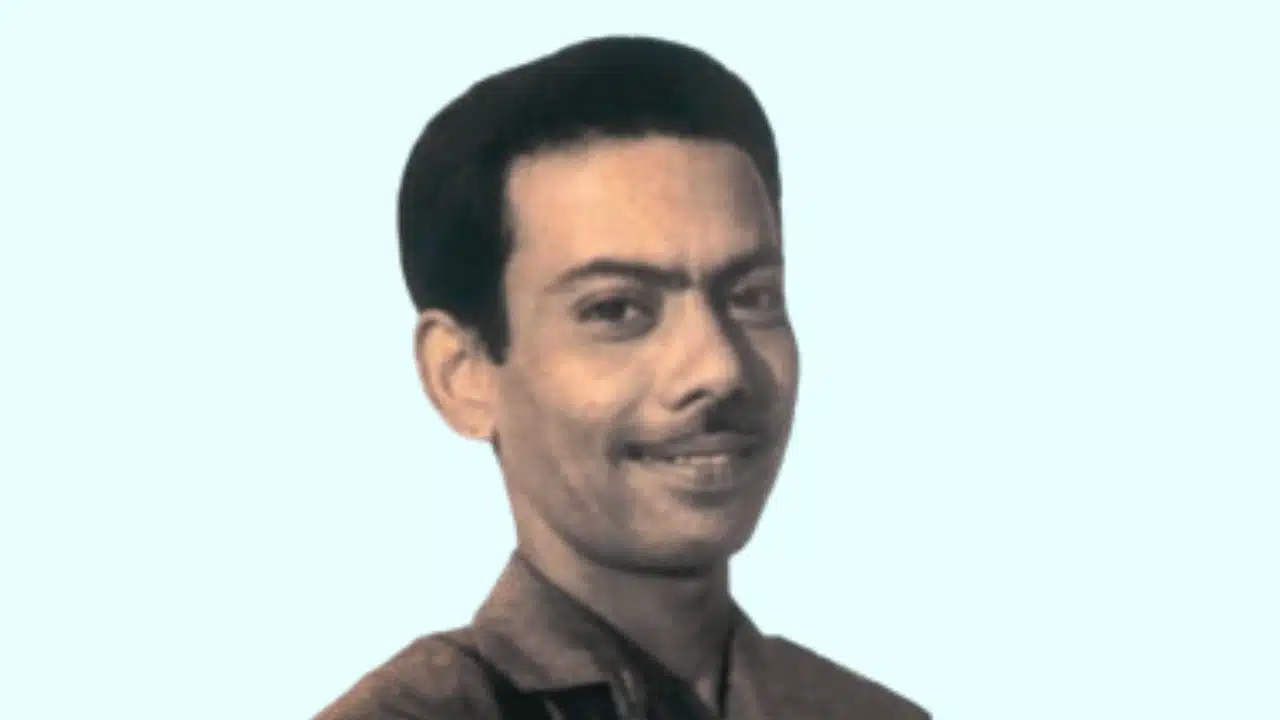
Today marks the 90th birth anniversary of martyred intellectual and legendary filmmaker Zahir Raihan, the celebrated creator of Jiban Theke Neya. Widely admired as a filmmaker, novelist, story writer, and journalist, Raihan’s legacy continues to inspire generations across Bangladesh and beyond.
Early Life and Education
Born on August 19, 1935, in Majupur village of Feni, Zahir Raihan’s full name was Abu Abdar Mohammad Zahirullah, though he became known to the public simply as Zahir Raihan. Affectionately nicknamed Zafar, he began his education in 1940. After excelling in his matriculation examination, he studied at Dhaka College, where he became politically active alongside his elder brother, Shahidullah Kaiser. Later, he pursued higher studies in the Bengali department of Dhaka University.
His literary journey began early, with journalism and storytelling shaping his student life. His first collection of short stories, Suryagrahan, brought him attention. Raihan went on to write timeless novels such as Shesh Bikeler Mey, Hazar Bosor Dhore, Arek Falgun, and Baraf Gala Nadi.
Role in the Language Movement and Politics
Zahir Raihan was among the first ten people to defy Section 144 on February 21, 1952, during the Bengali Language Movement. His activism continued through the mass uprising of 1969, where he used his camera to document historic moments. His passion for politics and national causes soon merged with his deep interest in filmmaking.
Entry into Cinema and Pioneering Works
Raihan began his film career in 1957 as an assistant to director A.J. Kardar. His directorial debut, Kakhono Aseni, was released in 1960. He went on to break new ground in South Asian cinema—directing Pakistan’s first color film, Sangam, in 1964, and the first CinemaScope film, Bahana, in 1965.
Over the next decade, he created masterpieces like Sonar Kajal, Kancher Deyal, Behula, Anwara, and most notably, Jibon Theke Neya. Released in 1970, the film became a landmark in Bengali cinema for its bold metaphorical portrayal of the Language Movement.
Voice for Liberation
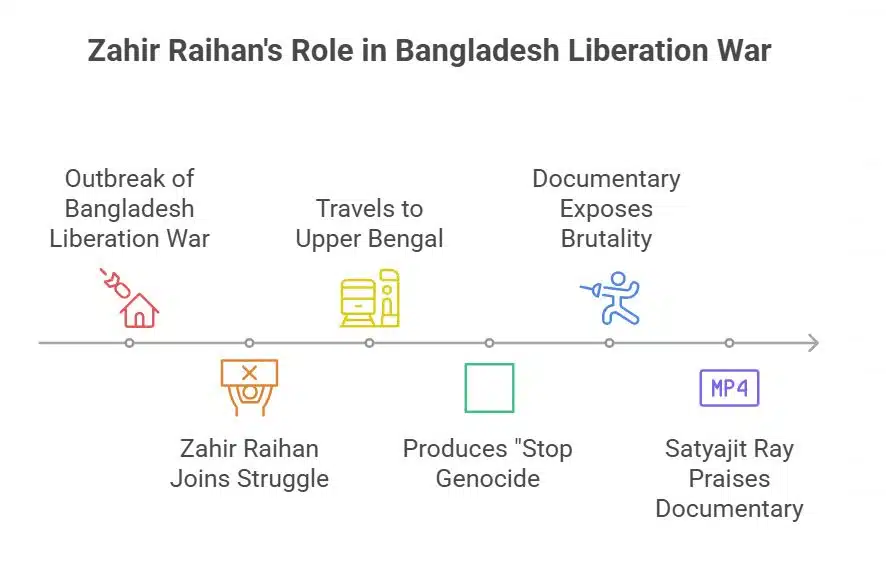
With the outbreak of the Bangladesh Liberation War in 1971, Zahir Raihan joined the struggle in his own way. He traveled to Upper Bengal and produced the groundbreaking documentary Stop Genocide, which exposed the brutality of the Pakistani army to the world. Even renowned filmmaker Satyajit Ray praised the documentary for its powerful storytelling and impact.
Awards and Recognition
Zahir Raihan’s literary and cinematic brilliance earned him multiple accolades.
-
Bangla Academy Medal (1972) for literature
-
Nigar Award (1965) for Best Director (Kancher Deyal)
-
Tashkent Film Festival Awards (1972) for Jiban Theke Neya and Stop Genocide
-
National Film Award (1975, posthumous) for overall contribution
-
Ekushey Padak (1977, posthumous) for cinema
-
Swadhinata Puraskar (1992, posthumous) for literature
These honors underline his unmatched contributions to both literature and cinema.
A Life Cut Short
Despite his towering achievements, Zahir Raihan’s life was tragically brief. On January 30, 1972, while searching for his missing brother Shahidullah Kaiser, he disappeared and was never found. His death at the young age of 37 left an irreparable void in Bangladeshi arts and culture.
Enduring Legacy
Though gone, Zahir Raihan’s creations remain etched in the collective memory of Bangladesh. His films and writings continue to serve as cultural touchstones, embodying the struggles, hopes, and dreams of the Bengali nation.
As Bangladesh celebrates his 91st birthday, Zahir Raihan stands as a shining example of how much one individual can achieve in a short lifetime, leaving behind a legacy that will forever be cherished.