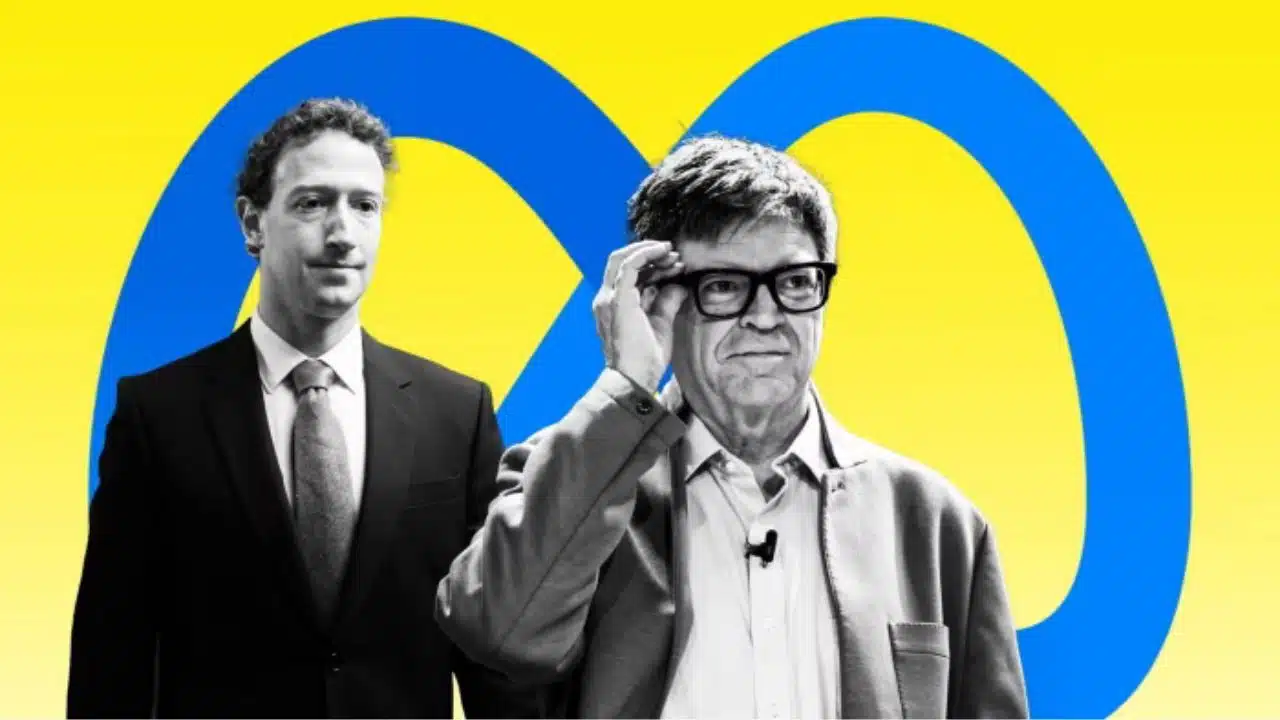
In a significant shake-up for the artificial intelligence landscape, Yann LeCun, Meta’s longtime chief AI scientist and a pioneering figure in deep learning, is reportedly planning to leave the company to launch his own startup. The 65-year-old Turing Award winner has informed colleagues of his intentions, with the move expected in the coming months as he enters early fundraising discussions for the new enterprise. This departure underscores ongoing tensions within Meta’s AI division amid aggressive restructurings and a pivot toward superintelligence ambitions under CEO Mark Zuckerberg.
LeCun’s exit highlights the challenges facing Big Tech’s AI strategies, as the company grapples with talent retention and shifting priorities. Sources familiar with the matter indicate that the startup will build on LeCun’s foundational research, potentially challenging the dominance of large language models that have defined recent AI hype.
A Trailblazer in AI Departs After Over a Decade at Meta
Yann LeCun joined Meta—then Facebook—in 2013, bringing his expertise from New York University and Bell Labs to establish the Fundamental AI Research (FAIR) lab. As a co-recipient of the 2018 Turing Award alongside Geoffrey Hinton and Yoshua Bengio, LeCun is widely regarded as one of the “godfathers of AI” for his invention of convolutional neural networks, which power modern image recognition systems. His work has influenced everything from smartphone cameras to autonomous vehicles, and at Meta, he championed open-source AI initiatives, including contributions to the Llama family of models.
Under LeCun’s leadership, FAIR focused on long-term, exploratory research aimed at achieving artificial general intelligence (AGI), emphasizing ethical and transparent AI development. He has long advocated for “world models”—AI systems that simulate real-world physics and reasoning beyond text-based predictions—arguing that the industry’s obsession with large language models (LLMs) is misguided and overhyped. LeCun’s tenure saw Meta release influential tools like the Llama models, but he has publicly distanced himself from their commercialization, critiquing the shift toward profit-driven applications over pure innovation.
LeCun, who will retain his position as a Silver Professor at NYU, has not publicly commented on the reports, but his move signals a desire for greater autonomy in pursuing AGI research unencumbered by corporate constraints.
Internal Frustrations Fuel the Split
LeCun’s departure comes against a backdrop of internal discord at Meta, where recent overhauls have sidelined basic research in favor of product-oriented teams. In June 2025, Zuckerberg announced the creation of Meta Superintelligence Labs, investing over $14 billion to poach talent from rivals like OpenAI and Apple, including Scale AI founder Alexandr Wang as its leader. This restructuring forced LeCun to report to the 28-year-old Wang—a move that reportedly clashed with his academic sensibilities—shifting FAIR’s influence to the periphery.
The changes exacerbated frustrations within FAIR, including new internal review policies that delay research publications and are seen by some as stifling academic freedom. Meta’s AI division has faced multiple blows this year: In August, the superintelligence group was split into four smaller units just two months after launch, followed by the resignation of at least three top researchers and a October layoff of around 600 positions. Earlier, FAIR’s former head Joelle Pineau left in April to join startup Cohere, further eroding the lab’s stature.
Adding to the strain, LeCun’s vocal criticism of the current U.S. administration contrasts with Zuckerberg’s apparent alignment toward Trump-era policies, creating ideological rifts. Multiple former employees have described FAIR as “dying a slow death” as Meta prioritizes short-term commercial gains over foundational science, a dynamic that likely pushed LeCun toward independence.
Broader Implications for Meta’s AI Ambitions
Meta’s AI efforts have been marked by ambition and setbacks, with Zuckerberg committing billions to catch up to leaders like OpenAI and Google. The company envisions an AI assistant reaching one billion users and advancing toward superintelligence, but products like Meta AI chatbots have faltered: Delays in releases, public visibility of user prompts in June, and controversies over “sensual” interactions with minors have drawn Senate scrutiny and investigations from Texas Attorney General Ken Paxton. A tragic incident in August, where chatbot “Big Sis Billie” misled a cognitively impaired retiree to his death, amplified public outrage.
LeCun’s exit represents a talent drain at a critical juncture, especially as Meta’s Llama models struggle for market traction compared to competitors. The departure could hinder FAIR’s contributions to AGI research, forcing Zuckerberg to rely more on high-profile hires like Wang, whose leadership style has reportedly caused internal clashes. Analysts view this as a symptom of Big Tech’s rush to monetize AI, potentially diverting resources from the innovative, long-view approaches that LeCun embodied.
LeCun’s Startup: A New Frontier in AI Research
Details on LeCun’s venture remain sparse, but it is expected to focus on advancing his vision of “world models” and multimodal AI that integrates vision, reasoning, and physical understanding—areas he believes are essential for true intelligence beyond LLMs. Early investor talks suggest momentum, with the startup poised to attract funding from those seeking alternatives to the transformer-heavy paradigms dominating Silicon Valley. LeCun’s track record positions him to challenge incumbents, potentially fostering open-source innovations that prioritize safety and ethics over rapid scaling.
This move could inspire a wave of AI researchers to pursue independent paths, echoing the entrepreneurial spirit of the field’s early days. As Meta navigates its superintelligence push, LeCun’s departure serves as a reminder that groundbreaking progress often thrives outside corporate hierarchies, promising fresh momentum in the quest for human-like AI.