The real estate market is constantly evolving, and one trend that’s gaining significant momentum is “green real estate.” This isn’t just a fleeting fad; it’s a fundamental shift towards homes that are designed, constructed, and operated with environmental sustainability and efficiency in mind.
For homebuyers, looking beyond traditional properties to embrace green homes offers a surprising array of benefits that go far beyond just being good for the planet. Let’s try to understand why should homebuyers consider green real estate and invest in it. But first:
What Is Green Real Estate? How Is Sustainable Housing Different From Traditional Homes?
Green real estate refers to residential properties designed, built, or upgraded to reduce environmental impact while improving efficiency and occupant comfort. Unlike traditional homes, green properties focus on long-term performance rather than short-term aesthetics.
Key differences include:
-
Lower energy and water consumption
-
Health-focused building materials
-
Smarter use of natural light and ventilation
-
Reduced carbon footprint over the home’s lifecycle
Green homes are not limited to new builds. Many existing homes qualify as green real estate after energy-efficient upgrades, retrofits, or certifications.
10 Reasons Why Homebuyers Should Consider Green Real Estate:
Here are 10 practical reasons why homebuyers and realtors should focus on sustainable and eco-friendly real estate:
1. Significant Savings on Utility Bills
This is often the most immediate and tangible benefit for green homeowners. Green homes are engineered for efficiency, meaning they use less energy and water.
It is Energy Efficient
Think about features like high-performance insulation, energy-efficient windows, LED lighting, and ENERGY STAR-certified appliances. Many green homes also incorporate smart thermostats and even solar panels.
All these elements drastically reduce your consumption of electricity and natural gas, leading to noticeably lower monthly utility bills. Over the lifespan of your home, these savings can add up to tens of thousands of dollars.
The most immediate benefit is the reduction in monthly overhead. Standard homes bleed energy through drafty windows, poor insulation, and inefficient appliances. A certified green home is designed to keep conditioned air inside.
High-Performance Windows: Triple-pane glass keeps heat out in summer and traps it during winter.
Smart Thermostats: These learn your schedule and adjust the temperature automatically so you are not cooling an empty house.
Solar Integration: Many green homes come with solar panels installed or are “solar-ready,” which allows you to generate your own power and potentially sell it back to the grid.
Helps Water Conservation
Low-flow fixtures, efficient irrigation systems, and drought-tolerant landscaping are common in green homes. This not only conserves a precious resource but also cuts down on your water bill.
These ongoing savings directly impact your household budget, freeing up money for other priorities or investments.
Energy Efficiency vs Traditional Homes: Cost Comparison
| Feature Area | Traditional Home | Green Real Estate |
|---|---|---|
| Energy Usage | High, variable | Lower, optimized |
| Utility Bills | Fluctuate with prices | More predictable |
| Insulation | Standard or outdated | High-performance |
| Cooling Needs | Heavy reliance on AC | Reduced demand |
| Long-Term Costs | Higher over time | Lower over time |
This comparison highlights why many buyers see green homes as a financial hedge rather than an expense.
2. Beyond the Walls: Sustainable Landscaping and Curb Appeal
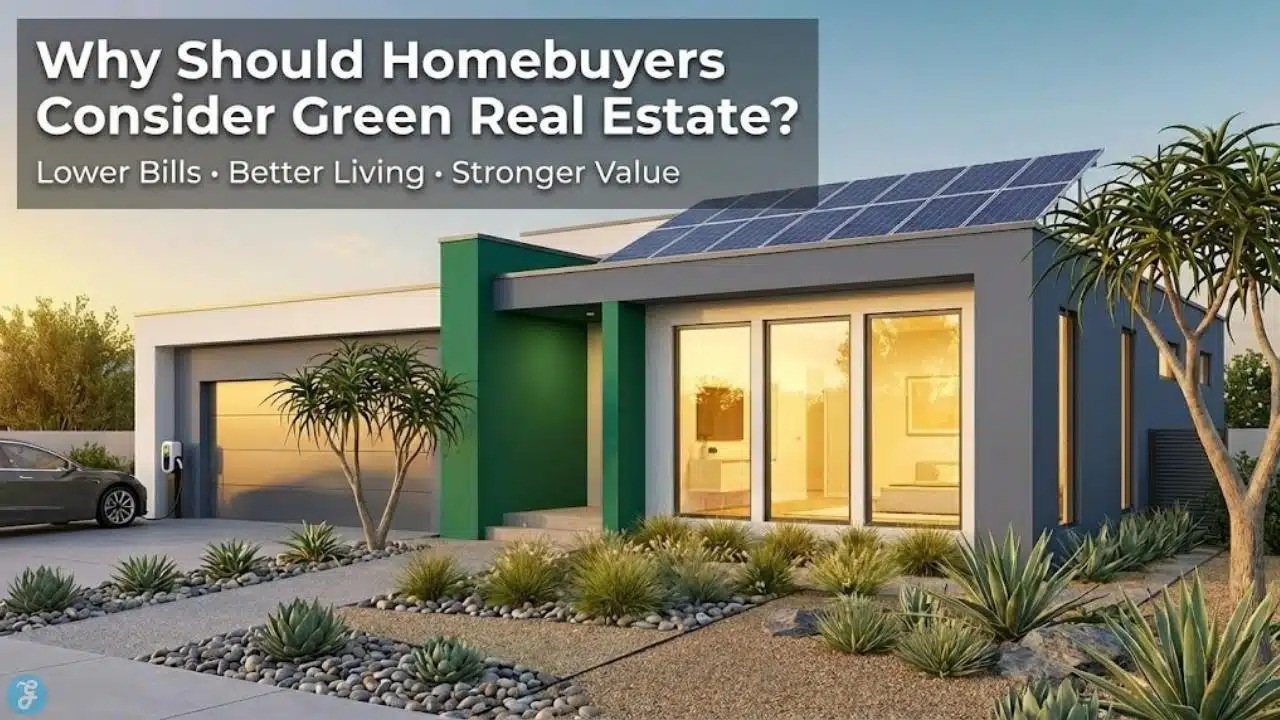
When evaluating green real estate, the eco-friendly features shouldn’t stop at the front door. The land surrounding the home plays a massive role in its environmental footprint and maintenance costs. A true green property employs “Sustainable Landscaping” or “Xeriscaping.”
Why It Matters for Homebuyers
Traditional lawns are resource-intensive monocultures that require vast amounts of water, fertilizers, and gasoline-powered mowing. Green properties flip this script.
Key Exterior Features to Look For
-
Native Plantings: Green homes prioritize plants native to the specific region. These plants have evolved to thrive in the local climate and soil, requiring little to no extra watering or chemical fertilizers.
-
Permeable Hardscaping: Traditional concrete driveways create runoff that overwhelms storm drains and pollutes local waterways. Green homes often use permeable pavers, gravel, or porous concrete. This allows rainwater to soak back into the ground, recharging the local water table and reducing flood risks on your property.
-
Rain Gardens and Bioswales: These are landscaped depressions designed to capture and filter rainwater runoff from the roof and driveway. They prevent erosion and filter out pollutants before the water enters the ground.
-
Tree Placement for Passive Energy: A strategically placed deciduous tree on the south or west side of a home can shade the roof and windows in summer (lowering cooling costs) while letting sunlight through in winter when the leaves fall (lowering heating costs).
3. The Intersection of Smart Tech and Green Living
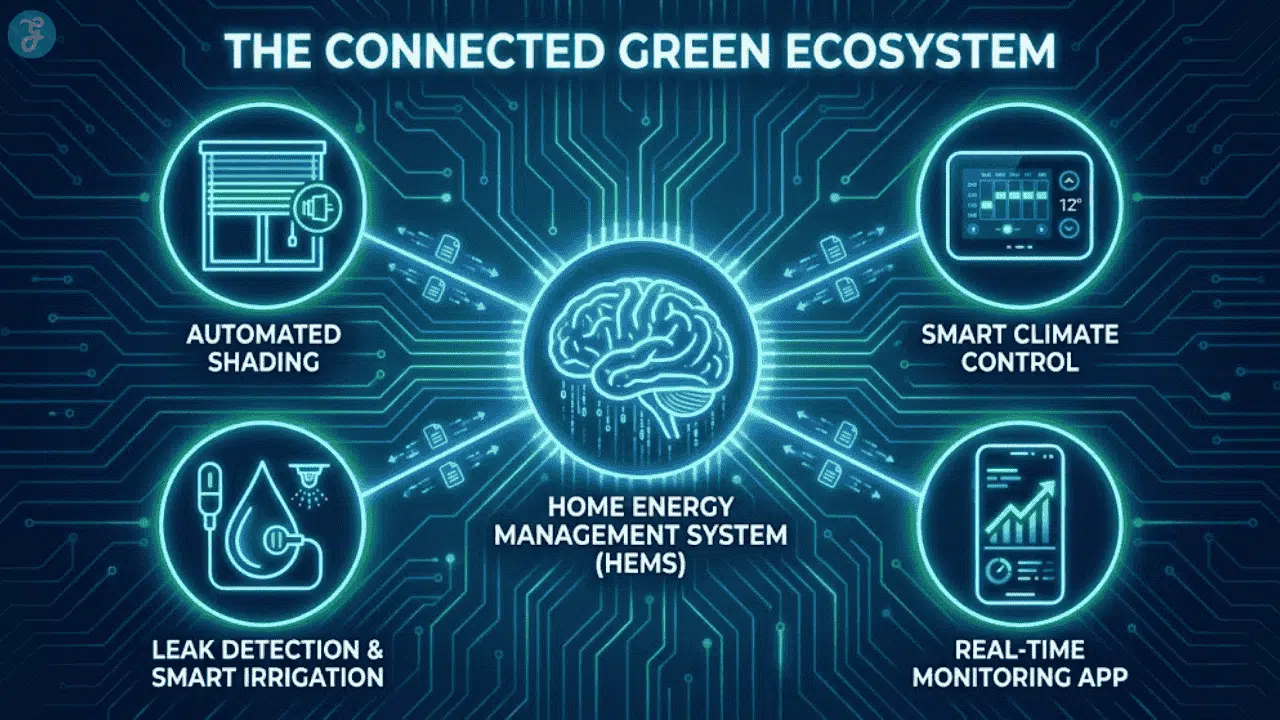
In the modern real estate market, “Green” and “Smart” are becoming synonymous. You cannot maximize efficiency without data and automation. When viewing green real estate, you are likely to encounter an ecosystem of interconnected devices designed to minimize waste without you lifting a finger.
The Brain of the Green Home
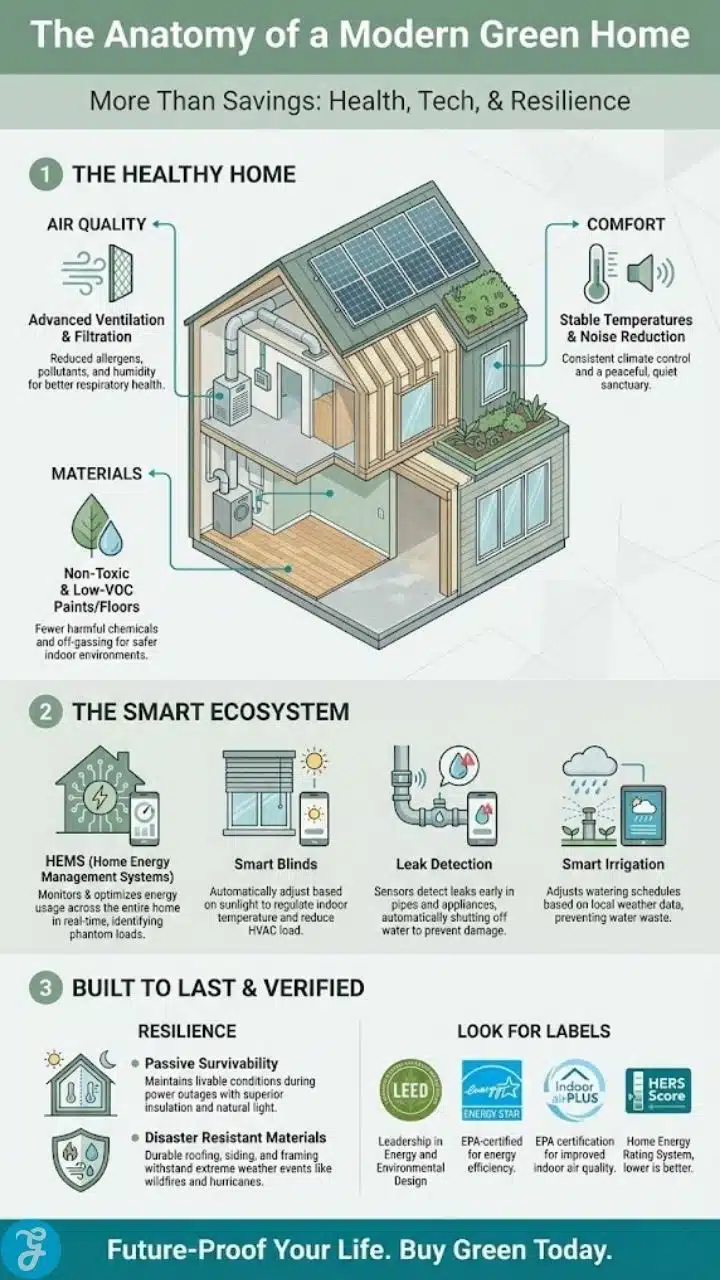
Home Energy Management Systems (HEMS) are becoming standard in high-end green real estate. Unlike a simple smart thermostat, a HEMS monitors the energy usage of the entire house circuit by circuit.
-
Real-Time Monitoring: You can see exactly how much energy your refrigerator, EV charger, or dryer is using via a smartphone app.
-
Phantom Load Elimination: These systems can identify “vampire appliances”—electronics that suck power even when turned off—and cut power to them automatically.
Automated Efficiency
-
Smart Blinds and Shading: In a green home, window treatments often work in tandem with the HVAC system. During a hot summer afternoon, smart blinds will automatically close to block solar heat gain, reducing the load on your air conditioner.
-
Leak Detection Systems: Water damage is a leading cause of insurance claims and resource waste. Green homes often feature smart water monitors that detect leaks in pipes or appliances and automatically shut off the main water supply to prevent flooding.
-
Smart Irrigation: Instead of a timer that waters the lawn regardless of the weather, smart irrigation controllers check local weather forecasts. If rain is predicted, the sprinklers stay off, saving thousands of gallons of water annually.
4. Enhanced Indoor Air Quality and Health Benefits
Traditional homes can sometimes be a repository for volatile organic compounds (VOCs) and allergens, contributing to poor indoor air quality. Green homes actively combat this, promoting a healthier living environment.
Non-Toxic Materials:
Green building practices prioritize materials with low or zero VOCs, such as specific paints, flooring, and finishes. This means fewer harmful chemicals off-gassing into your home. Green real estate prioritizes low-VOC or zero-VOC materials.
- Flooring: Bamboo, cork, or solid wood instead of cheap laminates.
- Paints: Water-based formulas that do not release harmful chemicals.
- Insulation: Formaldehyde-free fiberglass or cellulose.
This reduction in chemical exposure is crucial for families with young children or anyone suffering from asthma and allergies.
Improved Ventilation: Many green homes incorporate advanced ventilation systems that bring in fresh air while filtering out pollutants, allergens, and excess humidity. This can significantly reduce issues for those with allergies, asthma, or other respiratory sensitivities.
Moisture Control: Sustainable design often includes better strategies for moisture management, which helps prevent mold and mildew growth, further contributing to healthier indoor air.
Living in a green home can lead to fewer respiratory problems, better sleep, and an overall improved sense of well-being for you and your family.
5. Increased Comfort and Quality of Life
Beyond health, green homes simply offer a more comfortable living experience.
- Stable Temperatures: Superior insulation and efficient windows mean fewer drafts and more consistent indoor temperatures year-round. You’ll experience fewer hot spots in summer and cold spots in winter, reducing reliance on your HVAC system to constantly adjust.
- Reduced Noise: The same high-quality insulation and window technologies that keep temperatures stable also do an excellent job of blocking outside noise, creating a quieter and more peaceful sanctuary.
- Abundant Natural Light: Green home designs often maximize natural light through thoughtful window placement, reducing the need for artificial lighting during the day and creating brighter, more inviting spaces.
This translates to a home that feels more serene, comfortable, and pleasant to live in every single day.
6. Resilience and Durability: The Hidden Benefit of Green Homes
While energy savings are the headline feature of green real estate, resilience is the unsung hero. As climate patterns shift and extreme weather events become more frequent, the durability of a home is no longer just a luxury—it is a necessity. Green homes are often built to higher standards of durability, making them safer havens during emergencies.
Passive Survivability
One of the most critical concepts in modern green building is “passive survivability.” This refers to a home’s ability to maintain livable conditions in the event of an extended power outage or interruption in heating fuel or water.
-
Thermal Safety: Because green homes are airtight and heavily insulated, they retain heat in winter and stay cool in summer for days longer than traditional homes without active HVAC. This can be a lifesaver during winter storms or summer heatwaves when the grid fails.
-
Natural Lighting: Homes designed with solar orientation in mind provide sufficient daylighting, allowing life to continue normally during daytime power outages.
Disaster Resistance
Green building materials are often more durable and resistant to the elements than standard construction materials.
-
Fire Resistance: Many eco-friendly siding options, such as fiber cement or metal, offer superior fire resistance compared to traditional vinyl or wood, a crucial factor in wildfire-prone areas.
-
Moisture Management: Green homes utilize rain screens and advanced drainage planes behind the siding. This prevents water intrusion during heavy storms, protecting the structural integrity of the wood framing from rot and decay.
-
Wind Resistance: Structural Insulated Panels (SIPs) and Insulated Concrete Forms (ICFs)—common in high-performance green buildings—offer significantly higher wind shear resistance than standard stick-framing, providing better protection during hurricanes or tornadoes.
Buying a green home isn’t just about saving money on a sunny day; it is about ensuring your family is safe and secure during the stormy ones.
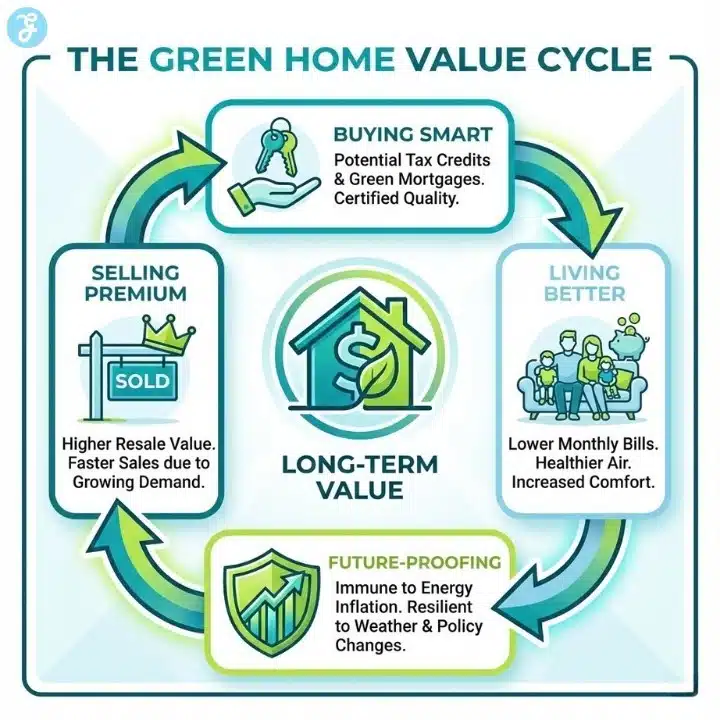
7. Higher Resale Value and Future-Proofing Your Investment
While the upfront cost of a green home might sometimes be slightly higher, this investment often pays off handsomely in the long run.
- Growing Demand: As climate awareness increases and utility costs rise, more buyers are actively seeking energy-efficient homes. This growing demand makes green homes more attractive on the resale market.
- Certified Value: Homes with green certifications (like LEED, Energy Star, or Passive House) can often command higher prices and sell faster. These certifications provide credible proof of a home’s efficiency and quality.
- Lower Operating Costs: Future buyers will also appreciate the lower utility bills and maintenance costs, making your green home a more financially appealing purchase.
- Protection Against Rising Costs: As energy prices continue to climb, a home that produces its own power or uses significantly less energy becomes an even more valuable asset, essentially future-proofing your investment against market fluctuations.
8. Reduced Environmental Impact
Of course, the core philosophy behind green real estate is its positive impact on the planet.
Lower Carbon Footprint: By consuming less energy, green homes contribute significantly less to greenhouse gas emissions, directly combating climate change.
Resource Conservation: Efficient water use and the selection of sustainable, recycled, or locally sourced building materials reduce demand on natural resources and minimize waste.
Less Pollution: Reduced energy consumption often means less pollution from power generation.
Choosing a green home allows you to live in alignment with your values, contributing to a healthier environment for current and future generations.
9. Potential Tax Credits and Incentives
Many governments, states, and even local municipalities offer financial incentives to encourage green building and energy-efficient home improvements.
- Tax Credits: You might be eligible for federal or state tax credits for installing solar panels, energy-efficient windows, or other qualifying green upgrades.
- Rebates: Utility companies often provide rebates for purchasing ENERGY STAR appliances or making certain efficiency upgrades.
- Green Mortgages: Some lenders offer “green mortgages” with more favorable terms for properties that meet specific energy efficiency standards.
These incentives can help offset any initial higher costs, making green real estate even more financially appealing.
10. The Net-Zero Standard: The Future of Real Estate
For homebuyers looking for the ultimate investment, “Net-Zero” is the buzzword to watch. While a standard green home uses less energy, a Net-Zero Energy (NZE) home produces as much energy as it consumes over the course of a year.
How Does Net-Zero Work?
Net-Zero is achieved through a combination of aggressive efficiency and on-site renewable energy.
-
Demand Reduction: The home is built so efficiently (airtight, super-insulated) that it requires a fraction of the energy of a normal home to run.
-
Energy Production: Solar panels (photovoltaics) or wind turbines generate electricity.
-
Grid Tying: In the summer, the home often produces more energy than it needs, sending power back to the grid for credit. In the winter, it draws from the grid. At the end of the year, the net cost is zero.
Why Buy Net-Zero?
-
Immunity to Energy Inflation: If you live in a Net-Zero home, you are effectively immune to rising electricity and gas prices. Your energy cost is fixed at the price of your mortgage and maintenance.
-
Premium Resale: As governments push for carbon neutrality, Net-Zero homes are becoming the regulatory gold standard. Owning one places you ahead of the curve, ensuring your asset remains premium while older homes risk becoming obsolete “brown” assets.
How to Identify a True Green Home?
One of the biggest challenges homebuyers face is “greenwashing.” This happens when a seller claims a home is eco-friendly just because it has a smart thermostat. You need to look for objective verification.
Look for the Labels
Do not just take the seller’s word for it. Ask for the paperwork.
- LEED Certification: The gold standard for holistic green building.
- Energy Star: Verifies the home meets strict energy efficiency guidelines set by the EPA.
- Indoor airPLUS: A specific certification for air quality and mold prevention.
- Passive House: The ultimate standard for energy efficiency, requiring almost no active heating or cooling.
Ask for the HERS Score
The Home Energy Rating System (HERS) is like a miles-per-gallon rating for a house. A standard new home scores 100. A resale home might score 130 (which is bad). A high-performance green home will score 50 or lower. The lower the number, the more efficient the home is. Always ask your real estate agent if a HERS rating is available.
Choosing a green home offers direct, measurable advantages that impact your daily life and finances.
How Green Real Estate Lowers Monthly Living Expenses
One of the most practical reasons homebuyers consider green real estate is cost control. Efficient systems reduce recurring expenses that traditional homes struggle to manage as prices rise.
Common cost-saving features include:
-
High-efficiency HVAC systems that reduce heating and cooling costs
-
Advanced insulation and sealing that prevent energy loss
-
Energy-efficient windows that stabilize indoor temperatures
-
Low-flow fixtures that reduce water usage
Over time, these features can significantly reduce utility bills, making green homes more affordable to live in, even if the purchase price is slightly higher.
Should Homebuyers Consider Green Real Estate?
Considering green real estate is about more than just a trendy purchase; it’s a holistic decision that benefits your wallet, your health, your comfort, and the planet. As the world moves towards a more sustainable future, homes that embrace these principles will not only become the standard but will also prove to be the most desirable and valuable investments for discerning homebuyers. It’s time to build a greener future, one home at a time.