The planet is heating up. Glaciers are melting. Cities are choking on pollution. We’ve marched, we’ve protested, we’ve tweeted. But while the climate movement has raised vital awareness, it hasn’t been enough to stop the crisis.
What Earth truly needs now is something bigger: a Tech Renaissance—a new wave of smart, scalable technologies that can not only reduce harm but actively help heal the planet. In this article, we explore why climate awareness must evolve into bold innovation, and how tech is becoming the planet’s most powerful ally.
The Limits of the Climate Movement Alone
The climate movement has inspired millions around the world to take action, from school strikes to large-scale protests. It’s brought climate change to the front pages, sparked conversation, and made politicians listen. But despite all this passion, the movement has hit a ceiling. Awareness isn’t translating fast enough into results. To truly move forward, we need more than voices—we need innovation, invention, and infrastructure.
Awareness Without Action
From school strikes to climate marches, awareness campaigns have played a huge role in putting climate change in the spotlight. But knowing isn’t doing. Many global net-zero pledges remain just promises—without the tools, timelines, or tech to make them real.
For example, over 70 countries have announced climate neutrality goals, but less than 10 have credible action plans. The gap between intention and action is wide.
Misinformation and Greenwashing
Not all that glitters is green. Many corporations and governments promote eco-friendly images while continuing harmful practices behind the scenes. This “greenwashing” confuses consumers and slows progress.
Terms like “sustainable,” “net-zero,” or “eco” are often misused, making it hard to know what’s real. Without technological tools to track and verify emissions, even the best intentions can fall flat.
Emotional Burnout and Eco-Anxiety

Many young people feel hopeless. Constant doom-and-gloom messaging creates eco-anxiety. Activism fatigue is setting in.
Without tangible signs of progress, people can feel overwhelmed and disillusioned. A positive, constructive path forward is needed. And that’s where technology comes in.
What Is a Tech Renaissance and Why Do We Need It?
We’ve heard the call to reduce, reuse, and recycle. We’ve seen marches and signed petitions. But in 2025, it’s clear that saving the Earth will take more than awareness—it will take reinvention. A Tech Renaissance isn’t just a buzzword—it’s a global shift where innovation becomes the frontline tool in healing our planet.?
Tech Renaissance Defined
A Tech Renaissance is a new era of purpose-driven innovation—where every breakthrough is built to solve real-world climate and environmental challenges. It’s not about building the next app for fast food delivery. It’s about building solutions for food security, clean energy, clean air, and a cooler planet.
It’s the age of planet-positive invention—where engineering, science, and creativity unite to help Earth thrive.
Urgent Global Problems That Demand Tech Solutions
The world faces complex challenges:
- Rising sea levels and extreme weather
- Plastic pollution and overflowing landfills
- Clean water shortages in Africa and Asia
- Food insecurity and declining crop yields
These problems are too big for policy alone. We need scalable solutions that are fast, efficient, and measurable—and that’s what tech can deliver.
From Ideas to Impact
Awareness is step one. But action means building.
For example:
- Planting trees is important—but a carbon-capturing machine can remove CO₂ 100x faster.
- Protesting oil pipelines is powerful—but creating cheap solar batteries is practical.
The future belongs to those who create solutions—not just point out problems.
The Role of Breakthrough Technologies in Saving the Planet
While policies and protests raise awareness, it’s breakthrough technologies that create the biggest impact. Around the world, scientists, engineers, and innovators are designing tools that tackle climate problems at scale. These solutions are fast, measurable, and often game-changing. In this section, we’ll explore how tech is turning climate challenges into opportunities for progress.
Clean Energy Tech
Solar panels and wind turbines are just the beginning. We now have:
- Next-gen solar glass that turns windows into energy sources
- Fusion research labs working to create unlimited clean energy
- Grid-scale batteries that store power for whole cities
Countries like China, Germany, and the U.S. are investing heavily in these areas.
Climate Data and AI
AI is helping us predict floods, track wildfires, and manage farming systems. Google’s AI-powered flood warning system now alerts millions in India and Bangladesh days ahead of time, saving lives.
AI also helps optimize energy use in buildings, reduce food waste, and monitor illegal deforestation.
Waste & Water Innovation
Plastic alternatives like mushroom packaging and seaweed containers are replacing single-use plastics. Machines like Watergen turn air into drinking water in remote villages.
AI tools also help sort and recycle waste more accurately than humans ever could.
Carbon Capture and Geoengineering
Technologies like Climeworks pull carbon straight from the air and lock it underground. Other innovations like Project Vesta use crushed minerals to naturally absorb CO₂ from oceans.
While some geoengineering ideas are still being tested, they offer powerful tools for reversing climate change.
Climate Movement vs. Tech Renaissance: A Comparison
| Climate Movement | Tech Renaissance |
|---|---|
| Protests, petitions | Prototypes, pilot programs |
| Focus on awareness | Focus on innovation and results |
| Often reactive | Proactive and solution-focused |
| Mostly human-powered | Tech-enabled, scalable |
| Emotion-driven | Data- and impact-driven |
Real-World Case Studies: Tech Making a Real Difference
- Pachama: Uses satellite images and AI to measure real carbon absorption from forests
- Climeworks: Removes over 60,000 tons of CO₂ annually in Iceland
- Agreena: Pays European farmers to adopt carbon-storing soil practices
- Ecovative: Grows biodegradable packaging from mushrooms to replace Styrofoam
- WINT: Detects leaks and saves water in homes and buildings
These are just a few examples of thousands of climate solutions already changing the game.
Why the World Needs Builders, Not Just Believers
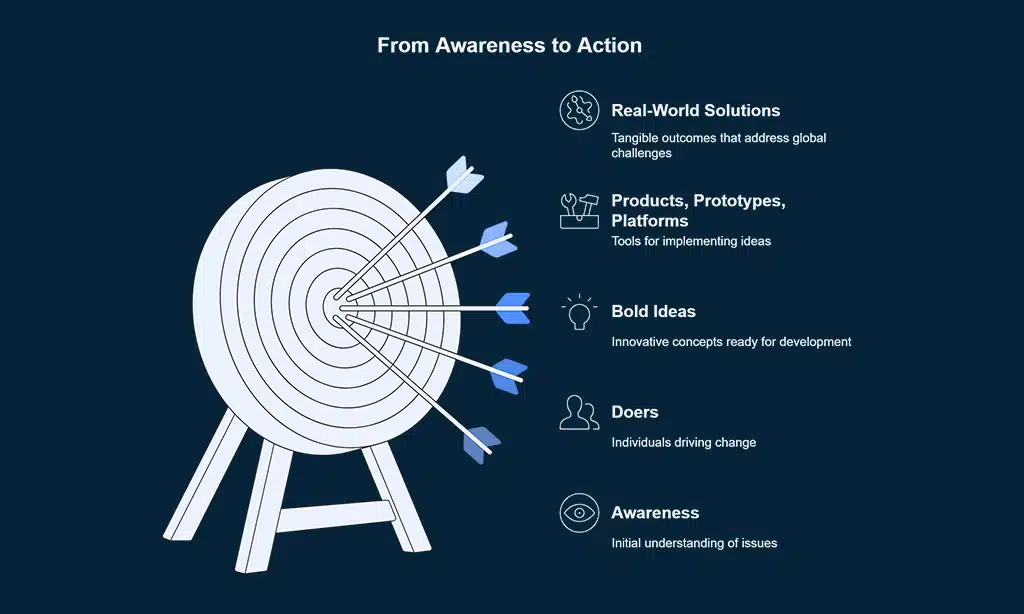
Awareness is powerful—but action changes everything. Today, the world doesn’t just need people who care; it needs people who create. Behind every climate pledge, we need products, prototypes, and platforms that deliver results. The next phase of saving the planet belongs to doers—the engineers, coders, designers, and tinkerers who turn bold ideas into real-world solutions.
Activism Needs Engineers, Coders, and Inventors
Climate advocacy is crucial—but it’s not enough on its own. We need builders. People who design, code, invent, and test. Because real change happens when ideas turn into inventions.
How Everyone Can Contribute
You don’t have to be an engineer to help:
- Students can learn coding, renewable energy systems, or environmental science.
- Professionals can switch to green jobs or start climate-positive companies.
- Consumers can support eco-innovative brands and share real impact stories.
A Movement of Makers
We need solar coders, carbon hackers, and AI-powered climate scientists. Let’s shift the focus from Instagram posts to innovative prototypes.
The next generation of heroes won’t just chant. They’ll build.
What’s Next? The Future of the Tech-Driven Climate Era
The next 5–10 years could see:
- Breakthroughs in carbon-free steel and cement
- Personal carbon tracking apps for every household
- Climate-friendly food grown in vertical farms
- Global funding models for tech startups in Africa and Latin America
International cooperation and digital learning will make this renaissance more global than ever.
Takeaways
The climate movement helped us care. But to truly change the planet’s future, we need to build. This is the moment for a Tech Renaissance—a wave of human creativity powered by science and driven by hope. Because Earth doesn’t need saving. It needs rebuilding.
Let’s stop waiting for solutions. Let’s start creating them.