Ever wondered why the world’s most famous ninja is named after a fish cake? It might sound like a joke at first, but the name “Naruto Uzumaki” holds deep connections to Japanese mythology, geography, and even a specific ramen topping. Names in anime are rarely accidental, and this one is packed with hidden meaning.
You might be surprised to learn that “Naruto” refers to violent, swirling whirlpools off the coast of Japan that can reach speeds of 20 kilometers per hour. These aren’t just pretty water patterns; they represent raw power and untamed energy.
I’m going to walk you through what does Naruto Uzumaki mean in Japanese, the secrets behind the name, from ancient myths to the real-life location that inspired the series creator. Grab a bowl of miso ramen, and let’s dig in.
Who is Naruto Uzumaki?
Naruto Uzumaki is the knuckleheaded, loud ninja from the Hidden Leaf Village (Konohagakure). His story is a classic underdog tale that resonates with anyone who has ever felt like an outsider.
Overview of the character
Naruto starts his journey as an orphan who dreams of becoming the Hokage, the village’s strongest leader. The villagers shun him because he is a Jinchuriki, the human vessel for Kurama, the Nine-Tailed Fox. This burden makes his childhood incredibly lonely.
Despite this, he refuses to give up. He meets every challenge with his catchphrase “Dattebayo!” (often translated as “Believe it!”). His relentless optimism turns enemies into friends and eventually unites the entire shinobi world.
Role in the Naruto series
Naruto is the heart of the franchise. While other characters fight for power or revenge, Naruto fights for acknowledgment and peace. His growth is physical and emotional.
He transforms from a prankster who paints graffiti on monuments into a hero who ends the Fourth Great Ninja War. His ability to change people’s hearts is often called “Talk no Jutsu” by fans, highlighting his unique power of empathy.
Breaking Down the Name “Naruto Uzumaki”
Masashi Kishimoto, the creator of the series, chose this name carefully. It bridges the gap between a delicious meal and a dangerous natural phenomenon.
Meaning of “Naruto”
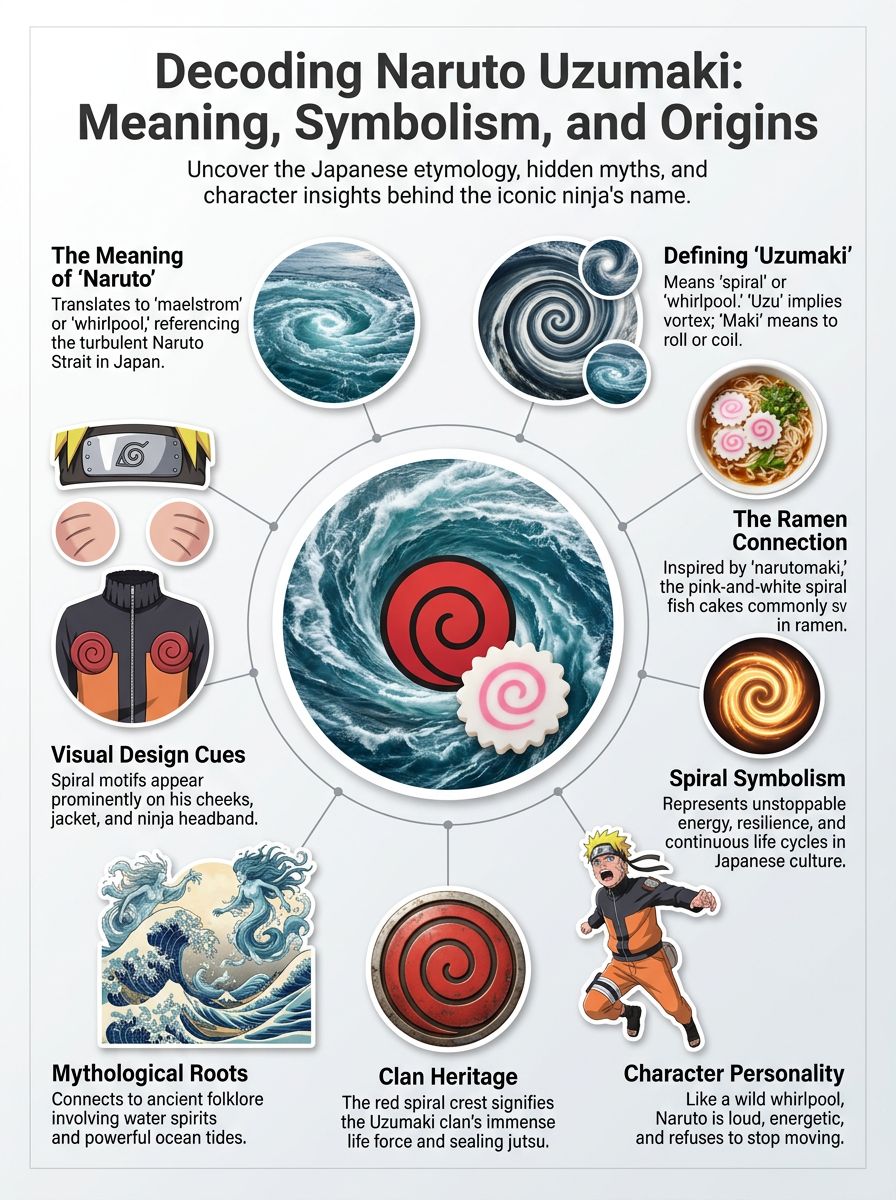
The word “Naruto” primarily refers to the Naruto Whirlpools found in the Naruto Strait between Awaji Island and Shikoku in Japan. These are some of the fastest whirlpools in the world, with currents reaching up to 20 km/h (12 mph) during spring tides.
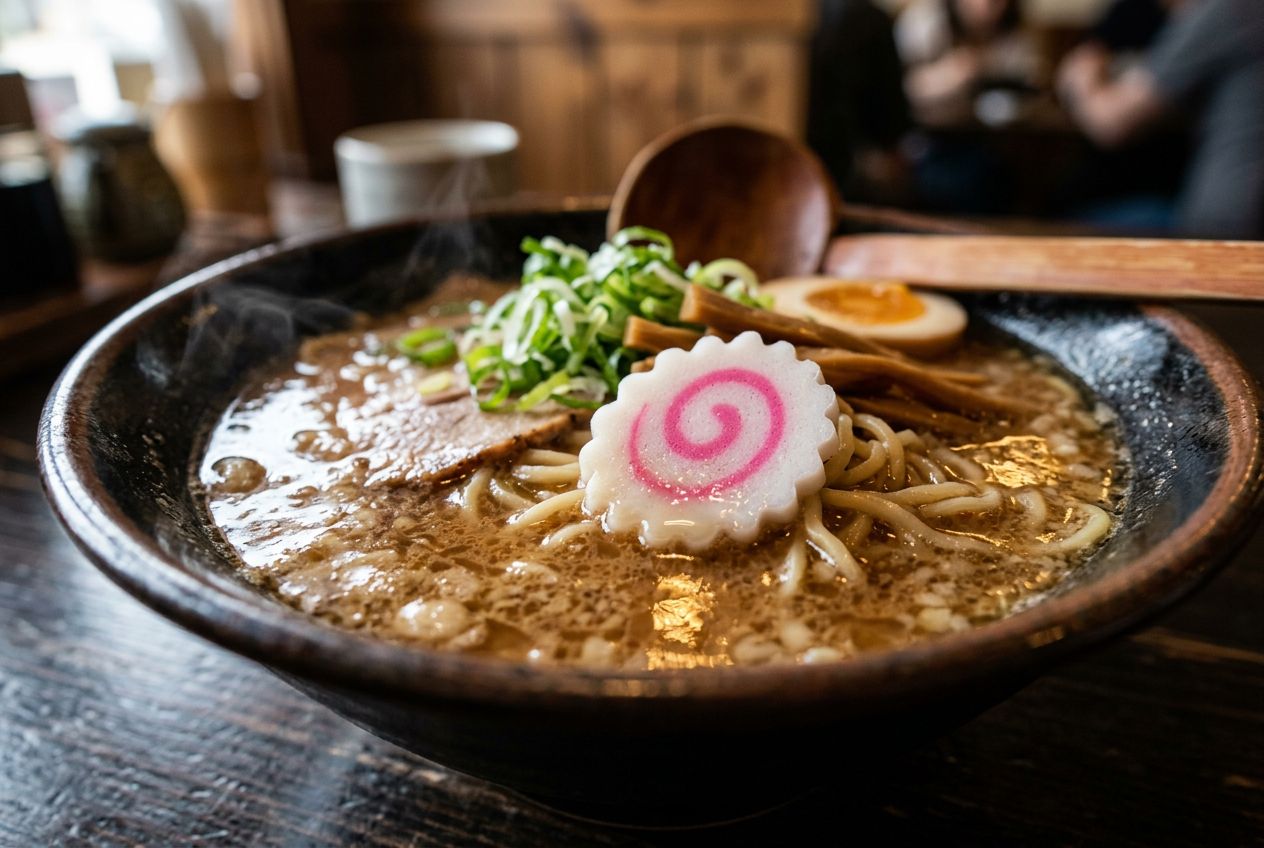
In the culinary world, “naruto” is shorthand for narutomaki. This is the cured fish surimi with a pink spiral pattern that you often see floating in a bowl of ramen. It has been a staple in Japanese cuisine since the Edo period. The spiral design on the food is meant to mimic the famous whirlpools mentioned above.
Kishimoto used this double meaning brilliantly. It connects the character’s favorite food (ramen) with his personality (a whirlwind of energy).
Meaning of “Uzumaki”
“Uzumaki” (渦巻) literally translates to “spiral” or “whirlpool” in Japanese. It combines “uzu” (vortex) and “maki” (roll). Unlike a flat circle, an uzumaki represents a three-dimensional spiral, like a tornado or a shell.
This shape represents growth and evolution. In the series, the Uzumaki Clan hails from the Land of Whirlpools (Uzushiogakure). They were famous for their sealing jutsus and incredibly strong life forces. The name hints that Naruto is a force of nature that draws everyone around him into his orbit.
Symbolism Behind the Name
The spiral is the most important shape in the entire series. You can see it everywhere, from the protagonist’s belly to the jackets of other ninjas.
Connection to spirals and whirlpools
A spiral represents a pattern that starts small and expands outward. This mirrors Naruto’s life perfectly. He starts with nothing, no parents, no friends, no skills, and slowly expands his circle of influence until he saves the world.
The Rasengan, Naruto’s signature attack, is literally a handheld ball of spiraling chakra. To master it, he had to learn to rotate his energy in multiple directions, mimicking the chaotic flow of a whirlpool.
Cultural and mythological significance in Japan
In Japanese culture, spirals are ancient symbols of life, death, and rebirth. You can find spiral patterns on pottery dating back to the Jomon period (14,000-300 BC). They often represent the flow of energy that connects all things.
The Uzumaki clan’s affinity for Fūinjutsu (Sealing Techniques) also ties into this. Sealing often involves intricate spiral patterns to lock away energy, just as a whirlpool traps water in its center.
Hidden Significance in the Series
The name isn’t just a label; it’s a roadmap for the character’s destiny. The symbolism of the “spiral” explains why Naruto succeeds where others fail.
Thematic ties to resilience and growth
A spiral never closes; it only gets bigger. This represents resilience. When Naruto faces failure, he doesn’t stop. He simply expands his efforts. Whether he is trying to master Sage Mode or bring Sasuke back to the village, he pushes forward in a continuous loop of improvement.
This contrasts with a circle, which just goes back to where it started. Naruto breaks cycles of hatred. He refuses to repeat the mistakes of previous generations, choosing instead to spiral outward toward a new future.
Representation of the Uzumaki clan
Here is a detail many fans miss: Look at the back of the standard Konoha flak jacket. You will see a red spiral symbol. This is the crest of the Uzumaki Clan.
Konohagakure and Uzushiogakure were ancient allies. The Senju clan (who founded the Leaf Village) added the Uzumaki symbol to their official uniforms to honor this friendship. Even though the Uzumaki village was destroyed, every ninja in the Leaf Village literally wears Naruto’s heritage on their back. It is a powerful hidden reminder that he belongs there, even when he feels alone.
Influence of Name Design on Character Development
The character’s design and name evolved together. Masashi Kishimoto made specific choices to ensure the “spiral” theme was visible instantly.

Original concept and inspirations
Naruto looked very different. In the early drafts, Kishimoto drew Naruto wearing goggles instead of a headband. However, he quickly realized that drawing the reflection and straps on the goggles every single week was too time-consuming.
He replaced the goggles with the now-iconic forehead protector. This practical decision led to the creation of the entire “rebel ninja” headband system that defines the series today.
How the name reflects Naruto’s personality
“I’m not gonna run away, I never go back on my word! That is my nindo: my ninja way!”
This famous quote embodies the “whirlpool” spirit. A whirlpool does not change direction. It is a stubborn, powerful force. Naruto is loud, unpredictable, and sometimes destructive, just like the tidal currents in the Naruto Strait.
His affinity for Wind Release chakra further connects him to the concept of moving air and storms. He is the storm that clears the air, blowing away the dark clouds of the ninja world’s past.
Broader Cultural Impact of “Naruto Uzumaki”
The character has become a global icon, appearing in everything from high fashion collaborations to government events.
Influence on Japanese and global pop culture
The cultural footprint of Naruto is massive. In 2019, a viral Facebook event called “Storm Area 51” encouraged people to “Naruto Run” to dodge bullets. While it started as a joke, roughly 1,500 people actually showed up in the Nevada desert, and news reporters worldwide had to explain what a “Naruto Run” was.
The series has sold over 250 million copies worldwide, making it one of the best-selling manga series in history. It helped popularize Japanese terms like “Shinobi,” “Hokage,” and “Chakra” in the West.
Symbolism in anime storytelling
Naruto set the standard for the modern “Shonen” protagonist. The formula of a hero with a hidden power and a tragic past is now a staple. However, Naruto’s specific focus on empathy over violence sets him apart.
He defeats his strongest enemies not just by punching them harder, but by understanding their pain. This “empathetic spiral” has influenced countless other anime characters, from My Hero Academia to Black Clover.
Trivia About Naruto Uzumaki’s Name
You might know the main story, but here are a few specific facts that only the most dedicated fans know.
Fun facts and lesser-known details
- The Real Ramen Shop: The fictional “Ramen Ichiraku” is based on a real shop in Fukuoka, Japan, where Kishimoto ate during his university days. The original location closed in 2014, but other branches still exist.
- The Emoji Connection: Check your phone’s emoji keyboard. The “Fish Cake with Swirl” emoji (🍥) is a direct representation of the narutomaki that inspired his name.
- Naruto City: There is an actual city named Naruto in Tokushima Prefecture. It is famous for the whirlpools and the Otsuka Museum of Art.
- Sanji’s Original Name: Eiichiro Oda, the creator of One Piece, originally planned to name the character Sanji “Naruto” because of his swirly eyebrows. He changed it when Kishimoto’s manga launched first to avoid confusion.
Alternate interpretations of the name
Some literary critics interpret the “spiral” as a symbol of the Golden Ratio (Fibonacci sequence), representing perfection in nature. While Kishimoto likely didn’t plan the math, the aesthetic perfection of the spiral fits the hero’s journey toward balance.
Others see the name as a nod to the Shinto deity Fujin, the god of wind. Naruto uses Wind style jutsu, while his rival Sasuke uses Lightning style, paralleling the god of thunder, Raijin. These two gods are often depicted together in Japanese art, just as Naruto and Sasuke are eternally linked.
Finally: “Naruto Uzumaki” More Than a Name!
Naruto Uzumaki is more than just a ninja in an orange jumpsuit. His name is a carefully crafted symbol of energy, heritage, and resilience. From the crashing tides of the Naruto Strait to the simple joy of a fish cake in a bowl of soup, every part of his identity tells a story.
The “Uzumaki” spiral reminds us that growth isn’t a straight line. It loops, it expands, and it draws others in. Whether you are a long-time fan or just starting the series, understanding his name adds a whole new layer of depth to the legend of the boy who wished to become Hokage.