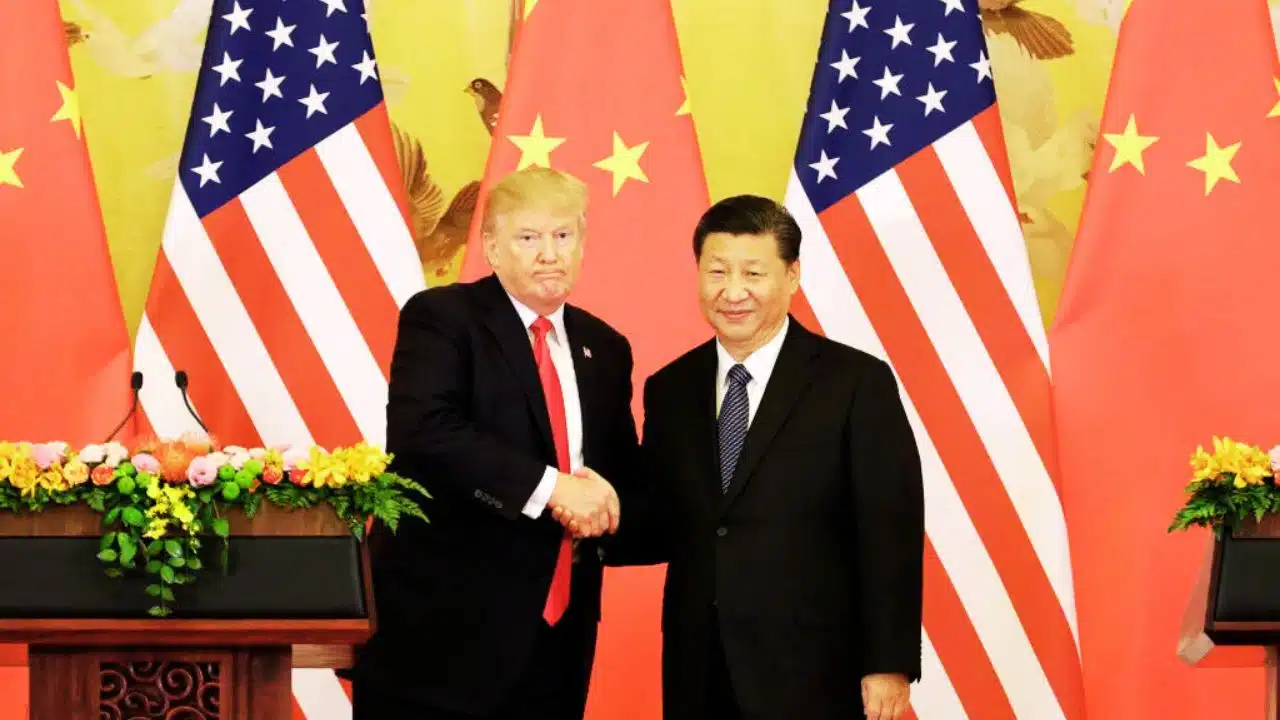
The United States and China have agreed to a new trade deal that lowers key tariffs on each other’s goods, marking a fresh attempt to cool years of tensions between the world’s two largest economies. The agreement, reached after high‑stakes talks and a meeting between President Donald Trump and Chinese President Xi Jinping, reduces some of the most politically sensitive duties that had weighed on global trade and corporate supply chains.
Under the deal, Washington will cut a portion of the additional tariffs it imposed on Chinese imports in connection with fentanyl‑related trade measures, while also extending a truce on broader “reciprocal” tariffs. In return, Beijing will roll back retaliatory tariffs on a wide range of American agricultural products and ease certain export controls on critical raw materials.
What the US Is Changing on Tariffs
At the heart of the agreement is a cut to the so‑called fentanyl‑related tariffs that the US had slapped on a broad basket of Chinese goods earlier this year. Those duties, set at an extra 20%, will now be reduced to 10%, lowering the effective tariff burden on many products entering the US from China. This move is framed by the White House as a calibrated incentive tied to Chinese cooperation on curbing the flow of fentanyl and its chemical precursors into the United States.
Separately, the US will maintain a lower 10% “reciprocal” tariff rate on Chinese imports for an additional year, instead of allowing a previously planned jump to much higher levels. This extension effectively prolongs a truce that had been renewed in earlier rounds of talks and averts an imminent spike in costs for American importers who rely heavily on components and finished goods from Chinese factories.
China’s Concessions: Agriculture and Export Controls
China’s most visible concession is targeted at American farmers, a group that has suffered repeatedly as both sides have used agriculture as a pressure point in the trade conflict. Beijing has agreed to suspend or cancel retaliatory tariffs of roughly 10–15% on a broad slate of US agricultural products, including soybeans, corn, wheat, sorghum, meat, dairy and certain processed foods. This should make US products more competitive again in the Chinese market and could help revive export volumes that had been diverted or lost during the height of the trade war.
In addition, China is set to ease export restrictions on certain critical minerals and materials that are essential for high‑tech manufacturing, batteries and advanced electronics. While the details remain technical and partly confidential, officials indicated that licensing rules and quotas for some rare earths and related inputs will be relaxed, addressing a major concern for industries that feared supply disruptions from Chinese policy shifts.
A Tactical Truce, Not a Full Peace
Despite the positive tone surrounding the announcement, the agreement is widely seen as a tactical truce rather than a sweeping reset of US‑China economic relations. Most of the core tariffs from previous waves, including long‑standing Section 301 duties on hundreds of billions of dollars of Chinese goods, remain firmly in place. Key disputes over technology transfer, subsidies, data security and industrial policy are also unresolved.
The time‑limited nature of several provisions—such as the one‑year extension of the reduced reciprocal tariff rate—means the deal will require constant political maintenance. Either side could choose not to renew certain measures if tensions flare again over geopolitics, security issues, or new trade complaints, keeping a layer of uncertainty hanging over the bilateral relationship.
Impact on Businesses and Global Supply Chains
For companies that rely on cross‑Pacific supply chains, the immediate effect of the deal is modest but meaningful. Importers in the US will see slightly lower tariff costs on affected Chinese goods and, crucially, avoid a sharp escalation that had been looming on the calendar. That breathing room may encourage firms to delay drastic restructuring of supply chains, at least in the short term, while they monitor whether the truce holds.
On the Chinese side, exporters of agricultural products and downstream processors will benefit from renewed US demand, while American agribusiness stands to regain some lost ground in China’s vast food and feed markets. Meanwhile, manufacturers in sectors like electric vehicles, consumer electronics and industrial machinery may feel some relief from looser constraints on critical materials, even though they still face a complex web of existing tariffs and regulatory risks.
Fentanyl, Security and Political Messaging
Politically, the deal allows both governments to claim a win at home. Washington is presenting the tariff cuts as conditional and tied directly to Chinese action on fentanyl, a potent synthetic opioid at the center of a major public health crisis in the United States. By linking tariff relief to enforcement commitments, the administration can argue it is using economic pressure to secure tangible security gains.
Beijing, for its part, can emphasize the suspension of some of the more punishing US duties and the renewed access for its exporters to the American market. Chinese officials have described the outcome as “hard‑won” and framed it as a step toward stabilizing ties, while making clear that China will still defend what it sees as its core development and security interests.
What Comes Next in the Trade Relationship
The new deal is likely to be followed by further technical talks over implementation, including how to verify compliance on fentanyl‑related commitments and export control adjustments. Business groups on both sides have called for clear guidance and timelines, warning that lingering ambiguity can undercut the benefits of any tariff relief.
In the broader picture, analysts expect the US‑China relationship to remain one of “managed competition,” where periods of tariff easing and cooperation coexist with structural rivalry in strategic sectors like semiconductors, green tech and defense‑related supply chains. The latest agreement lowers the temperature and offers short‑term relief, but it stops well short of dismantling the elaborate tariff architecture that has come to define the trade war era.