

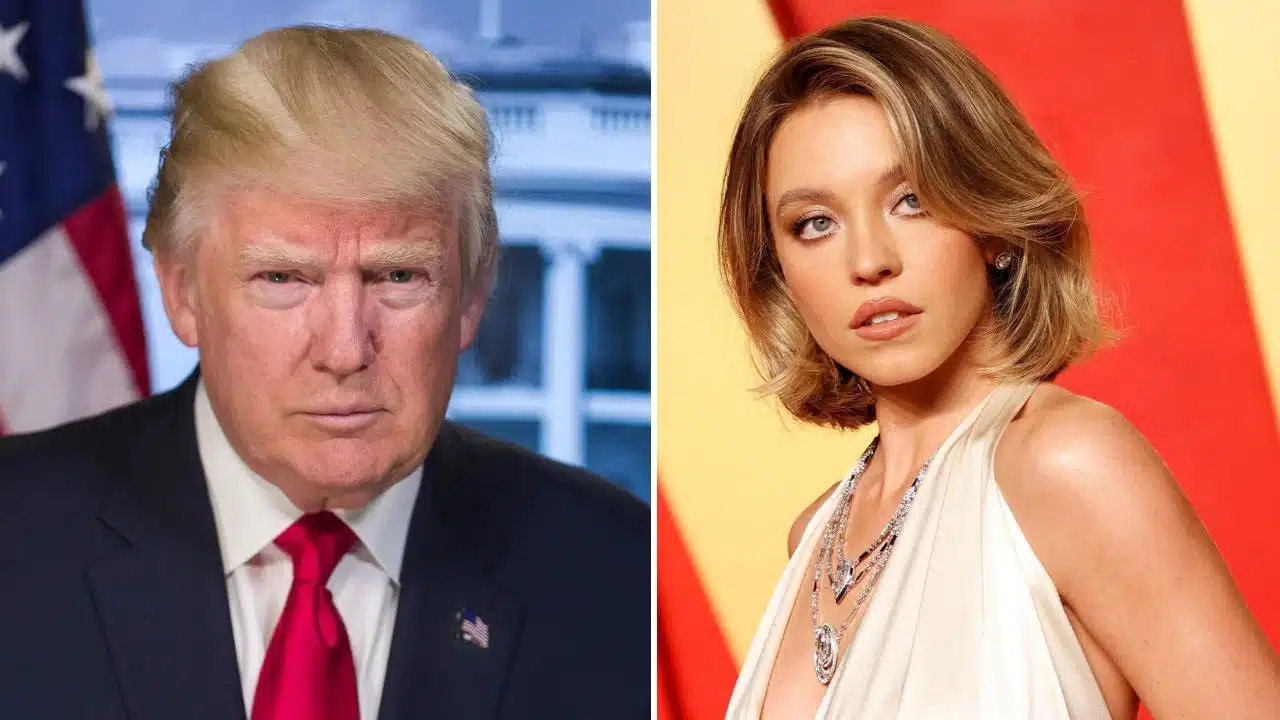
U.S. President Donald Trump has reignited political and pop culture tensions after posting a highly charged message on Truth Social. In the post, he openly supported actress Sydney Sweeney and sharply criticized singer Taylor Swift and multiple global brands he described as aligned with “woke” ideologies. The post, which generated intense discussion across social and mainstream media, combined political messaging, celebrity endorsement, and accusations of corporate misdirection.
Trump Lauds Sweeney’s “HOTTEST” Campaign for American Eagle
Donald Trump began his post by endorsing actress Sydney Sweeney, who recently starred in an American Eagle advertising campaign. The campaign, launched in mid-July 2025, featured a provocative pun in its tagline: “Sydney Sweeney Has Great Jeans.” The ad aimed to play on the homophone of “genes” and “jeans,” implying both a compliment to her appearance and a promotion for the brand’s denim collection.
In his message, Trump highlighted Sweeney’s apparent political affiliation, stating that she is a registered Republican. He emphasized that the ad was attracting major consumer attention and claimed that American Eagle jeans were selling rapidly as a result. Trump used this opportunity to frame Sweeney’s success as a victory for conservative values in an industry often perceived as liberal-dominated.
According to several market analytics reports, American Eagle’s stock price experienced a notable jump—reportedly between 10% and 24% in one day—after the campaign launched and Trump’s endorsement circulated online. While exact figures vary depending on the outlet, financial platforms like Forbes confirmed that the campaign significantly boosted investor interest and brand visibility.
Backlash Against the Ad’s Messaging
Although the brand likely intended the campaign to be light-hearted and fashion-focused, it soon sparked a heated cultural debate online. Critics accused the tagline and associated visuals of carrying undertones related to white supremacy and eugenics. They argued that the wording, combined with Sweeney’s portrayal as a blonde, blue-eyed figure, subtly echoed historical notions of genetic superiority.
The controversy intensified when internet users and commentators pointed out similarities to past advertising controversies, such as Brooke Shields’ infamous Calvin Klein campaign. Some experts from the fashion and sociology fields argued that the campaign relied on the “male gaze” and perpetuated narrow beauty standards. Others claimed the backlash was rooted more in partisan bias against Sweeney’s Republican ties than the ad itself.
Despite the public uproar, Sydney Sweeney did not release any statement addressing the backlash. She maintained a low profile while the campaign continued to gain traction online and in retail.
American Eagle Defends the Campaign
In response to the growing criticism, American Eagle released a public statement clarifying their intent. The company stated that the campaign’s core message was focused purely on denim, fashion confidence, and self-expression. They emphasized that the pun was designed to celebrate individuality, not to invoke any social or racial undertones. The brand reaffirmed its commitment to inclusivity and highlighted that its jeans are designed for everyone, regardless of background.
Analysts noted that American Eagle’s reaction struck a balance between standing by its marketing team and avoiding further escalation. The brand also avoided targeting critics or getting entangled in broader political discourse.
Trump Widens Attack on “Woke” Brands and Culture
Beyond the Sweeney endorsement, Trump expanded his message to criticize a number of companies and celebrities he associated with progressive or “woke” values. He singled out luxury automaker Jaguar, accusing the brand of producing an advertisement that, in his view, embodied misguided liberal ideology. He further claimed that the fallout from Jaguar’s campaign had contributed to leadership changes and organizational instability within the company.
He referenced the case of Bud Light as an example of what he described as a marketing disaster caused by aligning with progressive themes. The beer brand faced a significant backlash and reported market value loss after a campaign featuring a transgender influencer in 2023. Trump connected that episode with Jaguar’s situation and warned companies against repeating what he viewed as a failed strategy of trying to appeal to woke sensibilities.
His broader point appeared to be a cultural warning: that companies embracing politically progressive messages risk alienating a significant portion of the consumer market, leading to financial and reputational consequences.
Renewed Criticism of Taylor Swift
Trump also revived his long-running feud with global pop icon Taylor Swift. He accused Swift of promoting liberal politics, particularly due to her public endorsement of Democratic candidates during recent election cycles, including support for Vice President Kamala Harris in 2024.
Trump claimed that her popularity had suffered as a result of her political positioning. He cited her appearance at the 2025 Super Bowl, alleging that the public’s reaction to her presence showed signs of declining popularity. He argued that her cultural influence was waning and that her association with what he described as “woke” values had contributed to her supposed fall from grace.
While Swift remains one of the world’s top-earning and most-followed artists, Trump’s post tapped into a recurring conservative narrative that criticizes celebrities who use their platforms to promote social justice, LGBTQ+ rights, or Democratic politics.
Political Implications of Celebrity Endorsements
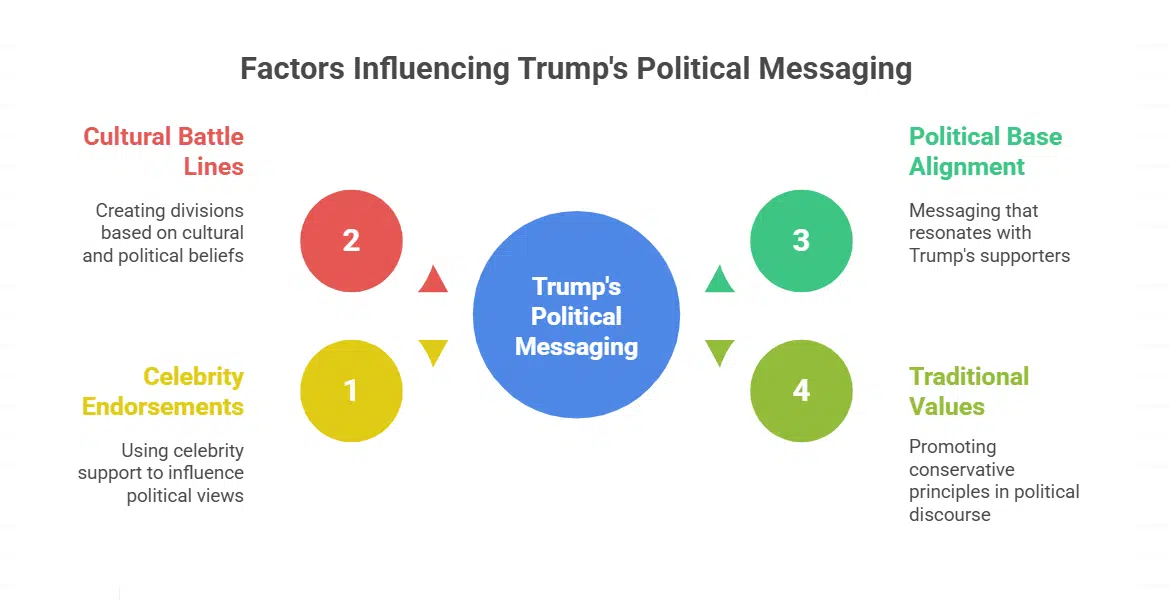
Trump’s latest post is part of a wider pattern of leveraging pop culture for political messaging. Throughout his political career, he has alternated between praising and attacking celebrities based on their perceived political leanings. By championing Sweeney and condemning Swift, he drew a cultural battle line that aligns with the ongoing polarization of American politics.
This type of messaging resonates with Trump’s political base, many of whom are skeptical of Hollywood and its relationship with liberal activism. It also reinforces the Republican Party’s ongoing strategy of promoting traditional values while criticizing progressive corporate behavior.
Sweeney’s Silence and Public Appearances
Amid the heated discourse, Sydney Sweeney has kept her personal responses to a minimum. However, she did make her first public appearance since the controversy on August 3, 2025, at a Los Angeles screening for her new film Americana. Observers noted that she remained composed on the red carpet and did not address the controversy during the event.
Additionally, a 2019 video showing Sweeney practicing at a shooting range resurfaced online and went viral shortly after Trump’s post. Many conservative social media users praised the footage, interpreting it as further evidence of Sweeney’s alignment with pro-Second Amendment and Republican values.
Public Reaction Remains Divided
Public reaction to the entire episode remains deeply divided. On one side, supporters of Trump and conservative commentators celebrated Sweeney’s campaign and the surrounding controversy as a cultural victory. They argued that the backlash itself was evidence of liberal overreach and hypersensitivity.
On the other side, many liberal voices and fashion critics expressed frustration that a marketing campaign with questionable messaging could be so quickly politicized. Some accused American Eagle of using the backlash as a marketing tool to boost sales and draw political alignment, even if indirectly.
Social media platforms became battlegrounds for both sides, with hashtags supporting Sweeney trending alongside calls to boycott American Eagle. The situation underscored the extent to which even fashion advertisements can become flashpoints for broader cultural debates.
Culture Wars Continue to Shape Public Discourse
The ongoing drama surrounding Sydney Sweeney’s jeans campaign, Trump’s vocal endorsement, and his criticism of Taylor Swift are not isolated events. They are emblematic of a larger shift where politics, celebrity culture, and consumer behavior are increasingly intertwined.
As corporations navigate the line between marketing and activism, and public figures choose to engage or disengage from political debate, consumers are left to interpret the meaning behind ads, endorsements, and statements. Trump’s Truth Social post has amplified these divisions, reinforcing his belief that conservative values are under attack and that culture must be reclaimed by Republican voices.
For brands like American Eagle, the financial rewards may be immediate, but the cultural consequences are likely to linger far longer.






























