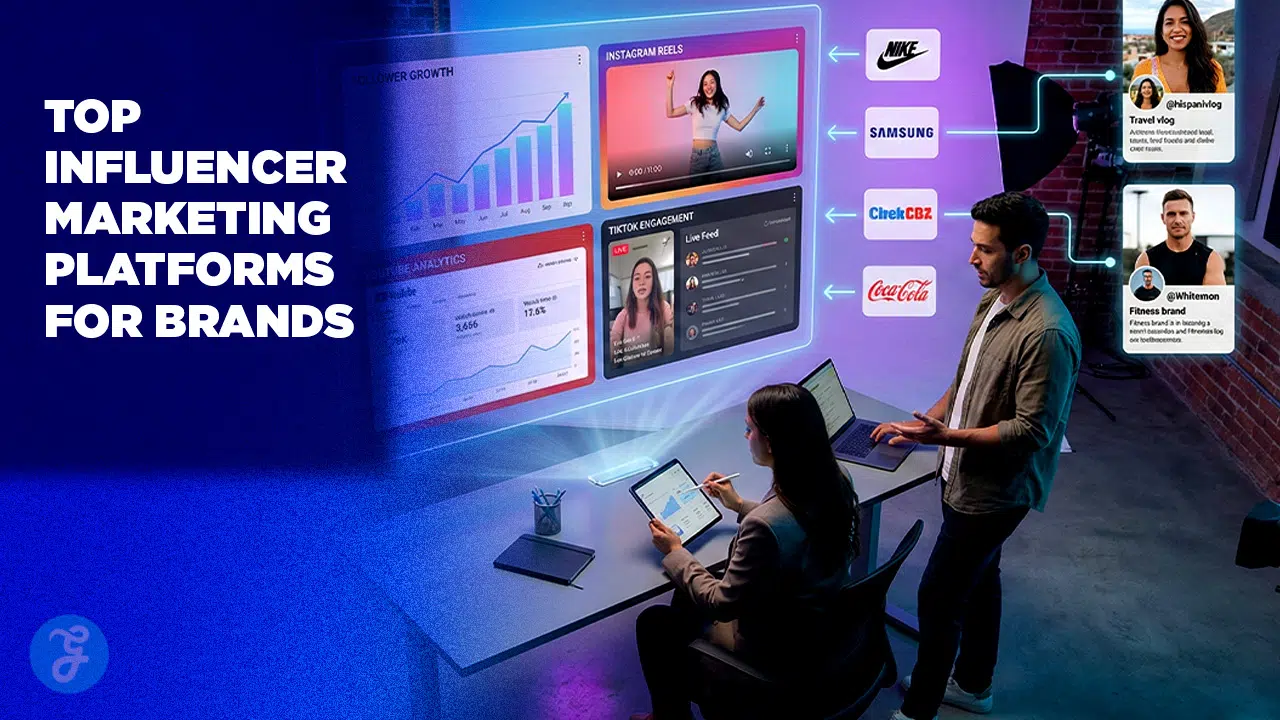
Selecting the top influencer marketing platforms is the most critical step for brands looking to scale their social proof and drive authentic conversions in 2026. As traditional advertising continues to face rising costs and diminishing returns, partnerships with trusted creators have become the primary bridge to modern consumers. These platforms provide the infrastructure needed to find the right voices and manage complex campaigns without getting lost in manual spreadsheets.
The current digital landscape in 2026 has transitioned toward “Agentic AI” discovery and deep revenue attribution. The top influencer marketing platforms featured here are no longer just simple databases but are intelligent engines that predict campaign performance before a single post goes live. By leveraging these tools, your marketing team can move away from vanity metrics and focus on measurable ROI through data-backed creator selection.
Utilizing a professional management system allows your brand to maintain a consistent presence across multiple social networks simultaneously. Whether you are targeting Gen Z on TikTok or professionals on LinkedIn, these platforms offer specialized filters to pinpoint your ideal audience demographics. This guide provides a detailed analysis of the leading software solutions helping brands build lasting and profitable creator relationships.
Selection Criteria For Our Top Rankings
We evaluated over forty different software providers to identify the most effective tools for modern brand managers. Our team prioritized platforms that offer a balance between a massive creator database and robust campaign management workflows. The following table illustrates the weighting system we applied to determine the final rankings for this year.
| Criterion | Weighting |
| Discovery & AI Search Accuracy | 35% |
| Campaign Management & CRM | 25% |
| Revenue & ROI Attribution | 20% |
| Payment & Legal Automation | 20% |
These criteria ensure that the selected platforms are capable of supporting both small-scale tests and massive enterprise programs. We also analyzed the quality of third-party integrations with common e-commerce tools like Shopify and Salesforce. This balanced approach helps ensure that your influencer efforts are fully integrated into your broader marketing stack.
Analyzing The 12 Top Influencer Marketing Platforms For High ROI
The following selections represent the pinnacle of creator management technology currently available in the industry. Each platform has been chosen to solve specific operational challenges, from initial talent scouting to final payment processing. These tools will help you transform your influencer strategy from a series of random posts into a predictable growth engine.
1. CreatorIQ
CreatorIQ is widely considered the leading enterprise-grade solution for large organizations managing high-volume creator programs. The platform features a massive database of over 30 million profiles across all major social networks, supported by sophisticated AI discovery. In 2026, it excels at global governance, allowing different regional teams to coordinate campaigns while maintaining a unified brand voice. This is a vital resource for Fortune 500 companies that need deep API access and custom business intelligence integrations.
Special Features:
-
Advanced “Integrity Check” system for enterprise-level fraud and brand safety detection
-
White-labeled creator portals for a professional and seamless onboarding experience
-
Predictive performance modeling that forecasts engagement and reach before campaign launch
Things To Consider:
-
Generally restricted to enterprise-level budgets with a high minimum annual commitment
-
The technical complexity may require a dedicated team member to manage the platform
Best For: Global enterprises and large agencies with complex multi-market programs
2. GRIN
GRIN has built its reputation as the ultimate relationship management tool for direct-to-consumer brands. Unlike traditional marketplaces, it focuses on building a “private community” of creators who truly love your products. The platform integrates deeply with e-commerce sites to automate product seeding and shipment tracking for thousands of influencers at once. It remains a reliable staple for those who view influencers as long-term brand ambassadors rather than one-off contractors.
Special Features:
-
Native Shopify and WooCommerce integrations for automated product gifting and sales tracking
-
Content library that automatically saves influencer Stories before they expire
-
Robust affiliate management tools for tracking commissions and discount code performance
Things To Consider:
-
Does not include a public marketplace, so you must find your own creators to import
-
Discovery features are less extensive than those found in pure search engines
Best For: DTC brands that prioritize long-term ambassador relationships and product seeding
3. Upfluence
Upfluence stands out for its unique ability to turn your own customers and website visitors into your biggest influencers. By integrating with your e-commerce platform and email list, it identifies high-value individuals who are already engaging with your brand. The 2026 version features an AI co-pilot named Jaice that assists with personalized outreach and campaign building. It simplifies the bridge between traditional customer relationship management and modern influencer marketing.
Special Features:
-
“Live Capture” tool that identifies influencers as they browse your online store
-
Combined affiliate and influencer management within a single unified dashboard
-
High-speed search performance across millions of global creators with granular filters
Things To Consider:
-
Requires a 12-month contract which might not suit brands testing small one-off campaigns
-
The platform focus is heavily skewed toward e-commerce and retail industries
Best For: E-commerce brands wanting to convert existing customers into brand advocates
4. Aspire
Aspire is built specifically for brands that want to manage the entire lifecycle of creator partnerships in a structured workflow. It offers both a massive search database and an “inbound” marketplace where creators can apply to your open campaign briefs. This dual model allows for rapid scaling as you can actively hunt for talent while also letting the right voices come to you. It is a masterclass in combining community building with high-volume content production.
Special Features:
-
Advanced content approval workflows that ensure every post meets brand standards
-
Influencer “Storefronts” that allow creators to build curated shopping experiences
-
Seamless integration with Meta and TikTok for amplifying creator content through paid ads
Things To Consider:
-
The higher price point makes it more suitable for established mid-market companies
-
Onboarding can take several weeks to fully set up complex automated workflows
Best For: Mid-market brands and agencies focused on UGC and ambassador programs
5. Brandwatch
Brandwatch combines its world-class social listening capabilities with a robust influencer management suite. This unique combination allows you to identify creators who are already leading the conversation in your specific niche or industry. Their Iris AI assistant helps you uncover emerging trends and high-potential micro-influencers before your competitors do. It provides a strategic advantage by linking influencer marketing directly to real-time consumer intelligence.
Special Features:
-
Integration with consumer intelligence data for deep audience sentiment analysis
-
Competitive share of voice reports that show how your influencer program ranks against rivals
-
Automatic monitoring for brand mentions and unauthorized content usage across the web
Things To Consider:
-
The interface is data-heavy and can be intimidating for casual social media managers
-
Primary strengths lie in research and listening rather than deep payment automation
Best For: Data-driven teams and enterprise brands needing deep market insights
6. Modash
Modash is the premier choice for lean teams that need to find and vet creators across the entire planet in seconds. It boasts one of the largest databases in the market with over 250 million profiles across Instagram and TikTok and YouTube. The platform is designed for “speed to discovery,” allowing you to filter by very specific audience demographics and engagement qualities. It makes complex influencer scouting easy for startups that need to move fast and stay on budget.
Special Features:
-
Powerful audience authenticity filters that catch fake followers and engagement pods
-
“Lookalike” finder that suggests new creators based on your best-performing partners
-
Automated content tracking that captures every post and Story without manual input
Things To Consider:
-
Lacks the deep CRM and relationship management features of tools like GRIN
-
The pricing is based on a “search” and “monitoring” credit system which can add up
Best For: Growth-focused startups and teams that need a high-volume discovery engine
7. HypeAuditor
HypeAuditor is the industry’s most respected specialist for audience verification and fraud detection. It uses over 35 different metrics to analyze the quality of a creator’s following to ensure your budget is not wasted on bots. The platform provides a “Global Power Ranking” for every influencer, giving you an instant snapshot of their true market value. It reveals the intent behind the numbers by separating vanity metrics from actual influence.
Special Features:
-
Deep-dive “Audience Quality Scores” that verify the location and age of followers
-
Campaign ROI forecasting tools that use historical data to predict your results
-
Competitor analysis dashboards that reveal the influencer strategies of other brands
Things To Consider:
-
The focus is primarily on Instagram and YouTube with less depth for other networks
-
The interface is utilitarian and focuses more on numbers than creative content
Best For: Brands and agencies that prioritize data accuracy and fraud prevention
8. LTK
LTK remains the dominant force for fashion and beauty and lifestyle brands that are focused on driving direct retail sales. As an invite-only network, it ensures that every creator on the platform is vetted for high-quality content and professionalism. The platform includes a dedicated shopping app where millions of consumers go specifically to buy what influencers are wearing. It bridges the gap between social inspiration and high-intent commerce perfectly.
Special Features:
-
Native “Shoppable” content that drives users directly to product pages for purchase
-
Access to proprietary historical sales data to identify the highest-converting creators
-
Dedicated account management and full-service campaign support for premium brands
Things To Consider:
-
The invite-only nature means the creator pool is smaller than open databases
-
Best suited for visual consumer goods rather than B2B or service-based brands
Best For: Retail and lifestyle brands that want a direct and measurable link to sales
9. Sprout Social
Sprout Social has integrated its powerful influencer marketing module (formerly Tagger) directly into its unified social management dashboard. This allows brands to manage their organic posts and paid ads and influencer partnerships in one single location. The platform uses AI to generate “Brand Fit Scores,” helping you identify which creators align most naturally with your brand values. It is a futuristic addition for teams that want to consolidate their entire social stack.
Special Features:
-
Unified reporting that compares influencer performance against your own organic social data
-
AI-powered “Topic Discovery” that finds creators based on the actual content of their posts
-
Centralized inbox for managing influencer communications alongside customer service messages
Things To Consider:
-
Maximum value is only realized if you use Sprout for your entire social media management
-
Enterprise pricing can be significant for brands that only need a standalone influencer tool
Best For: Teams seeking a unified platform for all organic and paid and influencer social efforts
10. Collabstr
Collabstr is a high-speed marketplace that makes hiring influencers as easy as ordering a meal online. It is a “self-serve” platform where you can browse vetted creators who have pre-packaged services and transparent pricing. This model eliminates the need for long-term contracts and complex negotiations, making it ideal for rapid UGC sourcing. It provides a great user experience for small brands that need to launch campaigns in hours rather than weeks.
Special Features:
-
Escrow payment system that protects your budget until the content is approved
-
No monthly subscription fees—you only pay a small transaction fee when you hire
-
Direct messaging and secure file delivery built right into the marketplace interface
Things To Consider:
-
Not designed for managing massive ongoing ambassador programs with hundreds of people
-
Lacks the deep audience analytics and fraud detection found in enterprise tools
Best For: Startups and small brands that need quick and secure influencer hires
11. Archive
Archive is the leading platform for brands that want to harness the power of community content and user-generated assets. It features a unique “Radar” tool that uses AI to detect when your brand is mentioned in a post, even if you aren’t tagged. The system automatically captures and saves every piece of content, ensuring you have a permanent library of social proof. It is an essential tool for high-growth DTC brands that rely on “social-first” advertising creative.
Special Features:
-
Automatic social listening that detects your brand in videos and photos without tags
-
Seamless Shopify integration that links creator content directly to website revenue
-
One-click “Usage Rights” management for turning influencer posts into paid ads
Things To Consider:
-
Focused specifically on content collection and listening rather than initial discovery
-
The feature set is optimized for Instagram and TikTok more than other platforms
Best For: DTC brands that want to automate UGC collection and track social revenue
12. Traackr
Traackr is designed for brands that want to take a strategic, data-driven approach to their entire influencer ecosystem. It provides a “Relationship Score” for every creator, helping you identify which partnerships are getting stronger over time. The platform features advanced “Cost-Per-Metric” analysis, allowing you to compare the efficiency of different campaign segments. It makes complex performance benchmarking easy for teams that need to justify their budget to stakeholders.
Special Features:
-
Advanced global team collaboration tools with granular role and permission settings
-
Detailed audience demographics and benchmarking against industry standards
-
Integrated budget management that tracks every dollar from contracting to final payment
Things To Consider:
-
The depth of data can be overwhelming for teams without a dedicated analyst
-
Set up and onboarding require a significant commitment of time and resources
Best For: Companies that prioritize long-term strategy and performance benchmarking
2026 Influencer Marketing Market Overview
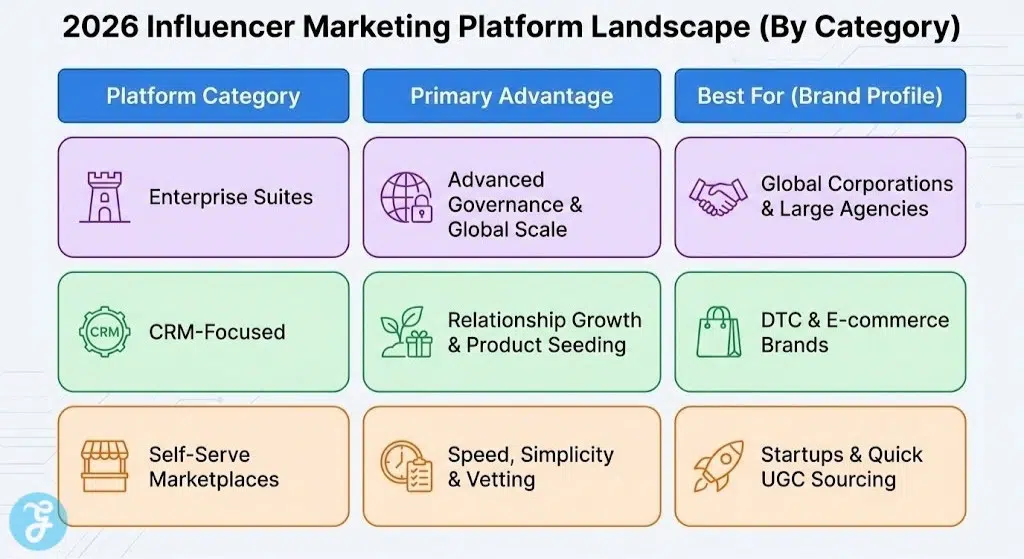
The market has evolved into three distinct segments catering to different brand sizes and specific campaign goals. Enterprise suites focus on governance and global scale, while mid-market tools prioritize e-commerce growth and affiliate tracking. Marketplaces remain popular for brands that need quick, one-off content pieces or user-generated assets for social ads.
| Platform Category | Primary Advantage | Best For |
| Enterprise Suites | Advanced Governance | Global Corporations |
| CRM-Focused | Relationship Growth | DTC & E-commerce |
| Self-Serve Marketplaces | Speed & Simplicity | Startups & Agencies |
The 2026 environment places a high premium on “First-Party Data” and authentic audience verification. Many platforms now include advanced fraud detection to identify bot followers and fake engagement clusters before you commit your budget. Understanding these market shifts is essential for selecting a partner that protects your brand safety while maximizing reach.
How To Choose The Right Influencer Tool
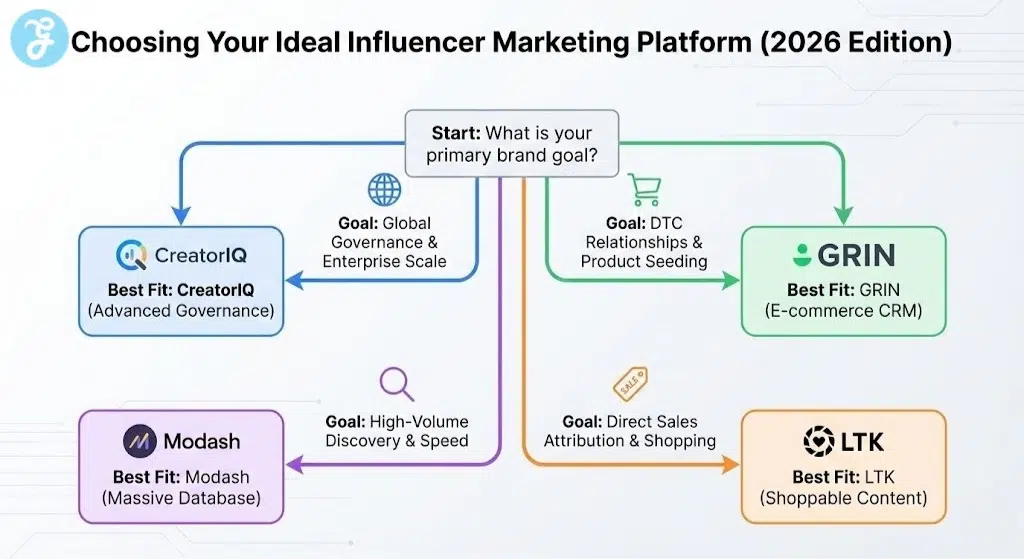
Choosing between these platforms depends on whether your priority is finding the “Absolute Best Voice” or “Managing a Massive Workflow.” If you are a small brand starting out, a marketplace like Collabstr offers the lowest barrier to entry and quickest results. However, if you are a global brand managing thousands of partners, an enterprise suite like CreatorIQ is necessary for governance and brand safety.
| Priority Goal | Recommended Tool | Primary Advantage |
| Enterprise Scale | CreatorIQ | Global Governance |
| Sales Attribution | LTK | High-Intent Shopping |
| DTC Relationships | GRIN | E-commerce Seeding |
| Fast Discovery | Modash | Massive 250M+ Database |
Final Thoughts
Winning the attention of consumers in 2026 requires a shift toward authentic and high-quality creator collaborations. The top influencer marketing platforms mentioned here provide the necessary tools to navigate this complex and rapidly evolving industry. By matching the right technology to your specific brand goals, you can create a predictable and scalable path to financial success.