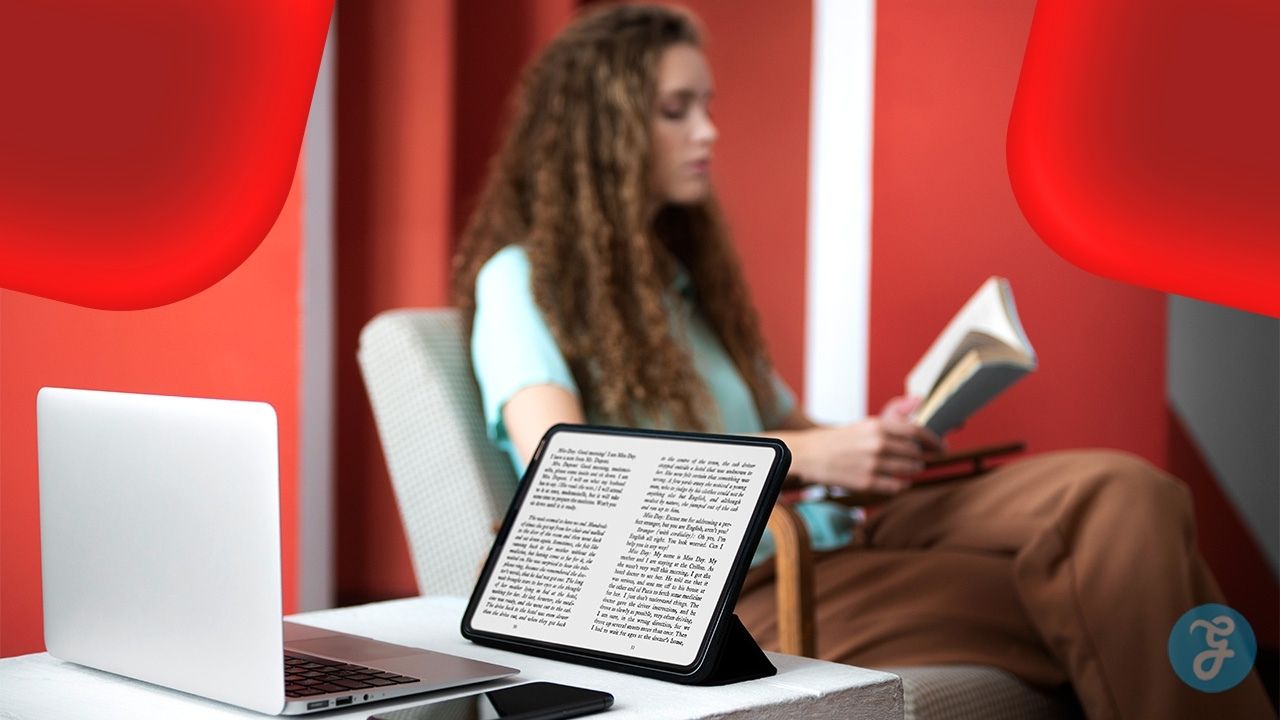
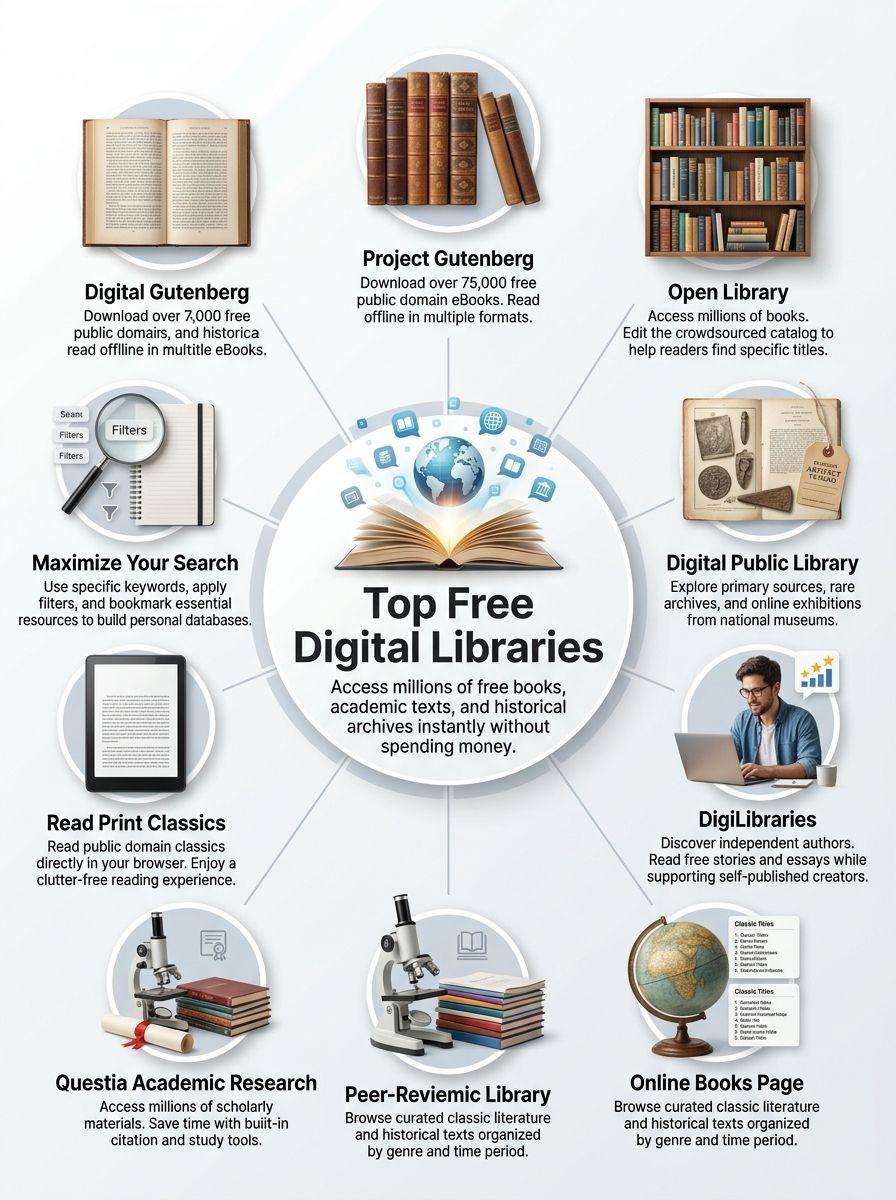
Have you ever skipped reading a book you really wanted because the price tag was simply too high? Books cost money, and textbooks cost even more. If you are a student, a researcher, or just someone who loves a good story, those expenses hurt your wallet fast. But that problem stops today. Millions of books sit in digital form, waiting for you to read them, and they cost absolutely nothing. Top free digital libraries that are completely free have put these texts online for anyone to access.
You can grab them right from your phone or computer anytime you want. I am going to walk you through the very best free digital libraries available right now. I will share some of my favorite insider tips on how to find exactly what you need without spending a single penny.
Grab a cup of coffee, and let’s go through it together
Benefits of Free Digital Libraries
Free digital libraries knock down the walls that money builds. They let you grab books, research papers, and learning materials without spending a single dollar.
You get to learn at your own pace and explore topics that spark your curiosity. Best of all, you do this without the stress of expensive subscriptions weighing you down.
- Zero financial risk: Try out new authors or complex subjects without buying the book.
- Instant availability: Skip the trip to the local branch and start reading in seconds.
- Permanent access: Keep your downloaded public domain files forever.
Access to a vast collection of resources
Digital libraries put thousands of books right at your fingertips without requiring a library card. You get access to millions of texts, eBooks, and educational materials all in one convenient place.
Project Gutenberg alone hosts over 75,000 free eBooks that span centuries of literature. Open Library takes it a step further by offering over 3 million books available for controlled digital lending in the US.
These massive digital collections break down barriers that once kept information locked away. Your research gets supercharged when you tap into these online archives.
Students and researchers access the same high-quality materials they would normally find behind expensive paywalls. Learning never stops when knowledge sits this close to your computer screen.
Cost-effective for students and researchers
Free digital libraries save students and researchers serious money. You bypass subscription fees and individual book purchases, stretching your budget so much further.
According to the College Board’s 2024-2025 data, the average US college student spends around $1,370 a year on books and supplies. A 2026 Education Data Initiative report shows that individual new textbooks average around $109 each.
Your tuition already costs enough, so why drain your wallet on research materials you can find online for nothing?
“Free access to knowledge levels the playing field, saving the average student over a thousand dollars a year.”
Researchers also benefit tremendously from these free digital collections. The Digital Public Library of America connects you to primary source sets at zero cost, bypassing hefty university database fees.
Promotes lifelong learning
Open digital libraries spark curiosity in people of all ages. Students use them to explore subjects beyond their classroom walls, while adults learn new skills without spending money.
A great pro-tip is to pair these free resources with platforms like Coursera or edX, which frequently recommend open-source texts for their classes. You can also use the Libby app to connect directly to your local US public library for a constant stream of new audiobooks.
Your brain grows stronger every time you pick up something new. A teacher might research primary source sets for tomorrow’s lesson, while a job seeker studies skills for better work.
People keep learning because these platforms make education easy, affordable, and genuinely fun.
Project Gutenberg
Project Gutenberg stands as a true trailblazer in the free eBook space. This platform offers readers access to thousands of classic texts that would otherwise cost money.
Founded by Michael Hart in 1971, it holds the title of the oldest digital library in the world. Volunteers have scanned and uploaded a massive catalog, making literature from centuries past available right now.
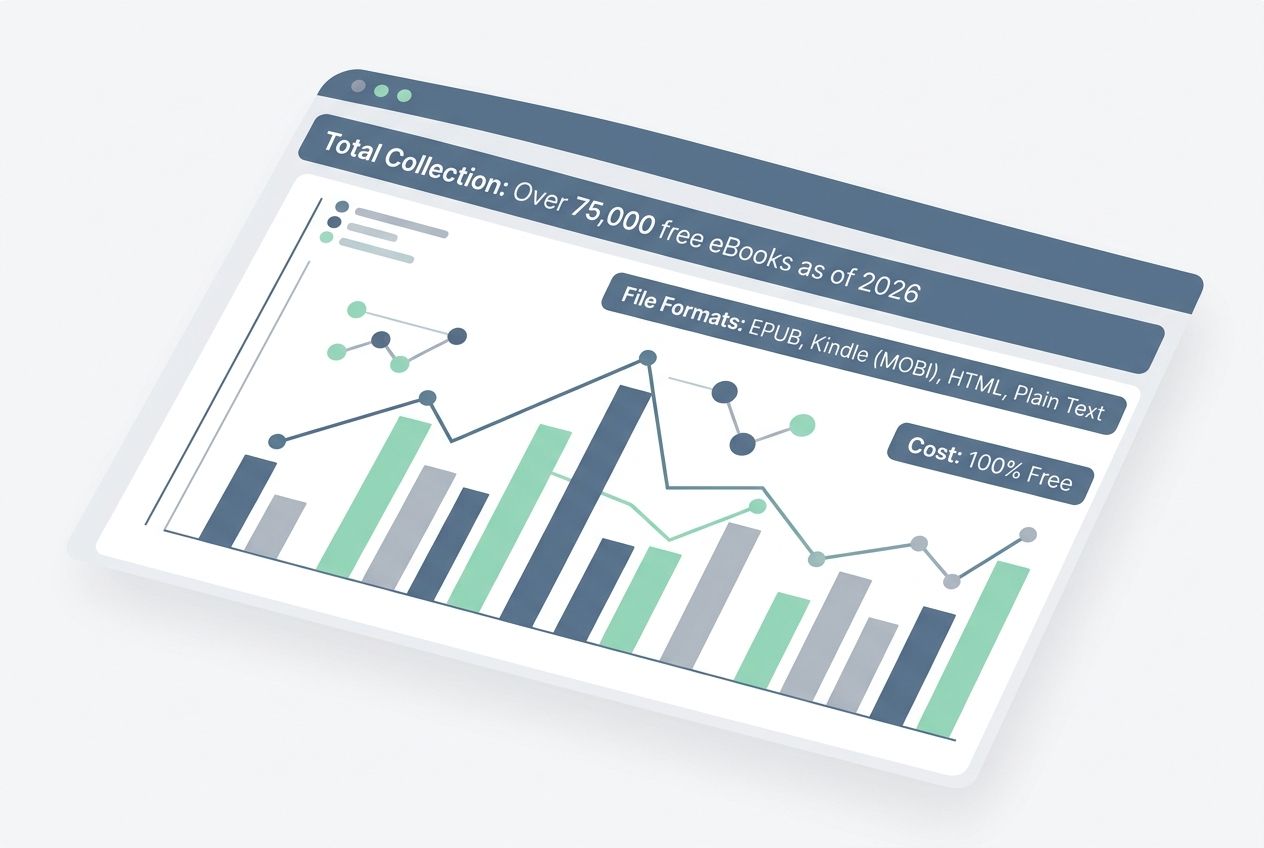
| Feature | Details |
|---|---|
| Total Collection | Over 75,000 free eBooks as of 2026 |
| File Formats | EPUB, Kindle (MOBI), HTML, Plain Text |
| Cost | 100% Free, no registration required |
Overview and features
Gutenberg holds over 75,000 eBooks that you can read right now. Most books come from the US public domain, making them totally free to access and distribute.
You get eBooks in many formats, including HTML, EPUB, and Kindle-compatible files. Readers love this library because they can easily download books to their devices and read offline.
Here is an insider tip for you. The site relies on a dedicated volunteer group called Distributed Proofreaders. These volunteers meticulously check every single page to minimize typos, ensuring you get a high-quality reading experience.
The collection spans fiction, history, science, and so much more. This digital archive delivers real value to anyone who loves reading and learning.
Access to over 75,000 free eBooks
You can browse through an enormous collection of public domain works without spending a dime. Authors like Jane Austen, Mark Twain, and Charles Dickens fill the virtual shelves here.
- Classic Literature: Find timeless novels that shaped modern storytelling.
- Historical Texts: Read original documents from important eras.
- Scientific Treatises: Explore early discoveries in physics and biology.
Because it focuses on US copyright law, you will mostly find books published before 1929. You will not find newer bestsellers, but you will discover the timeless stories that shaped literature forever.
Searching through these digital collections takes just a few clicks. A great trick is to skip the generic “Top 100” list and use their advanced search to filter by specific US Library of Congress Classifications.
Open Library
Open Library lets you search millions of books through one incredible catalog. This platform acts as an editable database that readers like you can actually improve.
Run by the San Francisco-based Internet Archive, it connects you to over 3 million books available through their Controlled Digital Lending program. You can borrow digital copies right now, making it a powerful tool for hunting down specific titles.
Editable library catalog
Open Library stands out because it functions a lot like Wikipedia for books. You can add books, fix incorrect information, and help other people find what they need.
This crowdsourced approach means the collection grows stronger every single day. In fact, users contribute over 1.3 million catalog edits regularly.
- Add missing details: You can upload missing book covers or update publication dates yourself.
- Fix author errors: Help the community by correcting misspelled author names.
- Create new records: If a rare book is missing, you can create a brand new entry for it.
Your edits stick around, helping future readers search the vast world of texts with perfect accuracy. This system promotes incredible knowledge sharing across the entire community.
Access to millions of books
This platform puts millions of books right at your fingertips. You can search for nearly any title you want, from classic novels to modern research materials.
Because it mimics a physical US library, popular modern titles might occasionally have a waitlist. If a book is checked out, you just join the queue and receive an alert when it becomes available.
“Open Library transforms digital reading by letting you set a ‘Yearly Reading Goal’ directly on your user profile.”
This massive collection spans different genres, languages, and topics. Whether you want to browse research databases or just read for pleasure, millions of titles stand ready to serve you.
Digital Public Library of America (DPLA)
The Digital Public Library of America connects you to millions of items from institutions across the country. You will find primary sources, historical documents, and cultural treasures that bring learning to life.
The DPLA links together over 4,000 US libraries, archives, and museums. This gives you instant access to more than 50 million digital items in one single search bar.
Focus on archives and museums
DPLA pulls incredible artifacts from major US entities like the Smithsonian and the National Archives. You can explore these massive collections without ever leaving your home.
Archives open their doors digitally, letting you dig into historical records and rare items. Students love this resource because they get authentic materials for their projects and papers.
- Search by location: Find high-resolution historical photos of your specific US state.
- Explore timelines: View artifacts organized by exact decades and eras.
- Discover local history: Access regional hubs like the Digital Library of Georgia.
Your searches pull up everything from old photographs to handwritten letters. This free access means museum-quality knowledge sits right at your fingertips.
Online exhibitions and primary source sets
The Digital Public Library of America opens doors to thousands of online exhibitions. These collections showcase rare documents and maps that bring history to life.
You can explore primary source sets on huge topics like the US Civil Rights Movement or the California Gold Rush. These specific sets come paired with educational teaching guides.
Teachers use these sets in classrooms to help students understand history through real, verifiable documents. You get to read letters written by historical figures and view original newspapers from major events.
These collections connect readers with the authentic voices that shaped our nation. Explore these special archives to find exactly what you need for your next big project.
DigiLibraries
DigiLibraries brings readers and writers together on one free, easy-to-use platform. You get instant access to thousands of books while authors gain real readers for their hard work.
| DigiLibraries Highlights | Reader Benefits |
|---|---|
| Catalog Size | Over 30,000 free eBooks available |
| Supported Formats | PDF, EPUB, and MOBI for easy reading |
| Author Access | Discover indie writers before they go mainstream |
Free books and publishing platform
This platform connects readers with authors in ways that traditional publishing rarely does. You get access to thousands of books written by independent creators who completely bypass the massive US publishing houses like Penguin Random House.
The site lets you read stories and educational materials without spending a dime. For self-published authors in the US, it serves as a fantastic testing ground.
Many writers use this site to build an email list before launching their paid books on Amazon Kindle Direct Publishing. Readers benefit immensely from these digital collections that span multiple genres and styles.
You can search by topic or keyword to find exactly what you need. This approach to open access means knowledge sharing happens freely and easily.
DigiLibraries acts like a bridge, connecting creative minds with curious audiences. Authors can share their work directly with people who genuinely love to read.
A great pro-tip is to check the “New Releases” tab every single week. Indie authors frequently upload serialized fiction here, giving you fresh chapters to read constantly.
- Direct reviews: Leave feedback that actually helps independent authors grow.
- Discover fresh voices: Find unique stories you will never see in a big-box bookstore.
- Interact with creators: Support writers who genuinely care about their reading audience.
This two-way street makes the platform a powerful tool for spreading stories. It removes the barriers between creators and readers, making online reading highly rewarding.
The Online Books Page
The Online Books Page pulls together free books from across the entire web. It makes finding classic literature and historical texts incredibly simple.
Hosted by the University of Pennsylvania, this site curates over 3 million free books. You can search by title, author, or subject to track down exactly what you need.
Curated collection of free books
This site stands out as a curated treasure chest for readers. Edited by John Mark Ockerbloom at UPenn, the collection focuses heavily on high-quality public domain texts.
Volunteers organize everything with extreme care, meaning you will never waste time sorting through junk files. They even verify the copyright status of every single link they post.
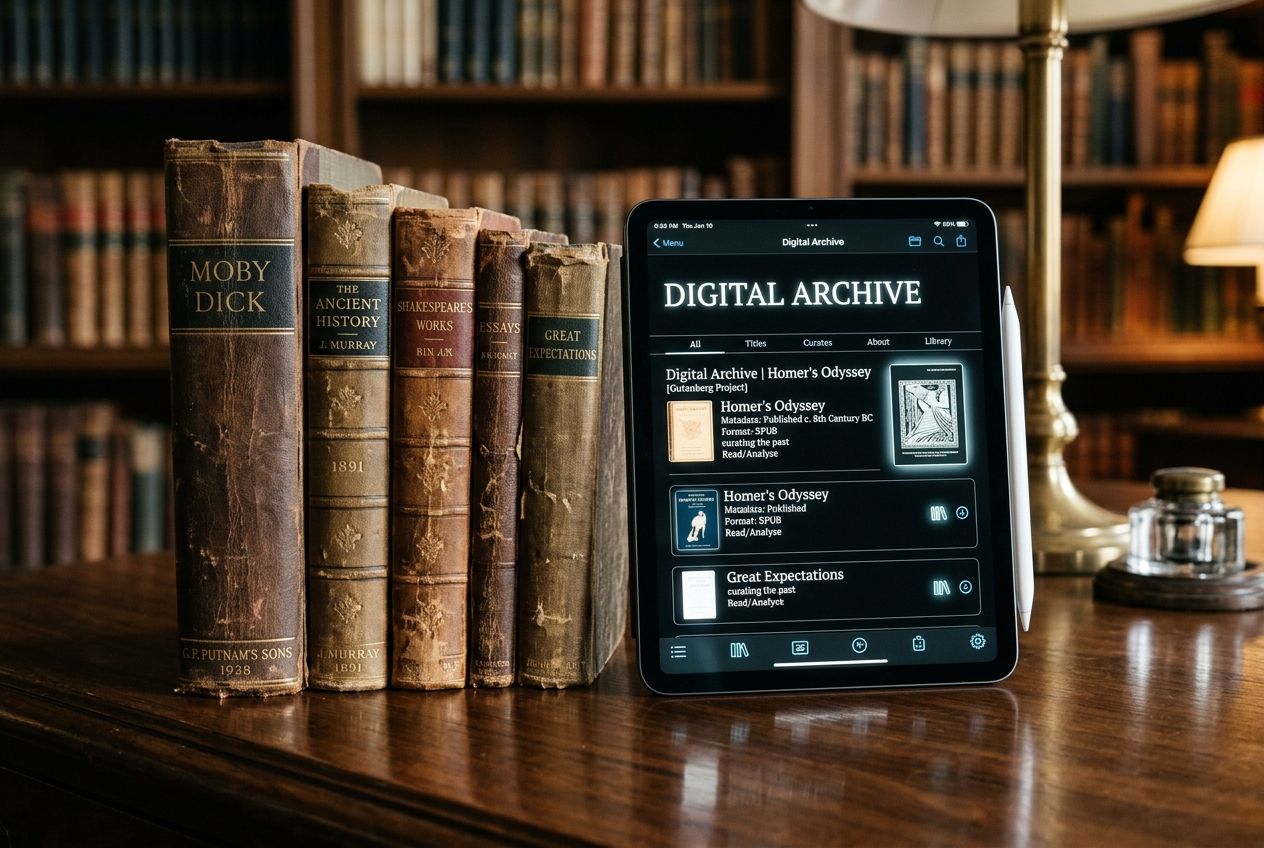
“The site features a fascinating ‘Banned Books Online’ section, highlighting classic texts that faced censorship in the US.”
History buffs enjoy exploring the primary source sets hosted here. The platform acts as a reliable bridge, connecting you straight to the research materials that truly matter.
Focus on literature and history
If you love literature and history, this curated collection will become your best friend. You can find novels, poetry, and rare essays from famous authors who shaped our world.
The site is excellent for finding texts related to the American Revolution or early US literature. Readers searching for educational content discover primary sources that bring history right to their screens.
- Explore old magazines: Use their “Serials” index to read 19th-century US publications exactly as they were printed.
- Find female authors: Access their specialized “A Celebration of Women Writers” sub-collection.
- Track prize winners: Easily browse past winners of major literary awards.
The platform connects you with archives of important works that shaped society. Each text opens doors to understanding how people thought and lived in different time periods.
Other Notable Free Digital Libraries
Beyond the major players, several other platforms merit your attention. Diversifying your sources is the best way to find exactly what you need.
These specialized collections open doors to rare materials and classic texts. They round out your research toolkit perfectly.
Internet Archive (Replacing Questia)
For many years, Questia served as a popular academic platform, but it officially shut down in 2020. Today, US students rely heavily on the Internet Archive Scholar to fill that specific void.
Internet Archive Scholar hosts over 35 million research articles, offering a massive upgrade for anyone needing peer-reviewed sources. Students and researchers tap into this tool to find scholarly materials without paying high database fees.
You can hunt down research materials across countless subjects, from history to modern science. The platform organizes educational content clearly, making your search simple and straightforward.
Teachers and learners praise these digital archives for making academic research truly accessible. Whether you need historical documents or modern academic papers, this free resource delivers.
Read Print
Read Print serves up thousands of free eBooks and texts. It is a highly respected platform, having previously earned a spot on Time Magazine’s “50 Best Websites” list.
The site specializes in public domain works, so you will find everything from William Shakespeare to Edgar Allan Poe. Search tools help you locate exactly what you need incredibly fast.
- Browser-based reading: You must read the texts directly in your web browser.
- No e-reader downloads: You cannot download these specific files to a Kindle or Nook.
- Clean interface: The site strips away visual clutter, letting you focus entirely on the words.
The educational materials here work beautifully for students researching classic texts. Best of all, no login is required to start reading immediately.
The Literature Network
The Literature Network pulls together classic works, plays, and historical documents in one easy-to-access spot. You can browse through different genres and hunt for specific titles without paying a dime.
It features over 3,500 full books and 4,400 short stories. Every text sits firmly in the public domain, meaning you get legitimate access to quality reading material.
Here is a quick warning for new users. The free version of the site does run heavy display ads, which can be a bit distracting while you read.
However, the platform makes up for it by offering a massive, searchable database of quotes alongside the texts. This feature is perfect for students pulling exact citations for an upcoming essay.
Tips for Utilizing Free Digital Libraries Effectively
You can get the absolute most out of these platforms by learning a few smart search methods. Saving your favorite resources properly will also save you hours of frustration.
Let me share a few pro-tips to help you search like a professional librarian.
- Use specific terms: Always type exact phrases instead of broad categories.
- Leverage filters: Sort your results by publication date or specific author.
- Save your work: Always keep a digital record of where you found a great source.
Use Keywords to Search Efficiently
Search terms make all the difference when hunting through massive digital collections. Type specific keywords instead of vague phrases, and you will find your target in seconds.
A great trick is to master Boolean operators like “AND” or “NOT.” For example, searching “Civil War AND letters NOT fiction” will give you much better historical results.
“If you need a specific textbook edition, bypass the title entirely and search directly using the US ISBN number.”
Many platforms let you use quotation marks around phrases, which lock in exact matches. Bookmark your best search strategies, as they work beautifully across multiple digital archives.
Bookmark Essential Resources
Once you find those perfect search results, save them immediately. Bookmarking essential resources takes your research to the next level because you never waste time hunting for the same file twice.
| Bookmarking Tool | Best Feature |
|---|---|
| Browser Extensions | Use Pocket or Evernote Web Clipper to save full pages offline. |
| Native Site Tools | Open Library lets you create custom “Lists” right on your user profile. |
| Digital Notes | Apps like Notion help you organize links alongside your own personal thoughts. |
Start building your collection right away. Your bookmarked archives will quickly become your personal research database, ready to support your goals whenever you need them.
Explore Special Collections and Archives
Beyond standard searches, you should explore the special collections hiding inside these platforms. These archives hold rare manuscripts and primary sources that most readers miss entirely.
Special collections offer something totally different from regular book listings. Look for “ephemera,” which includes old restaurant menus, theater playbills, and ticket stubs, to get a unique slice of daily US history.
Libraries organize these materials into themed sets, making research much easier. Spending time in these archives transforms your reading into a genuine discovery.
You become an active explorer, uncovering fascinating historical details that textbooks usually leave out.
Final Words
Free digital libraries open doors to knowledge that costs nothing but offers everything. You now know exactly how to use Project Gutenberg, Open Library, and the Digital Public Library of America. These platforms are packed with millions of books and resources waiting for you right now.
Your research and reading habits will completely transform when you tap into these free treasures scattered across the web. Start exploring today by picking just one library and searching for a topic that excites you.
Knowledge belongs to everyone, and these top digital libraries that are completely free prove that the best things in life really do come without a price tag.
Frequently Asked Questions (FAQs) on Top Free Digital Libraries
1. What are digital libraries that are completely free?
Digital libraries that are completely free let you read or download books, articles, and videos without paying a dime. Think of them as giant online bookshelves, like Project Gutenberg, open to everyone.
2. Can I find textbooks in these top digital libraries?
Yes, many top digital libraries offer textbooks, especially OpenStax, which provides peer-reviewed college textbooks at no cost. You might not find every title, but there’s a good chance you’ll spot what you need.
3. Do I have to sign up to use these free digital libraries?
Some ask for an email address or basic info, while others, like Internet Archive, let you browse without any signup at all.
4. Are all the materials in these top digital libraries legal to access?
Absolutely! The best part about using reputable free digital collections is knowing everything is above board. They only share content allowed by copyright law or public domain rules, so you can explore without worry.