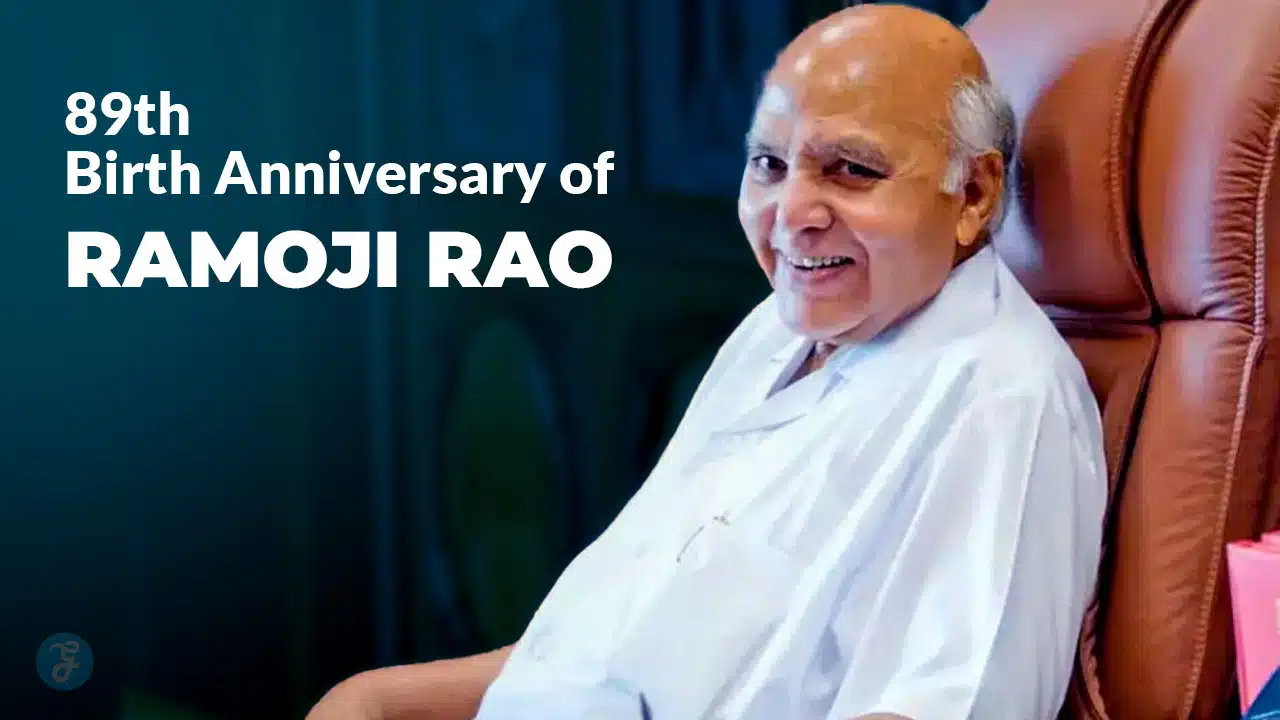
Have you ever wondered about the names behind the newspapers you read or the movies you watch? It can be overwhelming to keep up with all the big players in Indian media. Such is the legacy of Ramoji Rao.
When you hear about massive film studios or leading newspapers like Eenadu, you might not know the visionary who built them all. That’s where the story of Ramoji Rao comes in, and trust me, it’s fascinating.
Ramoji Rao was a game-changer from Andhra Pradesh. He created some of India’s most influential news and entertainment businesses, including Ramoji Film City in Hyderabad, which Guinness World Records recognizes as the world’s largest film studio complex, spanning 2,000 acres.
This article walks you through how Ramoji Rao transformed journalism, Telugu cinema, and the daily lives of countless families. You’ll discover his incredible journey from a small village in the Krishna district to becoming a household name known by millions across India.
Let’s explore what made Cherukuri Ramoji Rao’s legacy so remarkable.
Key Takeaways
- Ramoji Rao founded the Eenadu newspaper in 1974, which grew to become the largest circulated Telugu daily, with over 1.6 million copies distributed daily across Andhra Pradesh and Telangana.
- He built Ramoji Film City in 1996, which Guinness World Records certified as the world’s largest film studio complex, with 47 sound stages spread over 2,000 acres, attracting 1.5 million tourists annually.
- His production company, Ushakiran Movies, founded in 1983, produced over 80 films in multiple languages, winning national awards, including four Filmfare Awards South for hits like Mayuri and Pratighatana.
- He started Margadarsi Chit Fund in 1962, which grew to serve over 300,000 subscribers with 4,300 employees across four southern states, along with other ventures like Dolphin Hotels, Priya Foods, and Kalanjali crafts stores.
- Ramoji Rao received the Padma Vibhushan in 2016 from the Government of India for his transformative impact on media and business before he passed away on June 8, 2024, at age 87.
How Did Ramoji Rao Impact Journalism?
In 1974, Ramoji Rao launched the Eenadu newspaper from Visakhapatnam, marking a significant milestone in Telugu journalism.
According to a 2024 report by ETV Bharat, Eenadu celebrated its golden jubilee in 2024, marking 50 years of service to Telugu-speaking readers. The newspaper now circulates over 1.6 million copies daily and is published from 23 printing centers across Andhra Pradesh and Telangana.
What made Eenadu different? Ramoji Rao focused on local news that mattered to ordinary people. He brought honest, easy-to-understand reporting to villages and cities alike. People from Pedaparupudi to Visakhapatnam could finally read news in their own language that truly reflected their concerns.
His Ramoji Group expanded beyond print. The ETV network of television channels brought news directly into homes across the Telugu states. According to the group’s official records, ETV later grew to include channels in multiple Indian languages, and the digital platform ETV Bharat now operates 23 news portals in 13 Indian languages.
According to senior journalist N Ram, Ramoji Rao turned Eenadu into “a strong advocate for truth and justice,” consistently challenging government overreach and corruption.
Ramoji Rao served as president of the Editors Guild of India in the late 1980s, cementing his reputation as a media baron. His bold stand against press censorship during the 1975 Emergency showed his commitment to journalistic freedom. The Padma Vibhushan he received in 2016 honored this extraordinary contribution to Indian media.
Other media entrepreneurs followed his lead, launching regional newspapers after seeing how readers responded to quality journalism in their native language. This journey transformed Ramoji Rao into a household name across India.
Ramoji Rao’s Role in the Film Industry
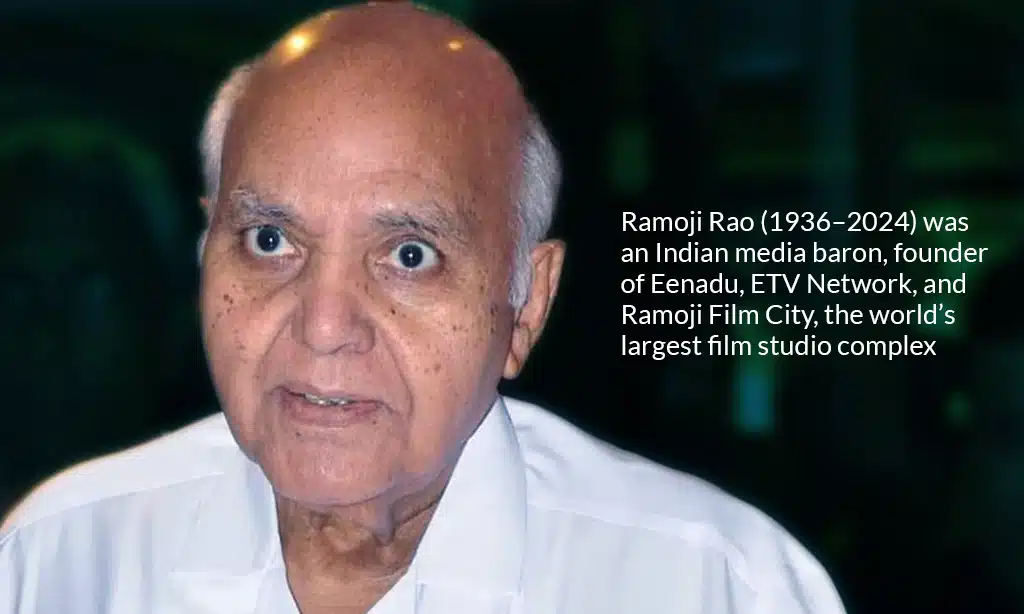
Ramoji Rao reshaped Telugu film production with a keen eye for fresh stories and emerging talent.
He built Ramoji Film City, which opened in 1996 and became the cornerstone of Indian cinema production. The studio complex covers 2,000 acres (some sources cite 1,666 acres of developed land) and features 47 sound stages, along with diverse outdoor sets ranging from Japanese gardens to replicas of the Taj Mahal.
What are Ramoji Rao’s key contributions to cinema?
Under his banner Ushakiran Movies, founded in 1983, Ramoji Rao produced over 80 Telugu films that won national recognition.
The production house gave opportunities to young, promising talent. Films like “Mayuri” and “Pratighatana” earned national film awards and four Filmfare Awards South. According to IMDb ratings, movies like “Nuvve Kavali” (2000) scored 7.6, while “Dagudumootha Dandakor” (2015) impressed critics with a 7.9 rating.
His first production, “Srivariki Premalekha” (1984), set the tone for content-driven cinema. Ushakiran Movies became known for tackling serious social issues and real-life stories that other production houses avoided.
The company also ventured into television, producing shows like “Sri Bhaagavatam” for ETV channels. From classic dramas to family entertainers, his projects ensured that audiences found something meaningful to watch.
How has Ramoji Rao influenced film production and distribution?
Ramoji Film City transformed how movies are made in India.
According to Guinness World Records, it is officially the world’s largest film studio complex. The facility can accommodate up to 50 film units simultaneously and handles between 400 and 500 film productions annually across multiple Indian languages, including Telugu, Hindi, Tamil, Malayalam, and Kannada.
According to Wikipedia, approximately 1.5 million tourists visit the film city every year, making it both a production hub and a popular tourist destination. The studio employs around 1,200 staff members and 8,000 agents to support these productions.
Major blockbusters have been filmed here. According to recent industry reports, films like “Baahubali,” “RRR,” “Pushpa: The Rise,” “Chennai Express,” and “Dilwale” all benefited from the studio’s comprehensive resources and ready-to-shoot sets.
His distribution network also expanded rapidly. Mayuri Film Distributors and Ushakiran Movies created strong channels that delivered films to theaters faster than ever before. New directors and actors got their big break because of his willingness to invest in untested talent.
From running the world’s largest studio to backing independent filmmakers, he truly wore many hats as a media entrepreneur after starting his journey in Pedaparupudi village back in November 1936.
What are the Major Business Ventures and Achievements of Ramoji Rao?
Cherukuri Ramoji Rao was born on November 16, 1936, in Pedaparupudi, Krishna district, Andhra Pradesh. He built a vast empire spanning media, cinema, finance, hospitality, and retail.
His business acumen showed early on. According to ETV Bharat, he achieved success with ventures like Priya Pickles before launching the Eenadu newspaper in 1974. Each business he touched became a leader in its field.
Pioneering ventures across industries
Margadarsi Chit Fund stands as one of his earliest and most impactful ventures. Founded in October 1962, it started with just two employees in a small rented office in Hyderabad. According to the company’s official website, Margadarsi now employs 4,300 people, operates 126 branches across four southern states (Andhra Pradesh, Telangana, Karnataka, and Tamil Nadu), and serves over 300,000 active subscribers with a turnover exceeding Rs. 12,817 crore.
According to Margadarsi’s records, the company has served over 60 lakh (6 million) customers over six decades, helping families save for homes, education, weddings, and business ventures. It pioneered the concept of organized chit funds in India when the financial instrument was relatively unknown.
His other major ventures include:
- Eenadu newspaper, which became the largest circulated Telugu daily with over 1.6 million copies distributed daily
- Ramoji Film City, certified by Guinness World Records as the world’s largest film studio complex
- Dolphin Group of Hotels, known for customer-centric luxury service across multiple properties
- Priya Foods, famous for its pickles and confectionery products that became household names
- Kalanjali, a retail chain offering traditional Indian arts and crafts
- Annadata magazine, which supported farmers with agricultural knowledge and best practices
Recognition and legacy
The Government of India honored him with the Padma Vibhushan on January 25, 2016, recognizing his outstanding contributions to media and business. This is one of India’s highest civilian awards.
He was married to Rama Devi. In her honor, he established schools and charity trusts focused on girls’ education and healthcare in rural areas.
Ramoji Rao passed away on June 8, 2024, at the age of 87, after battling respiratory illness. According to reports, he was admitted to Star Hospital in Hyderabad and breathed his last at approximately 4:50 AM. Tributes poured in from across the nation, with Prime Minister Narendra Modi calling him a “visionary who revolutionized Indian media.
Takeaways
Ramoji Rao truly changed how people in India experience news and movies.
He built the world’s largest film studio, Ramoji Film City, which attracts visitors from around the globe. His bold ideas made both journalism and the movie business stronger, not just for Telugu speakers but for all of India.
Even after his passing on June 8, 2024, his work continues to inspire young entrepreneurs across the country. The story of రామోజీరావు stands as a testament to what vision, hard work, and commitment can achieve, like a beacon lighting the way for future generations in Indian cinema and media.
FAQs on the Legacy of Ramoji Rao
1. Who was Ramoji Rao and what made him famous?
Ramoji Rao (రామోజీరావు) was a celebrated Indian media entrepreneur and film producer known for founding the Eenadu newspaper, the ETV Network, and the world’s largest film studio. His entrepreneurship was vast, as he also headed Ushakiran Movies and served as chairman of the Dolphin Group.
2. What happened on 8 June 2024 regarding Ramoji Rao?
Ramoji Rao’s death occurred at age 87 on 8 June 2024 in Hyderabad, and his funeral on 9 June 2024 was attended by prominent figures like Chandrababu Naidu.
3. Where did Ramoji Rao come from and what recognition did he receive?
He came from a family in Pedaparupudi and received the Padma Vibhushan, one of India’s highest civilian honors, in the Padma Awards 2016 for his exceptional contributions. In a personal gesture, he also built a school in the name of his wife, Rama Devi.
4. What makes his film studio so special?
His Ramoji Film City is the largest film production facility on earth, holding the Guinness World Record for being the world’s largest film studio. This massive complex, often covered by publications like The Hindu, supports the entire filmmaking process, from shooting to the distribution of films after production.
5. How did Ramoji Rao impact the entertainment industry?
He reshaped Indian entertainment by creating both the physical space for filmmaking with his studio and the broadcast platform with his ETV Network, which brought regional content to millions. His work influenced the entire industry, from production to how people watched movies in theaters.