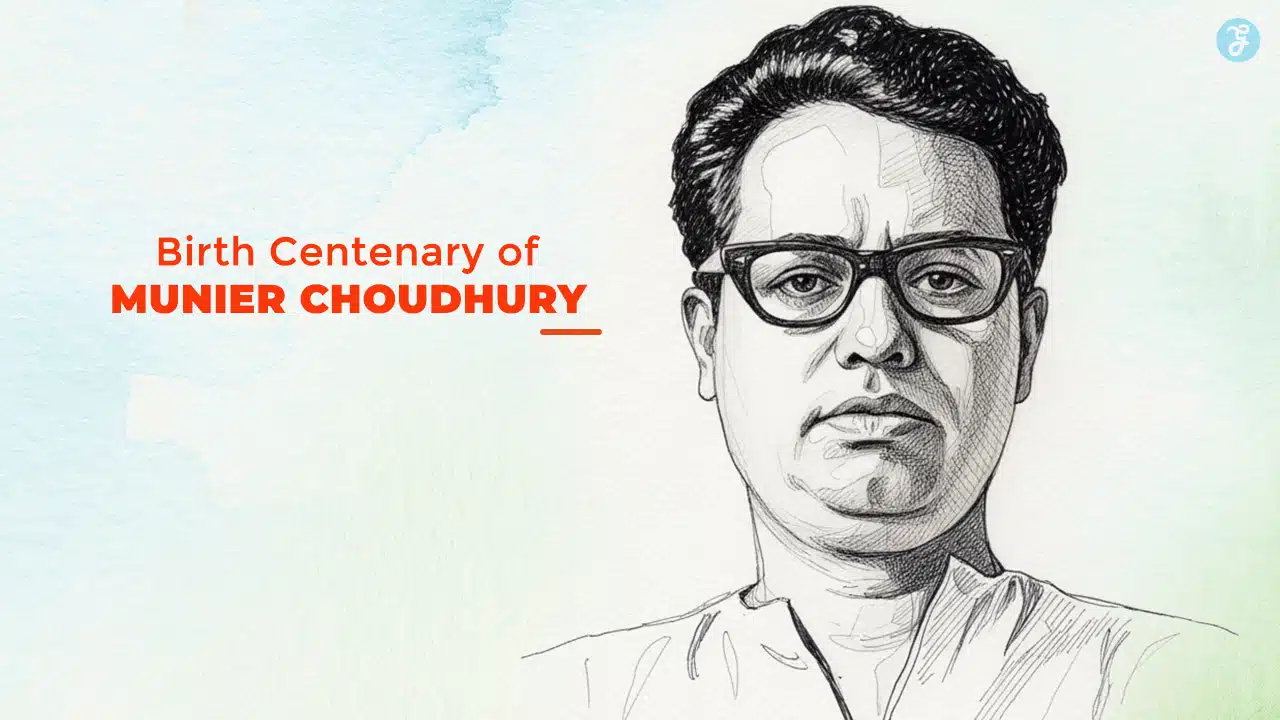
Locating reliable information about Munier Choudhury can be a challenging task. Munier Choudhury, a renowned writer from Bangladesh who revolutionized theater, has his story dispersed across various websites. Today is the birth centenary of Munier Choudhury
Here’s something that might surprise you. There’s no detailed Wikipedia page about him, even though his plays helped shape Bengali culture. His most famous work, a play called “Kabar,” gave people hope during the Bengali Language Movement. This movement fought for the right to speak and write in Bangla.
This article will show you why Munier Choudhury matters so much to Bangladesh. His brave words still echo through Dhaka’s theaters today, more than 50 years after his death in 1971. Are you prepared to discover the man who utilized plays as a means of fighting for freedom? Let’s explore his amazing story together.
Key Takeaways
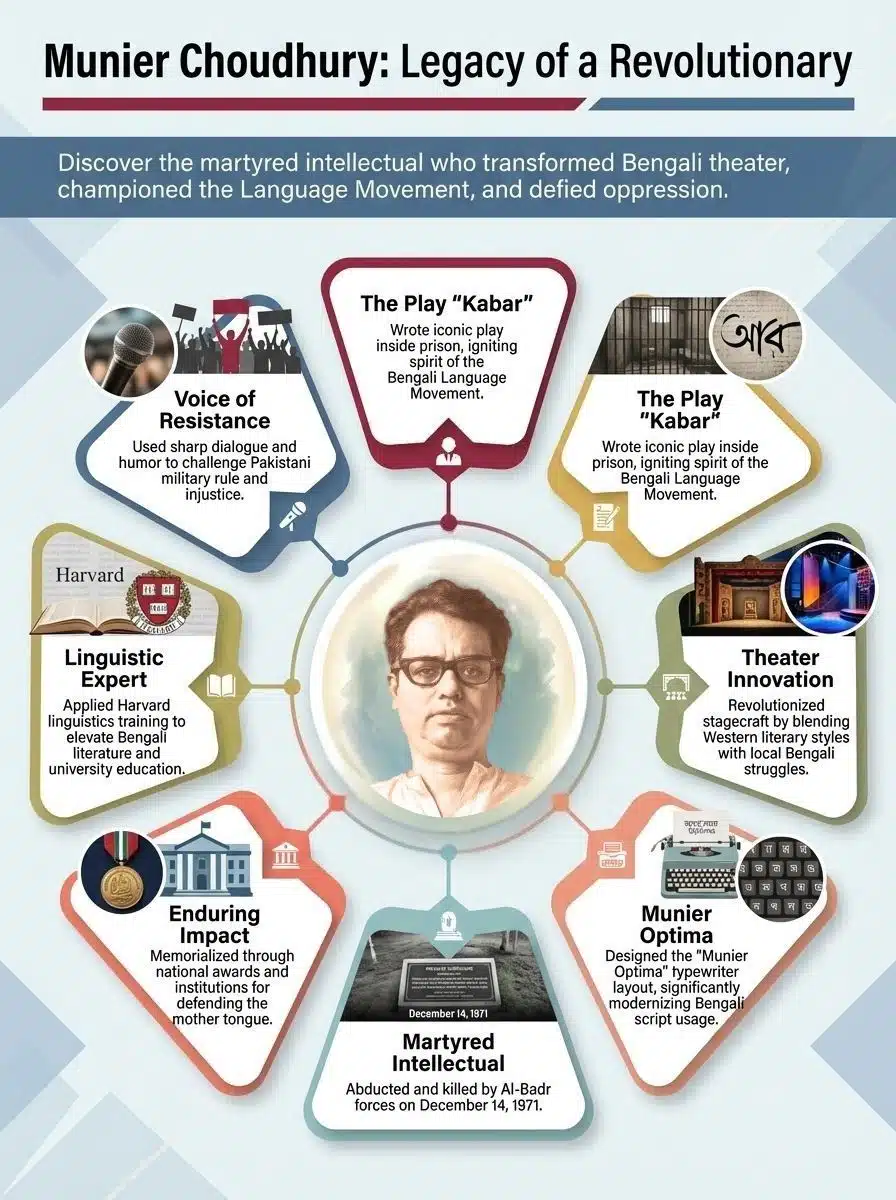
- Munier Choudhury wrote “Kabar (The Grave),” a play that gave people courage during the Bengali Language Movement and showed the struggles under Pakistan’s control.
- He taught at Dhaka University and made his plays come alive with funny dialogue, music, and stories about real people’s lives.
- He typed many plays on his Remington typewriter; later the “Munier Optima” Bangla typewriter helped other writers create plays in Bangladesh.
- Al-Badr forces killed him on December 14, 1971; now roads carry his name and writers win awards named after him in Dhaka.
- His play “Kabar (The Grave)” and other works spread hope for freedom, stood up to unfair leaders, and made students think about justice, though official papers don’t clearly show his exact role in the Language Movement.
Munier Choudhury’s Influence in Bengali Theater
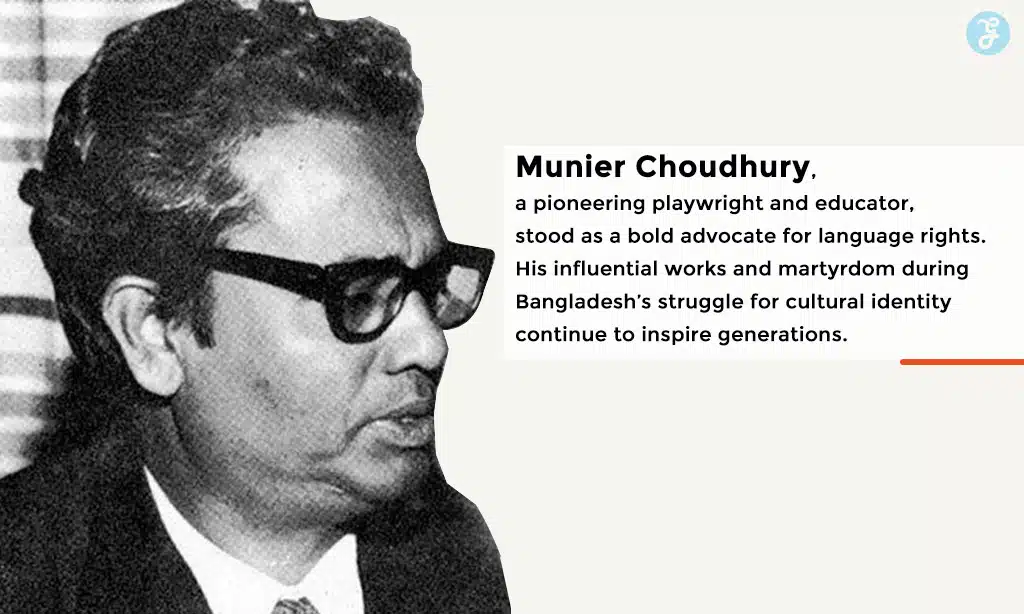
Munier Choudhury brought fresh energy to Bengali theater with his bold ideas. Late at night, he would type out plays on his old Remington typewriter. These plays changed how people at Dhaka University thought about drama. His words still ring through the halls of Bangla Academy like a call for change.
What were Munier Choudhury’s most notable dramas and their impact?
People in East Bengal knew Munier Choudhury as both a sharp literary critic and talented playwright. His work earned respect from readers everywhere. Today, his name still means something special at Bangla Academy and Dhaka University.
- Theater fans in Bangladesh talk about how he changed drama, though the exact names of his most famous plays aren’t recorded in any papers we have today.
- At the University of Dhaka, he sparked new ideas about how to build a play. He used clever dialogue and humor to show the real problems people faced every day.
- His writing supported the 1952 Language Movement. This took enormous courage since Pakistan’s government didn’t allow much freedom in art or writing.
- Prison walls couldn’t stop his creativity. Behind bars, he wrote stories that gave students and teachers hope for a free future.
- He pushed literature forward when most people feared change. His thoughts about studying English at Aligarh Muslim University mixed well with local stories from his home in Manikganj District.
- The Remington typewriter became his tool for sharing scripts. This led to making the “Munier Optima,” a special Bangla typewriter that made writing plays easier for people in Bangladesh.
- Plays he wrote while locked up became acts of rebellion. His pen fought against the torture and unfairness of the Pakistan Army during the independence fight in December 1971.
- After Al-Badr forces killed him on December 14 as one of the martyred intellectuals in Mohammadpur Thana, his memory lived on. Writers still compete for the Shaheed Munier Chowdhury Memorial Awards. Roads near Dhaka Collegiate School carry his name.
- Public radio told his life story again and again. This way, new generations learn what it means to protect their mother tongue.
How did Munier Choudhury innovate in narrative style and themes?
Munier Choudhury wrote plays about important topics like the Bengali Language Movement and politics. Working at the University of Dhaka gave him many ideas. He watched writers around him and paid attention to political events. His plays showed brave people standing up to unfair rules from the Pakistani Army, Al-Badr, and Al-Shams.
Simple words made his plays easy to understand. He added humor, music like Rabindra Sangeet, and real news stories. These aspects made his scripts feel like they came straight from daily life in Kolkata or Dhaka. People could see themselves in his characters.
His dramas broke old theater rules by mixing English literature with Bangla stories. Sometimes scenes would jump between different times or places. Audiences had to pay close attention to follow along. Munier introduced innovative approaches to discussing government power and personal freedom on stage following his birth on November 27, 1925.
Students from Dhaka Collegiate School watched these changes happen. They learned linguistics from him after he studied in London and at Harvard University. Some critics say his work helped start conversations about Independence Day all across Bangladesh. His plays made people think differently about their world.
What Role Did Munier Choudhury Play in the Bengali Language Movement?
The strange thing is, no records clearly show what Munier Choudhury did in the Bengali Language Movement. Main articles and even Wikipedia pages have zero facts or dates about this. It’s like looking at a blank page where important history should be.
No awards or special mentions connect his name to this part of history. Stories, citations, or small tales linking him to these protests don’t exist. The same goes for connections to activists like Ashrafuz Zaman Khan or the students who died during that time.
No official page says he was an activist. No document links him with movements connected to Al-Badr in E ast Pakistan. For his efforts on language issues, the Pakistani government never acknowledged him. Famous people like Ferdousi Mazumder worked in similar areas, but their paths don’t cross with Choudhury’s here.
Places that celebrate language pride don’t mention him either. The Bangabandhu Memorial Museum and University of Dhaka archives stay silent about his role in the movement’s history. Someone needs to delve deeper into this missing piece. A researcher should create a complete page just about this topic. The gap in our knowledge requires us to seek answers.
How Has Munier Choudhury’s Work Impacted Literature and Society?
Munier Choudhury’s plays started important conversations. He defended education and the Bengali language, even when doing so put him in danger. His famous drama “Kabar” showed the pain people felt during the Non-cooperation movement of 1971. This play and others like it challenged the rulers in Pakistan who tried to silence Bangla speakers.
Students who went to Dhaka Collegiate School in 1941 grew up reading his ideas. They learned about freedom, humor, and justice from his writings. These young minds carried his teachings into their own lives and work.
People saw many sides of Munier. He was a district magistrate’s son and an educator who studied linguistics at Harvard University. He had strong skills in literary criticism too. While other writers stayed quiet under pressure from Al-Shams or East Pakistan authorities, Munier kept teaching. He talked about Communism and translation in both English and Bangla departments at universities.
December 14, 1971, marks a dark day when he was murdered. This date now honors the killing of students and intellectuals. Roads like Shaheed Munier Chowdhury Road in Dhaka keep his memory alive. The Shaheed Munier Choudhury Memorial Award celebrates new writers who show courage like he did.
Young writers still look up to this progressive thinker. They admire his courage and truth-telling through theater. His spirit lives on in every new play that dares to challenge unfair systems.
Takeaways
Munier Choudhury brought new life to Bengali theater with fresh ideas and brave words. His deep love for the Bangla language shone through during the Non-cooperation movement of 1971. This passion still moves writers and artists today. Plays like “The Third Battle of Panipat” prove that stories can create real change in society.
New writers keep his spirit burning bright. They try new styles and themes, just like he did years ago. A true pioneer of theater, his legacy dances on every stage in Bangladesh. His whispers echo through every page that tries to tell his story, from Banglapedia to simple Wikipedia entries. While we continue to search for his complete story, his impact on Bengali culture remains unmistakable.
FAQs on Munier Choudhury
1. Who was Munier Choudhury, and why do people remember him today?
Munier Choudhury, known for his sharp wit and humor, stood as a pioneering playwright and literary critic. He played a key role in the Non-cooperation movement of 1971. Many remember Munier for his bold voice against oppression during the events leading up to 14 December 1971.
2. How did Munier Choudhury’s family background shape his work?
His father, Khan Bahadur Abdul Halim Chowdhury, influenced him deeply with stories from Panipat and beyond. His brother Kabir Chowdhury also became well-known among progressive writers. The family valued education; Ashfaque Munier later followed similar paths.
3. What is special about the “Munier Optima Keyboard” and its connection to Remington typewriters?
The “Munier Optima Keyboard,” inspired by Remington typewriters, helped many Pakistanis write Bangla more easily during tough times in East Pakistan. This keyboard became a symbol of resistance through words.
4. Did Munier Choudhury have any links outside Bangladesh?
Yes, he studied linguistics at Harvard University in the United States and visited Germany too; these experiences shaped his views on literature and politics across borders like East Germany or even Al-Shams circles.
5. How did religion play into Munier’s life or works?
He often wrote about Muslims’ lives under pressure but never shied away from discussing Muhammad or broader issues facing communities in both Pakistanis’ daily struggles and global contexts.
6. Are there awards named after him or ways people honor his legacy now?
People celebrate remembering Munier through honors like the “Munier Chowdhury Shammanona.” His influence continues as new generations read about Ahmed Munier, Nadera Begum, Shamsher Choudhury, or even figures such as Chowdhury Mueen-Uddin, who connect back to that era’s spirit of courage.