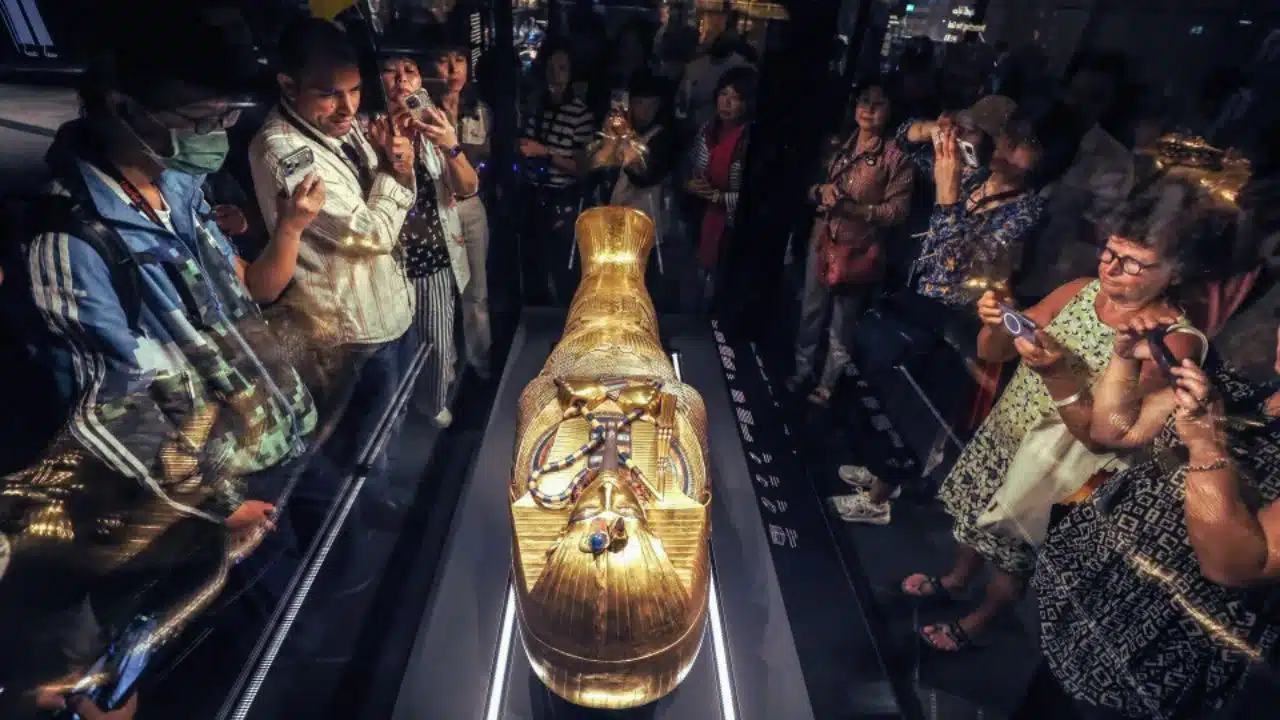
The Grand Egyptian Museum (GEM), located near the Giza Pyramids in Egypt, officially opened to the public in late 2025, marking a landmark moment in archaeology and cultural heritage. This $1 billion museum is the largest archaeological museum dedicated to a single civilization in the world, housing over 100,000 artifacts that collectively span some 7,000 years of Egypt’s rich history, from prehistoric times through the Greek and Roman eras. Its opening ushers in a new era for Egyptian cultural preservation and global access to ancient artifacts, notably bringing together the full collection of King Tutankhamun’s treasures for the first time since their discovery in 1922.
Introduction: A New Cultural Landmark
After more than two decades of anticipation, construction, and curation, the Grand Egyptian Museum stands as a magnificent modern temple to ancient history and the legacy of one of the world’s oldest civilizations. Situated just 2 kilometers from the historic Giza Plateau, home to the iconic pyramids, and 8 kilometers from Cairo, the expansive museum complex covers nearly 500,000 square meters, designed not just to display artifacts but to engage visitors with immersive cultural, educational, and conservation experiences.
The Heart of the Museum: King Tutankhamun’s Full Collection
The centerpiece of the GEM is the unprecedented display of the complete collection of King Tutankhamun’s tomb artifacts, numbering approximately 5,398 items, reunited in one place for the first time since their original excavation by British archaeologist Howard Carter in 1922. This monumental exhibit spans two large halls covering 7,000 square meters — among the largest exhibition spaces dedicated to a single archaeological collection worldwide.
Some of the most iconic pieces include:
-
The Golden Mask: Tutankhamun’s renowned funeral mask, made of solid gold and weighing 11 kg, sits at the center of the exhibition as a symbol of ancient Egyptian craftsmanship.
-
Nested Golden Shrines: The sarcophagus was enclosed within several gilded shrines decorated with funerary texts illustrating the young king’s divinity and royal role.
-
Chariots: Six chariots were found in the tomb, used for different societal roles including hunting, war, and daily transportation, now fully restored and shown to the public.
-
Golden Throne: A richly decorated chair of gold and silver showing intimate scenes of Tutankhamun and his wife Ankhesenamun, reflecting royal artistry.
-
Statues, Jewelry, and Household Items: Including amulets, rings, weapons, furniture, and utensils offering a panoramic view of life, death, and the afterlife beliefs.
The exhibit is carefully designed to echo the original layout of Tutankhamun’s tomb (KV62) in the Valley of the Kings, with sophisticated environmental controls preserving sensitive objects made from gold, wood, and fabric. While the artifacts are physically relocated for display, the pharaoh’s mummy remains in his original resting place in the Valley of the Kings.
Museum Features and Visitor Experience
The GEM offers an extensive journey through Egyptian history that spans five millennia. Visitors start from prehistoric times and move through the Old, Middle, and New Kingdoms, followed by the Late Period, Greek, Roman, and Coptic eras. The museum’s architectural design strategically aligns with the Giza pyramids, offering spectacular views and a symbolic connection between past and present.
Key features include:
-
Stunning Entrance Atrium: Hosting the colossal 3,200-year-old statue of Ramesses II standing 11.36 meters tall, welcoming visitors with grandeur.
-
Chronological and Thematic Galleries: Organized to showcase continuity and change in Egyptian civilization across different eras.
-
Cultural and Educational Facilities: Spaces dedicated to conservation labs, workshops, research centers, and interactive exhibits for an inclusive educational experience.
-
Extensive Artifact Collections: More than 50,000 objects on display, including the world’s oldest intact vessel, an ancient 4,500-year-old boat attributed to Pharaoh Khufu.
Key Highlights of the Grand Egyptian Museum
| Feature | Description |
|---|---|
| Total Artefacts | Over 100,000 artifacts spanning 7,000 years of history |
| Tutankhamun Collection | Complete 5,398 artifacts displayed together for the first time |
| Notable Pieces | Golden Mask, nested shrines, chariots, golden throne, statues, jewelry, household items |
| Size | Museum complex covers nearly 500,000 square meters |
| Location | 2 km from Giza Pyramids; 8 km from Cairo |
| Architecture | Designed to align with pyramids; environmental controls preserve sensitive artifacts |
| Education & Conservation | Includes cultural centers, conservation labs, research workshops |
| Visitor Experience | Chronological & thematic galleries, immersive storytelling |
| Special Exhibits | 3,200-year-old statue of Ramesses II, 4,500-year-old intact ancient boat |
Historical and Archaeological Significance
The GEM does not only allow public access to invaluable pieces of Egyptian history; it also symbolizes a revival of national pride and global acknowledgement of Egypt’s cultural heritage. Egyptologists emphasize that the museum may strengthen calls for the return of key artifacts currently held abroad, such as the Rosetta Stone, advocating for the reunification of Egyptian treasures for scholarship and cultural identity.
The complete assemblage of Tutankhamun’s tomb in GEM’s permanent collection offers unprecedented research opportunities. It reveals diverse influences from the ancient world, including Syrian plants and Aegean motifs depicted on objects like chariot harnesses, signaling Egypt’s interconnectedness with international cultures during Tutankhamun’s reign. This challenges older narratives of the boy king, showing him instead as a warrior and an active ruler.
Visitor Information and Opening Details
The museum’s opening, marked by a lavish ceremony in late October 2025, has drawn thousands of visitors eager to experience this monumental cultural institution. It represents a milestone in Egypt’s tourism sector, promising to attract millions annually with its unparalleled collections and state-of-the-art facilities.
Admission policies, tours, and educational programs are designed to accommodate a global audience, promoting accessibility and engagement for visitors of all ages and backgrounds. The GEM’s strategic location near Cairo and major transport hubs offers convenient access for both local and international tourists.
Conclusion: A Timeless Treasure for the World
The Grand Egyptian Museum stands as a beacon of ancient history and modern heritage preservation, intertwining the story of one of humanity’s earliest civilizations with contemporary scientific and museological innovation. By bringing together King Tutankhamun’s full collection in one spectacular venue, the GEM allows visitors a unique, immersive glimpse into the life and death of the legendary boy king, alongside a vast panorama of Egyptian civilization’s achievements and mysteries.
More than just a museum, the GEM is a powerful cultural statement—highlighting Egypt’s rich past, supporting archaeological research, fostering global cultural exchange, and inspiring future generations with the splendor of the ancient world. Its opening marks a remarkable chapter in the preservation and celebration of one of the most enduring legacies of human history, promising to captivate millions and deepen appreciation for Egypt’s unparalleled heritage for many years to come