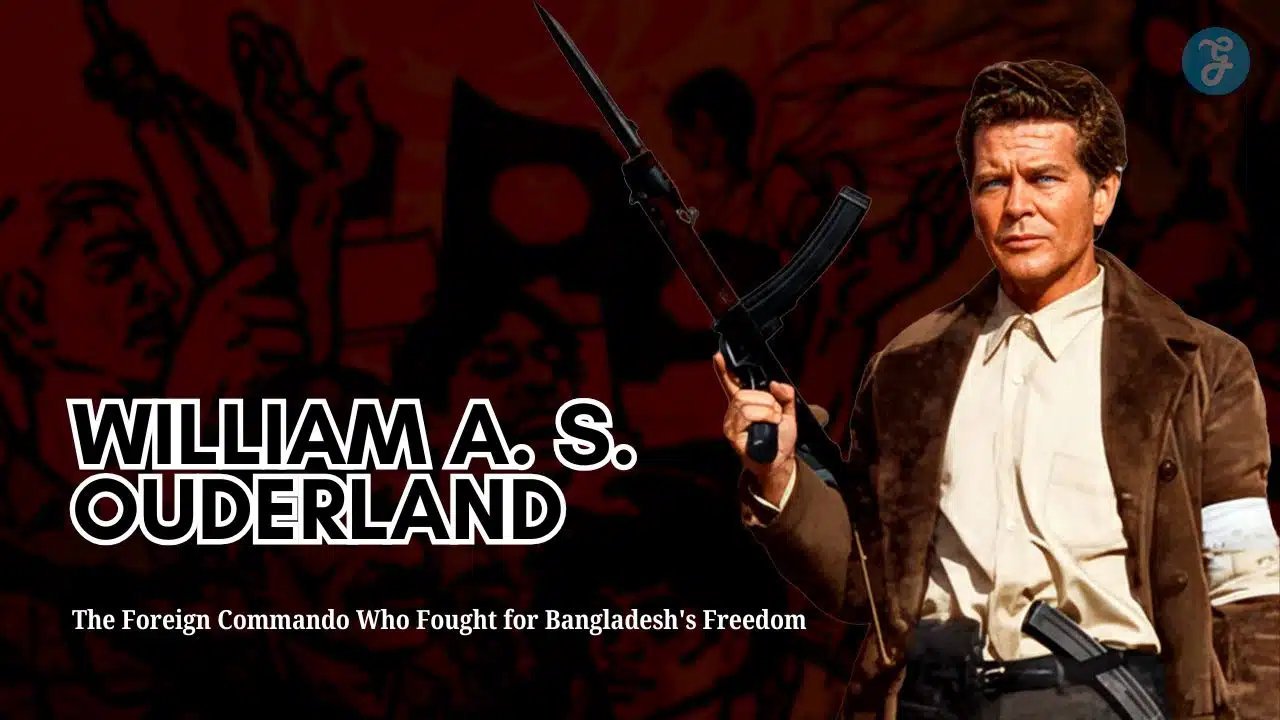
Today, December 6, 2025, marks the 108th birth anniversary of William A. S. Ouderland, a man whose dedication to the cause of Bangladesh defied nationality and borders. Born in the Netherlands, Ouderland became the foreign commando who fought for Bangladesh in the Bengali Liberation War of 1971.
He remains the only foreigner to have been awarded the Bir Pratik, Bangladesh’s fourth-highest gallantry award, for his direct combat role and invaluable contributions to the Mukti Bahini.
While many foreign friends of Bangladesh supported the country through diplomacy, poetry, and music, Ouderland took a far riskier path—one marked by personal bravery, clandestine operations, and a deep commitment to justice. A Dutch-Australian CEO by day, he became a guerrilla strategist by night, aiding the freedom fighters of Bangladesh with invaluable intelligence and fighting alongside them on the battlefield. His story could easily read like a spy thriller, but to those who fought beside him in Sector 2, he was simply a comrade-in-arms.
On his 108th birth anniversary, we remember the “Bata Sahib”—the foreign commando who risked everything for a land far from his own, driven by the spirit of humanity and the quest for justice.
William A. S. Ouderland at a Glance
Before delving into his remarkable contributions during the Liberation War, here’s a quick overview of Ouderland’s life:
-
Full Name: William Abraham Simon Ouderland
-
Born: December 6, 1917, Amsterdam, Netherlands
-
Died: May 18, 2001, Perth, Australia
-
Nationality: Dutch-Australian
-
Profession: Managing Director, Bata Shoe Company (East Pakistan)
-
War Role: Active combatant, intelligence gatherer, Mukti Bahini trainer
-
Major Honor: Bir Pratik (Symbol of Bravery or Idol of Courage)
-
Military Background: World War II Veteran (Dutch Royal Signals, Guerrilla Commando)
These facts tell of a well-accomplished man, but they don’t capture the full audacity of his actions during the bloodied months of 1971.
From WWII to 1971: A Veteran’s Instinct
Ouderland was no stranger to conflict. Born in Amsterdam, he had served in the Dutch army during World War II, experiencing firsthand the brutal realities of war under the Nazi occupation. His training and experience in guerrilla warfare would later shape his decisive role in the Bangladesh Liberation War.
When Operation Searchlight was launched by the Pakistani military on March 25, 1971, Ouderland saw the same terrifying patterns he had witnessed during the Nazi invasion of Europe. The tanks rolling into Dhaka were a painful reminder of history’s darkest days. As the managing director of Bata Shoe Company in Tongi, he faced a dilemma between his personal morality and his duty to take action. His decision was swift: he could not remain a bystander.
The Double Agent: CEO by Day, Spy by Night
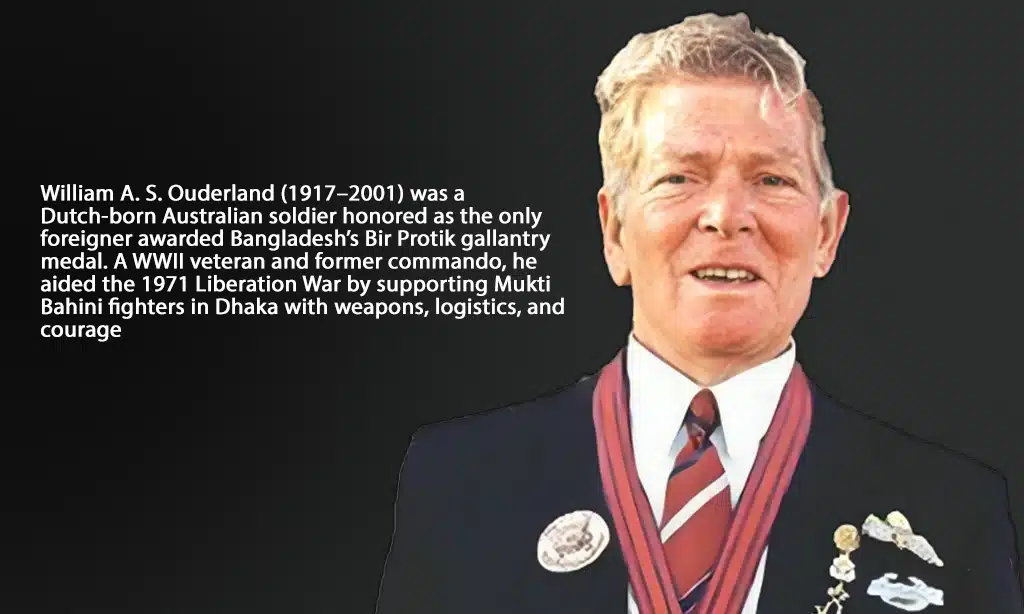
Ouderland’s unique position as an executive in a multinational company provided him with a cover that few could have imagined. The Pakistani military, eager for international support, courted him, giving him unrestricted access to the Dhaka Cantonment and top Pakistani military officials, including General Tikka Khan and General Niazi.
The Trojan Horse
Ouderland used his access to the military elite to become an invaluable spy. While dining with Pakistani generals, he secretly observed troop movements, noted supply lines, and memorized battle plans. He would then discreetly pass this critical intelligence to the Mukti Bahini—Bangladesh’s freedom fighters—especially to Sector Commander Major A.T.M. Haider.
Safe Haven
The Bata factory in Tongi became Ouderland’s sanctuary and a hub for the Mukti Bahini. Under the guise of normal factory operations, he provided food, medicine, and shelter to the freedom fighters. The factory also secretly stored weapons and ammunition, which were distributed to the guerrillas.
The Foreign Commando Who Fought for Bangladesh in 1971
What truly sets Ouderland apart from other foreign supporters of Bangladesh is that he didn’t just help from the sidelines—he actively fought.
Training the Youth
Using his World War II commando experience, Ouderland trained young guerrilla fighters within the confines of the Bata factory. He taught them how to set ambushes, handle explosives, and carry out hit-and-run operations. These were the same tactics he had used to fight the Nazis in Europe decades earlier.
Active Combat
Ouderland didn’t limit his role to training; he fought alongside the Mukti Bahini in missions across Tongi and Dhaka. His commitment to the cause was total. Accounts of his participation in combat operations are well-documented, with some detailing his personal involvement in ambushes and skirmishes against the Pakistani forces.
He also risked his life to capture photographs of the atrocities committed by the Pakistani army—images he smuggled out to the international press to build global support for Bangladesh’s struggle.
A Legacy of Solidarity
Even after the war, Ouderland continued to serve Bangladesh. He remained managing director of Bata until 1978 and kept strong ties with the country throughout his life. Even after retiring and moving to Australia, Ouderland’s heart remained with the people of Bangladesh.
The Only Foreign Bir Pratik
In recognition of his bravery, the Government of Bangladesh awarded Ouderland the Bir Pratik, a title reserved for the bravest of Bangladesh’s military personnel and freedom fighters. Ouderland remains the only foreign national to have received this prestigious honor.
A Bengali Farewell
When William A. S. Ouderland passed away in 2001 in Perth, Australia, he was given a final farewell with full state honors. As per his last wishes, the Bangladesh flag was draped over his coffin alongside the Australian flag, symbolizing the deep connection he had forged with the land and people he had fought for.
Takeaways
On his 108th birth anniversary, William A. S. Ouderland stands as a towering figure of internationalism. His story proves that the fight against injustice has no nationality.
He could have easily fled to safety when the war broke out, but instead, he stayed and fought for a people who were not his own by blood but became his own through shared struggle and dedication. He was not just a foreigner; he was a Bengali hero in every sense of the word.
Frequently Asked Questions on William A. S. Ouderland
Who was William A. S. Ouderland?
William A. S. Ouderland was a Dutch-Australian WWII veteran and the managing director of Bata Shoe Company in East Pakistan. He became an active combatant and intelligence gatherer for the Mukti Bahini during the Bangladesh Liberation War.
What award did he receive?
He was awarded the Bir Pratik, the fourth-highest gallantry award in Bangladesh, for his bravery and contributions to the Liberation War. He remains the only foreigner to have received this prestigious title.
How did he help in the Liberation War?
Ouderland acted as a spy, gathering intelligence from high-ranking Pakistani generals and passing it to the Mukti Bahini. He also provided shelter, food, and weapons training to freedom fighters at the Bata factory in Tongi and participated in active combat missions.
When was he born?
He was born on December 6, 1917. Today marks his 108th birth anniversary.
Is he buried in Bangladesh?
No, he is buried in Perth, Australia. However, he was buried with the Bangladesh flag draped over his coffin, symbolizing his deep connection to the country he fought for.