If you’re reading this, there’s a good chance you’re either moving, redecorating, or finally getting rid of that hand-me-down table you’ve been eating on since college. Either way, welcome. Choosing a dining table sounds simple, right? You just pick the one that fits and looks decent. Except…not really. Suddenly, you’re asking yourself things like: Is this too big? Too small? Is a round table smarter? Should it be wood, black, marble, extendable, or floating? (Okay, maybe not floating, but who knows what’s out there.)
And then, of course, you get hit with the style overload. There are sleek glass-top tables, earthy oak ones, and ultra-modern matte black ones. The options feel endless. Even brands like Poltrona Frau, globally known for their luxurious leather chairs, have entire lines that include high-end dining furniture. So, how do you even begin to decide what table makes sense for your space, your budget, and your vibe?
Let’s Start With Size
There’s nothing worse than buying a table that looks amazing… and then realizing your guests can’t walk behind it. Here are some quick, non-scary tips to get it right:
- Leave at least 36 inches (about 90 cm) between the edge of your table and any walls or furniture. That’s enough space to scoot in and out without knocking into stuff.
- A table for 4 people should be about 48 inches long. For 6 people, aim for 72 inches. For 8 people, 96 inches or more.
- Want to seat a small army? A table that’s 240 cm (roughly 94 inches) long can fit 8-10 people comfortably. A 12-seater table might need to stretch beyond 120 inches (300 cm). And for 20 people? You’re basically running a dinner club, budget at least 18 feet, and rent a second room.
When to Go Round, Rectangular, or Something Weird
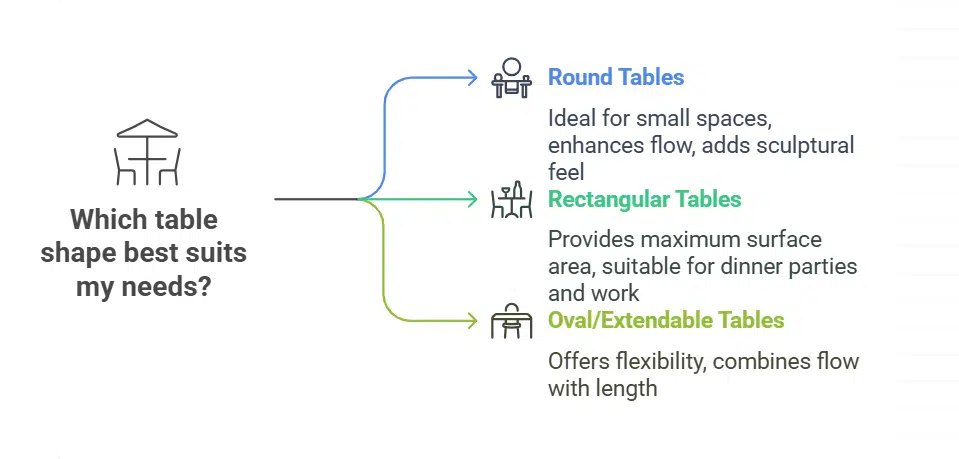
- Round tables are your best friend in small or awkward spaces. No corners means better flow. Something like the Porada Amphora Table adds a sculptural feel without overwhelming the room.
- Rectangular tables are classic and give you the most surface area. Great if you like dinner parties or need space to work from home. The Cattelan Italia Giano Table is a good-looking example with some serious presence.
- Oval or extendable tables, like the Desalto Tender Extendable Table, are solid picks if you need flexibility. You get the flow of a round table but with a bit more length.
The Table + Chairs Combo: How Many, How Close, How High?
The short answer: one chair every 24 inches (60 cm) is a solid rule. Table height matters too. The standard is 28–30 inches (71–76 cm) from the floor to the tabletop. Your chairs should have seats that are about 18 inches high. If you’re buying mismatched pieces, bring a tape measure. Trust me. But here’s a cheat sheet:
- Table for 4 → Needs 4 chairs
- Table for 6 → 6 chairs (or 4 plus 2 benches, if you’re that kind of person)
- Table for 8 → 8 chairs, but maybe consider going armless for space
- Want to really max out space? Stick with slender chairs and avoid bulky arms.
What About Color?
Honestly, this comes down to what’s already going on in your room. Here’s a quick vibe check:
- Light wood or white = airy, casual, and makes a room feel bigger
- Dark wood or black = cozy, bold, and dramatic
- Glass tops = good for small spaces, but they need cleaning. A lot.
- Want a statement piece? Something like the Reflex Sassi 72 Table brings personality without adding clutter. It’s bold without being shouty.
Table Placement in the Living Room
If your dining table is in your living room (been there), try this:
- Use a rug to define the dining zone
- Go with a round table to soften the layout
- Pick chairs that double as extra living room seating
Tables are one of the most-used pieces of furniture in your home, but choosing the right one doesn’t have to be intimidating. Think about how you actually live, what kind of space you’ve got, and whether you’re more likely to host dinner parties or eat cereal over your keyboard. Either way, your perfect table is out there. Just maybe don’t try to seat 20 people unless you’re feeding a football team.