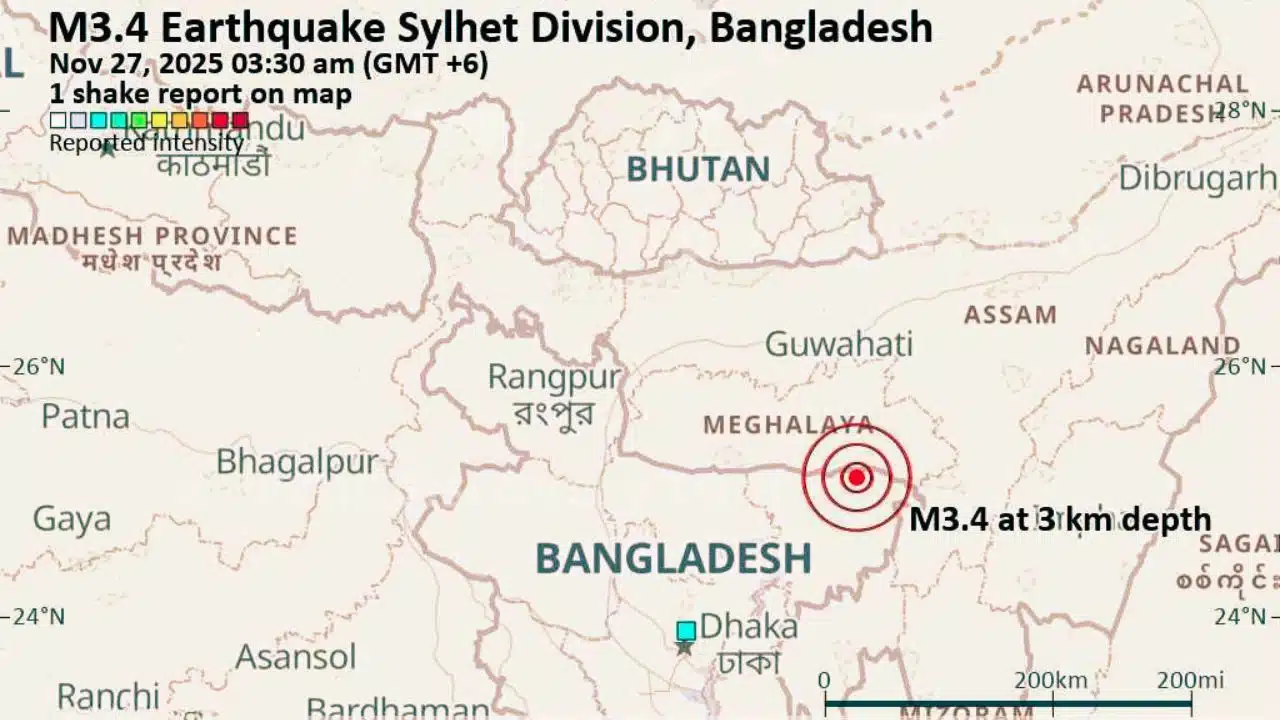
A light earthquake measuring 3.4 on the Richter scale jolted parts of northeastern Bangladesh early Thursday morning, with the epicenter located 24 kilometers north of Sylhet city. The tremor occurred at approximately 3:30 AM local time on November 27, 2025, sending ripples of concern through the region, though no casualties or significant damage have been reported.
Epicenter and Seismic Details
According to seismic monitoring authorities, the earthquake’s epicenter was pinpointed in Chhatak of Sunamganj district, a region situated north of Sylhet city. The tremor struck at a shallow depth, making it perceptible to residents in the surrounding areas. The quake was officially recorded at 3:30 AM Dhaka time, catching most residents in their sleep during the early morning hours.
The United States Geological Survey and regional monitoring stations confirmed the magnitude at 3.4, classifying it as a light earthquake on the seismic intensity scale. Such tremors typically cause minimal structural damage but can be felt by people, particularly those on upper floors of buildings or in areas close to the epicenter.
Impact on Local Communities
Residents across several areas of Sylhet division reported feeling the mild tremor, with many waking up to the brief shaking sensation. Despite the noticeable ground movement, local authorities have confirmed that no damage to buildings or infrastructure has been recorded so far. Emergency services remained on standby following the earthquake, monitoring the situation for any delayed reports of structural concerns or aftershocks.
The timing of the earthquake—in the early morning hours when most people were asleep—meant that many residents experienced the tremor while in bed, with some reporting awakening to a brief swaying sensation. Local officials have emphasized that the earthquake’s relatively low magnitude and the region’s building standards prevented any significant impact on communities.
Seismic Context in Bangladesh
This earthquake occurs against a backdrop of heightened seismic activity in Bangladesh during November 2025. Just six days earlier, on November 21, a much stronger magnitude 5.4 earthquake struck near Dhaka, resulting in at least 10 deaths and nearly 630 injuries—the deadliest seismic event in Bangladesh in over two decades. That earthquake triggered multiple aftershocks and caused significant concern about the country’s preparedness for larger seismic events.
The Sylhet region, located in northeastern Bangladesh near the border with India’s northeastern states, sits in a seismically active zone. Historical data shows that the area within 300 kilometers of Sylhet experiences an average of 31 earthquakes of magnitude 4.0 or above annually, with tremors occurring approximately every 11 days. The region’s proximity to major tectonic boundaries makes it susceptible to periodic earthquake activity, ranging from minor tremors to more significant events.
Ongoing Monitoring and Safety Measures
Following this morning’s earthquake, seismological authorities continue to monitor the region for any potential aftershocks or related seismic activity. While no aftershocks have been reported as of this writing, experts note that shallow earthquakes can sometimes be followed by smaller tremors in the hours or days following the initial event.
Local disaster management officials have urged residents to remain calm but vigilant, reminding communities of basic earthquake safety protocols. These include identifying safe spots within homes and workplaces, keeping emergency supplies readily available, and understanding evacuation procedures should a stronger earthquake occur. The authorities have reassured the public that monitoring systems remain fully operational and any significant seismic activity will be immediately reported to ensure public safety.