
If your senior dog struggles to stand up or limps after play, you feel it too. Aging puts real stress on joints, and arthritis in dogs is common. The good news, some joint supplements for dogs can ease stiffness, protect cartilage, and support smoother movement. In this guide, you’ll get simple tips on nine proven options like omega-3 fatty acids and glucosamine chondroitin, plus which picks help most with hip dysplasia or arthritis pain relief.
Curious if fish oil or MSM could help your best friend? Keep reading for practical steps that help those tails keep wagging.
Key Takeaways
- Glucosamine, chondroitin sulfate, and MSM can slow joint wear and ease arthritis pain in dogs. Experts such as Dr. Joseph J. Wakshlag and Dr. Julie Buzby support their use.
- Omega-3 fatty acids from fish oil, especially EPA and DHA, reduce joint inflammation in aging dogs. A common dose is 1 teaspoon per 20 pounds of body weight daily.
- Hyaluronic acid, green-lipped mussel at 77 mg per kilogram daily, turmeric or curcumin, Boswellia serrata, UC-II collagen, and vitamin C support cartilage and mobility.
- Look for the National Animal Supplement Council, NASC, seal. Talk with a veterinarian before starting any new product since needs and drug interactions vary.
- Weight control plus low-impact exercise work hand in hand with supplements to reduce pain and improve daily movement for senior dogs.
What are the benefits of Glucosamine and Chondroitin for dogs?
Glucosamine and chondroitin are building blocks for cartilage, the smooth tissue that cushions joints. These nutrients help the body protect cartilage and hold joint fluid, which improves joint lubrication and comfort.
Dr. Joseph J. Wakshlag notes that this pair can slow joint degeneration in senior dogs with degenerative joint disease. Chondroitin sulfate acts like a shock absorber between bones, so joints stay flexible and steps feel easier.
Dogs in large breeds, such as German Shepherds, often benefit because their hips and knees take extra strain. Some products, like Dasuquin, add eggshell membrane as a natural source of these ingredients.
Glucosamine and chondroitin may work even better when combined with MSM or hyaluronic acid. Many older pups show less stiffness and more pep on walks after a few weeks.
How do Omega-3 Fatty Acids from fish oil help aging dogs?
Omega-3 fatty acids from fish oil act like a calm-down signal for inflamed joints. EPA, eicosapentaenoic acid, and DHA, docosahexaenoic acid, lower swelling inside the joint and can reduce pain from arthritis in dogs.
Many dogs on fish oil need less pain medication over time, which can be safer for the stomach and kidneys. Measure carefully. A common guideline is one teaspoon of fish oil per 20 pounds of body weight daily.
Choose cold-water fish sources like salmon or sardines, which tend to carry lower heavy metal risk than large predator fish. Integrative veterinarian Dr. Julie Buzby often prefers liquid fish oils over chews since liquids stay fresher.
Feeding fresh or air-dried fish can help too, since lower oxidation keeps fats stable. Start slowly to avoid tummy upset, and ask your vet if your dog is on other medications.
What role does Hyaluronic Acid play in joint health?
Hyaluronic acid, HA, is a natural lubricant in joint fluid. It helps joints glide, reduces friction, and eases stiffness so older dogs can move with less effort.
When paired with glucosamine, chondroitin sulfate, or MSM, HA supports cartilage and promotes smoother motion. Many veterinarians, including Dr. Julie Buzby, see improved comfort and activity in dogs using HA.
If your dog hesitates to stand or seems sore after naps, adding HA may help the joint fluid do its job better. It is often included in complete joint formulas for convenience.
How does MSM (Methylsulfonylmethane) support joints in dogs?
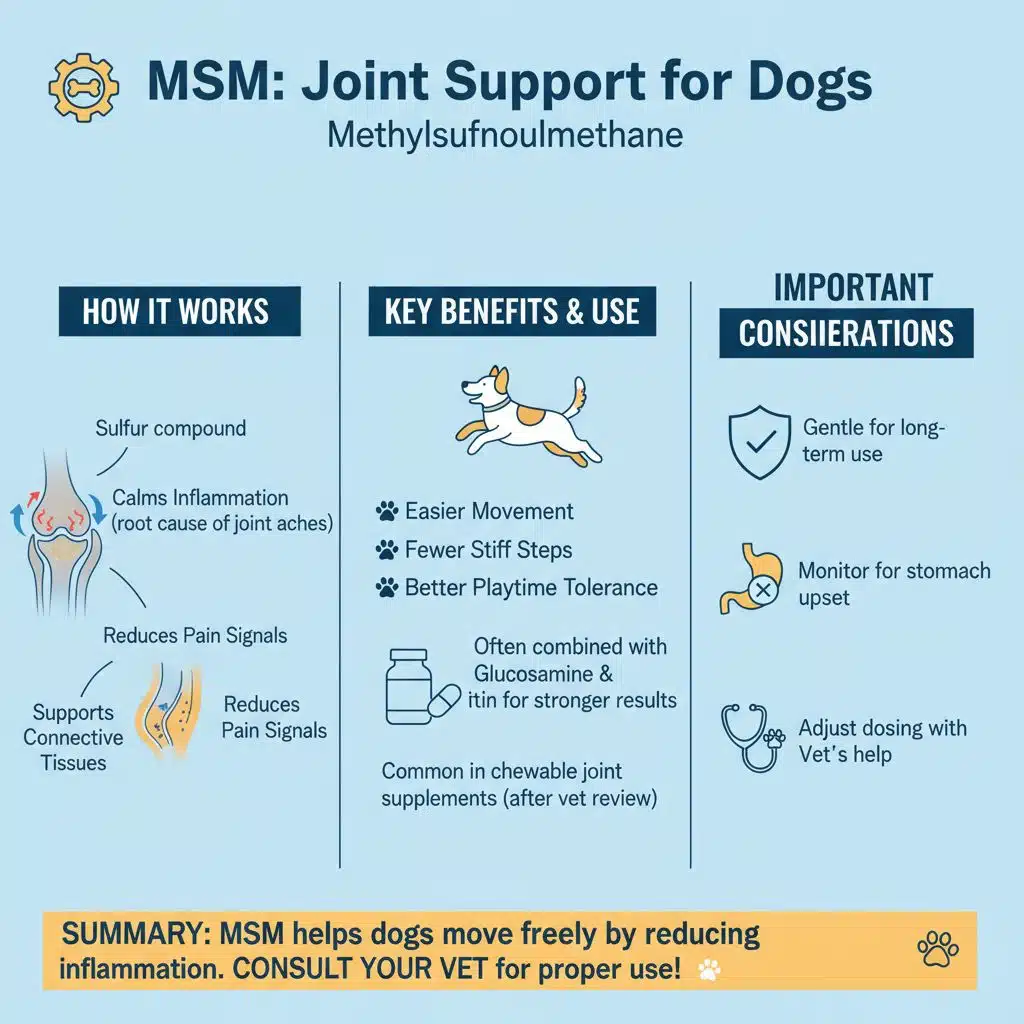
MSM, methylsulfonylmethane, is a sulfur compound that helps calm inflammation, the root cause of many joint aches. It can reduce pain signals and support connective tissues like cartilage and tendons.
Many vets suggest combining MSM with glucosamine and chondroitin for stronger results. Dogs on MSM often show easier movement, fewer stiff steps, and better playtime tolerance.
MSM is common in chewable joint supplements after a veterinary review. It is considered gentle for long-term use, though you should still monitor for stomach upset and adjust dosing with your vet’s help.
What are the effects of Turmeric (Curcumin) on dog joints?
Turmeric’s active part, curcumin, works as an antioxidant and an anti-inflammatory agent. Antioxidants fight cell damage, while anti-inflammatory compounds quiet the pathways that drive swelling and pain.
Dogs with arthritis often move easier on curcumin. Many senior dogs climb stairs with less struggle after a few weeks. Curcumin also supports cartilage health over time.
Because it can affect digestion or interact with meds at high doses, ask your vet for guidance. Curcumin pairs well with other joint supplements like glucosamine or fish oils.
How can Green-Lipped Mussel improve joint function?
Green-lipped mussel, Perna canaliculus, is rich in unique omega-3s and other joint-friendly nutrients. It helps reduce stiffness, protect cartilage, and support comfortable movement in aging dogs.
Research suggests a daily dose around 77 mg per kilogram of body weight for best results. Many dogs accept it well in chews, powders, or capsules.
Pet parents often notice softer steps and more willingness to play after steady use. If your dog is picky, many brands mask any seafood flavor to make dosing simple.
What joint health benefits does Boswellia Serrata provide?
Boswellia serrata is a tree resin extract that contains boswellic acids. These compounds may lower inflammatory signals that drive joint soreness and swelling.
Integrative veterinarians, including Dr. Julie Buzby, often add Boswellia to joint plans along with chondroitin sulfate, omega-3 fatty acids, or MSM. Many dogs show improved comfort and smoother motion with this combo.
Start low, then increase as guided by your vet to limit digestive issues. When used with glucosamine and MSM, Boswellia can boost flexibility without harsh side effects.
How does Collagen contribute to joint support?
Collagen is a core protein in cartilage. A special type called undenatured type II collagen, UC-II, from chicken sternum, helps the immune system tolerate joint cartilage. That means less inflammation and less cartilage damage.
Studies show UC-II can reduce pain and stiffness in dogs with arthritis. Many pets stay active longer when UC-II is part of their routine.
Experts such as Dr. Julie Buzby often suggest giving UC-II at a different time of day from glucosamine or chondroitin. This keeps each ingredient working at its best.
Why is Vitamin C important for aging dogs’ joints?
Vitamin C is a strong antioxidant that helps protect joint cells from oxidative stress. It also supports collagen production, which keeps cartilage firm and flexible.
Senior dogs dealing with arthritis may benefit from added Vitamin C in food or supplements. Berries like blueberries and cranberries contain Vitamin C and are easy toppers for meals.
Integrative vets may include Vitamin C in multivitamins to support recovery and joint comfort. Ask your vet about safe amounts, since too much can upset the stomach.
What factors should I consider when choosing joint supplements?
Picking a quality product matters because labels can be confusing and standards vary. Use this checklist to sort the good from the risky.
- Look for the National Animal Supplement Council, NASC, Quality Seal. It signals better safety and oversight.
- Choose products that list every ingredient and the exact dosage per serving.
- Ask your veterinarian or an integrative veterinarian, like Dr. Julie Buzby, for tailored advice.
- Prioritize proven ingredients: glucosamine, chondroitin sulfate, MSM, omega-3 fatty acids, hyaluronic acid, or Boswellia serrata.
- Skip supplements that make wild promises. Real joint pain relief takes time and proper dosing.
- Prefer brands that use third-party testing to confirm purity and potency.
- Consider allergies, for example to shellfish or beef, before you start.
- Review recall history or any FDA warning letters to judge company trustworthiness.
- Compare by value, not just price. Higher quality can prevent bigger vet bills later.
- Pick formulas made for dogs, not people. Canine dosing and flavors fit better.
- Helpful add-ons like antioxidants can support mobility along with the core actives.
Why should I consult a veterinarian before giving supplements?
Veterinarian guidance reduces trial and error. Dr. Christopher Frye recommends a vet exam first so you treat the right problem, for example arthritis versus a ligament tear.
Dose depends on age, size, activity, and health risks. Large breeds might benefit earlier, sometimes by one year of age, while small dogs need different amounts.
Certain supplements can interact with medications. Quality also varies since dietary supplements are not reviewed like drugs by the Food and Drug Administration, FDA, under the Dietary Supplement Health and Education Act, DSHEA.
A vet or integrative veterinarian can match ingredients to your dog’s needs, such as polysulfated glycosaminoglycans, PSGAGs, or green-lipped mussel powder. Good advice saves time and supports safer, faster relief.
How do supplements work with weight management for joint health?
Weight control is the quiet hero of joint care. Even the best supplement struggles against extra pounds pressing on sore knees or hips.
Omega-3 fatty acids and chondroitin sulfate work better when your dog is lean. Dropping just 10 percent of body weight can boost comfort and endurance.
Feed measured portions and limit calorie-heavy treats. With less load on joints, MSM and hyaluronic acid can shine, and short walks feel easier right away.
What is the role of regular exercise in maintaining joint health?
Regular movement keeps muscles strong and joints flexible. Think short walks, gentle swims, and sniffy strolls on soft ground.
Avoid hard sprints on pavement and high-impact leaps for tennis balls. Those moves can flare pain, especially with existing arthritis in dogs.
Active dogs, like Border Collies, still need activity, just with care. If your dog limps after play or looks stiff later, scale back and talk with your vet.
How can I create a comfortable environment for my aging dog?
Small home upgrades make daily life easier for stiff joints. Aim for soft landings, fewer slips, and simpler steps.
- Use orthopedic beds for dogs to reduce pressure on hips, elbows, and shoulders.
- Cover slick floors with rugs or runners so paws get traction.
- Add ramps or stairs near couches and beds to prevent jumping.
- Limit high-impact games like steep stairs or sharp turns.
- Raise food and water bowls to shoulder height to ease the neck and spine.
- Create cozy spots away from drafts since cold can worsen joint pain.
- Block stair-heavy areas with baby gates to reduce strain.
- Feed measured meals approved by your integrative veterinarian to support healthy weight loss if needed.
- Encourage brief indoor strolls during the day to keep joints moving.
- Pick soft toys that are easy to grab for sore mouths and jaws.
These changes support long-term pain management along with supplements and diet plans from experts such as Dr. Julie Buzby.
How do I read labels to ensure supplement quality?
Labels can be tricky, so focus on the essentials. You want proof of quality, clear dosing, and clean ingredients.
- Find the NASC Quality Seal to confirm better manufacturing standards.
- Scan for proven actives like glucosamine, chondroitin sulfate, omega-3s, hyaluronic acid, MSM, turmeric, and Boswellia serrata.
- Avoid heavy use of artificial additives or fillers.
- Check exact amounts of each active. Real benefits need therapeutic doses.
- Look for veterinarian input or “formulated by an integrative veterinarian,” such as Dr. Julie Buzby.
- Confirm the expiration date, especially for vitamins and antioxidants like Vitamin C.
- Seek third-party testing statements for extra safety.
- Visit brand websites for batch test results and sourcing details.
- Make sure the company lists clear contact info. Responsive brands are easier to trust.
Why is third-party testing important for supplement safety?
Third-party labs check that what is on the label matches what is in the bottle. This extra review can catch contamination and weak formulas before your dog takes them.
The NASC program supports higher standards for pet supplements. Since dietary supplements are not reviewed like prescription drugs by the FDA, outside testing is a smart safeguard.
Independent checks help ensure chondroitin sulfate, MSM, and omega-3 fatty acids are present at the right levels. That gives you more confidence your purchase supports joint health and mobility.
What signs indicate it’s time to consult a vet about joint issues?
Dogs rarely complain out loud, so you watch for body clues. Early action can prevent bigger problems later.
- Limping or favoring a leg, common with arthritis or hip dysplasia.
- Morning stiffness or a slow, stilted walk after rest.
- Struggling to climb stairs, jump into cars, or rise after naps.
- Muscle loss around the hips or thighs from avoiding movement.
- Shorter walks, stopping early, or low energy due to joint inflammation.
- Vocalizing or snapping when you touch sore areas.
- Visible swelling over a joint.
- Licking or chewing the same spot on a leg or hip.
- Bunny-hopping or odd sitting positions pointing to hip problems.
- Weight gain from reduced activity.
If you see these signs, schedule a visit with an integrative veterinarian, such as Dr. Julie Buzby. A proper plan can bring faster arthritis pain relief and steadier mobility.
How do I balance supplements with a healthy diet for my dog?
Supplements help, but a solid diet does the heavy lifting. Lean proteins support muscle, complex carbs and healthy fats fuel daily activity, and vitamins and minerals keep tissues strong.
Multivitamins with vitamins A, C, D, E, and K, plus calcium and iron, can fill small gaps. Whole foods like lean meats, brown rice, sweet potatoes, and veggies add natural antioxidants that support inflammation reduction.
Use chondroitin sulfate or omega-3 supplements as add-ons, not meal replacements. An integrative veterinarian can fine-tune choices so you avoid overlap or excessive dosing.
How can I monitor my dog’s progress when using supplements?
Track changes in simple ways so you can see what helps. Small wins add up, like a quicker rise from bed or more interest in walks.
- Watch gait daily after starting glucosamine, chondroitin sulfate, or omega-3s. Note limping or smoother steps.
- Log activity using a notepad or pet tracker to see trends.
- Check standing, stairs, and jumping onto an orthopedic bed as you add MSM or green-lipped mussel.
- Count hesitations before favorite activities. Fewer pauses can signal less pain.
- Use a calendar to mark good and tough days after starting Boswellia serrata or curcumin.
- Contact your veterinarian if mobility drops or new limping appears after changes.
- Note rest comfort. Less fidgeting can reflect better joint lubrication from HA or collagen.
- Track appetite and mood. Dogs with less pain often eat well and engage more.
- With your vet’s guidance, you may lower NSAID doses if supplements like Dasuquin show strong results.
- Weigh monthly. Healthy weight loss eases joint load and helps gauge progress.
Takeaways
Caring for senior dogs is a long game. With smart choices like glucosamine, chondroitin sulfate, omega-3 fatty acids from fish oil, and hyaluronic acid, you give aging joints a better shot at smooth, comfortable steps. Add turmeric or MSM for extra joint pain relief, consider green-lipped mussel and Boswellia serrata to tame inflammation, and use UC-II collagen and Vitamin C to support cartilage and healing.
Work with your veterinarian to build a plan that fits your dog’s needs. Paired with weight control and gentle exercise, these joint supplements for dogs can help extend playtime, ease arthritis in dogs, and keep daily walks enjoyable for both of you.
FAQs on Supplements That Support Joint Health in Aging Dogs
1. What causes arthritis in aging dogs, and how do joint supplements help?
Arthritis in dogs often comes from wear and tear on joints as they age. Joint supplements for dogs, like chondroitin sulfate or methylsulfonylmethane (MSM), support cartilage health and offer joint pain relief.
2. Which ingredients should I look for in joint supplements to reduce inflammation?
Look for omega-3 fatty acids, boswellia serrata, hyaluronic acid (HA), and avocado/soybean unsaponifiables. These anti-inflammatory supplements can ease swelling while supporting mobility.
3. Can omega-3 fatty acids really improve my senior dog’s joint flexibility?
Yes, omega 3 helps with lubrication of the joints and reduces stiffness. EPA (eicosapentaenoic acid) is a key player here; it supports both flexibility and arthritis pain relief.
4. Are there natural options besides traditional pills for supporting joint health in older dogs?
Absolutely! Some owners use MCT oil or alpha linoleic acid to aid inflammation reduction. Orthopedic beds for dogs also provide comfort by easing pressure on sore joints.
5. How does Dr. Julie Buzby recommend choosing the right supplement for my pet’s needs?
Dr. Julie Buzby, an integrative veterinarian, suggests considering your dog’s specific symptoms—like mobility issues or chronic pain—and matching them with targeted ingredients such as PSGAGs or vitamin C.
6. Do these supplements work if my dog has other conditions like Lyme disease or epilepsy?
Some anti-inflammatory properties may benefit multiple issues but always talk to your vet first if your dog has Lyme disease or epilepsy before starting new joint supplements; safety comes first when managing complex health concerns in senior pets.