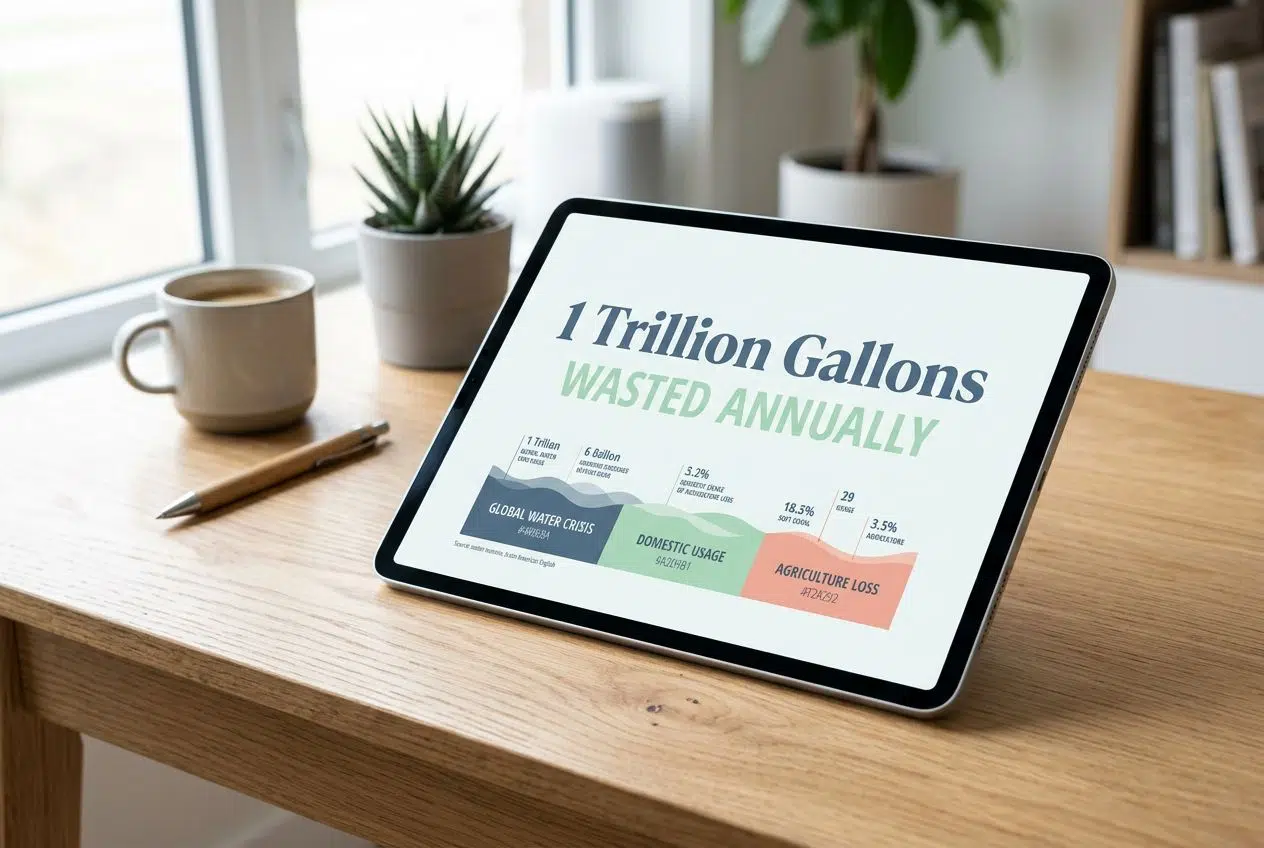
Have you ever turned on the tap and waited for water that just trickles out? You might wonder why this happens so often in your city. Maybe you have noticed leaking pipes or dirty water in your neighborhood. These daily frustrations make life harder for families across the country. Here is a surprising fact. The US Environmental Protection Agency notes that household leaks can waste nearly 1 trillion gallons of water nationwide every single year.
This wasted water costs money and makes clean resources even harder to find. I am going to show you exactly how smart water management in cities is fixing this problem. We will go over simple tips, real examples, and ways to protect our water supply together.
What is Smart Water Management?
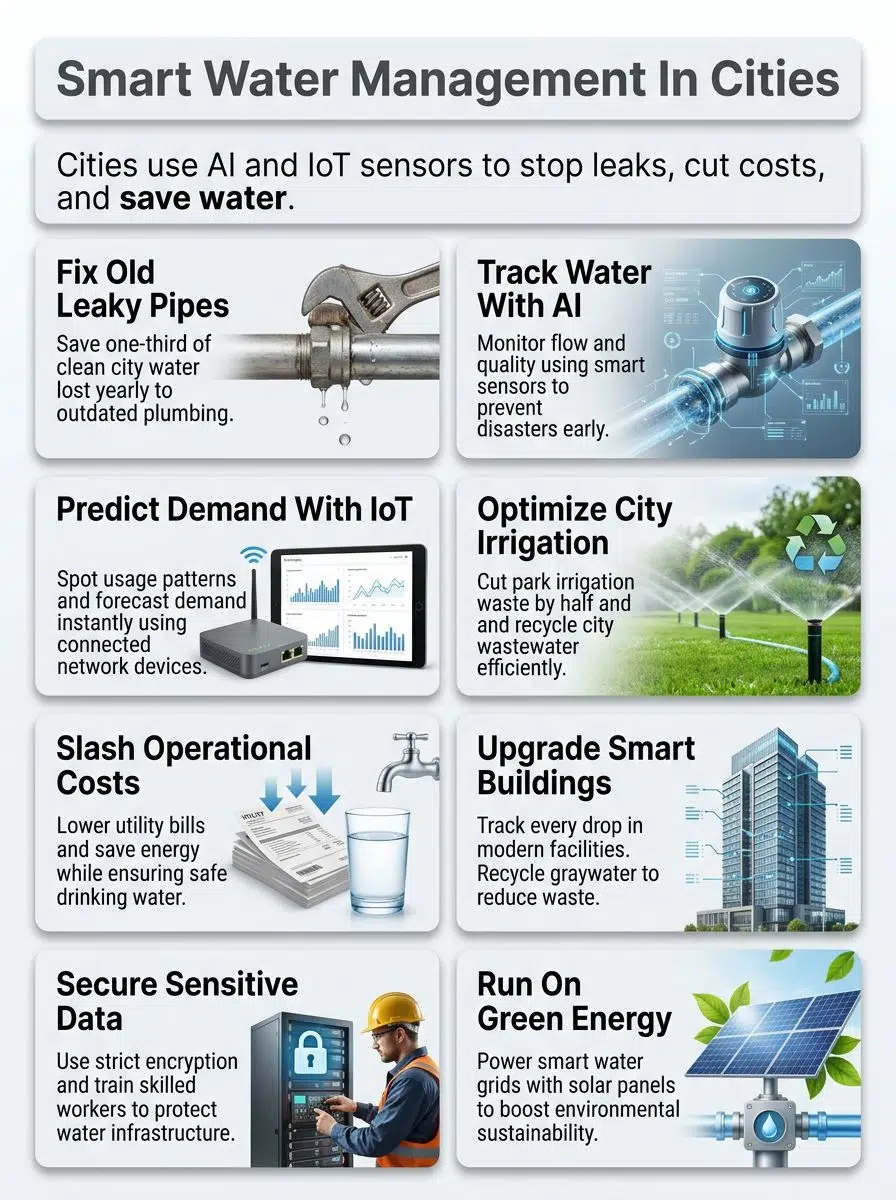
After exploring why water matters in cities, it is time to see how people use technology to help. Smart Water Management uses sensors, artificial intelligence, and data analytics to track water flow and quality in urban areas.
For example, many US cities now use comprehensive digital platforms like Xylem Vue. This system connects pipes, pumps, meters, and treatment plants with the Internet of Things, allowing utilities to spot leaks fast and monitor usage patterns.
Instead of guesswork, cities adjust distribution based on real needs. Let’s look at how this works in practice:
- Predicting Spikes: Machine learning helps predict demand spikes during hot summers or dry spells.
- Sharing Data: Cloud-based solutions let teams share reports instantly across departments.
- Fast Fixes: Engineers get alerts about problems before they become disasters, so they can fix issues quickly.
With automation at play, cities save both money and precious resources for a more sustainable future.
Importance of Smart Water Management in Cities
Cities grow fast, and their water needs change in a blink. Smart water management keeps taps running and streets safe, rain or shine.
Addressing water scarcity
Water scarcity pushes cities to get smart with water use. Smart Water Management In Cities uses sensors and data analytics to track every drop, spotting waste, leaks, or overuse fast.
This helps city leaders make quick fixes and save more water for everyone. Systems like smart metering help people see their own water habits in real time, so they can adjust how much they use once they know where the water goes.
The Southern Nevada Water Authority (SNWA) is a great example of this in action. By using smart tools and regional rebate programs, they reduced the community’s water use to just 89 gallons per person per day in 2023.
That is a massive 58 percent decline since 2002, proving that these systems really work for water conservation. Resource management becomes easier when each home or business joins in on conservation efforts.
Mitigating climate change impacts
Smart Water Management helps cities stay strong against floods and droughts. Here is how modern technology tackles extreme weather:
- Real-Time Tracking: IoT sensors give live data, showing risky spots during heavy rain or long dry spells.
- Upgraded Infrastructure: Miami recently launched a massive flood mitigation program to install new, tech-enabled stormwater pump stations to protect vulnerable neighborhoods from rising sea levels.
- Cloud Platforms: Companies like OptiRTC offer cloud-based smart stormwater platforms that provide up to a 10x performance improvement over older, passive drainage systems.
AI tools spot patterns in weather and water usage, making demand forecasting easier and cutting waste fast. Rainwater harvesting systems collect more water during storms, keeping supplies steady while reducing stress on old pipes. Each step gives urban infrastructure the power to handle wild weather swings from climate change.
Enhancing urban sustainability
Cities need to use water wisely, and digital tools like consumption monitoring, automation, and IoT sensors help manage water better. These systems spot leaks fast, track trends in daily water demand, and cut waste before it drains resources dry.
A drop saved is a city improved. Safe reuse of wastewater keeps rivers cleaner and supports resource efficiency, too. A prime example is the Pure Water Los Angeles initiative. In late 2025, the city voted to nearly double its water recycling efforts at the Tillman Water Reclamation Plant to purify 45 million gallons of wastewater per day.
This will eventually produce enough drinking water for 500,000 people and allow the city to stop draining natural creeks that feed Mono Lake. Better planning with data analytics lets urban development meet future needs without straining supplies or raising costs sky-high.
Key Technologies in Smart Water Management
From sensors to clever software, new tools are changing how cities handle water.
Internet of Things (IoT)
Tiny sensors, called IoT devices, link water pumps, pipes, and meters to the internet. This smart setup tracks water use every second.
In Barcelona, over 19,500 sensors help cut leaks and monitor street cleaning. In the US, many cities use tools like Badger Meter’s ORION cellular endpoints.
These attach to standard water meters to send usage data over existing cellular networks, meaning cities do not have to build expensive new radio towers. Smart metering checks for slow drips or big bursts in real time, so fast alerts mean workers fix problems before they waste lots of water. Cities study this data to spot patterns, save money, and make sure people get clean water.
Artificial Intelligence (AI)
Artificial Intelligence, or AI, helps cities predict water demand and spot problems fast. For example, smart sensors send huge amounts of data to computers, and the system learns patterns to alert workers if a leak starts or pressure drops.
Tools like Fracta, an AI-driven leak prediction software, are becoming incredibly popular. By analyzing soil conditions, pipe age, and weather, Fracta can predict which specific water mains are most likely to break before they actually fail.
Teams fix issues more quickly with this information. AI also supports automated controls in water treatment plants, adjusting pumps and valves on its own to save energy and improve water quality.
Big Data and Analytics
AI may spot patterns, but big data and analytics handle the heavy lifting with numbers. Water sensors in cities send millions of data points every day, tracking water use, leaks, pressure changes, and sudden drops.
Here is how data analytics helps city managers:
- Real-Time Visibility: Operators see live information on water consumption, allowing fast fixes to problems before they grow.
- Smarter Forecasting: Analyzing past trends helps forecast water demand during heat waves or droughts.
- Massive Savings: Reports show that using advanced analytics tools cut water loss by up to 25 percent in several US cities.
With strong data analysis at their fingertips, city leaders improve efficiency and boost sustainability everywhere from busy downtowns to quiet neighborhoods.
Cloud-Based Solutions
Cloud-based solutions store water data online, making it easy to access from anywhere. City managers can monitor water supply systems in real time, even on their phones or laptops.
This cuts costs for urban infrastructure while keeping consumption monitoring simple. Major technology providers are also leading by example in this space.
“In 2024, Amazon Web Services (AWS) reported it achieved a global data center Water Usage Effectiveness of 0.15 liters per kilowatt-hour, a 40 percent improvement since 2021, pushing toward its goal to be ‘water positive’ by 2030.”
These smart tools use massive cloud computing power for better resource management. Updates happen fast, so problems like leaks get noticed right away.
LoRaWAN and Smart Sensor Networks
LoRaWAN lets smart sensors send water data very far, even through thick city walls. These sensors watch things you cannot see, like pipe leaks or sudden drops in water pressure.
They use little power and work for years on the same battery, which means cities do not need to replace them all the time. In Paris, over 2 million LoRaWAN devices help manage resources.
In the US, networks operated by companies like Senet are expanding rapidly. They provide the low-cost wireless backbone that allows these smart sensor networks to check water quality every minute and spot problems fast.
Data from these networks goes straight to cloud-based platforms where operators get easy-to-read alerts. This strong combo of real-time monitoring helps save millions of gallons each year.
Applications of Smart Water Management
There are some specific applications for smart water management in cities. By applying those, we can save both our money and time.
Real-time monitoring of water distribution
Sensors now track water flow and pressure, 24 hours a day. They watch for sudden drops or spikes in the system.
For instance, utilities often use SCADA (Supervisory Control and Data Acquisition) systems. These industrial control systems gather live data from remote locations to control pumps and valves automatically.
IoT devices send alerts straight to engineers if something looks odd, letting teams stop problems before they spread. Data analytics help pinpoint areas using more than usual, so operators act quickly. This keeps the whole network running smoothly, saves money on repairs, and boosts resource efficiency.
Smart irrigation systems
Smart irrigation systems use sensors and data analytics to control water flow. These systems measure soil moisture, weather, and plant needs.
Water flows only when needed, cutting waste by up to 50 percent in some cities like Los Angeles. Products like the Rachio 3 Smart Sprinkler Controller are now widely used in public parks and commercial spaces.
By automatically adjusting watering schedules based on hyper-local weather forecasts, these controllers ensure landscapes get exactly the water they need and nothing more. Connected through the Internet of Things, these smart meters work around the clock. Maintenance teams get alerts right away if something breaks or leaks, so repairs happen fast.
Leak detection and prevention
Hidden leaks can drain city water supplies fast, leading to big losses and higher bills. IoT sensors help spot these leaks right away by sending live data from pipes and meters.
Here are the main ways cities find them:
- Acoustic Sensors: Companies like Echologics provide sensors that ‘listen’ to the pipes, identifying the distinct sound frequencies of escaping water.
- Automated Shut-offs: Water utilities use live data to close valves automatically before too much water escapes.
- Consumer Alerts: Residents get alerts if their usage jumps at odd hours, hinting at hidden drips behind walls or under floors.
Cities like Los Angeles save millions of gallons each year using these automated tools.
Wastewater treatment optimization
Smart Water Management in cities uses sensors to track water quality at every step. The system spots problems fast, like high chemical levels or blocked pipes, so that workers can fix them quickly.
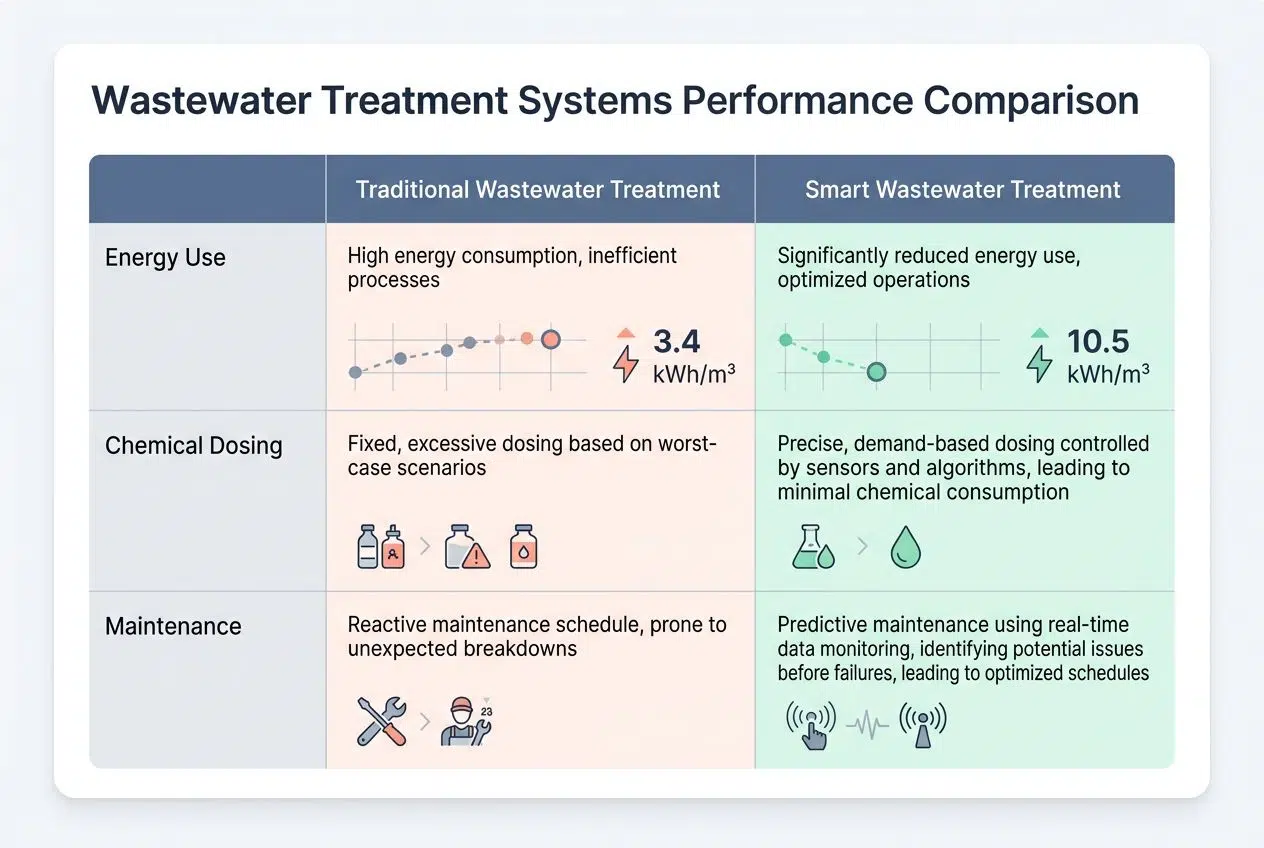
Data analytics makes the process smoother by adjusting treatment methods based on real-time needs. To understand the impact, let’s look at a quick comparison:
| Feature | Traditional Wastewater Treatment | Smart Wastewater Treatment |
|---|---|---|
| Energy Use | Pumps run constantly, wasting electricity. | AI adjusts pumps based on flow, saving up to 20% on energy. |
| Chemical Dosing | Fixed amounts based on estimates. | Automated sensors dose exact amounts needed, reducing chemical costs. |
| Maintenance | Reactive fixes after a breakdown. | Predictive alerts prevent failures before they happen. |
With these tools, plants clean more water for city reuse. Cities now recycle more wastewater into safe resources for parks or even drinking supply, making urban development cleaner and safer.
Benefits of Smart Water Management
The benefits of smart water management are many. It not only improves efficiency but also reduces operational costs and enhances water quality.
Improved water efficiency
Cities use data analytics and smart metering to track every drop. IoT sensors spot leaks fast, saving gallons that would slip away unnoticed.
The US EPA’s WaterSense program highlights the importance of this efficiency. According to the EPA, replacing old fixtures with WaterSense-labeled models and smart tech can save an average family $380 annually on water and energy costs.
Automated controls adjust flow based on real-time consumption monitoring. They match water demand with supply, avoiding overflow or shortage.
Reduced operational costs
Greater water efficiency often leads to lower bills and less waste. Smart Water Management cuts costs for cities by using automation, IoT devices, and data analytics.
“A 2024 report by the American Water Works Association found that financing for capital improvements is the number one challenge for utilities, with only 41 percent feeling fully able to cover their costs through rates.”
Smart tech is essential for keeping budgets in check without raising prices on consumers. Sensors spot leaks early, so repairs happen fast and avoid extra losses.
Energy use drops because pumps only run when needed. Big Data tools help forecast demand better, stopping overproduction or shortages, which saves money in both supplies and labor.
Enhanced water quality and safety
Smart sensors and quick data analytics spot harmful substances fast. Sensors can check pH, chlorine levels, or even bacteria in real time, so unsafe water rarely sneaks through the system.
This technology is crucial for complying with strict federal regulations, like the EPA’s Lead and Copper Rule Improvements (LCRI) finalized in late 2024. Smart testing allows cities to map out dangerous pipes faster and ensure lead levels stay well below the new, stricter limits.
Many systems update every few minutes, helping fix problems before people get sick. AI tools also help city teams predict where issues might pop up next week, maybe even next month.
Greater resilience to environmental challenges
Clean water boosts public health, but facing storms, droughts, and climate change needs more than safe pipes. IoT sensors spot flood risks fast, allowing city teams to act quickly to stop damage.
The recent Bipartisan Infrastructure Law set aside over $50 billion for water resilience, helping US cities install these very systems. This massive funding allows local governments to upgrade from old infrastructure to strong shields against floods or supply shocks.
Big data gives leaders a clear look at how much water people use every day. That means smart cities waste less and bounce back faster after tough weather hits.
Smart Water Management in Urban Infrastructure
How can we set up our smart water management system in urban infrastructure? Well, there are some ways we can do that.
Integration with smart buildings
Smart buildings use sensors and smart meters for water use. These tools track every drop, spotting leaks before they cause big problems or bills.
A building may send alerts straight to a phone or computer if pipes drip, saving water and money fast. In the US, buildings that integrate these advanced water systems can earn valuable points toward LEED (Leadership in Energy and Environmental Design) certification.
Achieving LEED status not only proves environmental responsibility but also significantly increases the property’s market value. New York’s Bank of America Tower started using rainwater collection back in 2010.
Now, it reuses up to 340,000 gallons each year just from the roof runoff alone! Smart controls help lower resource waste while boosting sustainability across urban infrastructure.
Solutions for high-consumption industries
Factories, data centers, and power plants use a lot of water every day. IoT sensors track water usage in real time and spot leaks fast.
Major tech companies operating huge data centers, like Google, are now pledging to use recycled wastewater or industrial water for their cooling towers instead of pulling from local drinking supplies. This single shift can save millions of gallons of fresh water per facility.
Smart metering helps cut waste by showing clear data to managers. Automated controls adjust flow based on actual demand, not just guesses.
Flood management and disaster preparedness
Smart water management uses data analytics and IoT devices to spot flood risks in real time. Sensors track rainfall, river levels, and stormwater flow across urban infrastructure.
During a storm, these systems help in a few critical ways:
- Early Warnings: Fast alerts help city teams act quickly during heavy rains or rising water.
- Automated Pumping: Automation pumps out extra water from flooded streets before it becomes a big problem.
- Mobile Access: Cloud-based systems let emergency crews view updates right on their phones or tablets.
With smart metering in place, cities adjust resource management fast in disaster zones, making sure response is safe and quick for everyone nearby.
Challenges in Implementing Smart Water Management Systems
Every improvement comes with challenges; we just have to find out how to solve and overcome the problem. There are some specific challenges we can mention.
High initial costs
Smart water management in cities needs smart meters, sensors, and computer systems. Installing them is expensive at first, and cities may spend millions on new water infrastructure before seeing savings.
The American Society of Civil Engineers (ASCE) 2025 report card highlights a massive infrastructure investment gap, noting that the US needs to spend billions just to maintain basic water services, let alone upgrade to smart tech. Many people worry about high upfront prices for IoT devices or data analytics software.
Even so, new technology often pays off over time by saving water, cutting waste, and reducing maintenance bills down the road. Some city leaders compare it to buying a sturdy umbrella before a rainstorm; you feel the pinch only once, but stay dry much longer!
Data security and privacy concerns
Cities collect huge amounts of data using IoT, smart metering, and cloud systems. Hackers may target this information for theft or misuse.
Sensitive details about water demand, consumption monitoring, and resource management need heavy protection. The Cybersecurity and Infrastructure Security Agency (CISA) frequently issues warnings about vulnerabilities in municipal water systems.
They stress that utilities must implement multi-factor authentication and update outdated software to prevent remote access attacks. City agencies must use strong passwords, encrypted networks, and regular checks.
Need for skilled workforce and training
Concerns about data security highlight one big challenge, but the skill gap is another hurdle. Smart Water Management in cities demands trained workers who can handle IoT devices, data analytics tools, and cloud-based platforms.
The water industry is facing what experts call a ‘Silver Tsunami’, where a massive portion of experienced operators are reaching retirement age. Replacing them requires specific new skills:
- Digital Networking: Hiring tech-savvy teams with hands-on experience in computer networks, not just traditional plumbing.
- System Monitoring: Workers must learn to read smart metering systems or react to sensor network alerts in real time.
- Software Management: Training must cover automation software and cybersecurity for water infrastructure.
Without this skilled workforce, even the smartest technology may sit idle like a car with no driver.
Case Studies of Smart Water Management
By doing our thorough research, we did some case studies of water management smart.
Successful implementation in smart cities
See how real cities use smart ideas to solve big water challenges. Singapore uses smart water sensors and AI to track every drop.
Tokyo upgraded its network with IoT technology, cutting down leaks by nearly 98 percent in some areas. In the US, Houston has been rolling out an extensive smart water meter project to over 500,000 customers.
This system drastically reduces estimated billing errors, ensuring residents only pay for exactly what they use. In Los Angeles, data-driven dashboards help workers see problems early, saving both money and water daily.
This teamwork keeps modern urban infrastructure strong against climate change impacts while helping people trust their water supply every day.
Innovative projects in water-scarce regions
Cities like Cape Town use smart metering to track every drop of water. Israel has turned desert land into green farms using drip irrigation powered by data analytics and automated controls.
In 2021, São Paulo cut its water loss by more than 30 percent with big data tools that find hidden leaks. In the US, Phoenix, Arizona, is a standout example.
Facing severe drought conditions, Phoenix uses smart technology to manage its supply from the Colorado River. They heavily promote smart irrigation controllers that have helped the city use less water today than it did in 1990, despite massive population growth.
Smart Water Management projects bring hope for urban sustainability and better water conservation, even where rain is rare.
Future Trends: Integration with renewable energy systems
Solar panels and wind turbines now help power smart water pumps, meters, and treatment plants. Cities use green energy to lower carbon footprints while saving on bills.
For example, many US water districts are now installing floating solar panel arrays directly on top of their drinking water reservoirs. This ingenious setup generates clean electricity to run the treatment plant while simultaneously shading the water to prevent evaporation and algae growth.
Grid-connected batteries store renewable energy for later use during peak hours or outages. This means smart irrigation systems can run at night using stored solar power from the day before.
Advancements in AI-driven water solutions
AI is making water systems much smarter. In cities, data analytics and automation help spot leaks fast and even predict future problems before they happen.
A major trend is the creation of Digital Twins by companies like Bentley Systems. Here is how they are changing the game:
- Virtual Simulation: A digital twin is a virtual replica of a city’s entire water network.
- Risk-Free Testing: Engineers can simulate storm scenarios safely on a computer before spending a single dollar on construction.
- Predictive Maintenance: AI tools guide city workers on where repairs are needed most, saving time and money.
These smart moves boost resource management while keeping urban development healthy and safe for people living there.
Expansion of smart water grids globally
Smart water grids are popping up in cities all over the world. Places like Singapore, Barcelona, and Los Angeles use smart sensors and data analytics to track water supply around the clock.
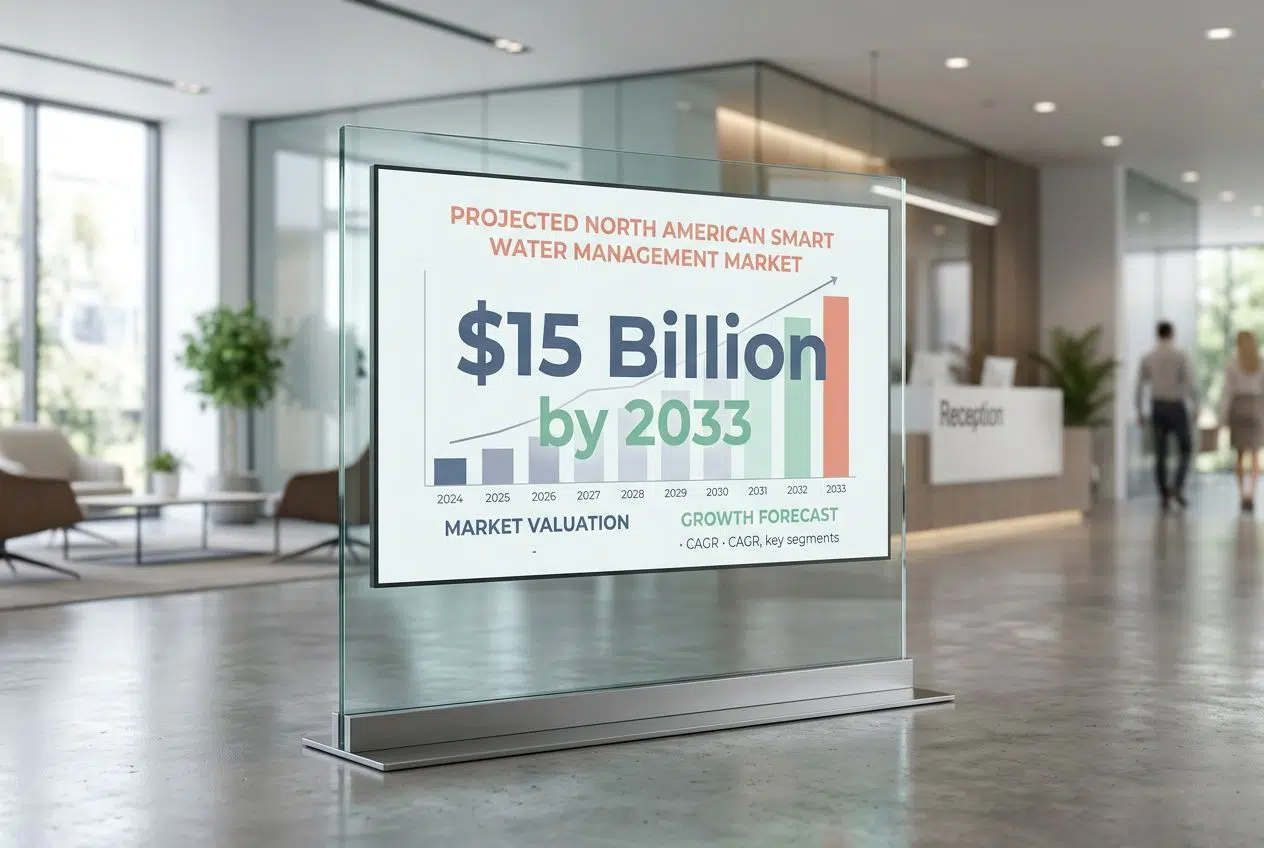
These systems help find leaks fast, save water, and lower costs for everyone. The North American smart water management market is projected to explode, expected to reach over $15 billion by 2033.
Smart water grids help manage demand during heatwaves or heavy storms, supporting clean drinking water for millions of people each day. With new technology spreading quickly, more communities now use smart solutions to keep their water safe and reliable.
Wrapping Up
Cities now face real pressure on water resources. Growing populations, climate change, and outdated urban infrastructure make things tricky for everyone. IoT networks, automation tools, and data analytics step in as smart helpers to overcome these hurdles. For example, with smart metering and resource management tools, cities can track water demand hour by hour.
Fast leak detection saves gallons every single day. Data-driven systems boost efficiency improvement so pipes last longer and less water gets wasted. These solutions bring fresh hope for environmental sustainability while powering better planning in both homes and businesses.
The push for smart water management in cities continues to gather steam across the globe, one drop at a time!