You try every SEO tactic in the book. Yet, your brand barely shows up in AI results or chatbots. You post and tweak your content, but you still wonder if anyone even sees it. Here’s a fact: Search engines are not alone anymore. Large Language Models like ChatGPT now play a big part in how people find answers online. “Share of Model” is the new SEO metric that tracks how much space your brand takes up inside these smart tools.
In this guide, you’ll learn what “Share Of Model” means, why it matters for your business, and simple ways to measure it fast. Want to make sure AI puts your brand front and center? I’m going to walk you through the exact steps I use, and I think you’ll be surprised at how easy it can be. Let’s go through it together.
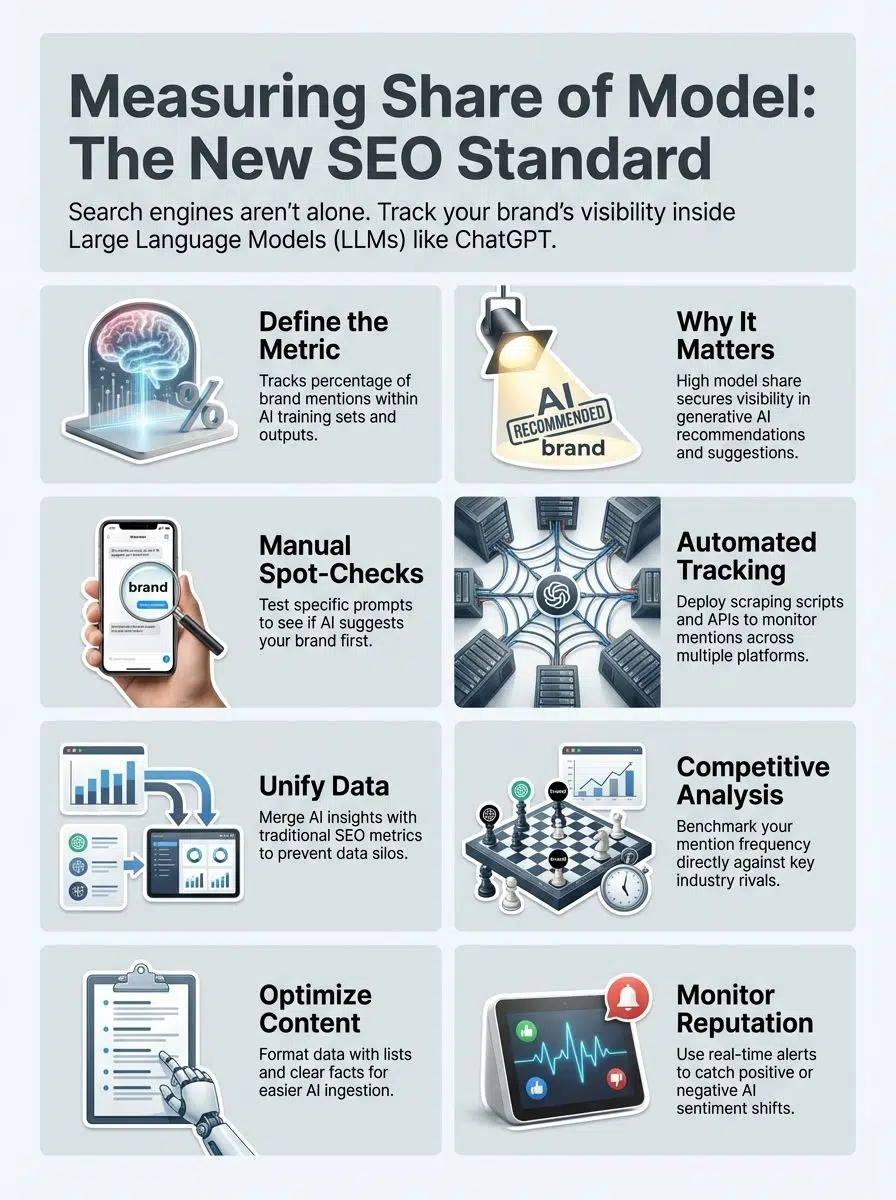
Brands now face a new challenge. Large Language Models, or LLMs, often pick answers from many sources online. “Share of Model” shows how much space your brand takes up inside these AI tools.
Think of it as the AI version of “market share.” If you ask ChatGPT for the “best running shoes” ten times, and it recommends your brand in one of those answers, you have a 10% Share of Model.
This metric helps you see if your content matters to machines, not just people typing into search engines. It’s like checking if AI remembers your brand name at the party instead of only asking guests who saw your invitation. Next, we’ll discuss the impact this has for anyone doing digital marketing and SEO with AI-driven strategies.
Share of Model can change how brands reach people online. Think of it as grabbing a bigger slice of attention in AI search results, not just chasing old-school rankings.
Impact on Generative AI Applications
Generative AI tools, like large language models, use vast pools of online content to answer questions and give suggestions. If your brand’s material appears often in these results, it means your “Share of Model” is high.
This shift is massive. According to a 2024 prediction by Gartner:
“Traditional search engine volume will drop 25% by 2026, with search marketing losing market share to AI chatbots and other virtual agents.”
This data shows that relying solely on Google rankings is a risky bet. Brands with higher model shares get more visibility from AI-driven suggestions. This can boost engagement rates and web traffic. “AI recommendations shape what people find,” says digital marketing leader Maya Lee.
A strong presence in generative outputs helps a brand stay ahead in search engine optimization and digital marketing. It lets you spot which keywords or topics are working for you inside AI applications, not just on search engines. The wider your reach inside these systems, the better chance people will notice your brand before others do theirs.
Enhancing Brand Visibility with AI Strategies
Large Language Models scan billions of pages every day. Tools like ChatGPT, Google Gemini, and Perplexity can mention brands in search results or answers, boosting brand visibility almost overnight.
To win here, you need to understand Generative Engine Optimization (GEO). This is the art of optimizing content specifically for AI. Unlike traditional SEO, which focuses on keywords, GEO focuses on “entities” and authority.
- Be the Authority: AI trusts sources like Wikipedia, Crunchbase, and highly-cited industry reports.
- Direct Answers: Content that directly answers “who,” “what,” and “how” questions is more likely to be picked up.
- Citations Matter: Being mentioned by other sites the AI already trusts helps you get “cited” in the final answer.
Brands that use smart content strategies reach more people because AI picks up new data quickly and features it in search engines.
AI marketing turns customer questions into traffic by matching queries with your brand’s best answers, products, or services. Combining SEO techniques with data analytics helps brands climb keyword rankings faster while monitoring what competitors do online. Up next is learning the best ways to measure “Share of Model” using simple approaches and clear methods.
Smart tools help track how often brands show up in AI results. Clear data lets teams see if their name pops up more than others, pushing them ahead of the pack.
Fundamental Approaches and Methodologies
To measure “Share of Model,” start by tracking how often your brand appears in responses from large language models, like ChatGPT or Google Gemini. Spot-check AI-generated answers using key questions tied to your business.
You need to create a “Golden Set” of prompts. These are the specific questions your customers ask, split into two types:
- Solution Queries: “What is the best CRM for small businesses?” (You want to be recommended here).
- Branded Queries: “What are the pros and cons of [Your Brand]?” (You want accurate, positive info here).
For example, ask an LLM which is the best sports shoe brand and tally if your name pops up first, last, or not at all. Tag these mentions over time for trend analysis.
Many brands now use scraping tools and custom scripts to collect this data daily or weekly across multiple platforms. Some even build APIs that pull results from chatbots for easier metrics gathering.
As one expert said,
“If you’re not showing up where the bots are talking, you’re invisible online.”
Manual checks help catch early shifts in share before competitors do. Regular measurement lets marketers spot gaps in AI visibility fast and adjust their content strategy on the fly.
Effective Data Collection Strategies
Start by gathering data from actual user queries in large language models. Track which brands appear most often as answers to popular questions. Use tools that monitor traffic analysis, keyword ranking, and online engagement within generative AI platforms like ChatGPT or Google SGE.
While manual checking works for small tests, professionals use specialized software to track this at scale:
| Tool Name | Best Used For | Key Feature |
|---|---|---|
| Authoritas | Comprehensive Tracking | Has a dedicated “Brand Analyser” for ChatGPT and Perplexity. |
| Semrush | Competitor Analysis | The “Semrush Enterprise AIO” tracks your AI visibility score vs rivals. |
| Custom Python Scripts | DIY Monitoring | Developers use LangChain to automate prompt testing. |
Scripted audits and APIs help you pull mentions across multiple systems without missing a beat. Check different AI-generated answers for accuracy. Combine insights from web analytics, search engine optimization dashboards, and direct brand name spotting through digital metrics software.
Brands can measure their share of model with real-time scraping tools or specialized databases built for competitive analysis in SEO performance. Mix automated reporting with human review for the sharpest picture of market share and content strategy impact.
Cracking this measurement nut can feel like herding cats, yet it’s doable with the right tools. Smart thinking and clever systems help you make sense of scattered data fast.

Addressing Limitations of Existing Analytical Tools
Current analytical tools for SEO face big roadblocks with new AI metrics. Many struggle to keep up with Large Language Models or track new signals like Share of Model.
One major issue is Non-Determinism. This means that even if you ask an AI the exact same question twice, it might give you different answers. A pro-tip from the r/TechSEO community is to run every test prompt at least 5 times and average the results to get a reliable score.
- Existing analytics platforms cannot always capture data from generative AI answers, so marketers miss key engagement numbers.
- Many tools focus on traditional website traffic or keyword ranking and do not measure how often brands appear in LLMs like ChatGPT or Google Gemini.
- Data silos block a clear view of market share, as each tool may only see one piece of the digital puzzle.
- Real-time tracking is rare; most analytics lag behind, so quick reactions to brand changes become tough.
- Standard engagement metrics ignore branded mentions inside conversational AI, which hides a chunk of brand visibility.
Metrics often do not show how well content performs in LLM outputs, making it hard to judge campaign success in AI-driven spaces.
Limited integrations between SEO tools and AI systems mean marketers must juggle many platforms just to get answers. User privacy updates and regulatory rules cut off access to some datasets, shrinking the pool for accurate measurement.
Few tools offer easy ways to benchmark against competitors within new AI results, putting brands at a disadvantage for competitive analysis. Constant changes in algorithm updates from search engines and LLM providers can make old metrics useless overnight, complicating performance measurement even more.
Solutions for Data Management Across Diverse AI Systems
Old tools miss key details in Large Language Model data. Handling AI models for SEO Performance gets tricky, since each system often stores information in its own way. Using cloud-based tools can help organize this chaos.
For example, platforms such as Snowflake and Databricks pull from many sources, so you see all your Digital Marketing metrics together. Built-in security keeps brand visibility and engagement numbers safe.
APIs connect different AI systems fast, cutting manual work and errors out of the picture. Tagging keywords or campaign names across every workflow keeps traffic analysis smooth and clear.
Learn to map fields so competitive analysis stays sharp, no matter where data starts its journey. Smart dashboards show Share Of Model changes in real time; now teams spot problems before small leaks turn into floods.
Small changes in your data can pack a big punch for marketing strategies. Use these signals to stay one step ahead, keeping campaigns fresh and results sharp.
Improving Campaign Planning Through Data
Good data helps teams plan better digital marketing campaigns. Marketers use “Share of Model” numbers to see which brands rank high in large language models like ChatGPT or Google Gemini.
This way, teams spot what works right now and change their strategy fast if needed. A company might notice its share is 12 percent while a top rival holds 22 percent, so it can adjust keywords or tweak content for higher AI engagement.
Better planning leads to smarter spending and stronger results with each campaign. Brands that watch their analytics fine-tune messaging quicker and target the best channels faster. Data-driven plans keep SEO performance sharp and help boost brand visibility before rivals do.
Competitive Benchmarking and Market Analysis
Strong campaign data forms a springboard for checking your brand against others. This next step uses competitive benchmarking to stack up your “Share of Model” alongside rival brands, showing who is leading in digital marketing and search engine optimization.
Major players like Google often use share-of-voice models as standard practice, but large language models add a new twist to this approach.

| Metric | Share of Search (Traditional) | Share of Model (AI Era) |
|---|---|---|
| What it Measures | How often do people search for you? | How often does AI recommend you? |
| Primary Goal | Ranking #1 on Google. | Being the “cited source” in an answer. |
| Key Driver | Keywords and Backlinks. | Entity Authority and Context. |
Brands now rely on metrics from AI tools to weigh their own visibility and monitor how much space they take up in online conversations compared to the competition. For example, tracking mentions or keyword rankings across LLM-powered platforms shows shifts in market share or web traffic almost daily.
Quick shifts may signal that you need stronger campaigns, while steady gains point to smart strategies at work.
Monitoring Brand Reputation in Real Time
Brands can watch their reputation shift in real time with “Share of Model.” This metric shows how often large language models like ChatGPT or Google Gemini mention a brand, product, or service.
For example, if people ask AI about running shoes and your brand pops up more than others, you have a strong share. Changes here show how your digital marketing or SEO efforts work right away.
Quick alerts from new data let teams spot both praise and bad buzz as soon as they happen. Brands can then act fast during online trends or viral moments to keep their image positive. Up next is how marketers use this live data for better campaign planning and deeper market analysis.
New paths are opening fast for “Share of Model,” so stick around to see how these changes might shake up digital marketing next.
Creating Standards for Cross-Platform Use
Brands use so many channels. Each one has its own Large Language Model. Marketers need rules that work for all of them, like a playbook for sports. Consistent standards help measure SEO performance and market share, no matter the platform, be it search engines or social apps.
These guidelines make digital metrics clear and fair. One key standard emerging is the use of Schema.org markup. This code helps AI understand exactly what your content is about, making it easier for models to cite you correctly.
A shared model means smoother data analytics. It also helps compare web traffic or engagement across systems without confusion, kind of like using the same ruler in every classroom.
Brands can trust their competitive analysis if each tool plays by the same rules, boosting confidence in online engagement numbers everywhere they look.
Integrating Metrics into Comprehensive Marketing Frameworks
Mixing “Share of Model” data with classic marketing tools makes campaigns smarter and sharper. Marketers can see exactly how often their brand or product pops up in large language models compared to others. This means teams spot gaps, plan better keyword strategies, and push online engagement where it counts.
Reports blend real-time digital metrics from multiple channels: SEO performance, market share stats, web traffic numbers, the whole kit and caboodle. Teams then adjust content strategy on the fly.
These new insights slot right into big-picture planning for search engine optimization or AI marketing goals. Up next are changes in rules that shape digital marketing’s future game board.
Rules for AI Marketing and digital data change fast. In 2026, regulators in the US and Europe keep a close watch on Large Language Models. The EU’s Digital Services Act is now active, setting strict rules on data use and privacy.
Marketers must track changes to avoid fines or blocked campaigns. A common mistake is blocking AI bots (like GPTBot) via your robots.txt file to “protect” content. While this keeps your content private, it also destroys your Share of Model because the AI can no longer “see” or recommend you.
Brands using Share Of Model metrics need clear data policies. Always log where your traffic comes from, how you gather it, and who can access it. Simple checklists help teams meet Search Engine Optimization laws without headaches. Compliance keeps new SEO metrics safe, so your Competitive Analysis stays sharp as a tack.
You can spark new growth by acting on clear insights from this metric. Use fresh ideas to catch AI’s eye and leave your rivals blinking in the dust.
Tailoring Content for Optimal AI Engagement
Content made for AI models needs to match how those models learn and select answers. Short sentences, clear points, and smart use of keywords boost your score in search engine optimization tools powered by AI or Large Language Models.
Google’s AI systems value freshness, accuracy, and usefulness; keep facts up-to-date and focus on what people ask most. Specifically, you should optimize for Information Gain, adding unique data or perspectives that no other site has.
- Use Lists: AI tools love bullet points because they are easy to parse and summarize.
- Add Data: Include specific numbers and stats. AI often prioritizes content that contains hard data.
- Entity Linking: Mention other clear entities (famous people, places, brands) to help the AI understand the context.
Pepper in the top questions users type into engines like Bing Chat or Google SGE. Careful word choice makes content pop out during traffic analysis and increases online engagement rates across digital platforms.
Leveraging Insights for Enhanced Campaign Performance
Use “Share of Model” data to spot which keywords and topics get the most traction in large language models. This helps focus your digital marketing where it counts. If your brand pops up more often than rivals in AI responses, you are winning at engagement and gaining greater market share fast.
Brands can track new patterns, like how many times their name or products show up in generative AI chats. These insights power smarter SEO moves, sharper campaign tweaks, and stronger performance measurement.
Marketers quickly adjust content strategies to match real user searches as they happen through LLMs such as ChatGPT or Gemini. Better campaign planning comes next with these data-driven steps.
Final Thoughts
Tracking “Share Of Model” reshapes how brands see Search Engine Optimization and AI marketing. You learned how to measure it, use simple data steps, and boost brand visibility with smart moves.
This new metric makes campaign planning clearer and helps you spot where your brand stands in the growing world of Large Language Models. Tools might need tweaking, but starting is easy and worth it.
Jump into these strategies today, watch your online engagement climb, and let curiosity lead you to explore more as digital marketing keeps changing. After all, every big change starts small!