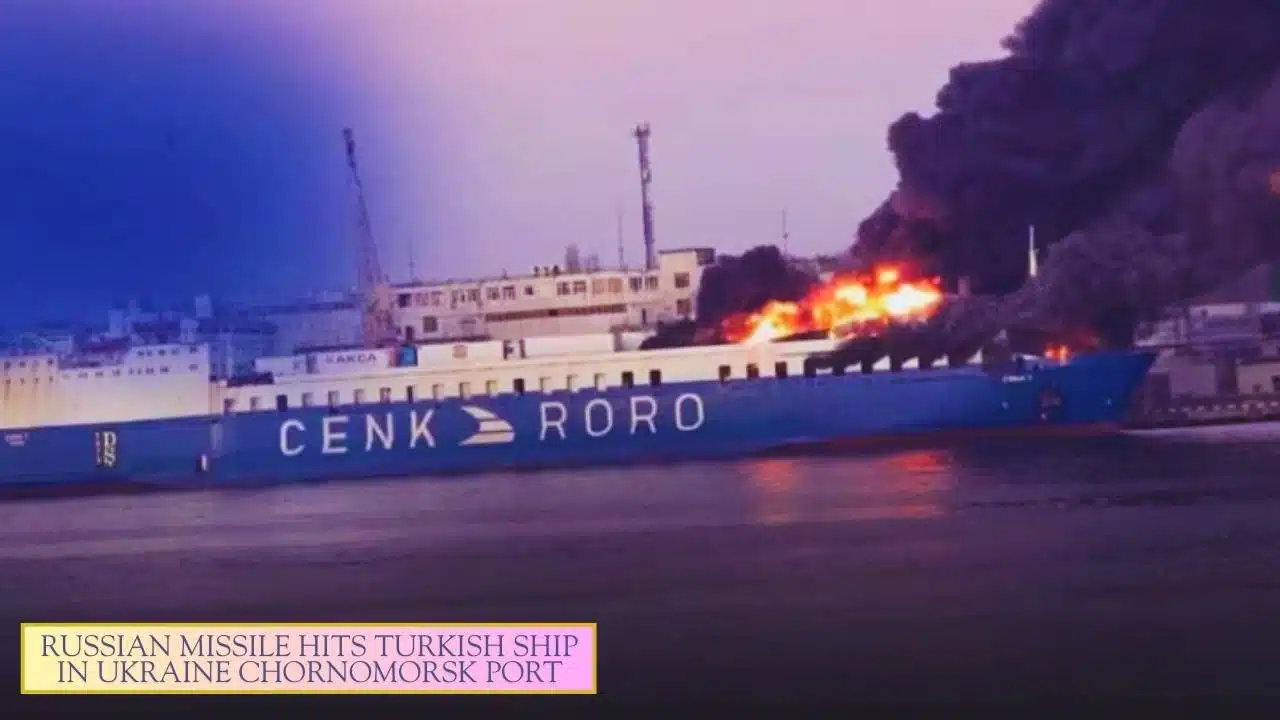
A Turkish owned cargo vessel erupted in flames at Ukraine’s bustling Chornomorsk port on Friday afternoon, struck by a Russian missile and drone barrage that sent shockwaves through international shipping lanes. The attack, which unfolded around 4 p.m. local time, targeted the CENK T—a specialized roll-on/roll-off (ro-ro) ferry operated by Istanbul-based Cenk Shipping. This 140-meter-long ship, built in 2006 and flagged under Panama, had just completed docking maneuvers after a voyage loaded with essential food supplies, heavy trucks, and humanitarian cargo destined for Ukrainian distribution networks.
Eyewitness videos circulating on social media captured the chilling moment: a Russian-made Shahed-136 drone—known for its low-flying, kamikaze-style strikes—slammed directly into the vessel’s forward deck. Flames quickly engulfed the upper sections, producing thick black smoke visible for miles across the Black Sea coastline. Port emergency teams, including firefighters from Chornomorsk and support tugboats, sprang into action, battling the inferno for hours to prevent it from spreading to nearby docked ships or fuel depots. Cenk Shipping issued a swift update confirming all 12 crew members aboard escaped unharmed, though one port worker suffered injuries in a simultaneous strike on the adjacent Odesa port, highlighting the human toll amid the chaos.
Ukrainian President Volodymyr Zelenskyy wasted no time condemning the assault in a pointed evening address, labeling it as having “no military purpose whatsoever.” He framed the strike as stark evidence that Moscow remains disengaged from genuine diplomatic efforts, especially amid ongoing ceasefire discussions. Ukraine’s navy spokesperson elaborated to media outlets that the broader assault damaged three Turkish-owned vessels in total, employing a mix of high-precision ballistic missiles like the Iskander-M and swarms of Shahed drones against infrastructure at both Chornomorsk and Odesa ports. These facilities serve as critical lifelines for Ukraine’s economy, handling vast exports of grain, metals, and consumer goods that feed global markets—particularly in Africa and the Middle East, where disruptions have already driven up food prices.
Deputy Prime Minister Oleksiy Kuleba drove the point home, stating that Russia systematically targets civilian logistics and commercial shipping hubs. These are not accidental hits; they aim to choke Ukraine’s trade arteries and starve allied nations of vital supplies,” he explained. The pattern fits a months-long escalation: since mid-summer, Russian forces have hammered port infrastructure over 50 times, crippling export volumes by nearly 40% and forcing Ukraine to reroute shipments through riskier land corridors via Poland and Romania.
Diplomatic Fallout Escalates as Erdoğan Pushes for Black Sea Ceasefire
The timing of the CENK T strike amplified its diplomatic sting, occurring mere hours after Turkish President Recep Tayyip Erdoğan’s high-stakes face-to-face talks with Russian President Vladimir Putin on the sidelines of a summit in Turkmenistan. Erdoğan, leveraging Turkey’s unique position as a Black Sea NATO member and mediator in prior grain deals, urged Putin to enact a “limited ceasefire” specifically shielding ports, energy grids, and maritime routes from strikes. We cannot allow this cycle of destruction to jeopardize regional stability,” Erdoğan emphasized, pointing to Turkey’s heavy reliance on safe Black Sea trade for its own economy.
Turkey’s Foreign Ministry followed up with a forceful statement demanding an “urgent multilateral agreement” to guarantee maritime safety, suspend attacks on energy and port facilities, and de-escalate tensions before they spiral into a wider Black Sea crisis. Ankara has long played a pivotal role in Ukraine-Russia negotiations, brokering the now-defunct Black Sea Grain Initiative in 2022 that temporarily eased global food shortages. The ministry warned that renewed port assaults risk alienating neutral players like Turkey, potentially isolating Russia further as winter trade volumes peak. Turkish shipowners, already jittery from prior incidents, have begun rerouting vessels through the longer Bosphorus route, hiking insurance premiums by 25% and delaying deliveries across Europe and Asia.
This incident underscores deepening cracks in Russo-Turkish relations, strained by competing interests in Syria, energy pipelines like TurkStream, and drone sales—ironically, Shahed models partly assembled in Turkey before Western sanctions. Erdoğan’s outreach reflects Ankara’s pragmatic balancing act: maintaining economic ties with Moscow while bolstering NATO commitments and supporting Kyiv with Bayraktar drones.
Energy Infrastructure and Odesa Under Siege as Winter Looms
Compounding the port chaos, the CENK T attack synchronized with a relentless Russian drone swarm on Odesa’s energy infrastructure the previous night, plunging the city into darkness. The barrage zeroed in on a key DTEK substation—the 20th such facility in the Odesa region to sustain major damage since the invasion began. This state-owned energy giant reported outages affecting 90,000 households, schools, and hospitals, with frigid temperatures already dipping below freezing amplifying the hardship.
DTEK crews worked through the night, restoring power to 40,000 homes via mobile generators and backup grids, but experts estimate full repairs could stretch weeks or months due to scarce parts and ongoing threats. Odesa, Ukraine’s crown jewel for maritime commerce, processes over 70% of the nation’s grain exports and hosts vital repair yards for allied shipping. Zelenskyy highlighted this vulnerability in recent discussions with U.S. President Donald Trump, stressing the city’s role as a bulwark against economic collapse.
Russia’s intensified campaign against energy and ports aligns with seasonal tactics, aiming to maximize civilian suffering as winter sets in. Moscow last week issued explicit threats to “cut Ukraine off from the sea entirely,” retaliating for Kyiv’s innovative drone strikes on Russia-linked oil tankers in the Black Sea and even deep into the Caspian. These Ukrainian operations have slashed Russian oil exports by 15%, hitting revenues that fund the war effort. With over 500 drones launched in recent salvos, both sides now treat the Black Sea as a contested battlefield, where civilian vessels like the CENK T become unwilling pawns in a high-stakes game of attrition.