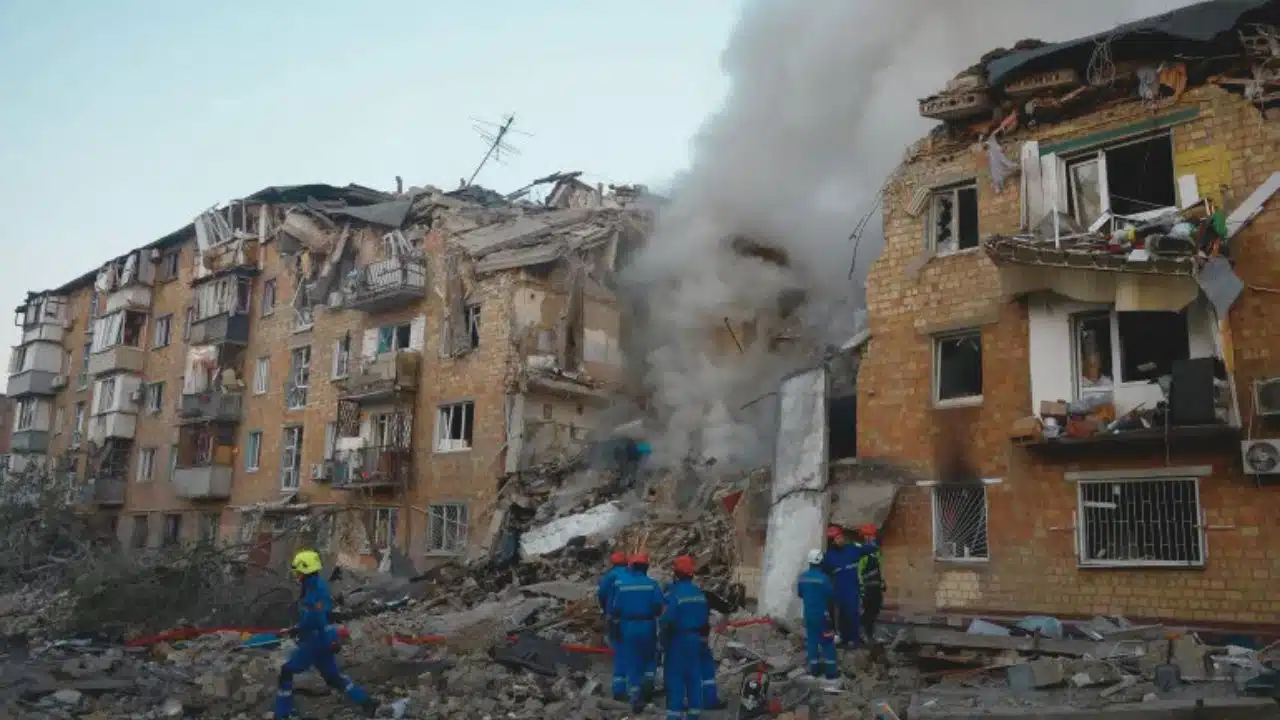
In a series of coordinated aerial attacks, Russian forces targeted residential buildings and key energy facilities across Ukraine, resulting in multiple casualties and widespread disruptions to power supplies.
The strikes, which occurred overnight into Sunday morning, have drawn sharp international condemnation as they hit non-military sites, exacerbating the humanitarian crisis in the ongoing conflict. Reports from Ukrainian officials indicate at least 12 people killed and over 50 injured, with damage assessments ongoing in several regions.
Timeline of the Assaults
The barrage began around 2 a.m. local time with a wave of missiles and drones striking the capital, Kyiv, and extending to central and southern provinces. Eyewitnesses in Kyiv described hearing explosions that shattered windows in apartment blocks, while in the Dnipropetrovsk region, a direct hit on a residential high-rise left several families trapped under rubble.
Ukrainian air defenses intercepted about 60% of the incoming projectiles, but those that penetrated caused significant havoc, particularly in urban areas where civilians were caught off guard during early morning hours. This marks the third major energy-targeted assault in the past month, signaling a deliberate strategy to cripple Ukraine’s infrastructure ahead of winter.
Impact on Civilians and Daily Life
The human toll has been devastating, with rescue teams pulling survivors from debris in Kyiv’s Podil district, where a multi-story apartment complex was partially destroyed. Among the confirmed fatalities are three children and several elderly residents, highlighting the indiscriminate nature of the strikes. Power outages affected over 200,000 households nationwide, forcing schools and hospitals to rely on backup generators and leaving residents without heating in sub-zero temperatures.
In Zaporizhzhia, a strike on a substation led to blackouts that halted water supplies, compounding the misery for those already displaced by the war. Local authorities have set up emergency shelters, but aid workers warn that prolonged blackouts could lead to a spike in hypothermia cases.
Energy Sector Under Siege
Russia’s focus on Ukraine’s power grid appears aimed at sowing chaos and weakening resolve, with key thermal plants in the Kharkiv and Odesa regions sustaining heavy damage. The assaults have knocked out approximately 15% of the country’s generating capacity, according to preliminary estimates from Ukraine’s energy ministry, raising fears of rolling blackouts that could persist for weeks.
Repair crews are working around the clock, but the repeated targeting of transformers and transmission lines has strained resources, forcing officials to implement scheduled cuts to conserve fuel for essential services. International partners, including the European Union, have pledged additional generators and fuel, but experts note that the grid’s vulnerability underscores the need for bolstered air defenses.
Official Reactions and International Response
Ukrainian President Volodymyr Zelenskyy condemned the strikes as “terrorist acts against civilians,” vowing retaliation and calling for more Western military aid during a late-night address. Russia’s Defense Ministry claimed the targets were legitimate military sites, dismissing casualty reports as exaggerated propaganda—a narrative swiftly rebutted by independent verification from the United Nations.
The U.S. State Department labeled the attacks “unprovoked aggression,” while NATO allies announced an emergency meeting to discuss enhanced support, including advanced missile defense systems. Human rights organizations like Amnesty International have urged an immediate investigation, citing potential war crimes given the civilian death toll. As the conflict enters its fourth year, these strikes serve as a grim reminder of the escalating stakes for both sides.