Ukraine’s intelligence chief says Russia plans a full Donbas seizure by 2026, while UN officials warn that intensified strikes—especially on energy systems—are pushing civilian casualties higher and deepening winter hardship across Ukraine.
What Ukraine’s intel chief said
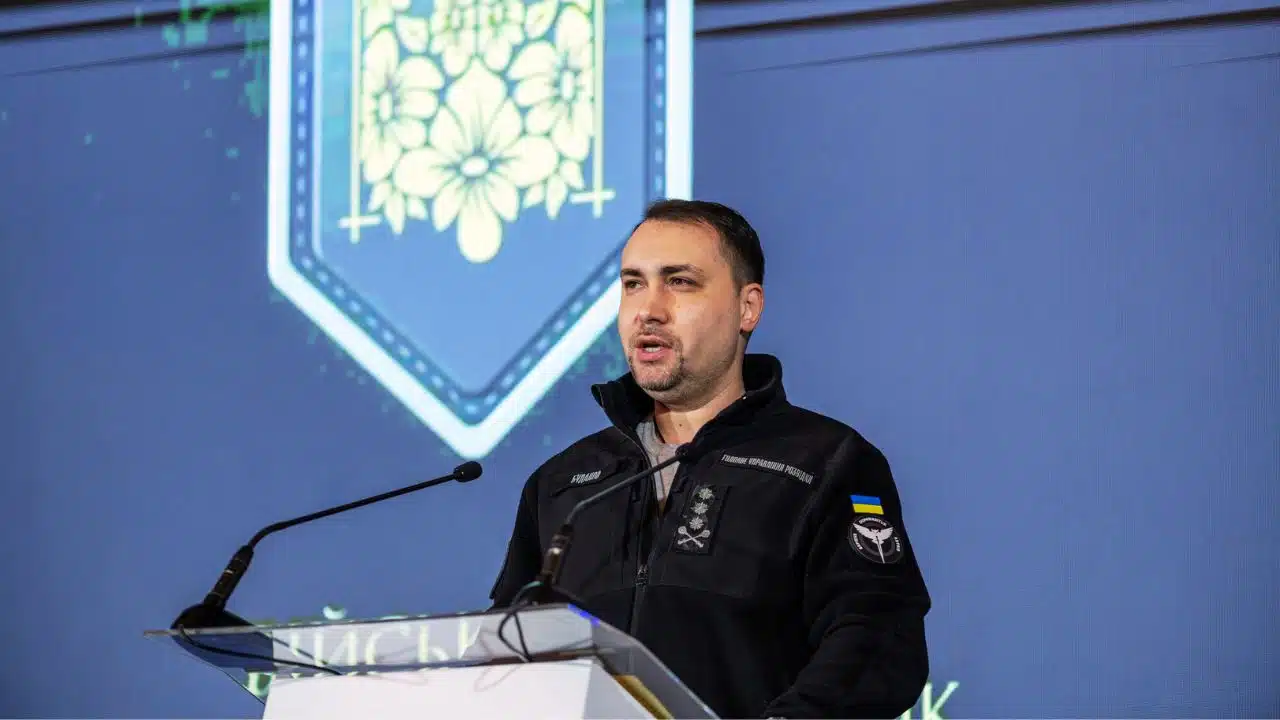
Ukraine’s military intelligence chief, Kyrylo Budanov, said in a late-December interview that Russian military planning for 2026 focuses on gaining full control of Donetsk Oblast, continuing operations in Zaporizhzhia and Kherson, and pushing as far as possible into Dnipropetrovsk Oblast.
Budanov also described a “buffer zone” concept along parts of the border as part of Russia’s operational thinking, framing it as a way to expand pressure beyond the current line of contact.
He said Moscow’s personnel plan for 2026 includes recruiting about 409,000 additional troops, after a 2025 target of about 403,000 was reportedly met early in December.
While Budanov presented these goals as derived from Russian military planning assessed by Ukrainian intelligence, he also argued that sustaining such war aims requires heavy national spending that can strain long-term growth.
At the same time, he cautioned that economic pressure does not necessarily translate into immediate battlefield effects, meaning Russia may still be able to keep up operational tempo in the near term.
How the battlefield context fits the warning
Independent conflict monitoring in 2025 continued to describe Russian efforts in eastern Ukraine as centered on expanding control in Donetsk and pressing toward key defensive belts, consistent with long-running Russian objectives in the region.
A late-year assessment tracking the war said Russia’s operational emphasis includes capturing the entirety of Donetsk Oblast and potentially advancing into adjacent areas such as Dnipropetrovsk.
Event data monitoring also suggested the pace of Russian territorial gains accelerated during much of 2025 compared with 2024, with hundreds of locations reportedly changing hands across multiple regions.
One 2025 situation update stated Russian forces claimed more than 190 distinct settlements in the first 11 months of 2025—about 40% more than the same period in 2024—though gains were not limited to Donetsk alone.
That same update linked some Russian advances outside Donetsk to Ukraine’s manpower constraints and shifting force posture following earlier developments along the border.
Russia’s stated/assessed 2026 objectives (as described by Ukrainian intelligence)
| Area/Objective | What Budanov said Russia aims to do in 2026 | Why it matters for the war |
| Donetsk (Donbas) | Seek full control over Donetsk Oblast. | Would pressure Ukraine’s remaining major defensive belt cities and logistics in the east. |
| Zaporizhzhia | Continue operations and pursue broader control objectives. | Keeps pressure on the south and supports Russia’s wider territorial demands. |
| Kherson | Continue operations. | Sustains threats along the Dnipro axis and forces Ukraine to allocate resources. |
| Dnipropetrovsk | Push “as far as possible” into the region. | Expands the war’s footprint and could threaten major rear-area hubs. |
| “Buffer zones” | Expand “sanitary/buffer” zones along the border. | Could widen fighting geographically and increase civilian exposure near border communities. |
Manpower and war sustainability signals
Budanov said Russia’s recruitment model continues to rely heavily on contract-style enlistment, supported by financial incentives that vary by region.
He presented the 2026 goal of roughly 409,000 recruits as achievable under current patterns, especially if incentives remain high.
Separately, UN briefings in December described 2025 as among the deadliest years for Ukrainian civilians since the full-scale invasion began in February 2022, underscoring that Russia’s ability to sustain operations has direct humanitarian consequences.
A UN Security Council briefing stated civilian casualties from January to November 2025 were 24% higher than the same period in 2024, as aerial attacks escalated.
Recruitment targets cited by Ukraine’s intelligence
| Year | Recruitment target mentioned by Budanov | Status described in reports |
| 2025 | 403,000 recruits. | Reported as met in early December. |
| 2026 | 409,000 recruits. | Described as Russia’s plan for next year. |
Civilian impact: UN warns of intensifying harm
In early December, the UN Human Rights Monitoring Mission in Ukraine described “almost daily attacks” and growing hardship as hostilities intensified, especially in frontline and urban areas.
The UN report said civilian casualties rose significantly between June and November 2025, with July marking the highest monthly level of deaths and injuries since April 2022.
It also documented how short-range drones, aerial bombs, and other munitions damaged homes and essential infrastructure, triggering new displacement from some frontline communities.
A separate UN Security Council briefing highlighted the risks of wintertime strikes on critical civilian systems, including energy and transport infrastructure, warning that millions could face disruptions to heating, water, and public services.
That briefing stated OHCHR had verified 14,775 civilian deaths (including 755 children) and 39,322 injuries (including 2,416 children) since February 2022, while stressing real figures are likely higher.
The same briefing described repeated large-scale missile and drone strikes in early December that left hundreds of thousands without power, illustrating how energy attacks can rapidly create humanitarian emergencies in freezing conditions.
The UN human-rights report said Russia carried out eight coordinated waves of missile and drone attacks against Ukraine’s energy system in October and November 2025, causing emergency outages and scheduled blackouts that could last up to 18 hours a day in some places.
It also described deteriorating conditions in parts of Russian-occupied eastern Ukraine, including rationed water access and rising pressure on residents tied to documentation and property measures.
Diplomacy, risks, and what comes next
UN officials urged de-escalation and renewed diplomacy, emphasizing that any settlement should uphold Ukraine’s sovereignty and territorial integrity within internationally recognized borders.
They also warned that attacks on civilians and civilian infrastructure—including energy infrastructure—are prohibited under international law and “must stop,” regardless of where they occur.
Against this backdrop, Budanov’s warning about a Russia plans full Donbas seizure by 2026 frames 2026 as a planning horizon rather than a guaranteed outcome, but it raises the stakes for Ukraine’s force generation, air defense, and infrastructure protection through the winter.
With UN reporting showing rising civilian harm and sustained pressure on power systems, the humanitarian situation may increasingly shape military resilience, economic stability, and political room for maneuver on both sides.
Final thoughts
Budanov’s assessment points to Donbas—especially Donetsk—as the center of gravity in Russia’s 2026 planning, with spillover pressure expected in Zaporizhzhia, Kherson, and potentially Dnipropetrovsk.
UN reporting, meanwhile, indicates the civilian cost is climbing as strikes intensify, particularly against energy infrastructure during winter.
The next months will likely hinge on manpower generation, air defense coverage, and the durability of critical services—because territorial objectives and civilian resilience are now tightly linked.