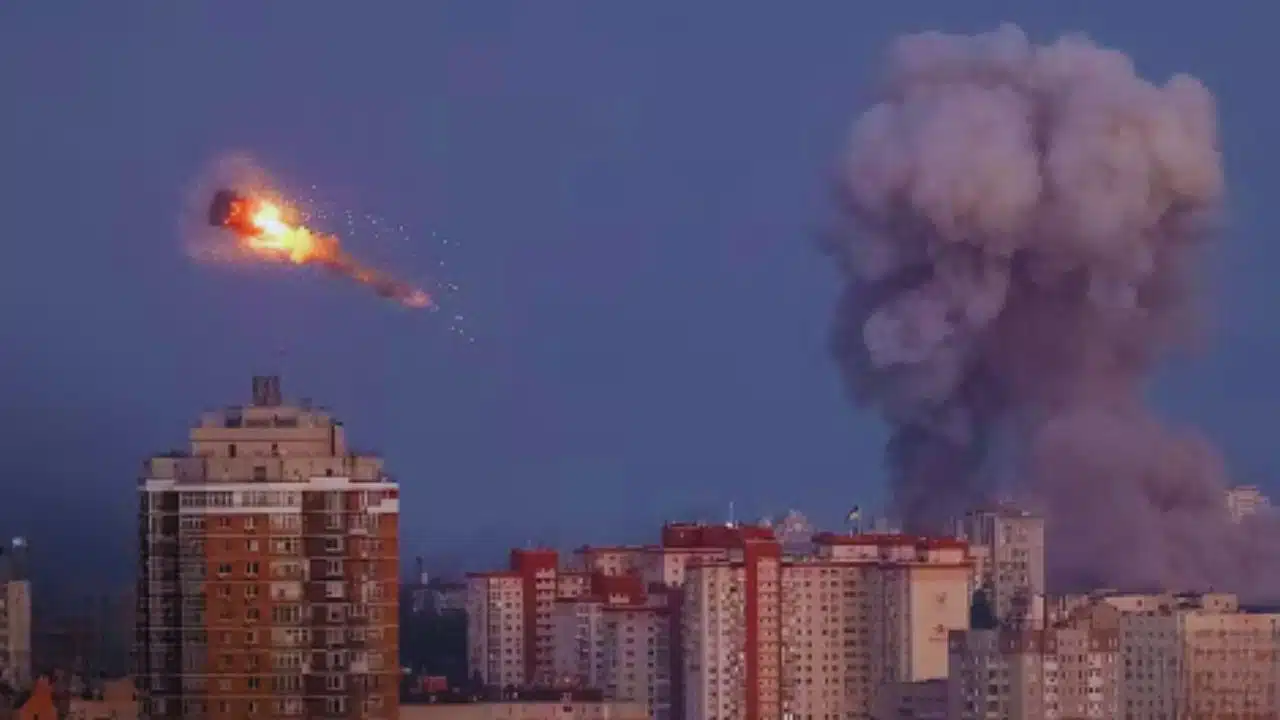
Russia has unleashed the biggest aerial attack of the war on Ukraine, firing over 800 drones and at least a dozen missiles in a coordinated overnight assault. Ukrainian officials said it was the largest wave of drones used in a single attack since the full-scale invasion began in February 2022.
The strikes were carried out in the early hours of Sunday, September 7, 2025, and targeted multiple Ukrainian cities including Kyiv, Odesa, Dnipro, Zaporizhzhia, Kryvyi Rih, Kharkiv, and Kremenchuk.
According to Ukraine’s Air Force, Russia deployed 805 Shahed one-way attack drones (also referred to as kamikaze drones or decoys), nine cruise missiles, and four ballistic missiles. Ukraine’s defenders managed to intercept and destroy about 747 drones and four of the cruise missiles, but the sheer scale of the assault meant that many projectiles still reached their targets.
Cabinet of Ministers Building in Kyiv Struck
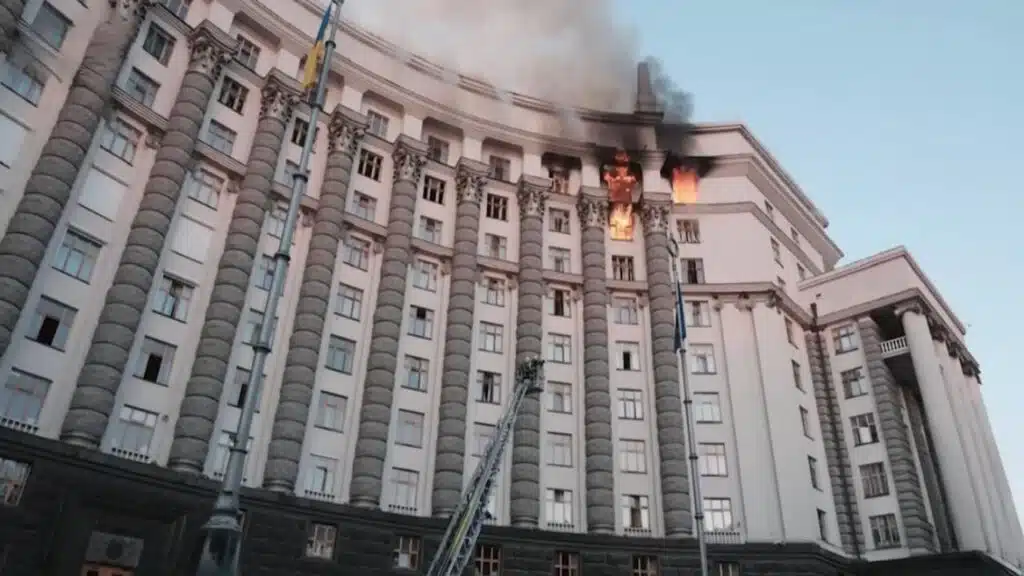
One of the most alarming aspects of this strike was that a government building in central Kyiv, home to Ukraine’s Cabinet of Ministers, was directly hit. This marked the first time during the war that a central government complex in the capital had been damaged.
Witnesses reported large plumes of smoke rising above the city center, and video footage confirmed extensive fire damage. Ukrainian officials described the strike as a serious escalation, suggesting that Russia was no longer only focused on energy and military infrastructure but was also testing the resilience of Ukraine’s state institutions.
Civilian Casualties and Widespread Damage
The overnight attack left at least four people dead, including a young mother and her three-month-old baby, according to emergency responders. Casualty numbers varied across regions, with local officials reporting between 20 and 44 people injured nationwide.
In addition to government buildings, the strikes caused severe destruction in residential neighborhoods. Two high-rise apartment blocks in Kyiv were damaged, forcing dozens of families to evacuate. Fires broke out in parts of Odesa and Dnipro, while power outages were reported in several central regions.
Rescue teams worked throughout the day, searching through the debris of damaged buildings and extinguishing blazes.
A Shift in Russia’s Military Tactics
This massive drone swarm demonstrates a change in Russia’s military strategy. Since early summer 2025, Moscow has increasingly relied on large-scale drone and missile barrages aimed at overwhelming Ukraine’s air defenses.
- The previous record attack came in July 2025, when Russia launched 539 drones in one night.
- Sunday’s assault was the seventh major strike since June involving over 400 drones each time.
- Analysts say Russia is seeking to drain Ukraine’s stock of air defense missiles and force Western allies to send more supplies at a time when Ukraine faces delays in military aid.
Russia has also renewed its focus on energy facilities, attempting to cripple Ukraine’s electricity grid ahead of the winter months. This tactic mirrors previous winter offensives designed to leave civilians without heat or power.
Ukraine Calls for More Air Defense Support
President Volodymyr Zelenskyy condemned the strikes as “an intentional campaign of terror” and urged Ukraine’s Western partners to urgently supply additional air defense systems.
Zelenskyy stressed that while Ukrainian forces successfully intercepted most of the drones, the volume of attacks is pushing Ukraine’s defenses to their limits. He warned that without faster deliveries of interceptor missiles and modern systems like Patriot and SAMP/T, Ukraine risks running out of the resources needed to protect its cities.
Foreign Minister Andriy Sybiha described Russia’s intensified bombardment, combined with its rejection of peace negotiations, as “the greatest cynicism.” He urged allies to cut off all remaining imports of Russian oil and gas, arguing that “the Russian war machine runs on fossil fuel revenues.”
U.S. and European Reactions
The attack drew immediate international condemnation.
- United States: President Donald Trump signaled that Washington is prepared to increase sanctions on Moscow, particularly focusing on oil and gas revenues. He said he expected Europe to take the lead in halting Russian crude and gas imports. U.S. Treasury Secretary Scott Bessent added that new measures could include secondary tariffs on countries still purchasing Russian oil, warning that coordinated sanctions could push Russia’s economy into “full collapse.”
- European Union: EU Council President António Costa said Russia’s actions showed it was “talking about peace while escalating bombings.” He urged member states to step up sanctions and military aid to Ukraine. However, divisions remain within the bloc. While many states back tougher restrictions, Hungary and Slovakia continue to resist a full embargo on Russian energy, citing their dependence on imports.
Ukraine’s Counter-Attacks
In response, Ukraine stepped up its own cross-border strikes on Russian infrastructure.
The Druzhba oil pipeline in Russia’s Bryansk region was reportedly attacked by Ukrainian drones, igniting fires and causing “comprehensive damage” to a dispatch station. This pipeline supplies oil to Hungary and Slovakia, both countries that have resisted cutting Russian imports.
Ukraine also launched strikes on an oil refinery in Bryansk, further targeting Russia’s energy sector. Ukrainian commanders said these operations were intended to weaken Russia’s ability to finance its war effort and retaliate against the attacks on Ukrainian energy facilities.
What This Means for the War
This record-breaking drone attack highlights several critical developments:
- Escalation of Targets – The strike on a government building in Kyiv indicates Russia is willing to directly target state institutions, not just infrastructure.
- Pressure on Air Defenses – Even though interception rates remain high, Ukraine risks depleting interceptor stockpiles, which could leave it exposed to future attacks.
- Energy Warfare – Both sides are now openly targeting each other’s oil and gas infrastructure, intensifying the economic dimension of the war.
- Global Stakes – The attack is pushing the U.S. and EU toward more coordinated sanctions, but energy dependencies could slow decisions in Europe.
- Winter Ahead – With winter approaching, these strikes raise fears of a humanitarian crisis if Ukraine’s power grid is further degraded.
The record drone and missile assault on Ukraine marks one of the most dangerous phases of the conflict so far. Russia’s escalation against government and civilian targets signals a hardening strategy, while Ukraine is urgently pleading for more air defense supplies from its Western allies.
At the same time, both Washington and Brussels are discussing how to choke off the revenues Moscow uses to finance its war, with the focus shifting toward oil and gas sanctions. The coming months will be critical—not only for Ukraine’s survival but for the global balance of energy, security, and diplomacy as the war grinds on.
The Information is Collected from BBc and ABC News.