Have you ever tried sending digital money, only to feel like the wait is absolutely endless? It is incredibly frustrating when fees skyrocket, and your simple payment gets stuck in a long digital line. Many of us notice these slow speeds and crowded networks. They make everyday digital tasks much harder than they need to be. Blockchains like Ethereum can often handle only about 15 to 20 transactions per second. This strict limit causes massive delays when thousands of users flood the system at once.
I am going to walk you through exactly how the rise of layer 2 solutions is changing the game for everyone. You will learn the specific tools that make blockchains faster, much cheaper, and ready for millions of new users. Grab a cup of coffee, and let us go through this process together.
What are the Blockchain Scalability Issues
Blockchains can get incredibly slow and crowded as more people try to use them. This high congestion makes transactions lag, leaves users waiting for confirmations, and aggressively pushes up network fees.
Limitations of Layer 1 Blockchains
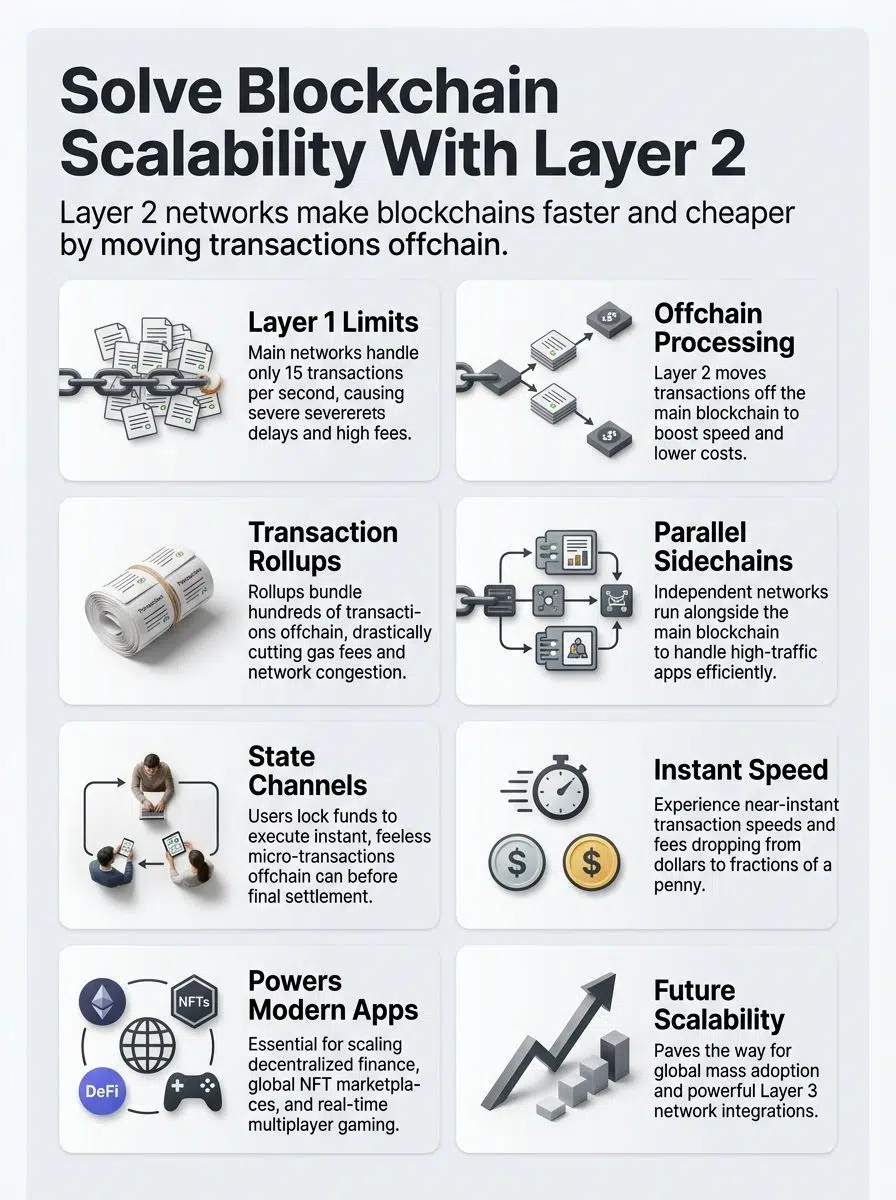
Layer 1 blockchains, like Bitcoin and Ethereum, process all transactions directly on their main network. This approach slows down the entire system as more users join the party. For example, Bitcoin can only handle about 7 transactions per second.
Ethereum is a bit faster but still manages only about 21 transactions per second, even after the massive 2025 network upgrades. As traffic grows, these networks get incredibly crowded. People then face long wait times and much higher fees.
Smart contracts also add heavy stress to these networks by running many complicated tasks at once. These strict limits make it hard for base chains to match massive payment processors like Visa. Visa comfortably handles over 24,000 transactions per second globally.
Many users complain about rising costs during busy periods. Back in May 2021, Ethereum gas fees spiked higher than $70 for a single simple transaction. We simply cannot reach mass adoption if we only rely on layer 1 blockchains.
The Need for Layer 2 Solutions
The main chain handles only a tiny number of transactions each second. This low throughput causes networks to clog up incredibly fast.
People end up paying much higher fees just so their payments go through quicker. Busy periods make this situation even worse for average users.
A simple currency swap or NFT purchase might cost tens of dollars during peak times. Even in early 2026, a basic Ethereum transfer averages around $0.44 on the main chain, which is far too expensive for a daily coffee purchase.
Users desperately want faster and cheaper payment methods that maintain strict security. Off-chain processing steps are right here. It takes a huge amount of work off the main blockchain, so it does not get too crowded for everyone else waiting in line.
What Are Layer 2 Solutions?
Layer 2 solutions help blockchains handle millions more transactions by moving some heavy activity away from the main network. They act like extra express lanes on a busy highway, speeding things up without changing the road itself.
Definition and Purpose
Layer 2 solutions work directly on top of main blockchains, like Ethereum. These systems help process thousands more transactions without changing the original base code.
They handle the heavy lifting off-chain. This ensures the main network does not get too crowded or painfully slow. Your fees drop drastically, and your speed goes up.
Think of Layer 2 as adding an express lane to a busy road, one developer explained during ETHGlobal Tokyo in April 2023.
Developers rely on these tools to boost scalability and daily performance. For instance, the US-based Coinbase exchange launched its own express lane called the Base network. By mid-2025, Base reached a historic milestone of 3.5 million daily active users simply because it made transactions fast and cheap.
Key Features of Layer 2 Solutions
Layer 2 solutions offer several massive upgrades for daily users. They sit directly on top of main networks and boost performance in a few specific ways.
A pro-tip I always share with new users is to check a gas tracking website before moving your funds. You still pay one initial fee to bridge your money to the new network, so timing that first move is crucial. Here are the main features you should know:
- Quicker processing: Speeds up the whole network, lowering your wait times from many minutes to just a few seconds.
- Lower fees: Sending coins or using smart contracts becomes much cheaper for everyone.
- Off-chain computation: Takes heavy work off the main blockchain, preventing high traffic jams.
- Tight security: Links directly back to Layer 1 protections, keeping your funds safe even if the secondary system faces trouble.
- App compatibility: Allows games, decentralized finance tools, and digital art markets to run much more smoothly.
- Bridges: Connect different networks so your assets travel between popular chains with ease.
Types of Layer 2 Solutions
Layer 2 options come in many distinct styles. Some focus completely on pure speed, while others aim for the absolute lowest fees or better system scaling.
Sidechains
Sidechains act as separate, parallel blockchains. They run right next to the main network, like Ethereum or Bitcoin. You can easily move digital coins from the main system to a sidechain for faster and cheaper trades.
Projects like Polygon support these networks to boost speed and deeply cut fees. Smart contracts on sidechains handle the vast majority of the work off-chain. This lightens the heavy load on the base blockchain.
Each sidechain controls its own rules and security setup. They often use different validation methods than the main chain. For example, Polygon PoS processes transactions for roughly $0.002 each.
Because of these tiny fractions of a cent, major US gaming studios heavily rely on sidechains. Large apps can function perfectly without raising costs or slowing down everyone else.
Rollups
Rollups bundle hundreds of specific blockchain transactions into one big group. They keep most of the heavy data off-chain, which speeds things up and cuts your costs.
Ethereum can only handle a few dozen transactions each second by itself. Rollups completely boost this number by letting thousands of people use the network at once. To make your choice easier, look at how the top networks compare in 2026:
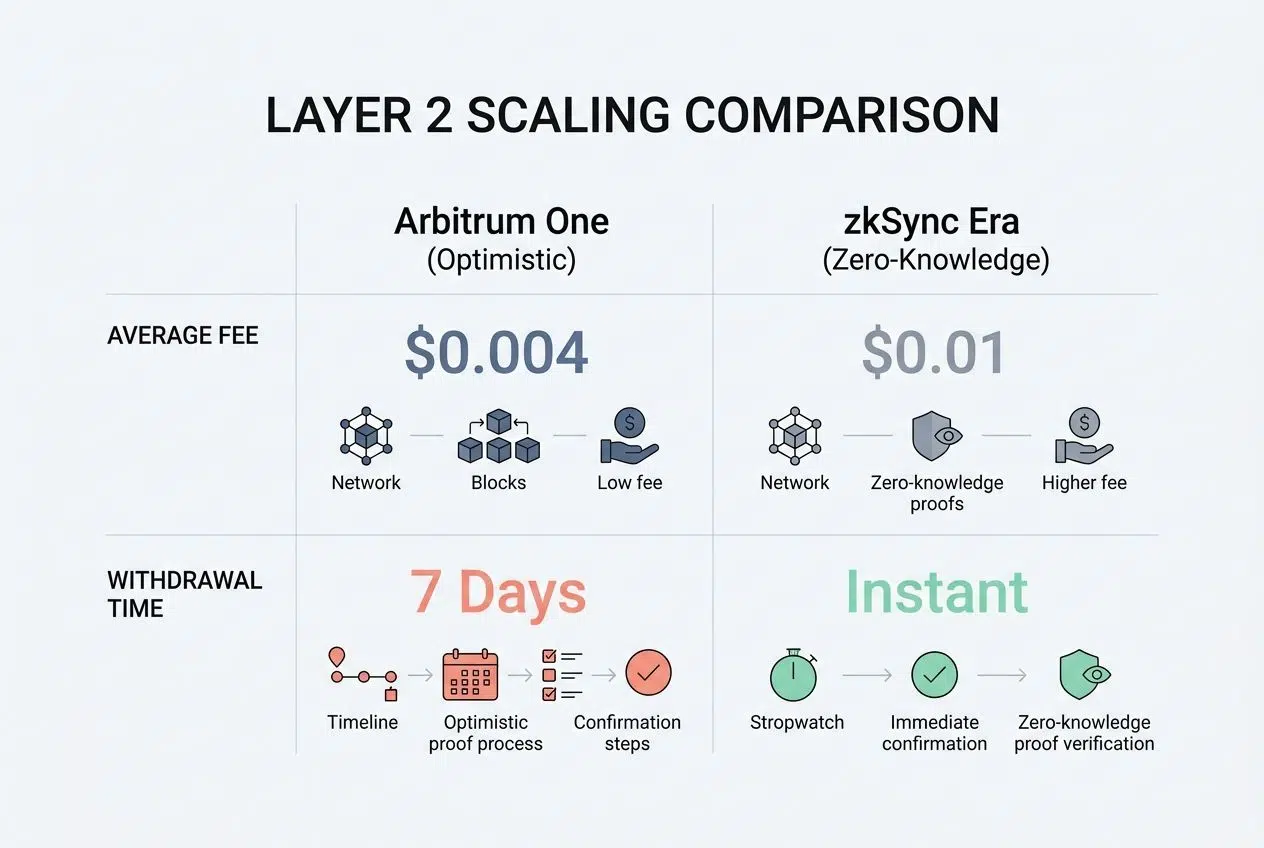
| Feature | Arbitrum One (Optimistic) | zkSync Era (Zero-Knowledge) |
|---|---|---|
| Average Fee | $0.004 | $0.01 |
| Withdrawal Time | 7 Days | Instant |
| Best Use Case | Established DeFi Apps | Privacy & Instant Finality |
Big projects use these specific tools to make apps run smoothly on Ethereum. They keep everything perfectly safe for users who deeply care about efficiency and keeping more money in their pockets.
State Channels
Unlike rollups, state channels keep most transactions off-chain until users are completely ready to close the channel. Two or more people lock up some funds on the blockchain and start a private session. They only send one final transaction back to the main blockchain once they finish their trades.
This brilliant method slashes waiting times. It makes micro-transactions cheap and fast, almost like sending a text message instead of mailing a physical letter. You only pay network fees exactly twice: at the very start and at the very end.
The Bitcoin Lightning Network is the most famous example of a state channel. US users rely on the Lightning Network every single day to instantly send fractions of a cent for digital tipping. State channels act as secret passageways that perfectly speed up busy streets.
Exploring Rollups
Rollups work exactly like a high-speed lane on a busy highway. They give blockchain networks much more breathing room, zipping transactions along with far less effort and much lower costs.
Optimistic Rollups
Optimistic Rollups process transactions off-chain and then post the basic data back to Ethereum. They make a huge batch of transactions cheaper by only checking for fraud if someone specifically reports it.
This innocent-until-proven-guilty approach means most of your transfers go through without any delay. You can easily save up to 100 times on fees compared to using the base layer directly. Anyone can challenge a transaction during a set 7-day dispute period.
This mix of basic trust and open checks brings thousands of new developers into blockchains. The top networks using this specific technology are dominating the market in 2026:
- Arbitrum One: Holds the largest market share with over $16 billion in Total Value Locked.
- Base: Coinbase’s massively popular network that processes over 10 million transactions daily.
- OP Mainnet: Powers a vast, interconnected Superchain of applications.
These networks let people run complex apps with incredible speed while inheriting strict security from the main blockchain.
Zero-Knowledge (ZK) Rollups
Zero-Knowledge Rollups use advanced cryptography to process transactions off-chain. They then provide a mathematical proof of validity back to the main blockchain.
This method keeps the stored data much smaller and highly secure while vastly increasing scalability. ZK Rollups can comfortably handle hundreds of transactions in a single batch. This drastically reduces network congestion and cuts your daily fees.
These solutions check every single transaction with strict math proofs instead of relying on a dispute window. Vitalik Buterin has frequently praised ZK Rollups for their incredible speed and strong privacy features. A major benefit here is instant finality.
You do not have to wait a week to withdraw your funds back to the main chain, as you do with optimistic networks. Many major finance apps now choose zkSync Era or Starknet because they boost performance without risking user safety.
Benefits of Layer 2 Solutions
Layer 2 solutions make blockchains remarkably quicker, and help users save tons of money on costs. Imagine sending digital money as fast as sending a text message.
Faster Transactions
People demand quick payments. Old blockchains like Bitcoin and Ethereum can get painfully slow. You might wait 10 minutes, or even a full hour, just for one single payment to finish.
Layer 2 solutions make things incredibly zippy. Rollups, state channels, and sidechains move the vast majority of the work off-chain. This strategy keeps the main blockchain entirely clear.
For example, Arbitrum regularly hits speeds of 57 transactions per second, with maximum recorded bursts over 2,000. State channels let friends play games or trade collectibles in real time without any lag.
Projects using these specific networks see near-instant results and vastly higher throughput. Faster processing makes your apps smooth and incredibly easy to use.
Reduced Transaction Fees
Faster transactions naturally open the door to another massive win: lower fees for everyone. Layer 2 solutions shift much of the heavy processing workload off-chain.
This means less pressure on the main Ethereum blockchain, so your personal network costs drop fast. Sending money or using smart contracts no longer burns a massive hole in your pocket.
The March 2024 Dencun upgrade introduced EIP-4844, which slashed Layer 2 data posting costs by up to 90 percent.
Because of this specific upgrade, fees that once soared above $20 in 2021 now regularly fall below a single US penny on rollups. Small businesses and regular users feel this relief right away.
Enhanced Blockchain Efficiency
Lower fees open the wide door for millions more people to use blockchain networks. Today, projects process thousands of transactions each second without slowing down the entire global system.
Ethereum Layer 2 solutions bundle many smaller user actions into one massive batch before sending them back to the main chain. This highly efficient method keeps the network from getting clogged up.
A 2025 industry analysis showed that processing data in specific bundles called blobs reduced network overhead dramatically. This specific change saves incredible amounts of energy and valuable block space.
More users happily jump in because things move quickly and cost practically nothing. Blockchains become much more efficient at handling peak traffic while staying completely secure.
Use Cases of Layer 2 Solutions
Layer 2 solutions now spread their wings far and wide. They touch everything from modern money apps to digital art.
Decentralized Finance (DeFi)
DeFi uses automated smart contracts to let people trade, borrow, and lend digital assets without traditional banks. It runs heavily on networks like Ethereum but faces slow speeds and high fees during busy market hours.
Many popular DeFi apps move their trades off-chain with rollups to vastly boost speed. This simple switch helps process thousands of trades per second instead of just a tiny handful.
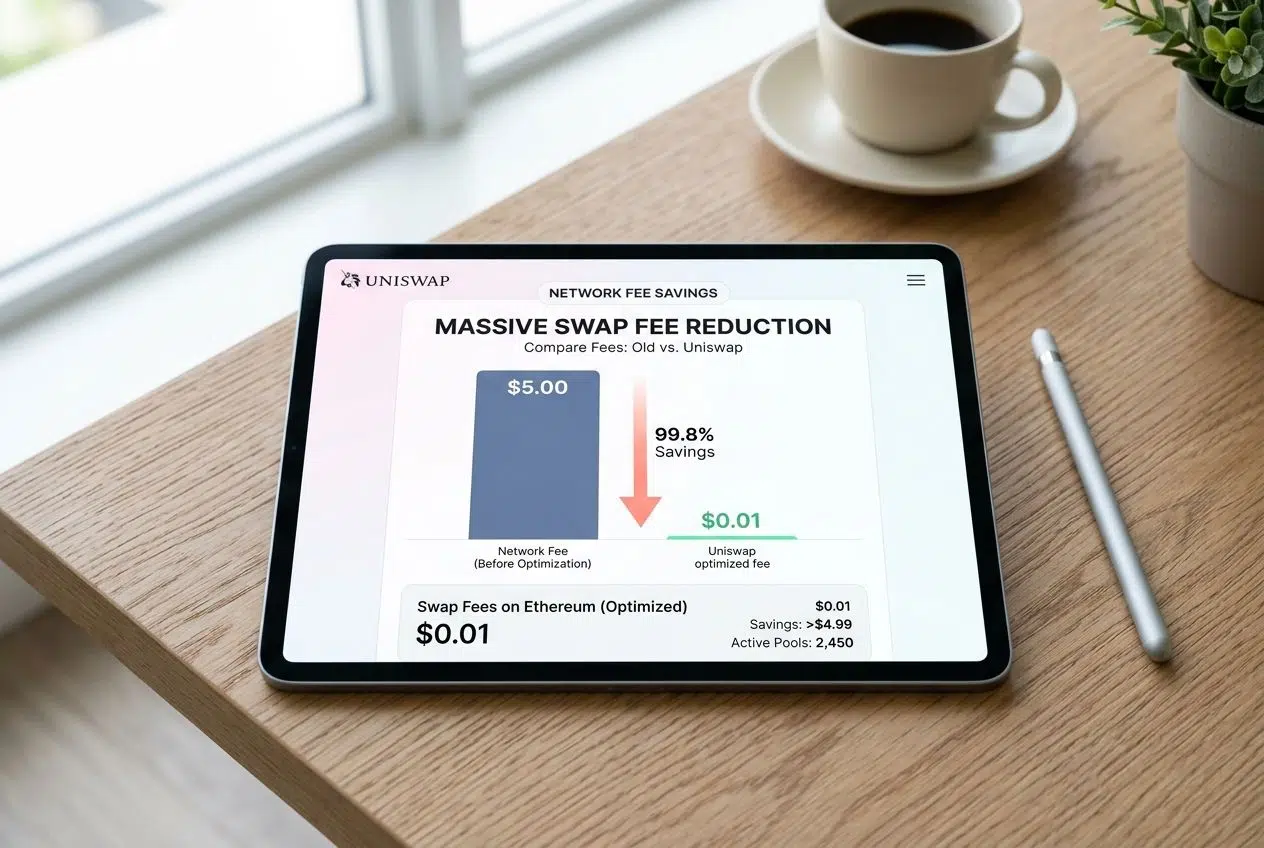
For example, Uniswap is a leading US decentralized exchange. It processes billions of dollars in volume on Layer 2s because a simple token swap costs $0.01 instead of $5.00.
More users take part in yield farming or stablecoin trading thanks to these massive scalability improvements. With better off-chain infrastructure, DeFi handles bigger financial volumes with total ease.
Non-Fungible Tokens (NFTs)
NFTs use the blockchain to firmly prove who owns digital art, music, and unique game items. Most major NFT platforms now entirely rely on Layer 2 solutions.
This shift helps keep your fees low and wildly speeds up transactions for everyday buyers and sellers. Trading NFTs on the main chain used to cost a small fortune in gas fees. If you want to mint or trade digital items without losing money to fees, keep these actionable tips in mind:
- Use Polygon or Base: Major brands like Coca-Cola use the Base network because minting a collectible costs less than ten cents.
- Batch your transfers: Use wallet tools to send multiple NFTs in a single transaction to save even more on fees.
- Check network liquidity: Ensure the Layer 2 you choose has active buyers for your specific digital art collection.
Artists can easily sell their beautiful work worldwide without high costs slowing their business down.
Gaming and High-Volume Applications
Many modern games and high-traffic apps strictly need to process thousands of distinct actions every single second. Layer 2 solutions help make this possible by perfectly handling transactions off-chain.
In fast-paced Web3 games, every sword swing or card play is a verifiable transaction. Players would instantly quit if every single move cost a dollar.
For example, Axie Infinity uses the custom Ronin sidechain to heavily speed up trading for millions of daily players. This keeps game fees practically invisible, vastly boosts performance, and lets new users join the fun.
Fast-paced gaming absolutely requires quick response times. Layer 2 networks keep the action perfectly smooth, so developers create much better experiences for you.
Challenges Faced by Layer 2 Solutions
Layer 2 technology does not come without a few bumps in the road. Some frustrating problems still pop up, making developers constantly search for better answers.

Technical Complexity
Setting up off-chain solutions is surprisingly tricky. Rollups, sidechains, and state channels all function in completely different ways.
Each system uses brand new types of software and highly complicated cryptography. For example, writing zero-knowledge proofs requires highly specialized math skills. If the code breaks, it is incredibly hard for developers to fix quickly.
A common pitfall I see with new applications is mispricing micro-transactions. A 2026 security study warned that many apps accidentally overcharge users for tiny actions because of complicated transaction batching logic.
Any code change must fit smoothly with the main Ethereum chain. Minor bugs could freeze user assets or heavily slow processing speed for everyone using the app.
Centralization Risks
Many fast solutions currently keep network control in the hands of a single small group. This severely hurts decentralization and leaves the system open to painful censorship.
Most rollups today use a single sequencer to order transactions. This means one computer server, often operated directly by the founding team, orders every single transaction.
If that single sequencer crashes or acts badly, the entire express lane temporarily halts, completely blocking your access to your funds.
Some sidechains also heavily depend on just a tiny handful of validators. Bad actors might team up and take over the vulnerable network. Central points like these completely lessen public trust.
Interoperability Concerns
Big worries about centralization quickly lead to another incredibly tough problem. Making different blockchain networks talk securely to each other is still a massive headache.
Layer 2 solutions process your transactions off-chain and send results back to the main network. But each separate chain uses its own unique rules. If you want to move stablecoins across two blockchains, things get sticky fast.
Moving assets directly between Arbitrum and Optimism often requires a third-party bridge. Hackers have targeted these specific bridges repeatedly, stealing millions in recent years. To keep your money totally safe, always follow these bridge rules:
- Use official bridges: Stick to the official bridge built by the network developers whenever possible.
- Test with small amounts: Always send a tiny test transaction of $1 before moving your entire balance.
- Revoke permissions: Use security tools to revoke smart contract access after you finish bridging your funds.
The Future of Layer 2 Solutions
Layer 2 keeps getting smarter and more incredibly useful with each upgrade. New features constantly arrive, completely changing how people use blockchain every single day.
Advancements in Scalability
Bigger digital dreams need much bigger digital roads. Major networks now process thousands of transactions per second using optimized rollups.
These constant upgrades deeply cut your costs and vastly speed up processing. Work keeps moving forward at a blistering pace. Upgrades like the late-2025 Fusaka patch continue to aggressively expand data capacity on the main chain.
Polygon’s zkEVM uses brilliant zero-knowledge tech to perfectly trim fees while keeping security rock solid. State channels now easily manage high-volume gaming moves in real time with zero noticeable lag. As these clever methods improve, excitement grows about combining them with even newer ideas called Layer 3 solutions.
Integration with Layer 3 Solutions
Layer 3 solutions add one more powerful step to scaling. They stack directly on top of Layer 2, bringing custom speed and extra specialized features.
For example, networks like Arbitrum Orbit allow creators to easily launch their own custom Layer 3 chains. This is absolutely perfect for a specific video game that needs its own dedicated, server-like blockchain.
Projects like zkSync have started using these advanced tools in real time. Many top developers see a near future where you move smoothly through different network layers without even noticing.
Potential for Mass Adoption
Big financial names like Binance now heavily support off-chain solutions. This amazing support helps millions of regular people use quick, low-fee transactions every single day.
Hiding the complicated technical plumbing is the real secret to bringing in everyday users. The data perfectly proves this strategy works:
- Seamless integrations: US crypto giant Coinbase natively integrated the Base network right into its incredibly popular main app.
- Massive user growth: This simple interface helped Base grow to over 3.5 million daily active users by mid-2025.
- Incredible volume: By 2026, Ethereum’s combined off-chain ecosystem processes millions of individual transactions per day.
New tools make blockchain apps as simple as sending a quick text message. Better speed and lower fees successfully turn slow networks into bustling, highly efficient highways.
Closing Thoughts
Layer 2 solutions are actively changing the blockchain as we know it. These vital upgrades help major networks handle thousands more transactions. They deeply cut your daily fees and speed things up for absolutely everyone. More people can now use amazing apps like decentralized finance or digital art markets without waiting forever. Off-chain systems are completely driving this massive jump in digital performance.
Developers will keep building incredibly fast networks to fully support global mass adoption. Sidechains, rollups, and state channels each perfectly boost throughput in their own unique ways.
As the desperate need for scalability keeps growing rapidly, expect even bigger steps forward in pure processing power.