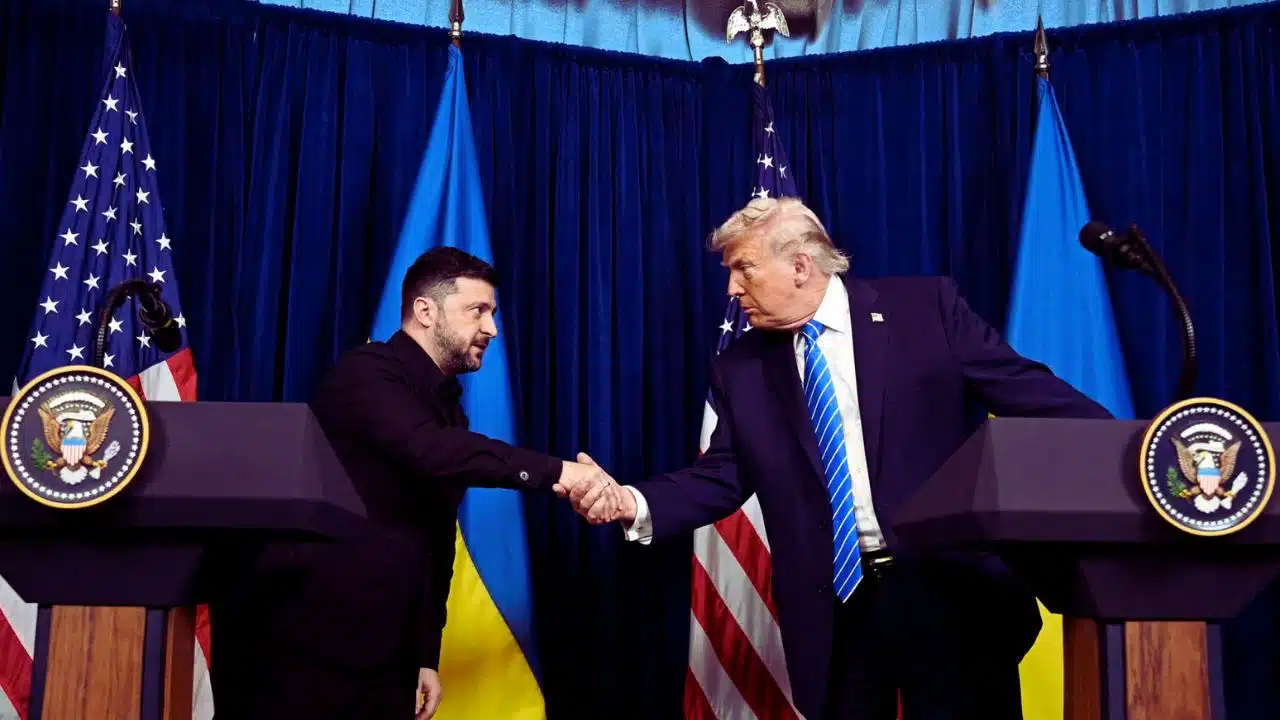
Russia says Ukraine tried to hit President Vladimir Putin’s Valdai residence with drones, and Putin told US President Donald Trump Moscow may revise peace terms—an allegation Kyiv calls fabricated as talks continue.
What Russia claims happened
Russian officials say Ukrainian long-range drones targeted a presidential state residence associated with Putin near Lake Valdai in Russia’s Novgorod region overnight into Monday.
Russia’s foreign minister said the alleged strike involved 91 drones and warned the incident would “not go unanswered,” framing it as a reason Moscow’s negotiating position would change.
In the Kremlin’s account of a Putin–Trump phone call, Putin briefed Trump on the alleged attack and signaled that Russia would review its stance on understandings reached in the previous stage of talks.
Russian reporting on the scale of the incident has not been fully consistent in public statements, with separate official tallies cited for drones downed over Novgorod versus nationwide totals.
No independently verified evidence has been publicly provided by Russia to substantiate the claim that the residence itself was the intended target, and public descriptions have relied primarily on official statements.
Key timeline (reported)
| Date (2025) | Event | What was said publicly |
| Dec 23–24 | Ukraine briefed media on a revised peace framework under discussion with the US and partners. | The framework includes security guarantees and monitoring concepts, according to Ukrainian statements. |
| Dec 28–29 | Russia alleged a drone attempt against the Valdai/Novgorod presidential residence area. | Russian officials described dozens of long-range drones and warned of consequences. |
| Dec 29 | Putin spoke with Trump and linked the allegation to a tougher negotiating posture. | Kremlin aide said Russia would reassess parts of its prior negotiating track. |
Ukraine’s denial and what’s unproven
Ukraine’s president rejected the allegation, describing it as a “fabrication” aimed at justifying additional Russian attacks and undermining diplomacy.
Ukrainian officials also argued the claim fits a pattern of rhetoric used to cast Kyiv as the escalatory side while Russia maintains pressure on Ukrainian cities and infrastructure.
Public reporting based on official statements indicates Russia has not released verifiable details—such as debris photos tied to the location, flight-path evidence, or independent assessments—sufficient to confirm the claim.
The episode arrives in a war environment where drone claims and counterclaims are frequent, and where both sides use long-range strikes for military effect and strategic messaging.
Separately reported drone exchanges earlier in December included large-scale intercept claims by Russia and continued long-range attacks by Russia into Ukraine, underscoring the high tempo of aerial threats.
Why the peace terms are now in dispute
According to the Kremlin’s readout, Putin told Trump Russia would revisit its position on elements discussed earlier, after being informed (in Russia’s telling) about the alleged drone incident.
Russian officials indicated the reassessment would affect “agreements reached at the previous stage” and how Moscow interprets emerging proposals—without specifying which clauses would change.
In parallel, Russian messaging has emphasized skepticism toward ceasefire-first approaches, arguing that temporary pauses could be used to prolong the conflict rather than settle it.
From the Ukrainian side, the current diplomatic track has revolved around a revised multi-point framework, with Kyiv emphasizing enforceable security guarantees and mechanisms designed to deter renewed invasion.
A separate strand of public discussion has included the duration of US security assurances in draft language (reported by Ukrainian leadership as 15 years), with Kyiv signaling it wants longer terms.
What’s been discussed publicly in the draft framework
| Topic | Elements described publicly by Ukrainian leadership/media briefings | Status (public) |
| Security guarantees | “Article 5–like” assurances discussed in draft concepts involving the US and European partners. | Still under negotiation. |
| Monitoring/verification | Monitoring concepts include technology-enabled oversight to detect violations. | Not finalized. |
| Force posture | Ukraine has described maintaining a large peacetime force in draft discussions. | Not finalized. |
| Political sequence | Ukraine has discussed sequencing tied to ceasefire/diplomatic steps, while Russia argues against ceasefire-first formulas. | Contested. |
Drone warfare context and escalation risk
The alleged Valdai incident fits a broader pattern: drones have expanded the war’s geography by enabling strikes and attempted strikes far from front lines.
Russia has previously alleged attacks near high-profile sites, including the May 2023 Kremlin drone incident that Russian authorities framed as an attempted assassination.
Large-scale drone exchanges have repeatedly disrupted civilian aviation and raised the risk of miscalculation, as authorities impose temporary flight restrictions when debris or intercepts occur near major cities.
Diplomatically, claims of attacks on leadership-linked locations can harden public positions because they raise the political costs of compromise, even when details remain contested.
At the same time, public accounts suggest both Washington and Kyiv still see value in continuing talks, even as Moscow signals it may tighten demands rather than move toward a quick ceasefire.
Final thoughts
Watch for whether Russia publishes verifiable evidence (intercept data, imagery, location details) that supports the claim and clarifies the reported number of drones.
Watch also for any formal Russian readout of revised “peace terms,” since current statements describe a reassessment but do not publicly itemize which positions will shift.
Finally, monitor whether the alleged incident is followed by a declared Russian retaliatory strike package, as Russian officials explicitly hinted at consequences and target planning.