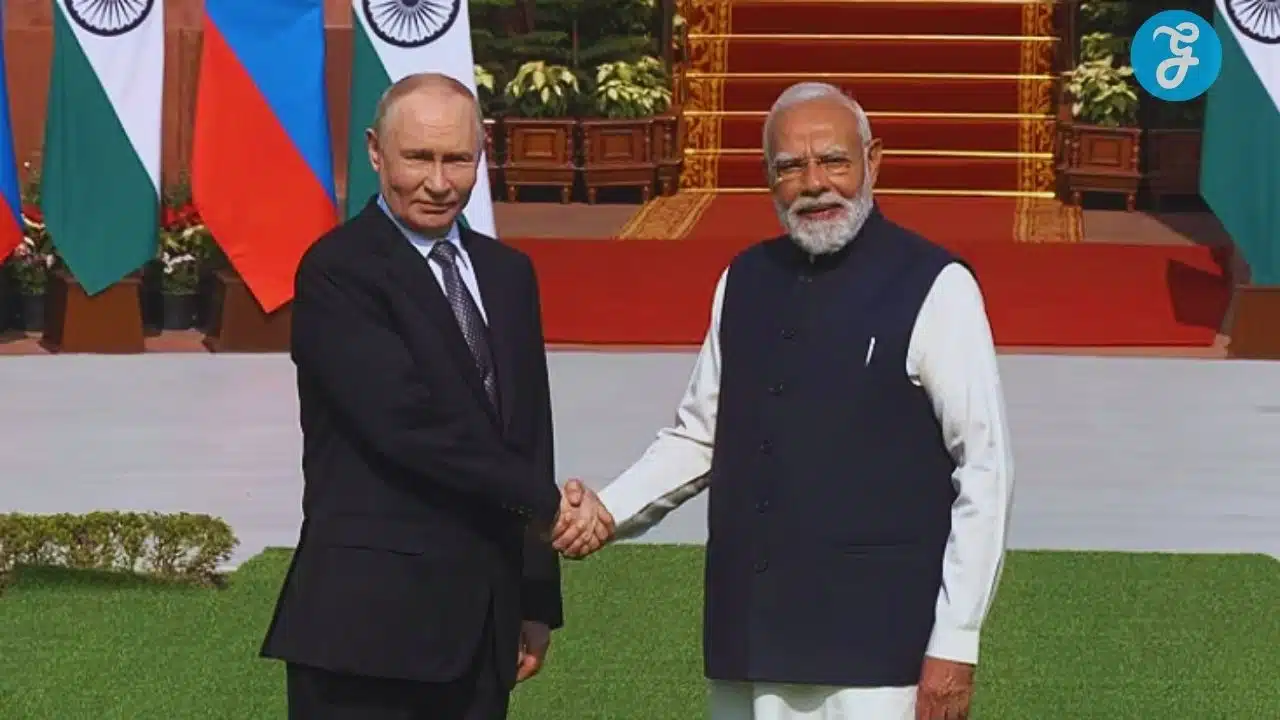
Russian President Vladimir Putin landed in New Delhi on the evening of December 4, 2025, for a pivotal two-day state visit with Indian Prime Minister Narendra Modi. Marking his first trip to India since the Ukraine war began in 2022, and the first in four years, Putin’s visit underscores the deep and enduring ties between the two countries.
Modi personally welcomed Putin at Delhi’s Palam Airport, embracing him immediately and breaking with tradition, signaling the warmth and significance of their relationship. The leaders then shared a private dinner at the Prime Minister’s official residence, setting a collaborative tone for discussions ahead. Both nations are determined to enhance their bilateral trade volume from $68.7 billion in fiscal year 2024-25 to an ambitious $100 billion by 2030, despite growing pressure from Washington regarding India’s continued import of discounted Russian oil.
Navigating Complex US Pressure and Tariff Issues
The summit takes place against a backdrop of increasing US pressure on India to curtail its purchases of Russian oil. Under the administration of President Donald Trump, India currently faces tariffs as high as 50% on its exports to the US, with a substantial portion of these tariffs linked to India’s buy of Russian crude at discounted rates. Speaking in an interview with India Today, Putin challenged the logic of these sanctions, highlighting that the US continues to purchase nuclear fuel from Russia for its own power plants. Putin questioned, “If the US has the right to buy our fuel, why shouldn’t India have the same privilege?” He further emphasized that the cooperation between Russia and India is not aimed at working against any entity but is rooted in mutual respect and benefit. This stance underscores New Delhi’s consistent approach to maintaining strategic autonomy amid competing international influences.
The trade relationship remains heavily skewed towards Russia, with imports constituting the lion’s share. In FY 2024-25, bilateral trade reached $68.7 billion—of which Indian exports accounted for only $4.88 billion, while imports from Russia stood at $63.84 billion, primarily composed of crude oil and petroleum products. Despite this imbalance, both countries are committed to expanding their economic partnership, with India pushing for a more balanced trade equation.
At the India-Russia Business Forum held on the eve of the summit, India’s Commerce Minister Piyush Goyal underscored the vast untapped potential in sectors such as automobiles, electronics, pharmaceuticals, and food products. He pointed out that India’s contribution to Russian imports still sits below 2%, which he described as falling short of the true potential of this historic partnership. Goyal reiterated the importance of stronger collaboration in innovation, startups, and skilled labor as central to deepening this commercial relationship.
Focus on Defense and Energy Cooperation
A key component of the summit’s agenda on December 5 involved formal talks at Hyderabad House between Putin and Modi, focusing on defense cooperation, energy ties, and the unveiling of a joint Strategic Economic Roadmap aimed at 2030. Defense discussions are expected to prioritize the delivery timeline of two pending S-400 air defense missile squadrons, complementing the three systems India has already acquired from Russia. The leaders will also likely discuss Russia’s advanced Su-57 fighter jets and potential deals around the modernization and overhaul of Indian Su-30 aircraft squadrons, affirming shared defense priorities. India’s defense minister has underscored the importance of these acquisitions to India’s strategic capabilities, while Russian officials have reiterated their commitment to completing all pending deliveries by 2026-27.
On the energy front, the dialogue will emphasize further expanding collaboration in nuclear power projects and other energy investments. Discussions may touch upon the expansion of the Kudankulam nuclear power plant and plans for smaller modular reactors, highlighting the increasing integration of Russian technology into India’s energy landscape. Both nations view energy security as a crucial area for long-term partnership, with Russia keen to support India’s growing power needs through diverse channels beyond hydrocarbons.
State Banquet and Bilateral Agreements
The visit culminates with Putin’s official meeting with Indian President Droupadi Murmu, where he was accorded a traditional guard of honor and participated in ceremonial events, including a visit to Raj Ghat, the memorial of Mahatma Gandhi. The leaders will then attend a grand state banquet, symbolizing the “special and privileged” bond described by Indian diplomats. Throughout the visit, several bilateral agreements covering trade, labor mobility, energy investments, and Arctic shipbuilding cooperation are expected to be signed. These agreements aim to solidify the economic, technological, and strategic frameworks underpinning future India-Russia relations.
Putin’s visit highlights the enduring and multifaceted partnership between India and Russia at a critical juncture marked by global geopolitical shifts and economic challenges. While India navigates its complex relations with the US, it continues to pursue a diversified and robust trade and defense relationship with Russia, guided by shared goals of mutual benefit and strategic autonomy.
The meeting between Modi and Putin reaffirms their countries’ commitment to expanding economic cooperation to $100 billion by 2030, balancing defense and energy priorities, and sustaining a collaboration built on decades of diplomatic goodwill and trust. This visit underscores the evolving nature of global alliances and India’s central role in balancing its relations on the world stage.