Ever promised yourself you’d stop after “just one more” level, only to find the sun coming up? As someone who spends his days analyzing game mechanics and tech culture, I know that feeling well. It’s the same loop that happens when your thumb hovers over the remote. You plan for an hour of TV. You blink, and suddenly you’ve finished an entire season.
If this sounds familiar, you aren’t the only one. Streaming has gamified our viewing habits, turning casual entertainment into an endurance sport. Here is a hard reality check about the Psychology of Binge-Watching: it’s not just about losing sleep. Leading researchers link this habit to shorter attention spans and a rewiring of how we process patience in daily life.
I’m going to break down exactly what happens in your brain during a marathon session and share the specific, tech-savvy adjustments I use to take back control. Curious if your next marathon is harmless fun or hurting something deeper? Let’s get into it.
What is Binge-Watching?
Binge-watching feels a lot like the “completionist” urge in gaming. You finish one quest, and the menu immediately offers you the next one. Suddenly, you’ve consumed hours of content without moving.
Definition of Binge-Watching
Streaming shows for hours at a time counts as binge-watching. While the old definition was “2-3 episodes,” the modern reality is much more intense. According to Nielsen’s 2024 “The Gauge” report, streaming now accounts for a record-breaking 40.3% of all TV usage in the US. We aren’t just watching; we are devouring content.
“Television is no longer something we wait for,” says Dr. Jill Walsh, a behavioral psychologist from Boston University. Viewers get quick entertainment and avoid commercials or week-long waits between episodes. Pressing “next episode” feels easy; patience quickly takes a back seat to instant fun.
Factors Driving the Popularity of Binge-Watching
Why is it so hard to stop? It’s not a lack of willpower; it’s a feature, not a bug. Tech giants design these platforms to keep you engaged.
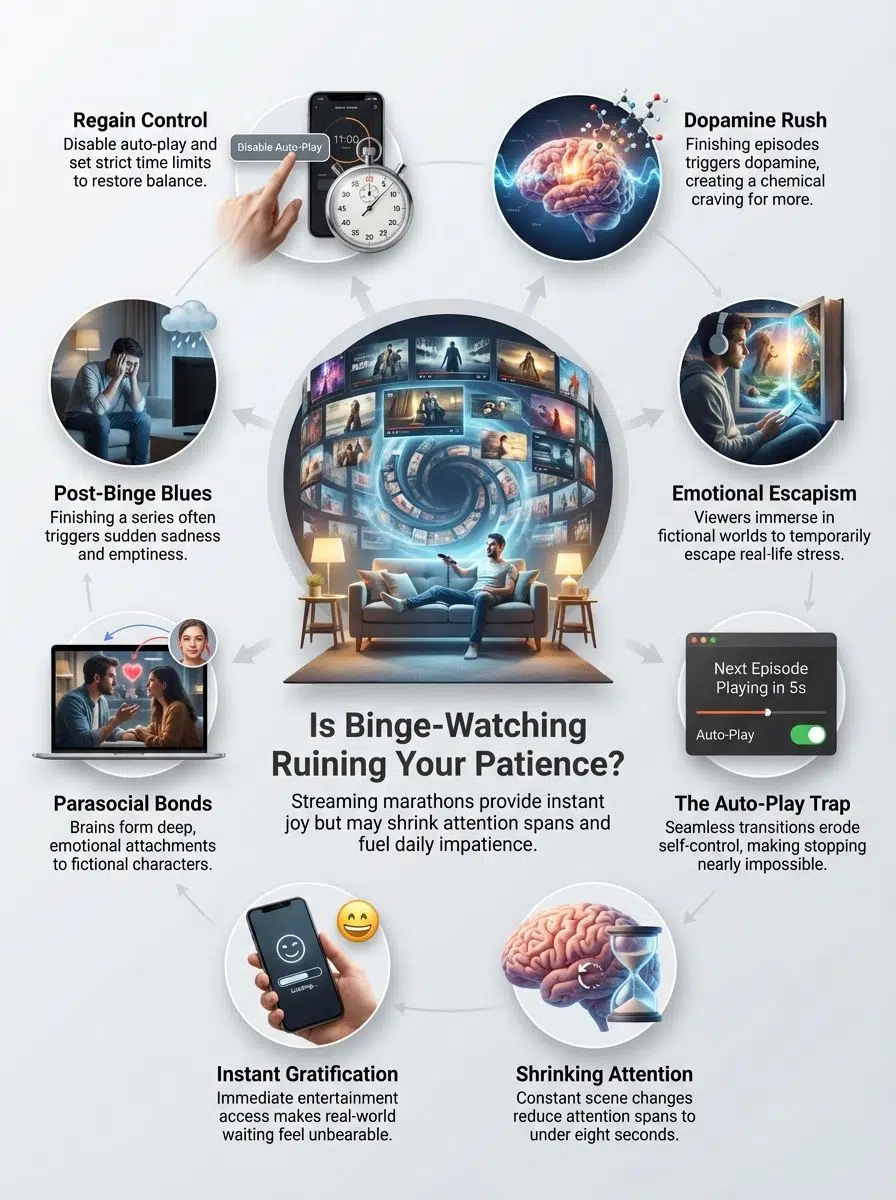
- The “No-Friction” Interface: Features like “Skip Intro” and “Play Next” remove the natural stopping points that used to exist in TV.
- The FOMO Factor: Social media buzz creates a “Fear of Missing Out.” If you don’t finish the season by Monday, the internet will spoil it for you.
- Emotional Regulation: A 2025 study found that 61% of viewers use binge-watching specifically to self-soothe after a stressful day.
- High-Speed Access: 5G and fiber internet mean 4K video streams instantly on your phone, making the “dopamine hit” portable.
- Parasocial Bonds: We spend hours with characters in a single day, tricking our brains into feeling a deep, personal connection.
Psychological Mechanisms Behind Binge-Watching
Streaming a whole show in one sitting messes with how our brains handle rewards. It’s wild how just one more episode can feel so good, yet also leave us craving even more.
The Zeigarnik Effect and Cliffhangers
There is a specific psychological term for why you can’t turn off the TV after a cliffhanger: the Zeigarnik Effect. This principle states that our brains remember incomplete tasks much better than completed ones. A cliffhanger creates “mental tension”, an open loop that your brain desperately wants to close.
Writers and showrunners know this. They structure episodes to end at the moment of highest tension, hacking your brain’s natural desire for completion.
Dopamine and the Brain’s Reward System
Dopamine is the brain’s “feel-good” chemical. Each time you finish an episode, your brain gives you a small rush of dopamine. This reward feels nice and can make you want to watch more, almost like snacking on chips until the bag is empty.
“Binge-watching triggers fast rewards for our brains,” says Dr. Pamela Rutledge, media psychologist.
Escapism and Mood Regulation
People use binge-watching as a way to forget real-life problems. It pulls viewers into exciting, made-up worlds where worries feel far away, even if just for a little while.
Streaming companies know this habit well. Their algorithms prioritize content that keeps you in this “flow state,” often recommending similar genres to maintain the mood. The bright colors and sounds grab your attention fast, making it easy to lose track of time and feelings.
Comparing Viewing Models
To understand the shift, look at how the delivery method changes the psychological impact:
| Feature | Weekly Release Model | Binge Model |
|---|---|---|
| Patience Required | High (7 days) | Zero (5 seconds) |
| Social Discussion | Sustained over months | Explosive but short-lived |
| Memory Retention | Higher (time to process) | Lower (info overload) |
Impacts of Binge-Watching on Patience
Binge-watching can make waiting feel like pulling teeth. The constant feed of high-stimulation content changes what our brains consider “normal” speed.
Reduced Attention Span
You might have heard the old myth that humans have an attention span shorter than a goldfish’s (8 seconds). That is not quite right, but the reality is still startling. According to extensive research by Dr. Gloria Mark from UC Irvine, the average time we focus on a screen before switching tasks has dropped to just 47 seconds in recent years.
Short videos and fast streaming train our minds to hop from one thing to another. Waiting feels harder after hours of back-to-back entertainment.
Expectation of Instant Gratification
Streaming lets people watch a whole season in a weekend. Shows load in seconds, episodes play one after another, and cliffhangers last only minutes. Waiting feels old-fashioned now. People begin craving rewards right away. It gets harder to enjoy activities that take time or patience, such as reading books or watching slow movies.
Difficulty Engaging with Slower Media
Binge-watching trains your brain to expect quick rewards. Slow-burning movies and long books can start to feel boring. This is often called “Popcorn Brain”, a state where your mind is so accustomed to constant popping and stimulation that real life feels slow.
Classic films or documentaries may seem too quiet compared to the rush of instant gratification. Many switch back to action-packed content because it feels easier.
Broader Psychological Effects of Binge-Watching
Sometimes, you feel empty after a long watch session, like finishing the last slice of cake and wanting more. These feelings can sneak up on anyone who streams late into the night.

Revenge Bedtime Procrastination
There is a specific name for staying up late to watch TV even when you are tired: Revenge Bedtime Procrastination. A 2025 study by Amerisleep found that 51% of Americans admit to delaying sleep to reclaim “me time” they didn’t get during the work day.
It feels like a victory over your schedule, but it destroys your sleep quality. The blue light from screens suppresses melatonin, making it harder to reach the deep sleep stages your brain needs to recover.
“Post-Series Depression”
Many people feel empty after finishing a long series. It is like a friend moved away, and you have nothing to do now. Fans often call this “Post-Series Depression.”
The sudden stop from fast-paced media can leave you moody or restless. Scientists link these feelings to dopamine drops in the brain after long watching sessions. Missing that steady source of excitement can lead to mild sadness for some viewers.
Heightened Anxiety and Isolation
After feeling empty from a finished series, some people notice they feel more anxious or alone. Binge-watching for hours often replaces calls with friends and trips outside. Netflix said that over 70 percent of users admitted to binge-watching in 2018, and that number has only grown.
Frequent streaming may turn into a coping mechanism, but it also keeps us glued to screens, away from real connections. Increased screen time links to worse mental health and higher rates of social isolation.
Risk Factors and Behavioral Patterns
Some people binge-watch because of age, mood, or habits. The data shows clear generational divides in how we consume content.
Age and Generational Trends
Younger viewers are leading the charge in late-night streaming. Recent data indicates that Gen Z has an average bedtime of 12:30 AM, significantly later than older generations, largely due to streaming and social media habits.
They like having whole TV shows ready at their fingertips. This habit shapes how they expect entertainment to be fast, constant, and right now. Older generations might remember waiting a week for new episodes on television, finding quick access to entire seasons overwhelming.
Emotional Coping Through Binge-Watching
Many people use binge-watching as a way to handle tough emotions. Streaming becomes more than just entertainment; it can turn into a coping mechanism for daily stress or sadness.
- Escaping Reality: People often turn on television shows to escape real-life problems. Watching favorite characters gives their minds a break from worry.
- Loneliness Buffer: For some, media consumption fills the gaps during loneliness. This habit helps them feel connected without needing others in the room.
- Procrastination Tool: Research links excessive viewing with higher rates of avoidance behaviors. Binge-watchers may ignore chores just to keep watching.
- Pandemic Habits: During the COVID-19 pandemic, global streaming hours soared. Many turned to this habit for comfort, and those patterns have stuck.
Strategies to Control Viewing Habits
You can outsmart the algorithms, set limits, and swap a screen for fresh air. Here is how I manage my own screen time without giving up the shows I love.
Technical Interventions
The most effective step is to change the default settings that are designed to hook you. You need to add “friction” back into the experience.
- Disable Autoplay: Go into your profile settings on Netflix or Hulu and turn off “Autoplay Next Episode.” This forces you to actively choose to watch another hour.
- Use Sleep Timers: Most modern TVs have a sleep timer. Set it for 60 minutes so the TV turns off automatically, snapping you out of the trance.
- Digital Wellbeing Tools: Android and iOS have “Digital Wellbeing” or “Screen Time” features. Set a hard limit for your streaming apps to block them after a certain hour.
Engaging in Conscious Viewing
Engaging in conscious viewing means making clear choices about screen time. Watch with a purpose, so streaming does not steal your whole evening.
Set a start and stop time, then stick to it. Give yourself breaks between episodes; stretch, get water, or chat with someone nearby. If a show sparks anxiety or feeds a compulsion, press pause and walk away.
Emphasizing Activities in the Real World
After setting limits on streaming, focus on activities outside of screens. Take a walk in the park or chat with friends face-to-face. Try reading a book or cooking with your family instead of binge-watching TV shows every night.
These real-world habits can boost patience and improve impulse control. Even simple actions like gaming with friends in the same room or playing board games can pull you away from endless media consumption.
The Bottom Line
Binge-watching offers a quick escape, but the cost to our patience and sleep is real. Streaming platforms use sophisticated tricks like the Zeigarnik Effect and auto-play to keep us glued to the screen. The need for instant gratification shapes our entertainment habits and, as Dr. Mark’s research shows, shortens our focus over time.
Too much screen time creates a cycle of “Revenge Bedtime Procrastination,” leaving us tired and anxious. Quick media fixes feel good in the moment, but work against our long-term mental health.
You don’t have to quit cold turkey. By disabling auto-play and balancing streaming with real-life connections, you can enjoy the show without losing control of your time.