


Sony has officially announced that it will raise the prices of its PlayStation 5 (PS5) consoles in the United States, with the increase taking effect this week (August 2025). Each version of the console is going up by $50, making the popular gaming system more expensive for American consumers who have already faced supply shortages and high demand since its launch.
The new U.S. pricing is as follows:
- PS5 Digital Edition – rising from $449.99 to $499.99
- PS5 Standard Edition with disc drive – rising from $499.99 to $549.99
- PS5 Pro Edition – rising from $699.99 to $749.99
This marks the first official U.S. price increase for the PlayStation 5 since it debuted in November 2020, though prices have been higher in many other regions since 2022. For years, Sony avoided raising U.S. prices, but that cushion is no longer sustainable in the current economic and political environment.
Tariffs Driving the Increase
The timing of Sony’s move is not random. It comes just weeks after President Donald Trump’s sweeping tariff plan, announced in April, officially went into effect earlier this month.
- The U.S. now has a 30% tariff on imports from China, a critical manufacturing hub for global electronics.
- Japan, Sony’s home country, was hit with a 15% tariff, directly impacting the company’s supply chain.
- While some tariffs on Chinese goods are “paused,” many remain in force, creating uncertainty for global tech companies that rely on Asia for production.
Although Sony did not explicitly blame tariffs in its blog post, the connection is clear. Executives at the company and across the consumer electronics industry have been warning for months that trade restrictions and higher import duties would ultimately force price increases on end users.
Sony stated:
“Similar to many global businesses, we continue to navigate a challenging economic environment.”
This brief statement reflects what many analysts see as a direct response to rising tariff costs, higher shipping fees, and global economic pressures.
Supply Chain Diversification — But Challenges Remain
Sony has tried to reduce its dependence on China by shifting some production elsewhere, including Southeast Asia and Japan. Earlier this year, the company said that most PS5 units sold in the U.S. are no longer manufactured in China.
However, diversification is not a quick fix. Tariffs affect not just final assembly but also components sourced globally, many of which still pass through China or Japan at some stage. This layered supply chain means that even when assembly shifts, higher tariffs still drive costs upward.
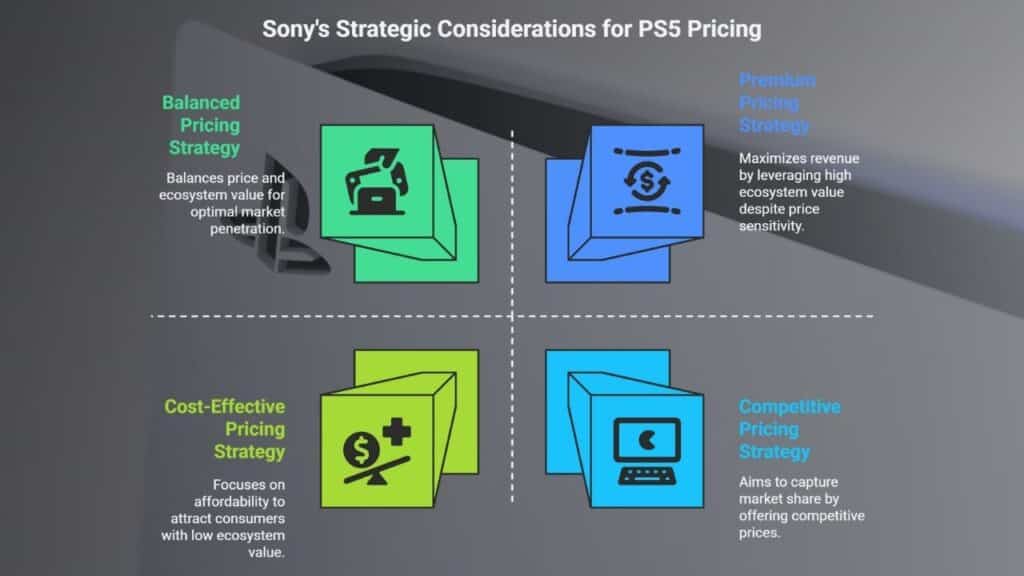
Sony also admitted in a recent call with financial analysts that pricing strategies are difficult to discuss publicly because they tie directly to competitive positioning. However, the company emphasized it would take a “flexible approach” based on factors like:
- Consumer price sensitivity
- Projected yearly profits
- Lifetime value of the PlayStation ecosystem
- Manufacturing capacity
- Units shipped and sold
- Sales potential from games and digital content
This highlights that Sony views the console not as a one-time purchase, but as a long-term ecosystem where game sales, subscriptions, and digital downloads generate revenue far beyond the console’s sticker price.
Accessories Remain Unchanged
One bright spot for gamers: Sony confirmed that the retail price of console accessories—such as DualSense controllers, headsets, and charging docks—will not change in the U.S. for now.
This may be a strategic decision to avoid alienating consumers even further. While the console itself is now pricier, accessories play a critical role in enhancing the gaming experience, and keeping them affordable may soften the blow for buyers.
Wider Impact Across the Gaming Industry
Sony’s move is not an isolated case. The entire video game hardware industry has been adjusting to tariffs and inflation:
- Microsoft raised the price of its Xbox Series X and Series S earlier this year in multiple markets, citing cost pressures.
- Nintendo delayed pre-orders of its Switch 2 console in April 2025 due to tariff uncertainty. While the new console’s price was not increased, the company raised the price of the original Switch in August 2025.
Together, these actions show a clear trend: consumers worldwide are paying more for gaming hardware as companies struggle with rising costs, tighter regulations, and geopolitical risks.
How This Affects U.S. Gamers
For American consumers, the PS5 was already one of the most in-demand gaming products of the decade, often selling out quickly and subject to scalper markups. While supply has improved since the shortages of 2020–2022, the new $50 increase may make the console less accessible to budget-conscious gamers.
Retailers like Amazon, Best Buy, Walmart, and Target are expected to honor the older pricing until existing stock sells out. For anyone considering a purchase, this week represents the last chance to buy at the lower price.
PS5 Pricing Changes
| Model | Old Price | New Price | Increase |
| PS5 Digital Edition | $449.99 | $499.99 | +$50 |
| PS5 Standard (Disc) | $499.99 | $549.99 | +$50 |
| PS5 Pro | $699.99 | $749.99 | +$50 |
| Accessories | No change | No change | — |
Sony’s PS5 price hike marks a turning point in the U.S. gaming market. For nearly five years, American gamers enjoyed stable console prices, even as inflation and tariffs raised costs globally. That grace period is now over.
While accessories remain stable and Sony insists it will stay flexible with future pricing, this move highlights the real impact of tariffs on everyday consumer goods. The broader gaming industry—Microsoft, Nintendo, and smaller hardware makers—will continue to adapt, but the underlying trend is clear:
Global politics and trade policy are now shaping the price of your favorite console.
The Information is collected from CNBC and BBC.






























