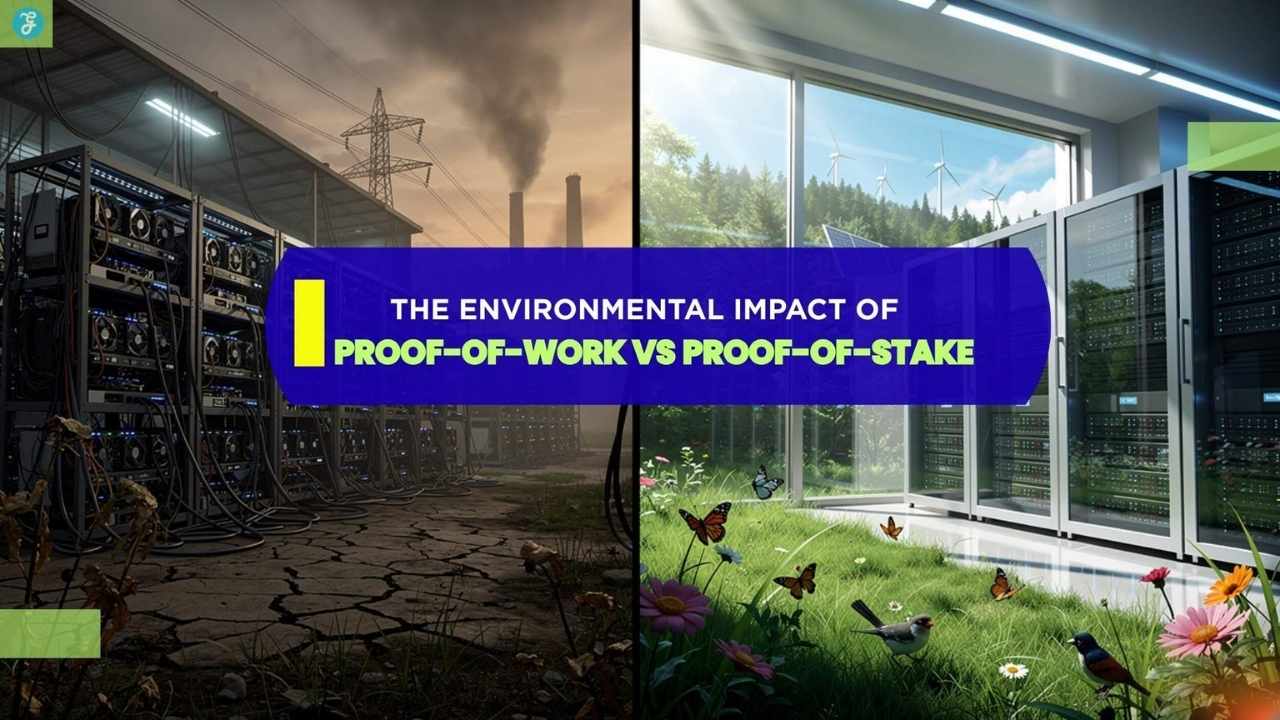
Have you ever felt a little dizzy trying to understand cryptocurrency while worrying about its effect on our planet? You hear wild stories about Bitcoin’s massive electricity bills, and then you hear whispers about new coins that are perfectly green. It is easy to feel stuck between wanting to explore digital money and wanting to protect the environment. The simple fact is that understanding Proof-of-Work Vs Proof-of-Stake changes how you view the whole industry. Proof-of-Work uses a staggering amount of energy, while Proof-of-Stake takes a completely different path.
I am going to walk you through exactly how both systems work and show you their true environmental footprints. Grab a cup of coffee, and let’s go through it together so you can spot what truly matters for sustainability.
What Are Consensus Mechanisms in Blockchain?
Consensus mechanisms help blockchains agree on which transactions are valid. Think of them as the rulebook that keeps everything fair and running smoothly without a single boss in charge.
They are incredibly important for daily digital life. By early 2026, over 50 million Americans owned some form of cryptocurrency, meaning these systems process massive amounts of value every single day.
The very first method was the Nakamoto Consensus, which introduced the concept of decentralized trust to the public. These mechanisms perform three critical jobs to keep your digital assets safe.
- They prevent duplicate spending so nobody can use the same coin twice.
- They verify the sender actually holds the funds they are trying to move.
- They lock new data blocks securely into the chain so history cannot be altered.
Overview of Proof-of-Work (PoW)
Proof-of-Work, or PoW, is the original system used by many blockchains. Bitcoin started using this method back in 2009 to secure its network.
Computers, known as miners, race to solve hard math puzzles. Only one machine can win the right to add the next group of transactions to the blockchain. This process requires an intense, constant supply of power to keep those machines running at top speed.
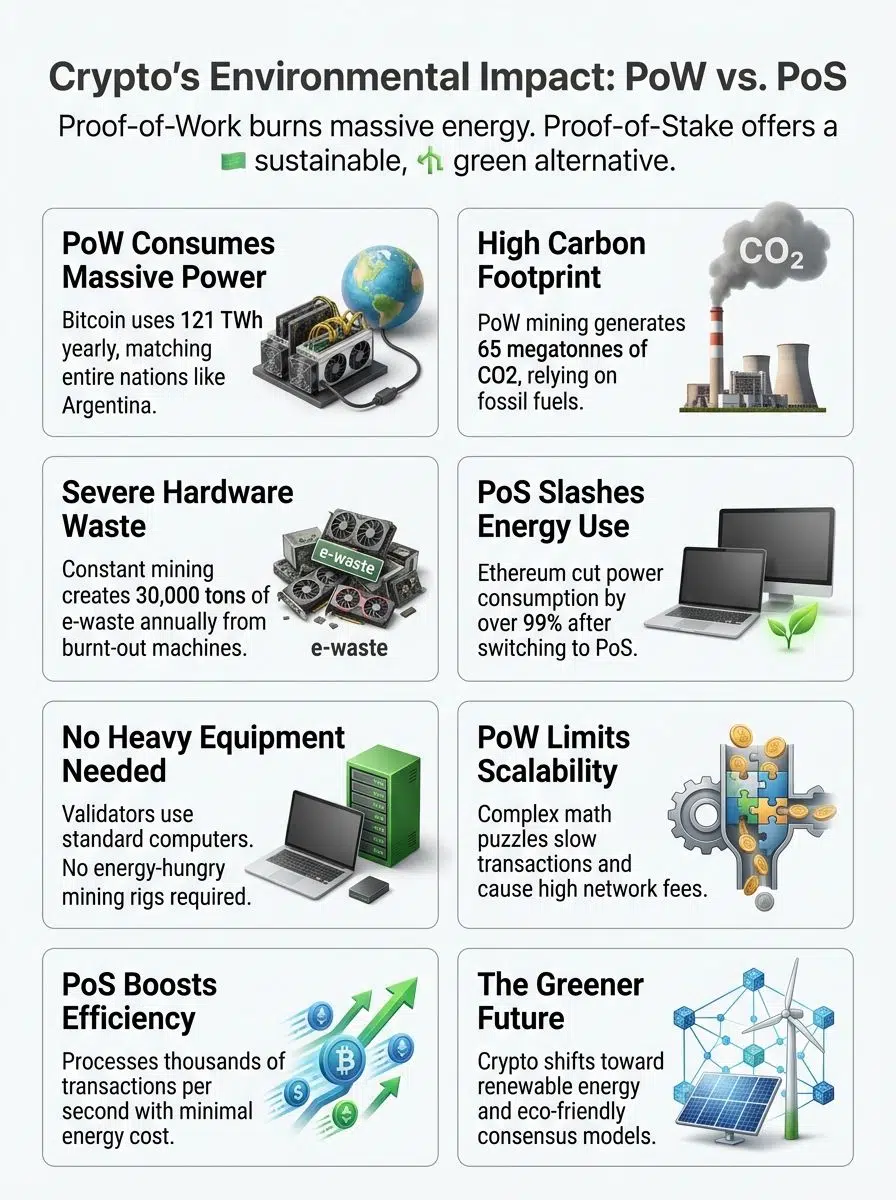
According to the Cambridge Bitcoin Electricity Consumption Index, the Bitcoin network consumes roughly 173 terawatt-hours of electricity annually as of early 2026.
That equals about 0.5 percent of the entire global electricity demand. Securing digital coins requires so much power that it eats up more electricity than many small countries, raising real concerns for eco-friendly technology advocates.
Overview of Proof-of-Stake (PoS)
Proof-of-Stake, or PoS, takes a wildly different approach to save energy. In this system, people called validators lock up their cryptocurrency coins as stakes.
The network picks them randomly to check new transactions and add them to the blockchain. You do not need powerful computers here, just a smart way of selecting trustworthy participants.
Ethereum made history when it switched from Proof-of-Work to PoS in September 2022, a major network upgrade known as The Merge.
This move completely transformed its energy footprint. A 2026 Forbes analysis noted that Ethereum now uses about 0.0026 terawatt-hours per year, which is roughly the combined energy consumption of just 200 to 250 American homes.
- It aggressively cuts down fossil fuel use.
- It severely lowers the carbon footprint of transactions.
- It keeps validators honest through a financial penalty called slashing, where cheaters lose their staked coins.
How Proof-of-Work Operates
Proof-of-Work requires specialized machines to solve tough puzzles. These computers race to finish tasks fast, relying on raw speed and electricity. Let’s look at exactly what goes into keeping this giant digital engine running day and night.
Mining and Computational Power Requirements
Miners race to solve hard math problems using special computers called ASICs. These computers use a massive amount of energy, like running hundreds of microwaves all at once.
Big networks draw so much power that they put serious strain on local grids. The US now holds nearly 38 percent of the global mining hashrate, making this a local community issue, not just a global one. The search for cheap energy leads miners to build massive warehouse facilities.
A 2025 Nature study revealed that the 34 largest crypto mines in the US consume 33 percent more electricity than the entire city of Los Angeles.
This causes tangible problems for nearby neighborhoods. In towns like Granbury, Texas, residents suffer from constant 100-decibel noise coming from giant cooling fans, leading to sleep loss and health complaints.
The hardware also burns out quickly because it runs continuously at high heat. This creates over 20 kilotonnes of electronic waste globally every single year.
Key Features of PoW
Proof-of-Work helps blockchains run smoothly and securely. This method uses a lot of energy and computing power to keep things safe and fair.
- PoW makes people solve hard math puzzles to add new blocks to the blockchain.
- The energy cost is staggering. In 2026, a single Bitcoin transaction uses about 1,335 kilowatt-hours, which equals 45 days of power for an average US household.
- The process helps stop fraud by making it incredibly expensive to execute a 51 percent attack against the network.
- Anyone with the right equipment can try to solve these puzzles, supporting decentralization.
- Only the first one to finish a puzzle gets a reward in cryptocurrency, fueling fierce global competition.
- Solving problems on PoW networks often takes several minutes, so transactions are slower compared to newer systems.
- Big mining farms often rely on fossil fuels for electricity, adding heavy environmental impact and resource strain.
Examples of PoW Cryptocurrencies
Many early cryptocurrencies adopted an energy-heavy process to keep transactions safe and secure. These digital coins need massive computing power for mining.
- Bitcoin started in 2009 and remains the undisputed leader of proof-of-work, consuming more electricity than nations like Argentina.
- Dogecoin was created as a joke in 2013, but grew into a massive network, using a specific mining algorithm called Scrypt that it shares with Litecoin.
- Litecoin launched in 2011 as a lighter version of Bitcoin with faster block times, but it still heavily relies on energy-intensive mining.
- Monero began in 2014 with a strict focus on privacy. It uses a unique RandomX algorithm to allow standard computers to mine it, actively blocking giant ASIC machines.
- Bitcoin Cash split from Bitcoin in 2017 and also relies on proof-of-work for transaction validation and network security.
How Proof-of-Stake Operates
Proof-of-Stake works like a lottery, picking who gets to add the next block based on how many coins they hold and lock up. This way, people help run the system by pledging their own assets, keeping things fair without burning mountains of coal.

Validator Selection and Staking Process
People who want to join as validators must lock up their cryptocurrency in a smart contract. This exact process is called staking.
The network picks validators based on how much of the coin they have staked and sometimes for how long it stays locked. More coins mean a higher chance of getting picked, exactly like holding more tickets in a raffle.
Validators help confirm transactions on the blockchain and earn rewards for honest work. If they cheat or approve bad data, the network triggers a slashing event, destroying a large portion of their locked funds.
You do not even need to be wealthy to participate. US-based liquid staking platforms, like Coinbase, allow everyday users to pool small amounts of crypto together to earn rewards without needing to hold the full required stake.
Key Features of PoS
After seeing how validators operate, it helps to look at what makes this system unique. PoS stands out from mining with major energy savings and high accessibility.
- It uses vastly less energy than Proof-of-Work, acting as a direct solution for environmental sustainability.
- It selects validators based on staked funds, meaning you can run a node on a standard laptop or even a tiny Raspberry Pi 4 computer.
- It punishes dishonest actors directly by taking away their staked coins, protecting network integrity efficiently.
- It helps blockchains scale better, allowing them to handle rapid transaction surges with minimal hardware upgrades.
- It drastically lowers the carbon footprint, evidenced by Ethereum becoming roughly 2,000 times more efficient after 2022.
- It encourages broad participation since expensive mining rigs and massive warehouse cooling fans are completely unnecessary.
Examples of PoS Cryptocurrencies
Many modern projects use Proof-of-Stake to stay green and cut operating costs. These networks actively push the boundaries of blockchain technology.
- Ethereum switched to Proof-of-Stake with its Merge upgrade, cutting energy use by over 99.95 percent and becoming the largest PoS network in the world.
- Solana uses a lightning-fast PoS network combined with Proof-of-History, easily handling thousands of low-energy transactions every single second.
- Cardano relies on a peer-reviewed PoS system called Ouroboros, processing global transactions using a fraction of a percent of Bitcoin’s power.
- Avalanche uses a highly unique sub-sampled voting mechanism, allowing it to finalize transactions almost instantly while saving incredible amounts of energy.
- Algorand uses Pure Proof-of-Stake, working hard for environmental impact mitigation by purchasing carbon credits to maintain carbon neutrality.
- Polkadot runs its entire ecosystem using nominated Proof-of-Stake, letting users back trusted validators to secure multiple connected blockchains at once.
Environmental Impact of Proof-of-Work
Proof-of-Work eats up piles of electricity and leaves a massive carbon footprint. The scale of the power required is often hard to comprehend until you look at the raw data. Let’s examine exactly how much energy these global networks pull from the grid.
Energy Consumption and Carbon Footprint
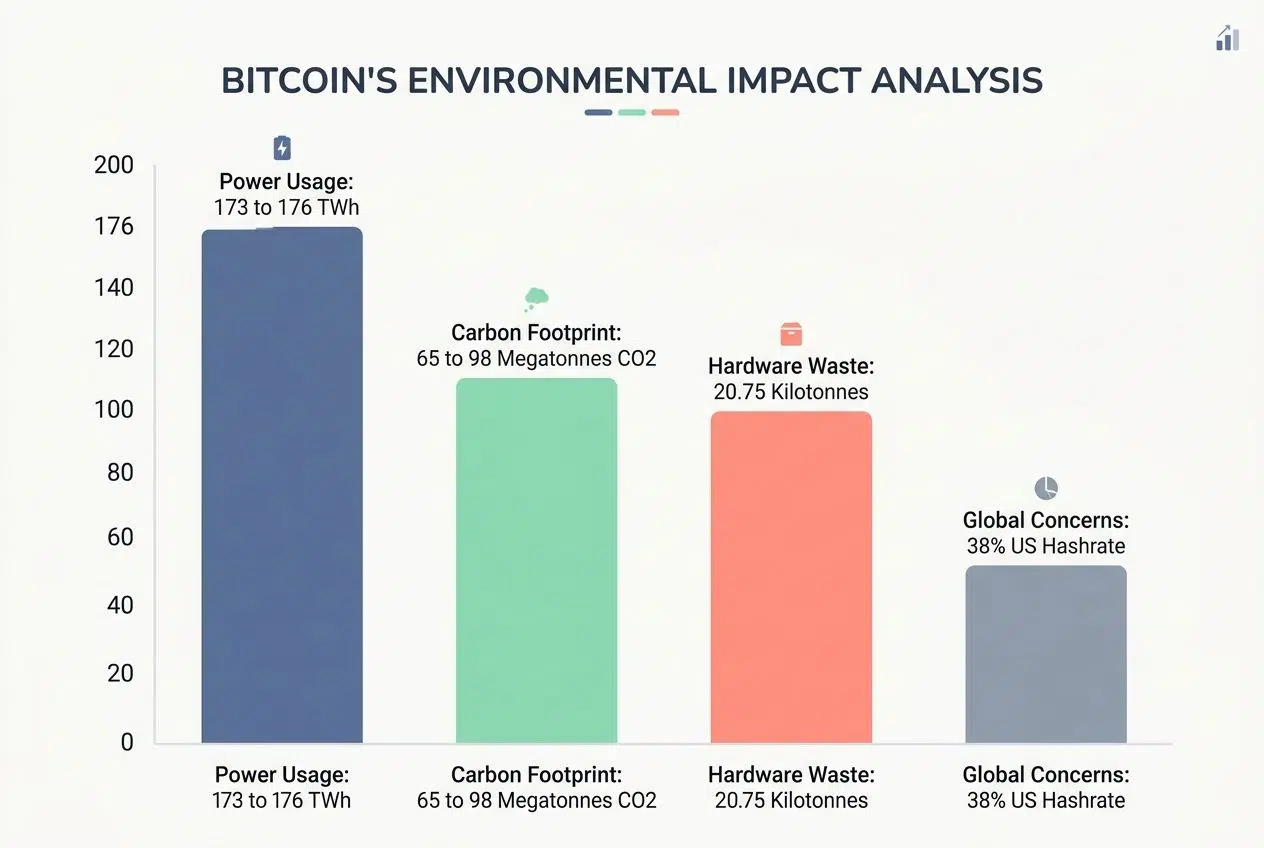
Energy use fuels a major debate around Proof-of-Work blockchains. Bitcoin eats up more power each year than entire industrialized nations. Here is how the hard numbers stack up for 2025 and 2026.
| Aspect | Details |
|---|---|
| Power Usage |
Bitcoin miners consumed approximately 173 to 176 terawatt-hours (TWh) of electricity annually in 2025 and 2026. This matches the total national consumption of countries like Poland or Argentina. The network draws a continuous load of about 10 gigawatts globally.
|
| Carbon Footprint |
Annual emissions from Bitcoin mining reach roughly 65 to 98 megatonnes of CO2. This equals the carbon footprint of the entire nation of Greece. In the US, 85 percent of the energy powering the largest mines still comes from fossil fuels.
|
| Hardware Waste |
ASIC miners become obsolete incredibly fast. By 2025, Bitcoin mining generated over 20.75 kilotonnes of electronic waste annually. That is as much small electronics waste as a country the size of Luxembourg produces.
|
| Global Concerns |
The US now hosts nearly 38 percent of the global hashrate, putting immense pressure on local power grids. Texas has become a major hub, with crypto operations using up to 3 percent of the state’s total generated electricity. United Nations studies flag crypto mining for actively increasing global air pollution.
|
Resource-Intensive Mining Processes
Proof-of-Work mining eats up a mountain of resources beyond just electricity. Powerful computers run nonstop, and keeping them cool requires massive infrastructure. This hidden environmental impact touches local communities directly.
- Water Consumption: Cooling these massive data centers requires billions of liters of fresh water annually, which is highly problematic in drought-prone mining hubs like Texas and Arizona.
- Electronic Waste: Because miners run at maximum capacity 24 hours a day, the hardware burns out or becomes outdated in under two years, filling landfills with specialized chips that cannot be recycled easily.
- Noise Pollution: The industrial cooling fans emit a constant, drone-like hum that disrupts local wildlife and forces neighbors to keep their windows permanently shut.
- Grid Instability: When winter storms hit the US, the massive power draw from these facilities can threaten rolling blackouts for everyday citizens.
Environmental Impact of Proof-of-Stake
Proof-of-Stake uses much less energy, slashing pollution and easing strain on our planet. It represents a massive technological leap forward for green finance. Let’s look at the actual savings this system provides.
Lower Energy Requirements
Validators in Proof-of-Stake do not need giant machines or endless amounts of electricity like miners in Proof-of-Work. They use standard computers, which means waste is practically eliminated.
A single transaction on the Ethereum PoS network uses about 0.03 kilowatt-hours, or roughly 30 watt-hours. That is thousands of times less than a Bitcoin transaction.
Many see this as a massive win for the environment. It shrinks the carbon footprint and proves that global blockchain technology can be genuinely eco-friendly. Lower energy helps fight climate change while keeping transaction validation fast, smooth, and highly accessible.
Reduced Environmental Damage
Lower energy needs in Proof-of-Stake do more than just shrink the power bill. They actively cut back on the physical pollution that plagues mining towns. PoS systems eliminate the need for warehouse-sized cooling systems, completely stopping the water waste and noise pollution issues seen in Texas.
- Ethereum’s shift to PoS dropped its total annual emissions to roughly 870 tonnes of CO2e.
- It practically eliminates electronic waste, as standard laptops can run for years without needing replacement.
- It stops the reliance on fossil fuel plants, meaning local air quality remains clean and breathable.
Comparing PoW vs PoS Environmental Footprints
Comparing PoW and PoS is like weighing the energy use of a roaring diesel freight train against a quiet electric bicycle. The differences are staggering when you place the data side by side.
Energy Usage Differences
The gap in energy use between the two leading systems is eye-opening. This updated 2026 table breaks down the massive divide between them.
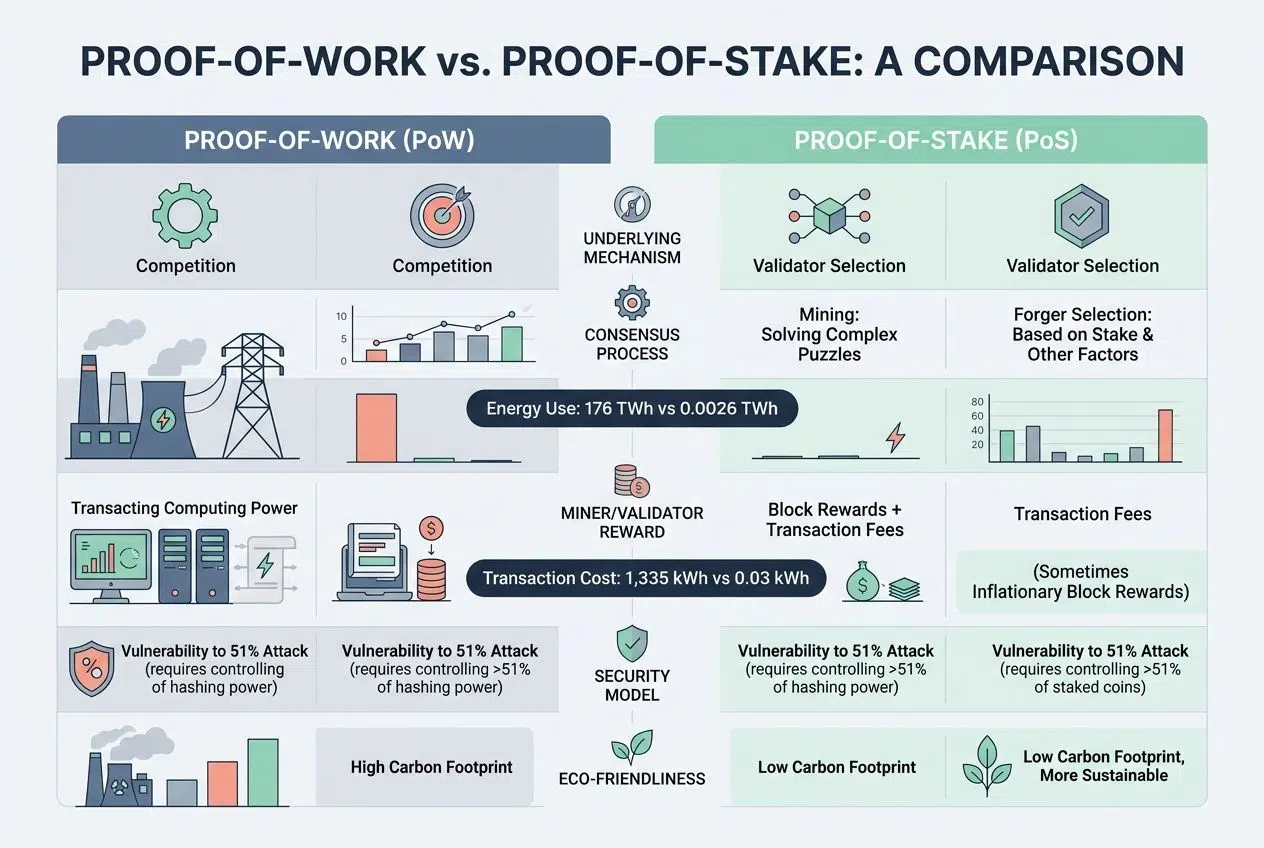
| Feature | Proof-of-Work (PoW) | Proof-of-Stake (PoS) |
|---|---|---|
| Core Activity | Miners race to solve complex puzzles, wasting a mountain of electricity. | Validators are picked using their staked coins, skipping the puzzle drama entirely. |
| Energy Use (per year) | Bitcoin consumes roughly 176 Terawatt-hours, matching the nation of Argentina. | Ethereum consumes roughly 0.0026 Terawatt-hours, about the same as 250 US homes. |
| Transaction Cost | A single transaction takes about 1,335 kWh, powering a US home for 45 days. | A single transaction takes roughly 0.03 kWh, barely enough to run a lightbulb. |
| Device Requirements | Energy-hungry ASIC machines run 24/7, burning through power and hardware budgets. | Any standard laptop or smartphone can join, sipping energy quietly. |
| Environmental Footprint | Heavy carbon trail, excessive water cooling, soaring emissions, and huge e-waste. | Barely warms a cup of tea, creates almost zero e-waste, and protects local air quality. |
Long-term Sustainability Considerations
After looking at energy usage, it becomes clear that long-term sustainability requires a permanent shift in how we build networks. Proof-of-Work simply uses too many fossil fuels to scale harmlessly.
This is causing major waves in the financial sector. Big institutions and US regulatory agencies, guided by the SEC’s climate disclosure rules, are putting heavy pressure on companies to report their crypto carbon footprints.
- ESG (Environmental, Social, and Governance) funds are increasingly refusing to invest in PoW-heavy companies.
- Proof-of-Stake perfectly aligns with global climate goals, making it the preferred choice for new corporate partnerships.
- Future blockchains must prioritize green design to avoid outright bans or harsh taxes from local governments.
Security Implications of PoW and PoS
Both systems have different strengths in keeping your digital assets safe from hackers. Security is the main reason these complex mechanisms exist in the first place. Let’s explore how each method stands guard over your transactions.
Strengths and Weaknesses of PoW Security
Proof-of-Work is famous for creating an incredibly tough shield around the blockchain. It uses the physical world, hardware, and electricity to protect the digital world.
- Hackers need huge computing power to change PoW transactions, meaning a 51 percent attack on Bitcoin would cost billions of dollars in hardware alone.
- The system spreads control over many users, making it incredibly resilient against sudden software bugs.
- Strong security comes directly from miners solving tough math puzzles, which anchors the digital coin to real-world energy costs.
- Big mining farms tend to cluster in places with cheap fossil fuels, centralizing power into the hands of a few massive corporate operations.
- If a country suddenly bans mining or the local power grid fails, the network’s processing speed can drop significantly.
- Slower transaction speeds pop up naturally because miners must finish their intense work before new blocks are approved.
Strengths and Weaknesses of PoS Security
Proof-of-Stake uses digital economics instead of physical mining to secure the network. This modern approach offers excellent defense with a few unique risks.
- Validators need to lock up their own money to join, ensuring they have a vested interest in keeping the network honest.
- To attack a massive PoS network like Ethereum, a hacker would need to buy 51 percent of all staked coins, which would cost tens of billions of dollars.
- If a validator cheats, their staked coins are slashed immediately. This acts as a swift, built-in financial punishment.
- Less hardware means attackers cannot just rent massive data centers to briefly overpower the network.
- Whales, or users with massive amounts of coins, might gain too much voting power, which can harm true decentralization if unchecked.
- Newer PoS systems are incredibly complex software projects, making them slightly more vulnerable to undiscovered code bugs in their early days.
Scalability and Efficiency
Some blockchains move at a snail’s pace, while others zip through tasks like a racecar. For cryptocurrency to become daily money, speed is everything. Let’s break down why some networks handle crowds better than others.
Challenges with PoW Scalability
Proof-of-Work has serious trouble growing as more people try to use it simultaneously. These bottlenecks lead to frustrating delays for users.
- Bitcoin can natively handle only about 7 transactions per second, while traditional US networks like Visa easily process thousands in the same timeframe.
- As network traffic grows, users must pay wildly high fees to convince miners to prioritize their specific transactions.
- The hard math puzzles cannot be bypassed, creating a permanent speed limit on the base layer of the blockchain.
- High computational needs push smaller players out, leaving only massive server farms in control of transaction processing.
- To fix these speed issues, developers have to build separate Layer-2 networks, like the Lightning Network, which adds complexity for the average user.
Scalability Advantages of PoS
Proof-of-Stake makes blockchains exceptionally efficient and fast. It allows networks to grow gracefully without requiring entirely new power plants to be built.
- Because validators skip the math puzzles, blocks are created predictably and rapidly.
- Networks like Solana use this efficiency to process up to 65,000 transactions per second during peak testing.
- Gas fees, the cost to send a transaction, usually stay incredibly low, often costing fractions of a penny.
- Developers can easily implement upgrades like sharding, which splits the blockchain into smaller, faster pieces to handle even more traffic.
- Energy consumption stays basically flat even as user numbers double or triple, making mass adoption safe for the environment.
The Future of Blockchain Consensus Mechanisms
New ideas in blockchain engineering are popping up every single month. Developers are constantly searching for the perfect balance of speed, security, and sustainability. Let’s look at the exciting new methods leading the pack right now.
Emerging Technologies and Innovations
Technology in blockchain is moving incredibly fast, shaking up old ideas about energy use. Fresh tools aim to make digital currency completely harmless to the planet.
- Hybrid consensus models are appearing, blending the security of Proof-of-Work with the speed of Proof-of-Stake.
- Innovative projects like Chia use Proof-of-Space-and-Time, utilizing empty computer hard drive space for validation instead of processor power.
- In Texas, some PoW miners are capturing flared methane gas from oil fields, using a harmful waste product to power their operations instead of pulling from the public grid.
- Energy-efficient hardware design is advancing, with newer mining chips sipping less electricity per calculation.
- Blockchain developers are actively partnering with global environmental groups to track and report their real-time ecological footprints.
Potential Shift Toward Eco-Friendly Solutions
After seeing the massive success of Ethereum’s green transition, the entire industry is shifting focus toward sustainable growth.
Investors are demanding clean technology. The market for tokenized carbon credits on eco-friendly blockchains is projected to scale to $1.6 trillion by 2028, proving that green tech is incredibly profitable.
As regulatory pressure mounts across the US and Europe, any blockchain that ignores its environmental impact risks being left behind.
This push for renewable energy and smart consensus design guarantees that the future of decentralized finance will be built on a foundation of ecological respect.
Final Words
Both systems shape how digital money works today, but their effects on our planet are incredibly different. While Proof-of-Work consumes power like a thirsty camel at an oasis, Proof-of-Stake offers a much lighter, energy-saving path. Understanding Proof-of-Work vs Proof-of-Stake helps you make informed choices about the technology you actively support.
You can always look for newer, greener projects or chat with tech experts if you want to learn more about how your favorite coin operates. Every small choice matters. Supporting cleaner technology helps build a healthier, brighter future for all of us.