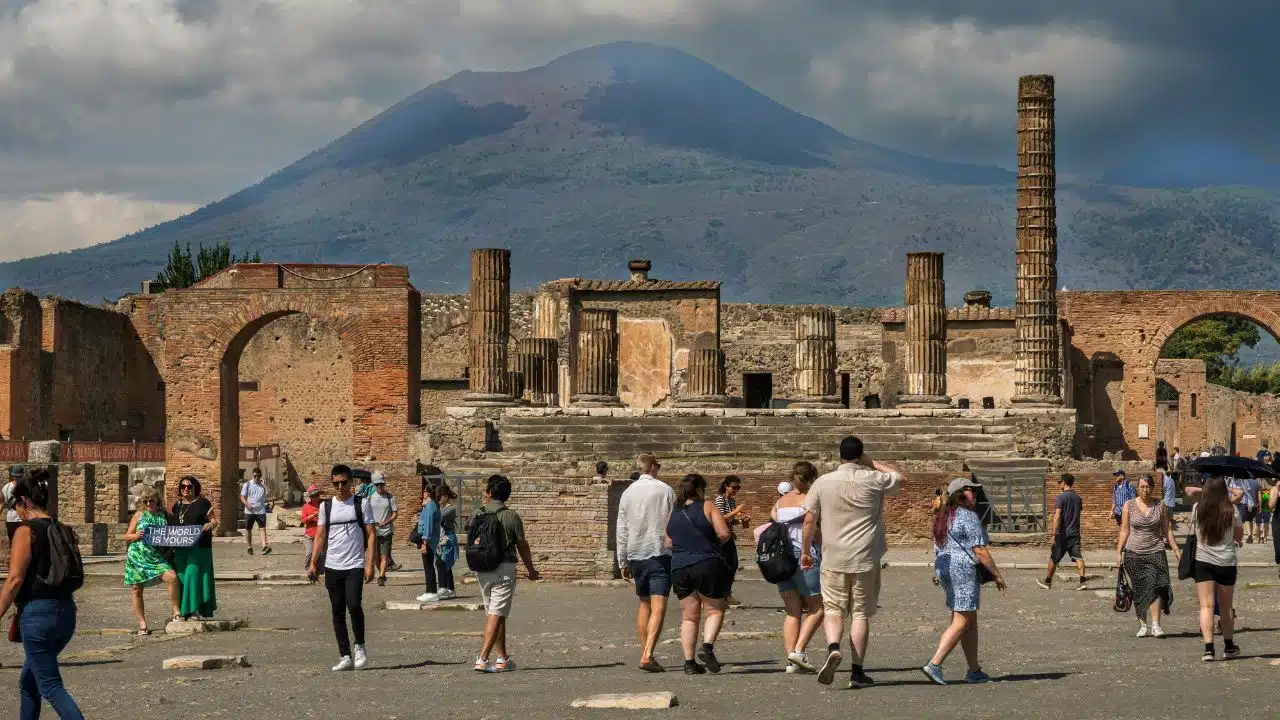
There are places that teach without needing explanations. Sites where history presents itself like a raised map, where every corner offers clues to understand how people lived, felt, and thought as they walked those same streets centuries ago. Pompeii, buried under the ashes of Mount Vesuvius since 79 AD, is one of those places. And for children and teenagers, visiting the ruins of Pompeii is a fascinating adventure that sparks questions about life before the tragic day—and about the eruption itself.
A tour that awakens childhood curiosity
Young visitors, used to screens and digital stimuli, find themselves facing an entirely new landscape here. The cobbled streets, the still-visible wheel ruts in the stone, the murals with their colors still vivid today: all of this creates the effect of a trip to the past. Children explore without even realizing it and start asking questions about life back then—why houses had no windows facing outwards, how the public baths worked, or what citizens talked about in the forum. The shops with preserved counters are as surprising as the remains of temples.
And it is in these moments that younger visitors, especially those of school age, begin to connect history with their present. It’s not unusual to see them carefully examining the mosaics in the baths or discussing the scenes of daily life painted on the walls. Every tangible element allows them to reconstruct, piece by piece, the puzzle of a civilization that suddenly doesn’t feel so distant.
A visit that fuels adolescent imagination
For teenagers, Pompeii offers a different kind of fascination. The eruption of Vesuvius, with its mix of catastrophe and mystery, captures attention right from the start. The human shapes molded by ash, frozen figures covered by sudden death, provoke less fear than reflection. What would they do in that situation? What would life be like for a 17-year-old in such a vibrant and advanced city? The amphitheater—one of the oldest in the Roman world—is another site that often captures teenage interest. Imagining gladiator combats or theatrical performances becomes an engaging mental exercise. And in the forum, they can picture the local, commercial, and political life of that ancient society.
A visit that enriches knowledge
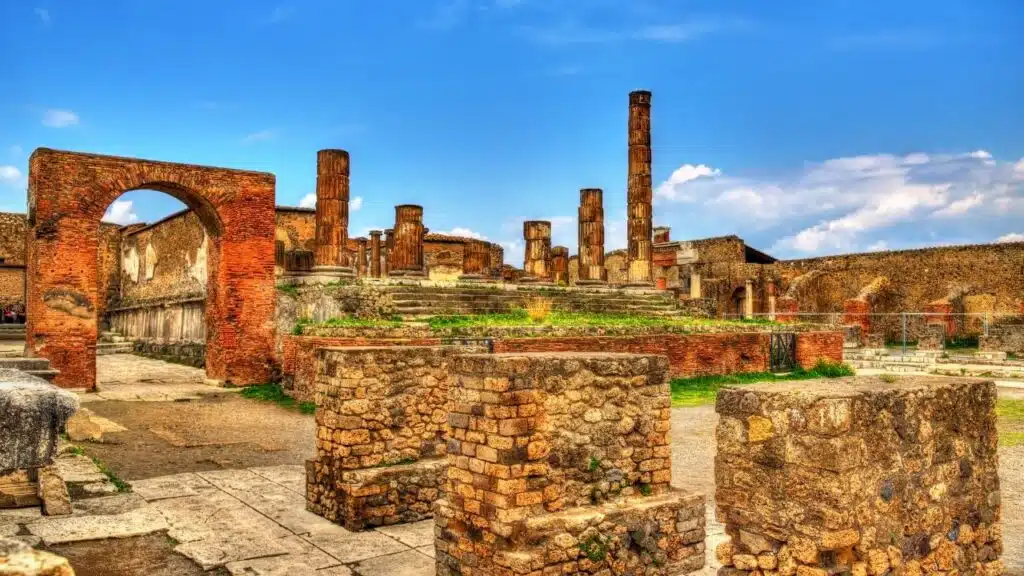
From an educational point of view, few destinations in Europe offer such a rich combination of archaeology, history, science, and emotion. It’s a journey that transcends academics. History transforms into direct experience—not something to memorize, but something to tell. Many secondary school teachers know this: a visit to Pompeii leaves a deep impact on young people. That’s why every year, thousands of schools include the site in their educational itineraries. And although it might seem like a demanding destination, Pompeii is perfectly suited for family visits, with services also designed for children. Thematic tours, guides specialized in young audiences, and even interactive materials designed to accompany the exploration turn every corner into an adventure.
Staying near the archaeological site: a major advantage
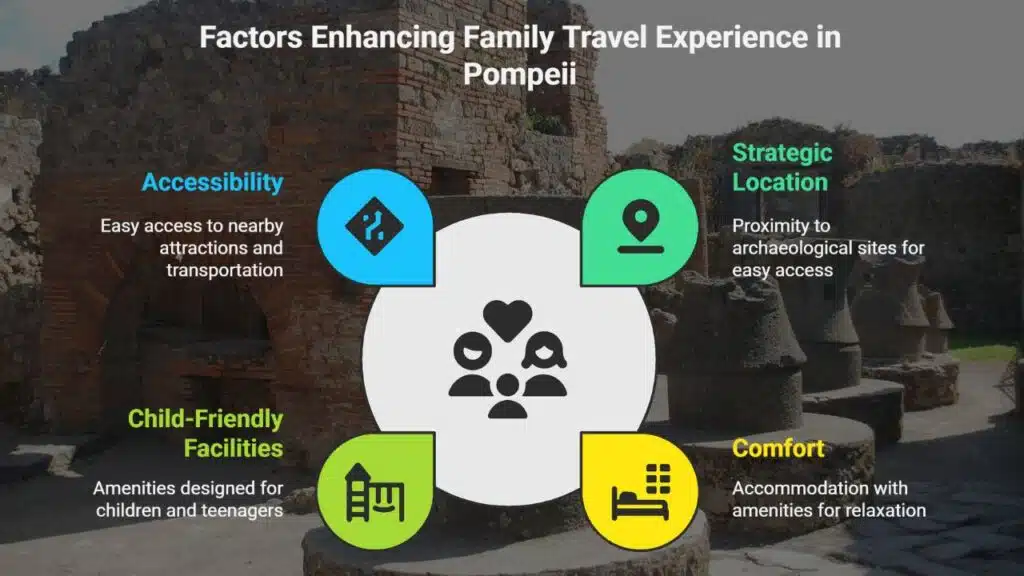
Families traveling to Pompeii often seek practical solutions to enjoy the visit calmly and without complicated transfers. Staying just steps away from the archaeological site is one of the best decisions to make the most of the experience. That’s why choosing accommodation like the one featured on Iltesoropompeiano.it can make all the difference.
It’s not about luxury, but about strategic location and comfort: a place next to the ruins, with facilities suited for children and teenagers, ideal as a starting point to also discover Naples, Herculaneum, or Mount Vesuvius. Plus, being able to return to rest after hours of walking under the sun, having quiet spaces, and planning new excursions from an accessible base becomes essential—especially when traveling with younger ones.
A gateway to new questions
No child leaves Pompeii the same as they arrived. They may not grasp all the details of Roman urban planning or remember the name of every building, but they carry with them a kind of knowledge that stays. Because having walked the same paths that children and teenagers like them walked two thousand years ago—with their games, their fears, and their dreams—leaves a lasting impression.
In short, a trip to Pompeii is a must for children and teenagers. Not only will it enrich their knowledge, but it will also be fun and entertaining for them. Visiting this archaeological site is an adventure they will never forget!