Homeowners and business leaders face rising bills and a shaky grid. Polish Renewable Energy Projects Leading Europe show how to shift to clean power. The European Investment Bank signed a PLN 2.25 billion deal with PGE.
It will fund new solar parks and a pumped storage plant in southern Poland.
This post explores 12 big green builds in Poland. It covers offshore wind farms, solar parks, and storage plants. You will see how each project cuts costs and boosts energy security.
Read on.
Key Takeaways
- In 2024, the European Investment Bank and PGE signed a PLN 2.25 billion loan. It funds new solar parks and a 540 MW pumped-storage plant in southern Poland.
- Baltica 2 and 3 will add 2.5 GW of offshore wind by 2027. Baltica 2 uses 107 turbines for 1.5 GW and got a €400 million EIB loan in 2024 as part of a €1.4 billion InvestEU, REPowerEU, and RRF package.
- European Energy built a 54 MW solar park in Debnica on December 23, 2024. mBank lent €33.3 million in August 2024. The park will generate 50 GWh per year—enough for 13,500 homes—and lift Poland’s solar capacity to nearly 200 MW.
- Orlen and Canada’s Northland Power formed Baltic Power to build one of Poland’s largest offshore wind farms. They aim to start by 2030, use advanced turbines, secure long-term power-purchase agreements, and cut fossil-fuel use.
- In June 2025, renewables out-generated coal in Poland for the first time. Solar capacity hit a record 22.074 GW in April 2025. The EIB, EBRD, PGNiG, and private equity backed key projects to meet EU energy and climate rules.
What is the Baltica 2 Offshore Wind Farm?
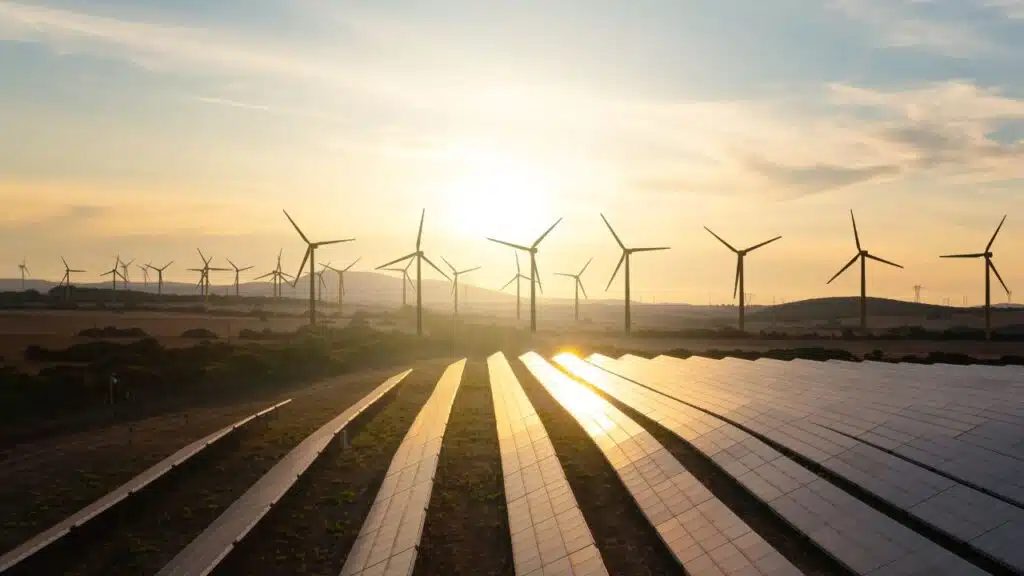
Europe’s largest offshore wind power project stands off Poland’s Baltic Sea coast. It will use 107 wind turbines to generate 1.5 gigawatts of clean energy. The site lies about 40 kilometers from shore.
PGE and Ørsted plan to finish construction by 2027. This build drives Poland’s energy transition.
A €400 million loan from the European Investment Bank arrived in 2024. The loan sits in a €1.4 billion investment package that also covers Baltica 3. InvestEU, REPowerEU and the Recovery and Resilience Facility back the project.
These turbines will boost Poland’s energy security. Once operational, Baltica 2 will double PGE’s renewable energy sources. Paired with Baltica 3, total output will reach 2.5 gigawatts.
What does the Baltica 3 Offshore Wind Farm involve?
Baltica 3 counts as a key component of a €1.4 billion investment plan alongside Baltica 2. Together, both sections will yield 2.5 gigawatts of capacity for Poland’s offshore complex.
PGE teams and Ørsted crews will oversee turbine installation across a deep sea plateau. Engineers will use metocean assessments and monitoring systems to track wind energy output.
Cables will link each unit to onshore energy infrastructure and grid operators.
Onsite work will build on the infrastructure and know-how gained from Baltica 2. Survey boats will map seabed layers and mark cable corridors. Coordinators will plan routes to protect marine habitats and maintain energy security.
Grid operators aim to plug in the new power plants by 2027, feeding renewable energy into the national energy mix. This effort supports Poland’s green transition, cuts reliance on fossil fuels and bolsters energy production.
What should we know about the Baltic Power Offshore Wind Project?
Orlen, Poland’s national oil and gas firm, and Northland Power, a Canadian developer, formed a joint venture for the Baltic Power offshore wind project. The partners aim to start operations by the end of the decade.
They plan to boost Poland’s offshore wind capacity. This venture ranks among the country’s largest renewable power investments.
It will use advanced turbines to boost efficiency and cut reliance on fossil fuels. Long term power purchase agreements will send renewable power into the grid. The project will help diversify energy sources and strengthen energy security.
It supports EU goals to raise renewable energy generation and deepens international cooperation in the region.
What makes European Energy’s Largest Solar Project in Poland significant?
European Energy launched a 54 MW solar park near Debnica in West Pomerania on December 23, 2024. Construction wrapped on December 21. mBank financed the farm with a EUR 33.3 million loan secured in August 2024.
The park will generate over 50 GWh of clean power annually, enough for roughly 13,500 households, keeping the lights on even during winter storms. That expansion grew operational capacity in Poland from 131 MW to nearly 200 MW.
It bolsters renewable energy infrastructure and strengthens energy security. The company now drives almost 4 GW of projects in Poland, including onshore wind, solar parks and energy storage systems, plus over 1.6 GW in early-stage screening.
The firm has served the Polish market since 2007 with offices in Warsaw and Gdynia. That experience sharpened its know-how in renewable sources. Debnica now stands as its flagship solar power plant and a milestone in the photovoltaic sector here.
The park will feed the grid with stable output, smoothing peaks and troughs for Poland’s energy market. Plans include battery storage systems to boost grid resilience. This project shows how private capital can reshape Poland’s energy landscape.
RWE Renewables’ Offshore Wind Development in the Baltic Sea
RWE will boost Poland’s energy transition and energy security with its sea-based turbines in the Baltic, feeding clean power into the grid through new subsea lines. Power purchase agreements and tight grid integration help lock in revenue and keep those turbines turning with every gust.
What are the key features of RWE Renewables’ Baltic Sea wind project?
The project taps strong Baltic Sea breezes for clean power. It links new energy directly to Poland’s grid.
- It uses advanced turbine systems that boost efficiency and cut maintenance, harnessing strong Baltic Sea winds for sustainable energy.
- The plan aims for high capacity factors, raising energy output and bolstering energy security.
- This project adds substantial new capacity to Poland’s offshore wind farms portfolio, improving the energy sector.
- Comprehensive environmental impact reviews protect marine life and coastal areas while shaping responsible energy infrastructure.
- Grid integration tools link clean power to local networks, supporting renewable energy supply and the energy transition.
- Local firms join the venture as suppliers and contractors, creating new jobs and economic opportunities in coastal regions.
- Strict EU and Polish rules guide the design, securing compliance in energy policy and offshore wind plans.
How will this project impact Poland’s energy landscape?
RWE Renewables will build a big offshore windfarm in the Baltic Sea. This windfarm will boost Poland’s share of renewable energy in the national energy mix. Coal-based power plants will lose ground as turbines churn clean power.
Strong wind generation will boost energy security and grid stability. New power purchase agreements will lock in green electricity and cut greenhouse gas emissions. International investors will channel more funds into renewable energy infrastructure and boost Poland’s status as a green innovator.
Local crews will gain skills through hands-on turbine work and training. Knowledge transfer will speed as engineers show teams how to maintain blades and optimize energy storage. Targets set by the EU for cutting pollution will move closer to reality.
Cleaner energy from wind generation will reshape energy infrastructure in Poland and drive the energy transition.
EDP Renewables’ Collaboration on Polish Wind Projects
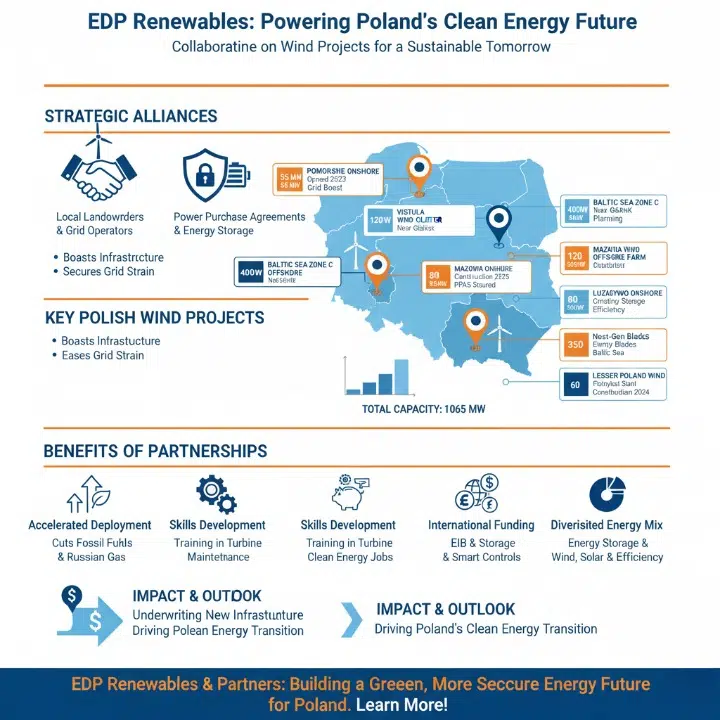
The energy firm teamed up with local landowners and grid operators to plant rows of power generators, boosting Poland’s clean energy infrastructure. It also locked in power purchase agreements and eyed modular energy storage systems, to shore up supply and ease strain on the grid.
Which Polish wind projects is EDP Renewables involved in?
EDP Renewables drives several wind farm ventures across Poland. They tap high wind zones to add clean power.
- Pomorskie Onshore Park taps 55 MW of wind capacity, it opened in 2023 with a local utility partner to boost grid capacity.
- Baltic Sea Zone C Offshore Wind secures 400 MW, backed by the european bank for reconstruction and development; it sits in planning near Gdańsk.
- Vistula Wind Cluster in Kuyavian-Pomeranian holds 120 MW, it won power purchase agreements and hits construction in 2025.
- Mazovia Onshore Complex spans 80 MW, it plans to link energy storage units to raise energy security and energy efficiency.
- Lubiatowo Offshore Farm offers 350 MW, it tests floating turbines in the Baltic Sea to expand renewable energy output.
- Lesser Poland Wind Project runs 60 MW, it uses next gen blades onshore and moved into construction in early 2024.
What are the benefits of EDP Renewables’ partnerships in Poland?
Local partnerships fuel more clean energy. EDP Renewables works with Polish groups to share expertise and funds.
- They speed up wind energy deployment across Poland, cutting reliance on fossil fuels and Russian gas.
- Each project includes on-site training sessions that build local skills in turbine maintenance and solar power plant operations.
- Partnerships boost clean energy jobs in small towns, lifting local incomes and sparking regional economic growth.
- This model invites funding from the European Investment Bank and EBRD, widening access to international capital.
- Such ties support grid modernization, adding energy storage and smart controls to bolster energy security and flexibility.
- Partnerships widen the renewable energy mix by pairing offshore wind farms with solar parks and energy efficiency upgrades.
- Projects link to power purchase agreements that underwrite new energy infrastructure and drive Poland’s clean energy transition.
Mirova Anemoska’s Investments in Renewable Energy
Mirova Anemoska pours capital into new solar parks and onshore wind farms. It teams up with Reconstruction Bank and seals energy contracts to back cleaner power and battery storage hubs, driving Poland’s green pivot.
What renewable energy projects is Mirova Anemoska investing in?
The firm backs green power builds across Poland. It finances wind farms, solar power plants and energy storage projects.
- It funds new onshore wind farms in rural regions with low income levels.
- Major solar power plants, each over 100 megawatts, have its backing.
- Its investments include grid integration systems to link renewable energy to the national network.
- Capital flows into battery storage units that help balance supply, boost energy security and improve energy efficiency.
- Hybrid projects mixing wind, solar and battery tech draw interest for consistent output.
- Both greenfield farm builds and brownfield site upgrades appear in its portfolio.
- Renewable infrastructure funds receive direct stakes to support the energy transition.
- High environmental benefit projects get chosen in underserved areas.
How do these investments support Poland’s green transition?
Mirova Anemoska pours funding into solar parks, offshore wind farms. These investments speed up the exit from fossil fuels, cut greenhouse gas. Projects boost renewable energy infrastructure and raise energy security.
New builds drive Poland toward EU climate targets.
Local towns gain fresh jobs in wind and solar operations. Investments cut air pollution, improve health for families. They expand access to clean energy for small consumers. Upgraded roads and grid links enhance community services.
Big backing prompts more green investment in Poland.
Qair’s Role in Advancing Poland’s Green Transition
Qair jumps on the green train with a renewable energy site near Wrocław. They ink PPAs with the EBRD to boost storage and accelerate the energy transition.
How is Qair contributing to renewable energy in Poland?
This firm drives clean power growth across Poland. It blends wind clusters, photovoltaic clusters, and battery units.
- Harnesses onshore wind parks that feed clean power into the national grid.
- Launches offshore wind clusters to cut dependency on Russian oil and natural gas.
- Builds photovoltaic clusters across sunny regions to spur the energy transition.
- Deploys battery units for energy storage, improving grid stability in low-wind periods.
- Partners with regional power companies on power purchase agreements to secure funding.
- Leverages digital control systems to boost energy efficiency and output, even in harsh weather.
- Maps every project to Poland’s climate and energy policies, speeding sustainable growth.
- Trains technicians through workshops, expanding the skilled workforce in renewable energy.
What projects highlight Qair’s impact on Poland’s green shift?
Qair drives Poland’s energy transition with strong green projects. Its work boosts the push for cleaner energy across towns and cities.
- Offshore and onshore wind farms: Qair’s flagship wind farms add over 800 MW of renewable energy capacity to the grid, cutting coal use.
- Solar parks under PPAs: its solar parks deliver clean power to 18,000 homes via long-term power purchase agreements (PPAs).
- Battery storage hubs: projects install 200 MWh of energy storage, smoothing erratic wind and solar output.
- Plant revamp drives efficiency: upgrades at five sites cut carbon emissions by 15% and boost free power.
- Supply chain growth: local firms in Silesia make turbine blades and cables, fueling 2,000 new jobs.
- Green seal of approval: the European Bank for Reconstruction and Development and EIB laud Qair’s high environmental standards.
- Capital magnet: Qair projects have drawn over €500 million in foreign direct investment, fast-tracking new green builds.
- Living lab for Europe: study tours to Qair’s fields show how to scale renewable energy infrastructure at low risk.
How is the European Investment Bank Funding Baltica 2?
In 2024, the European Investment Bank signed a €400 million loan agreement to boost the Baltica 2 offshore wind farm. It joins a €1.4 billion investment package for the PGE and Ørsted offshore wind farms that covers both Baltica 2 and Baltica 3.
The deal taps into EU funds like InvestEU, REPowerEU, and the Recovery and Resilience Facility to strengthen renewable energy infrastructure. That loan builds on past EIB financing to Ørsted for Polish wind projects, cementing its role in Europe’s energy transition.
This year, the EIB Group signed nearly €89 billion in new financing for over 900 ventures across renewable energy and other sectors. It dedicates almost 60 percent of its annual budget to climate and energy security initiatives.
That push helped channel about €100 billion into energy security investments under the EU umbrella. They say the bank is putting its money where its mouth is by aiming to mobilize €1 trillion in climate funding by 2030.
How is PGE Leading Large-Scale Renewable Energy Projects?
Poland’s biggest electric utility moves fast on renewable energy. The group supplies electricity and heat to nearly 6 million customers. This firm generates over 40 percent of the nation’s power.
PGE plans wind and solar parks to boost green energy. A 1.5 GW Baltic Sea wind farm will start in 2027 with a Danish offshore developer. These offshore wind farms will shore up energy security and speed the energy transition.
The european investment bank supports almost 730 MW of new solar parks. The deal also covers upgrading a 540 MW pumped-storage power plant. That southern facility stores clean power during low demand and peak output.
Dariusz Marzec highlights stable clean energy as key to decarbonization. These steps strengthen Poland’s energy infrastructure and storage.
When Did Renewables Surpass Coal in Poland?
June 2025 saw renewable energy generate more electricity than coal in Poland for the first time. Solar capacity reached a record 22.074 GW in April 2025, a major leap for solar power.
Massive offshore wind farms and Baltic Power onshore wind power projects came online and tipped the balance. That milestone marks a key point in the energy transition and a lasting shift in Poland’s energy mix.
European Investment Bank (EIB) and European Bank for Reconstruction and Development (EBRD) backed several solar parks and offshore wind projects, boosting renewable energy infrastructure.
State energy company PGNiG and private equity firms also joined international partnerships to bolster energy security. This support helps meet EU regulations on energy efficiency and cuts reliance on Russian energy supplies.
Experts see this as a long term trend toward cleaner energy sources.
Takeaways
Poland’s energy path shows bold steps. These projects speed the green shift. Big names like PGE and Ørsted lead offshore wind farm builds. Solar parks and energy storage grow fast.
The EIB backs efforts under the REPowerEU framework. This mix boosts grid strength, cuts fossil fuel habits. Citizens gain cleaner air and more energy security. Europe watches as Poland powers a greener future.
FAQs
1. What is the Baltic Pipe and GIPL gas pipeline in Poland’s energy transition?
The Baltic Pipe is a gas pipeline that cuts the cord to Russian gas, it brings liquefied natural gas from Norway via Denmark. GIPL links Poland with Lithuania. Both boost energy security, they shore up the energy transition.
2. How do solar parks and offshore wind farms push renewable energy in Poland?
Sun farms soak up sunlight to make clean juice. Sea turbines spin fast on the Baltic. They both add to the renewable energy infrastructure, they slash fossil fuels. The European Council on Foreign Relations calls them model projects. You can track them online, the site uses cookies to show local output.
3. Could small modular reactors from Westinghouse Electric Company swing Poland off coal?
Small modular reactors, or SMRs, are tiny nuclear power units. The AP1000 design is one of them. They fit in a nuclear power plant in Poland, they stack up in blocks like Lego. Kohlberg Kravis Roberts funds them, Munich Re insures each reactor.
4. How does the European Bank for Reconstruction and Development back green projects?
The EBRD lends cash to biogas plants, solar power, and sea turbines. It builds energy storage hubs to smooth the grid. Its funds lift the whole renewable energy industry in Europe.
5. What does the Baltic Power wind farm bring to Poland’s energy infrastructure?
Baltic Power sits in the Baltic region. It ties dozens of turbines to the shore grid. It pumps clean power across the renewable energy infrastructure, it ditches fossil fuels.
6. How do biogas plants and energy storage systems help keep the lights on?
Biogas plants turn farm waste into piped gas, that cuts methane leaks. Batteries and other storage soak up solar power by day, then flip the switch at night. They boost energy efficiency, they guard energy security after EU sanctions on Russian gas.